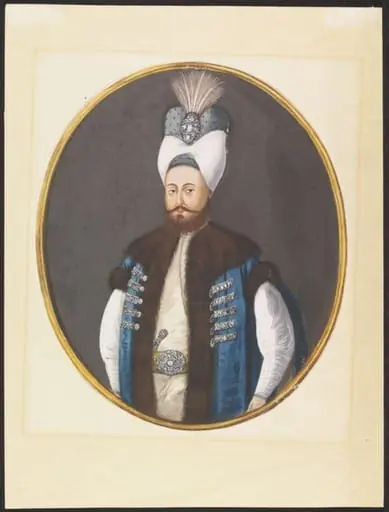
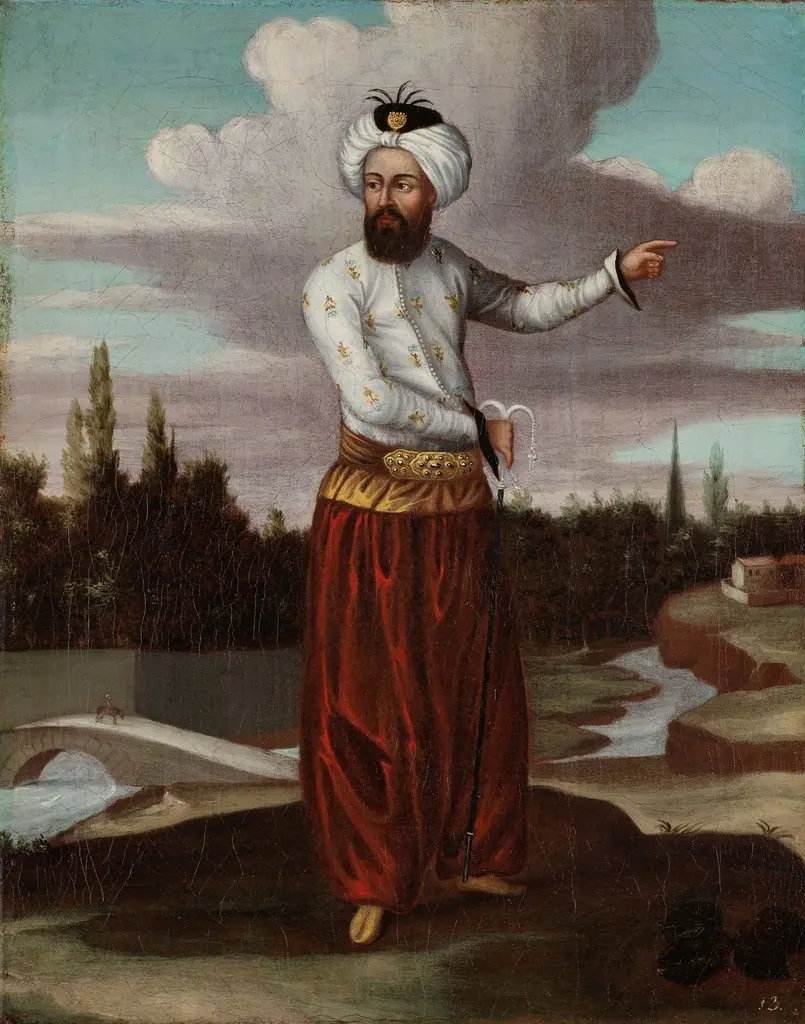
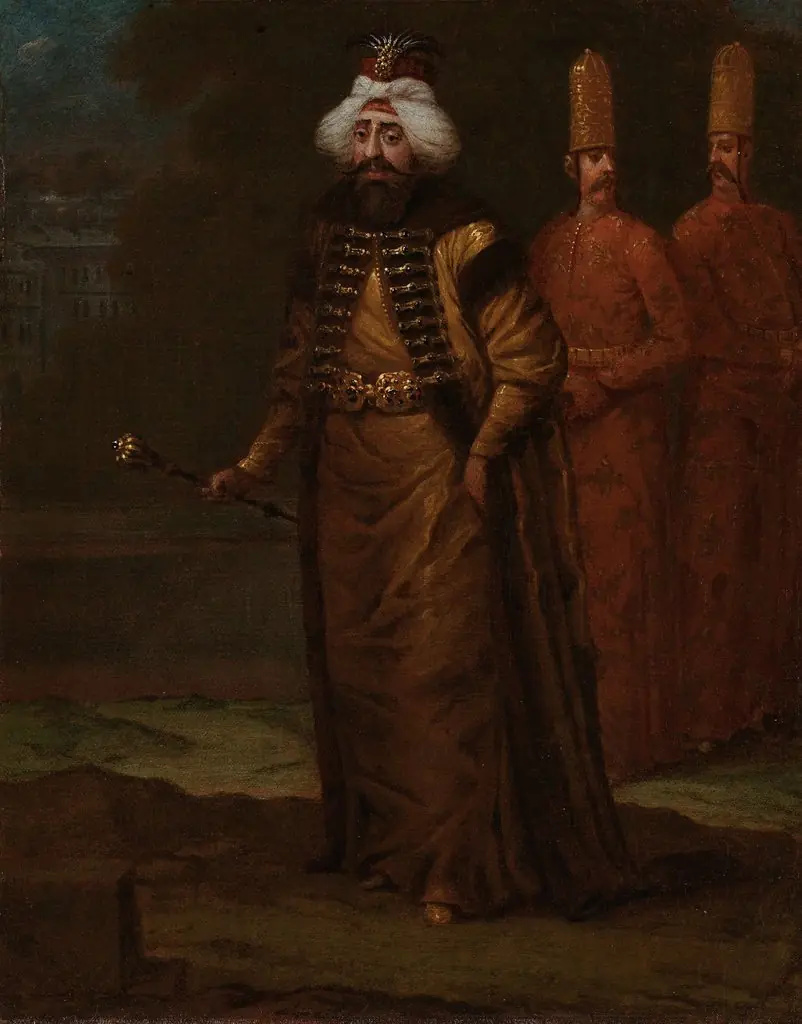
Artwork
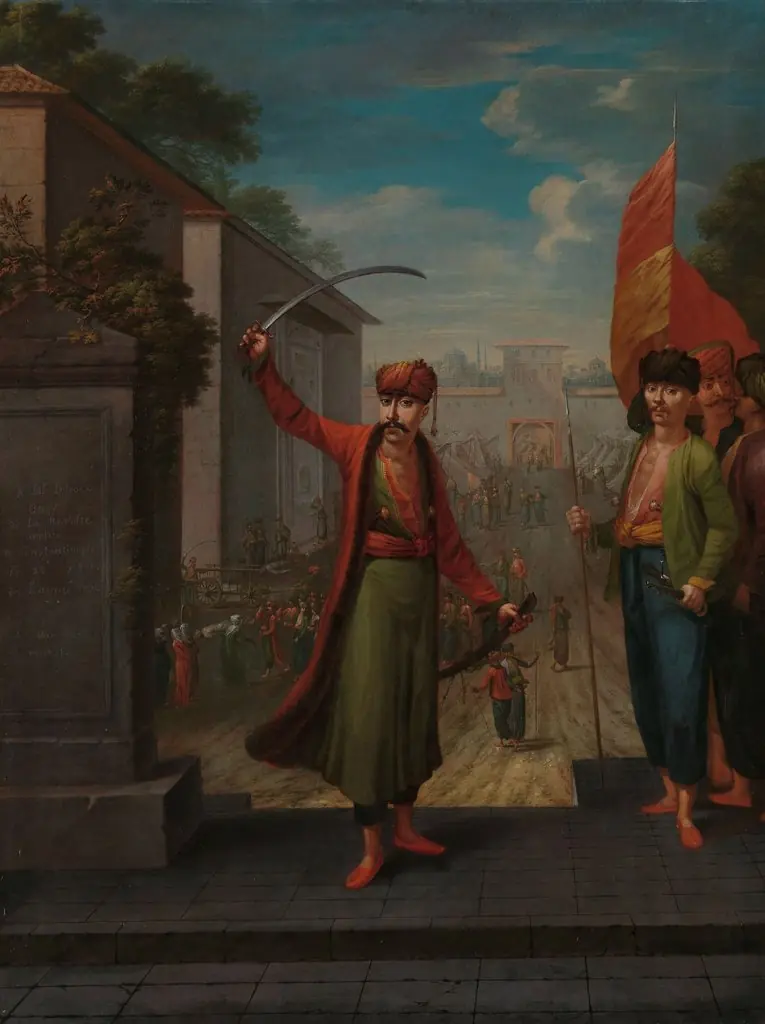
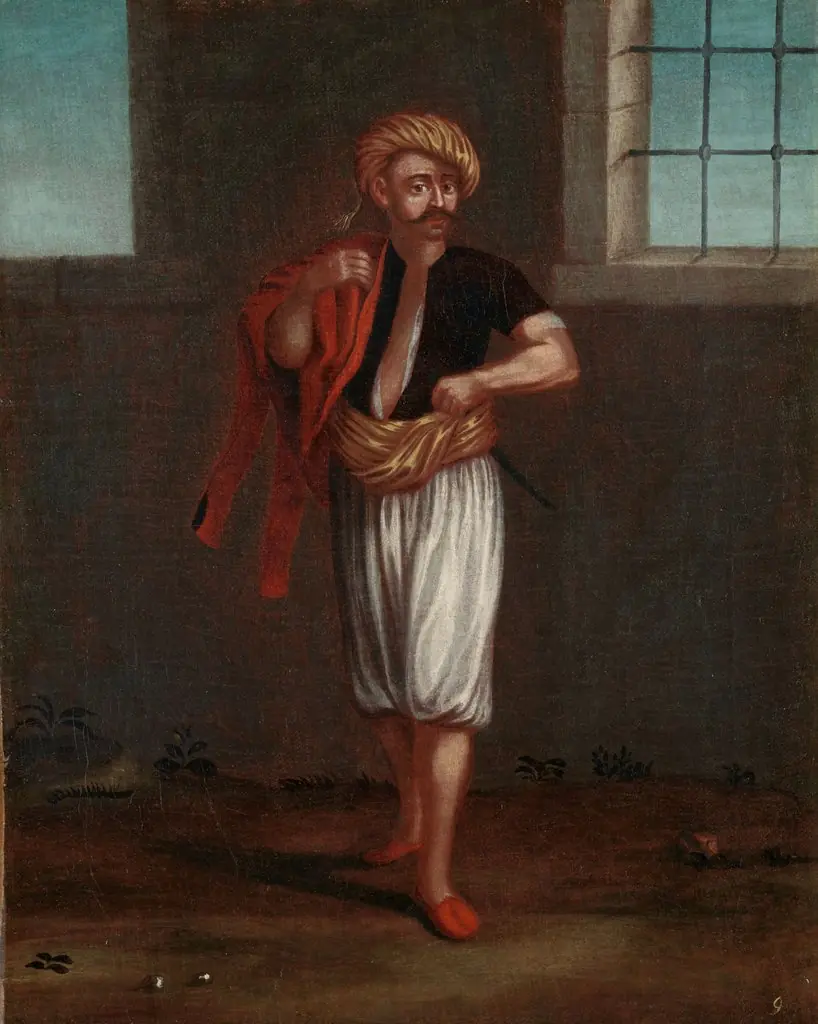
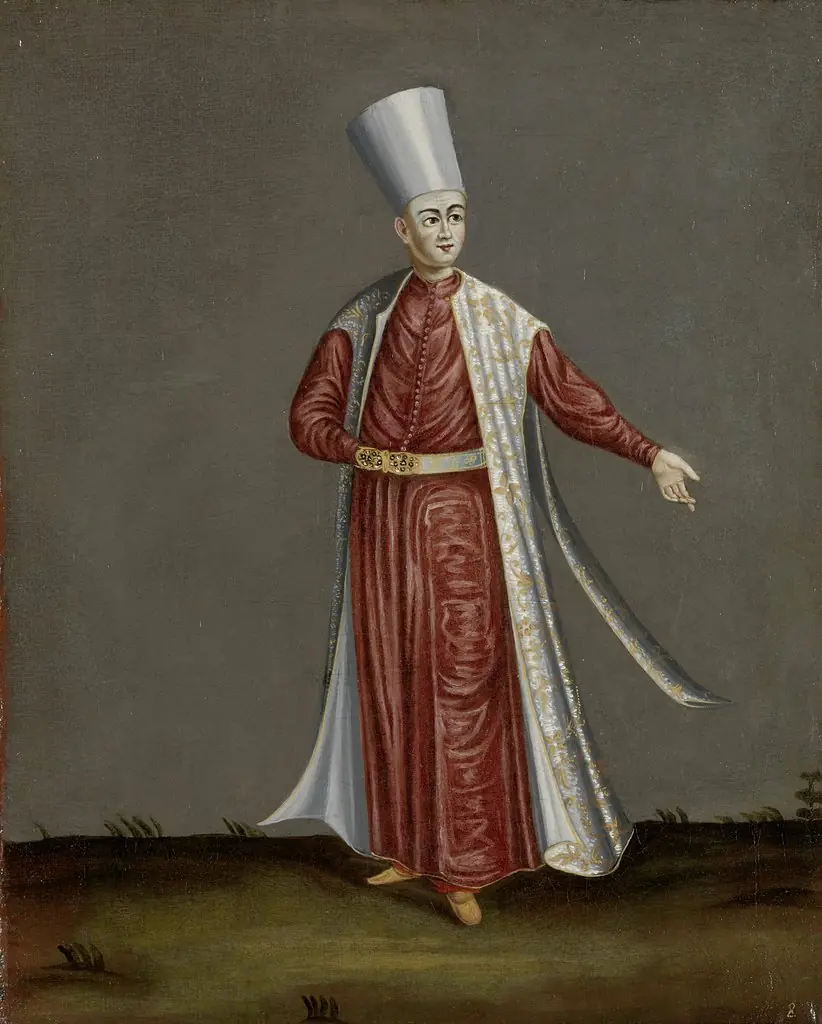
Seliktar Agassi, Equerry to the Sultan (Supreme Weapon-Bearer)
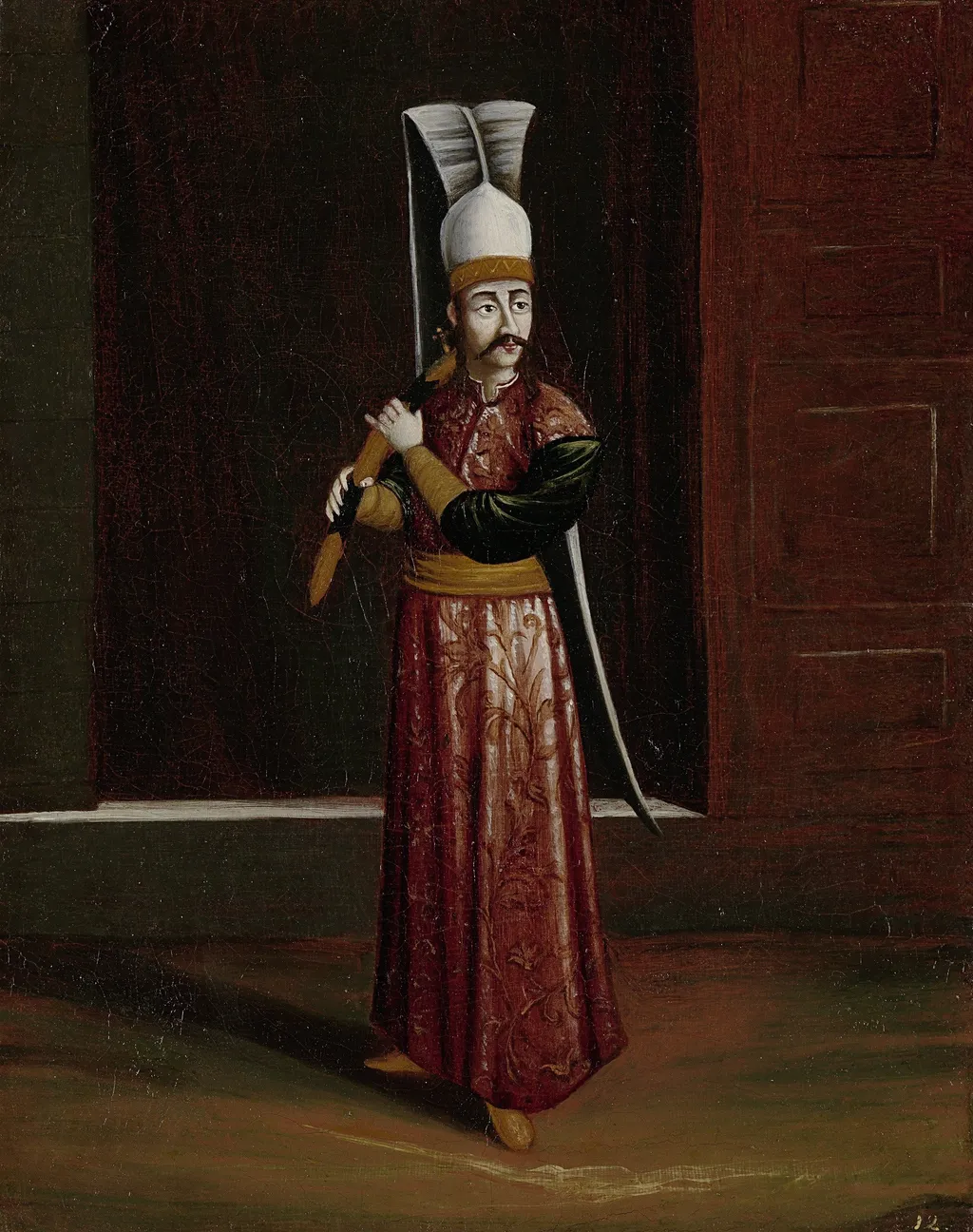
Seliktar Agassi, Equerry to the Sultan (Supreme Weapon-Bearer) is an oil painting by the Rococo painting artist Jean Baptiste Vanmour. It dates from 1718 and is held in the collection of the Rijksmuseum.
About this work
Overview
Jean Baptiste Vanmour, a painter of Flemish origin who worked in France, completed this oil portrait in 1718. The work depicts Seliktar Agassi, who held the title of Equerry to the Sultan, a senior position responsible for the Sultan’s weapons. The canvas is part of the Rijksmuseum’s collection and exemplifies the decorative tendencies of early‑18th‑century European painting.
Subject & Meaning
The setting—a dimly lit interior with a plain wall and a wooden door—focuses attention on his status as a high‑ranking official within the Ottoman court.
The sitter is presented in elaborate court attire: a tall white bicorne hat, a red robe embroidered with gold motifs, and a gilded belt. He grasps a curved sword in his left hand while his right hand rests on his chest, a pose that conveys both martial authority and personal dignity. The setting—a dimly lit interior with a plain wall and a wooden door—focuses attention on his status as a high‑ranking official within the Ottoman court.
Technique & Style
Executed in oil on canvas, the painting displays the lightness and ornamental detail associated with the Rococo period. Vanmour employs a relatively flat modeling, with limited chiaroscuro, resulting in a smooth surface that emphasizes pattern and costume over three‑dimensional depth. The restrained background allows the vivid colors of the costume to dominate the composition.
History & Provenance
Created during the Tulip Era, a time of cultural openness in the Ottoman Empire, the portrait reflects Vanmour’s long‑standing interest in documenting courtly life. After its completion, the work entered various private collections before being acquired by the Rijksmuseum, where it remains on view as part of the museum’s holdings of early modern European art.
Context
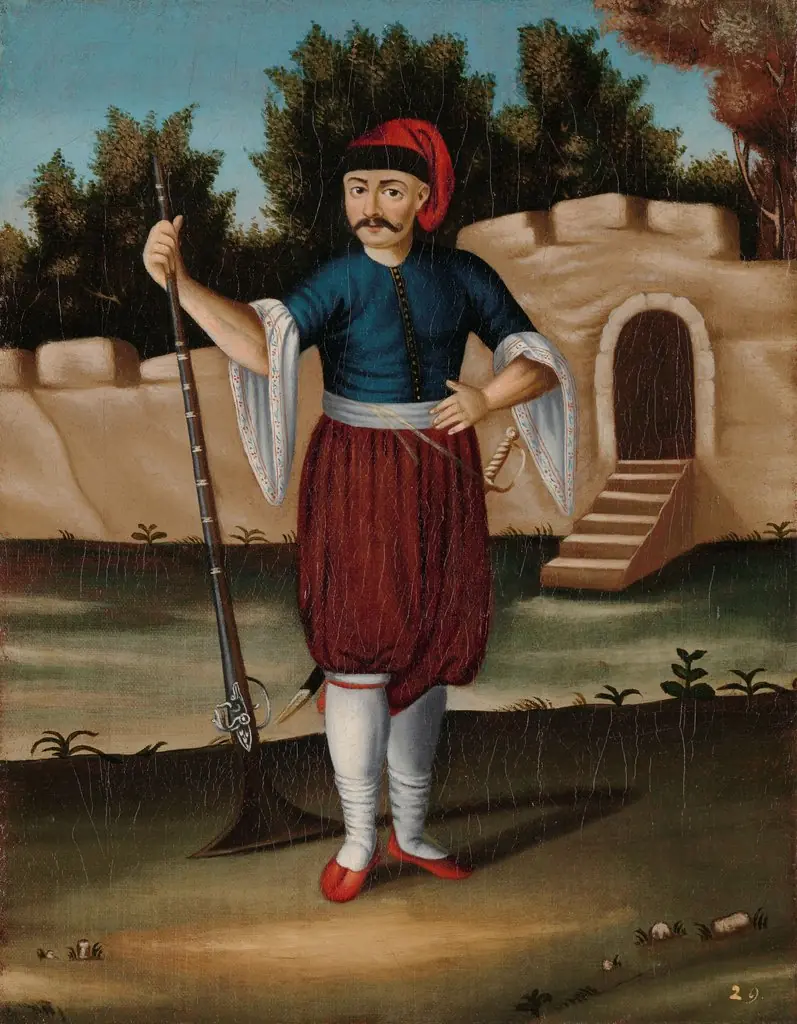
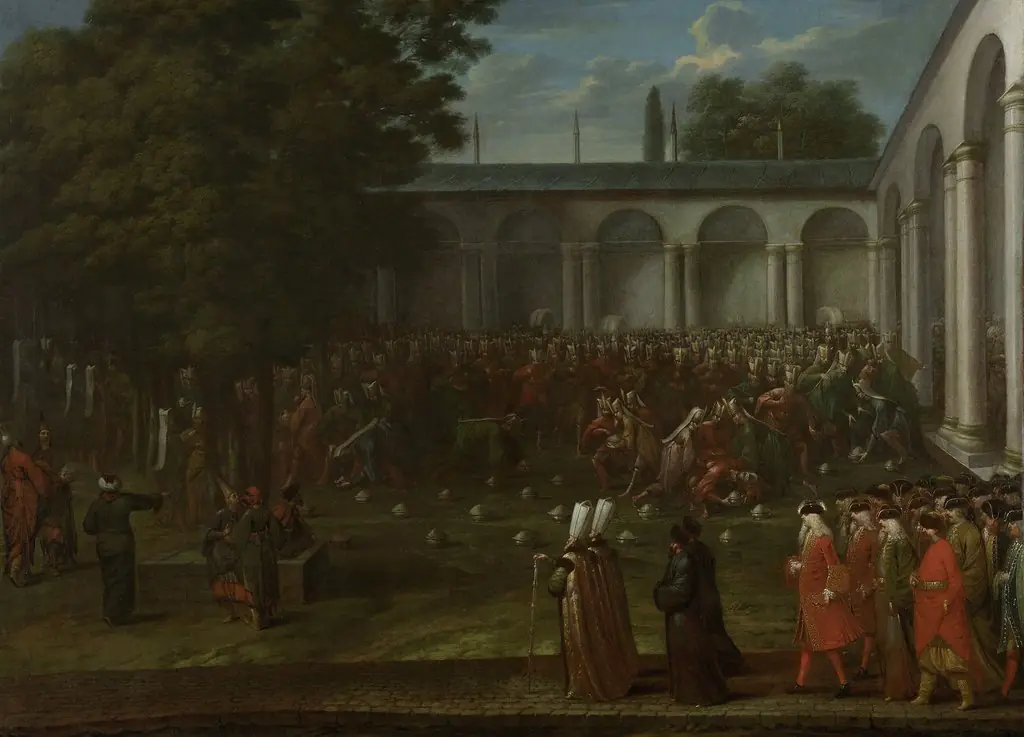
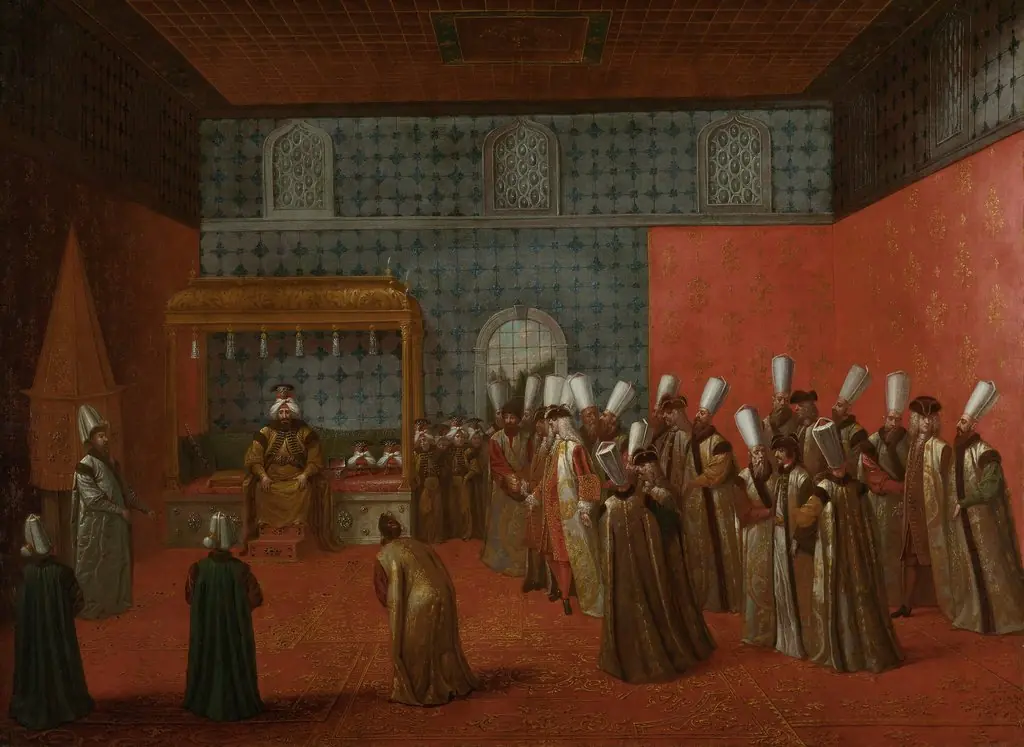
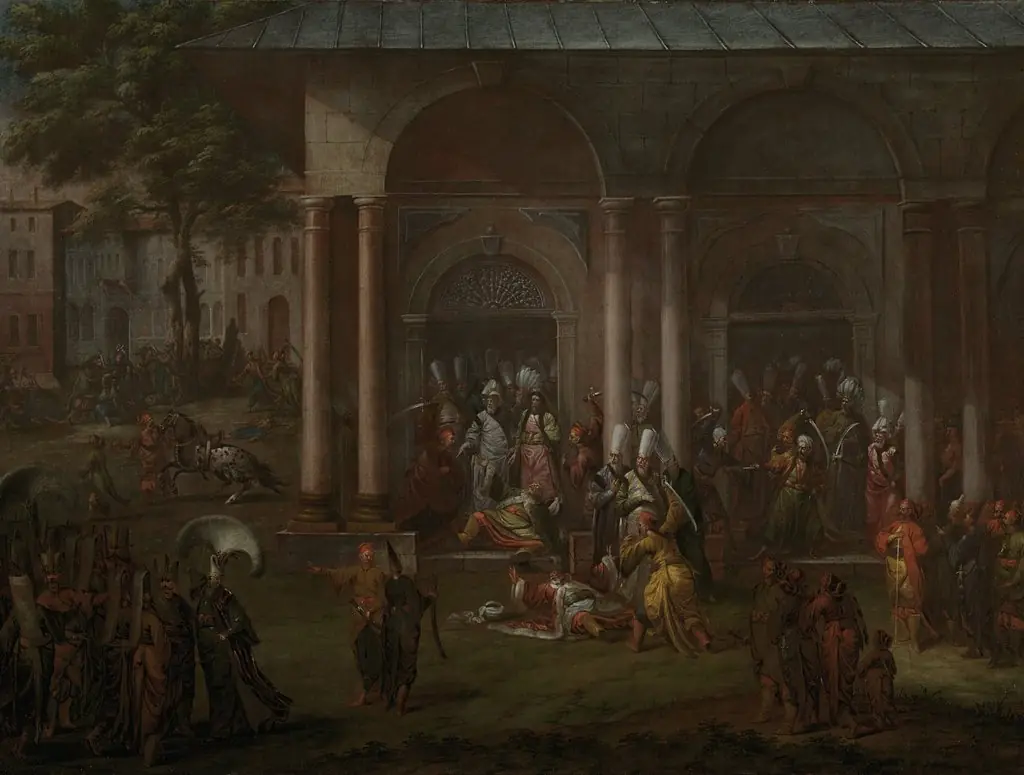
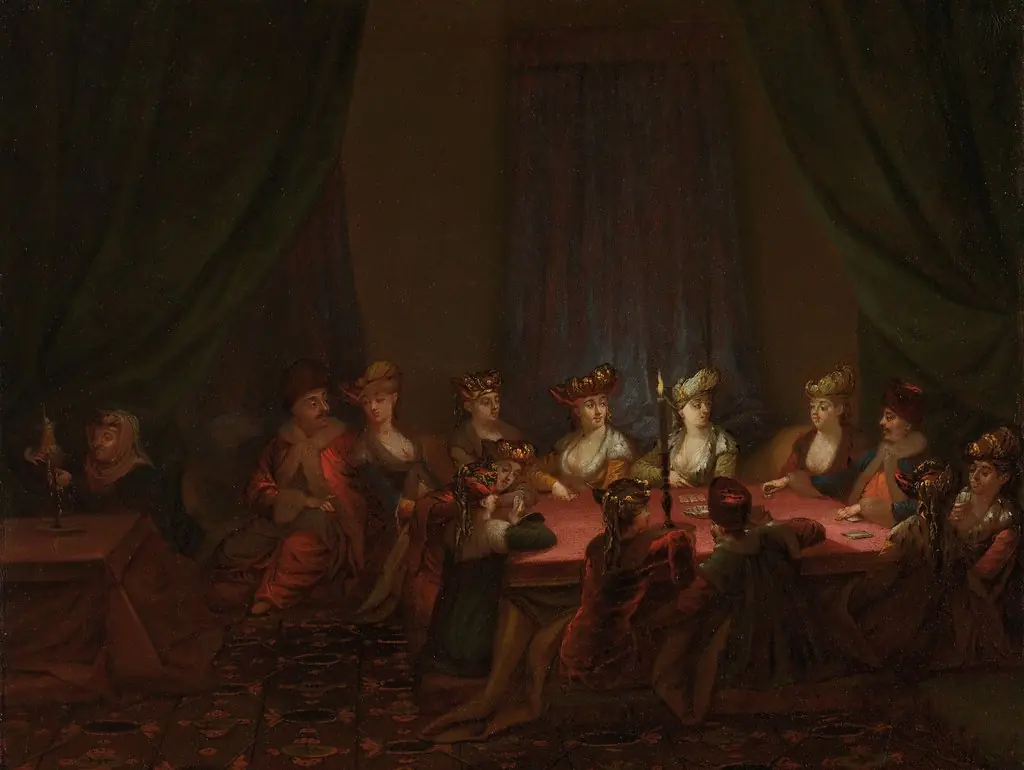
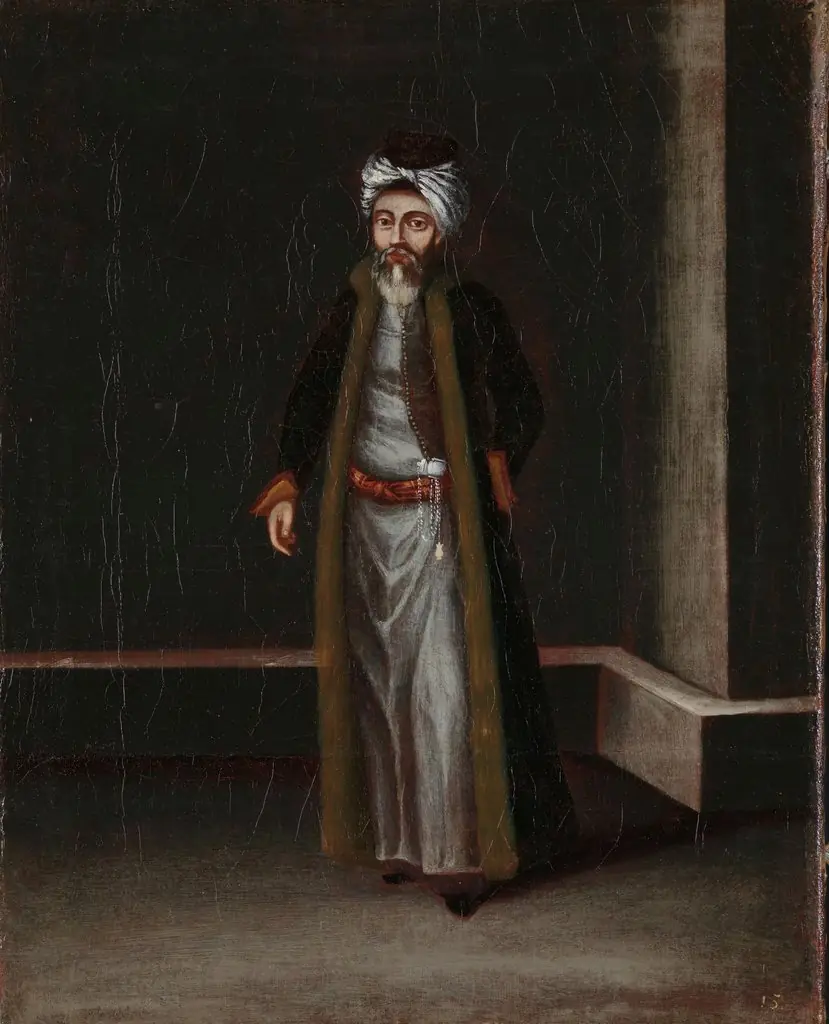
Vanmour spent many years in Istanbul, producing a series of portraits that recorded the attire and roles of Ottoman officials. This painting fits within that broader visual record, illustrating the exchange of artistic conventions between Western Europe and the Ottoman world during the early 1700s.
Own this work as a print
Artist & collection
Artist
Jean Baptiste Vanmour or Van Mour (9 January 1671 – 22 January 1737) was a Flemish-French painter, remembered for his detailed portrayal of life in the Ottoman Empire during the Tulip Era and the rule of Sultan Ahmed III.