Artwork
Whirling Dervishes
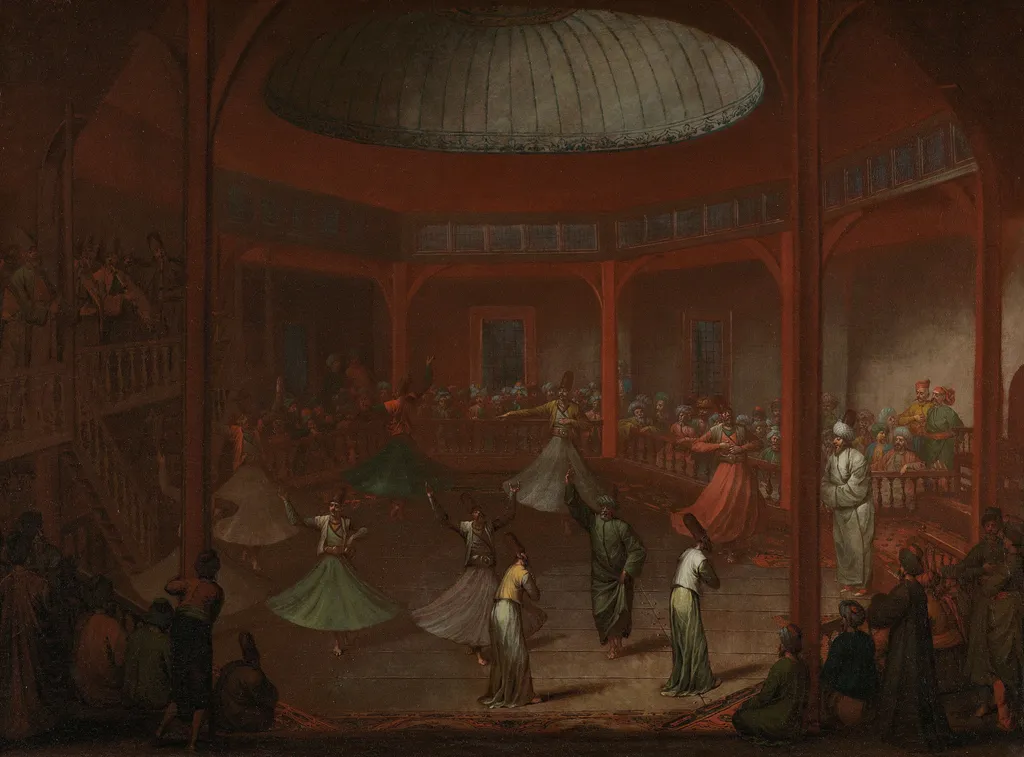
Whirling Dervishes is an oil painting by the Rococo painting artist Jean Baptiste Vanmour. It dates from 1728 and is held in the collection of the Rijksmuseum.
About this work
Overview
Whirling Dervishes, painted in 1728 by Jean Baptiste Vanmour, is an oil painting depicting a scene of Sufi dervishes in motion, set within an Ottoman interior. The work exemplifies the artist's fascination with Ottoman culture during the Tulip Era.
Subject & Meaning
The painting captures a moment of spiritual ritual, with three dervishes at its center, engulfed in whirling prayer. Surrounding spectators, fully engaged, underscore the communal aspect of the ceremony, reflecting Vanmour's interest in documenting Ottoman societal practices.
Technique & Style
Vanmour employed chiaroscuro to dramatic effect, leveraging contrasts of light and shadow to emphasize the swirling motion of the dervishes' robes and the intensity of their faces. The style aligns with the Rococo movement, characterized by vivid depictions of everyday and exotic life.
History & Provenance
Created during Vanmour's period of focus on Ottoman life under Sultan Ahmed III, Whirling Dervishes is now part of the Rijksmuseum's collection, testifying to the artist's role in bridging European and Ottoman cultural exchanges of the early 18th century.
Context
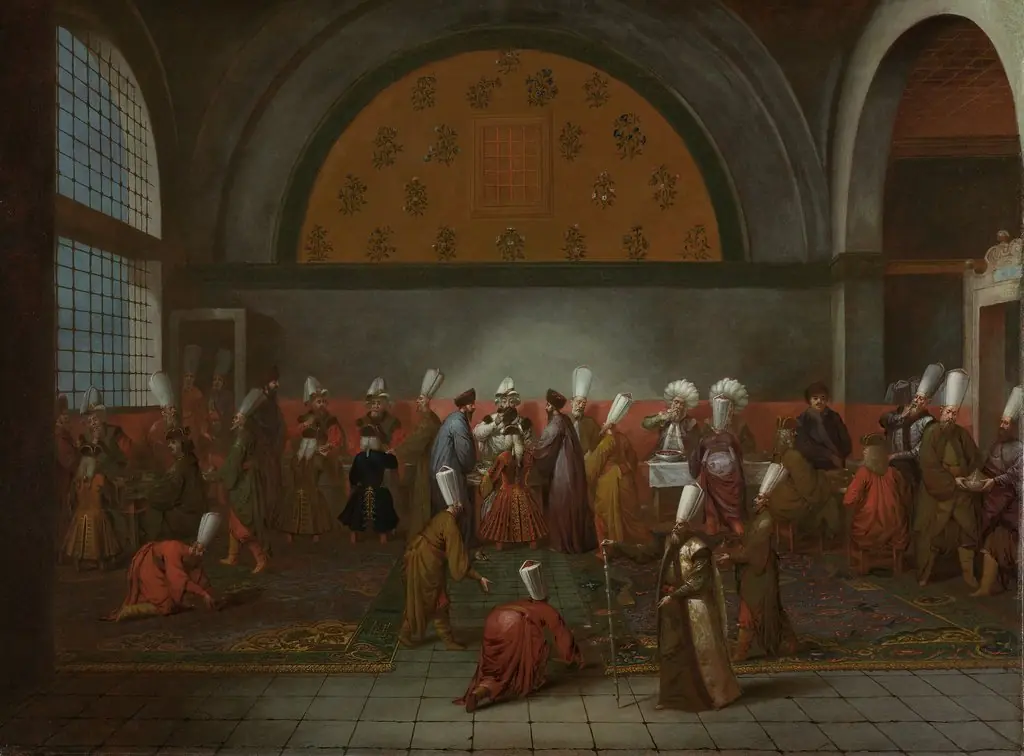
The painting's setting, with its curved ceiling, arched doorways, and dimly lit interior, provides a vivid backdrop to the dervishes' ritual. The contrast between the static, observant crowd and the dynamic, swirling dancers highlights the artist's ability to convey movement and contemplation within a single scene.
Legacy
As a detailed record of a specific Ottoman ritual, Whirling Dervishes contributes to the historical visualization of Sufi practices in the 18th century, while its artistic technique places it firmly within the broader European Rococo tradition.
Artist & collection
Artist
Jean Baptiste Vanmour or Van Mour (9 January 1671 – 22 January 1737) was a Flemish-French painter, remembered for his detailed portrayal of life in the Ottoman Empire during the Tulip Era and the rule of Sultan Ahmed III.