Artwork
Kelp Gatherers
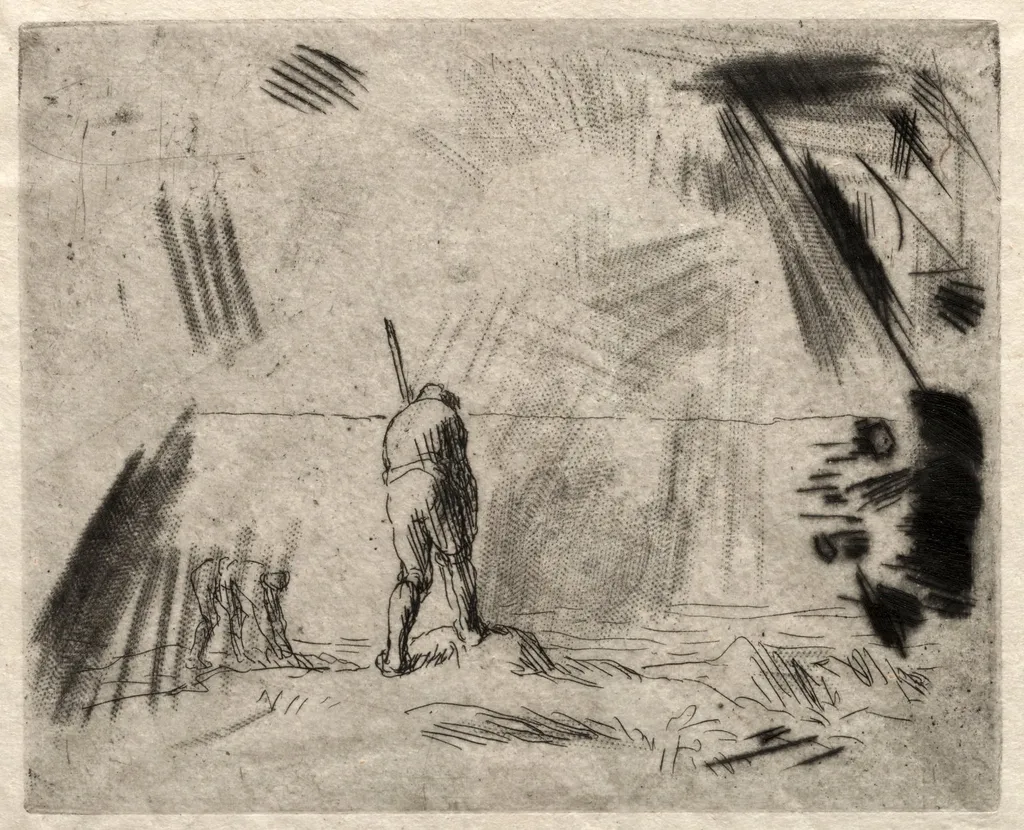
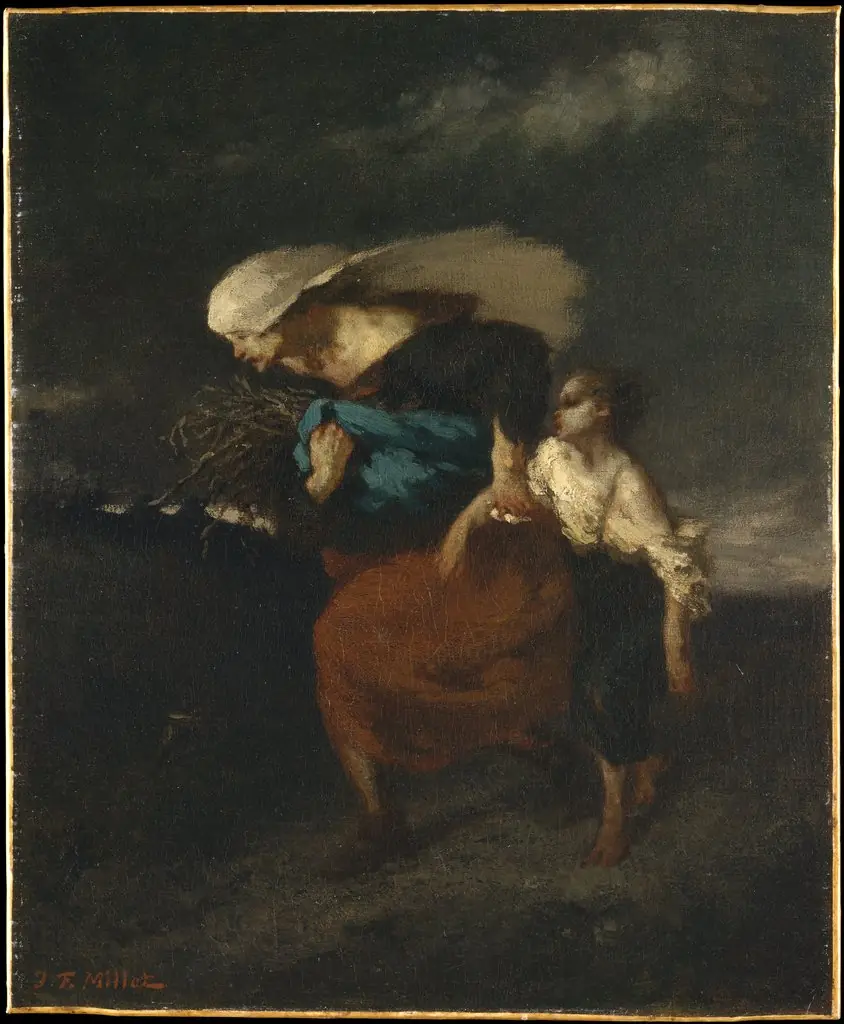
Kelp Gatherers is a print by the Romanticist artist Jean François Millet. It dates from 1847 and is held in the collection of the Cleveland Museum of Art.
About this work
Overview
Created around 1847, *Kelp Gatherers* is an oil painting by Jean-François Millet that captures a group of laborers collecting seaweed along a coastal shore.
Created around 1847, *Kelp Gatherers* is an oil painting by Jean-François Millet that captures a group of laborers collecting seaweed along a coastal shore. Though often associated with the Barbizon school, Millet’s focus here is on the physicality of rural work rather than landscape idealization. The scene unfolds under a wide sky, emphasizing the isolation and endurance of those who toil along the margins of land and sea.
Subject & Meaning
The figures are engaged in the arduous, repetitive task of gathering kelp, likely for use as fertilizer or fuel. Their postures suggest exhaustion and quiet resilience, avoiding romanticization. Millet presents labor not as picturesque but as an essential, unglamorous part of coastal existence. The absence of narrative detail directs attention to the dignity of routine work and the harshness of the environment that sustains it.
Technique & Style
Millet employs broad, textured brushwork to convey the weight of fabric, the grit of sand, and the movement of waves. Chiaroscuro defines the forms of the figures against the sky, enhancing their solidity and the atmospheric depth of the scene. The palette—cool blues and grays for the sea, warm ochres for the shore—grounds the composition in tactile reality, reinforcing the physicality of the labor depicted.
History & Provenance
Painted during Millet’s early years in Barbizon, this work reflects his transition from historical subjects to direct observation of peasant life. It was likely produced before his more widely known pieces like *The Gleaners*, serving as an early exploration of social realism. The painting remained in private hands until entering a public collection in the late 19th century, where it contributed to broader recognition of rural themes in French art.
Context
In mid-19th century France, industrialization and urban migration reshaped perceptions of rural labor. Millet’s focus on kelp gatherers aligned with a growing interest in the lives of the rural poor, though his approach avoided sentimentality. Unlike academic painters who idealized the countryside, Millet presented labor as unvarnished and integral to the rhythms of nature and survival.
Legacy
*Kelp Gatherers* helped establish Millet’s reputation as a chronicler of agrarian toil, influencing later realist and socially conscious artists. Its emphasis on physical labor and environmental immersion prefigured themes in 20th-century regionalist and documentary art. Though less celebrated than his later works, it remains a quiet testament to the visibility of marginal labor in the visual culture of its time.
Own this work as a print
Artist & collection
Artist
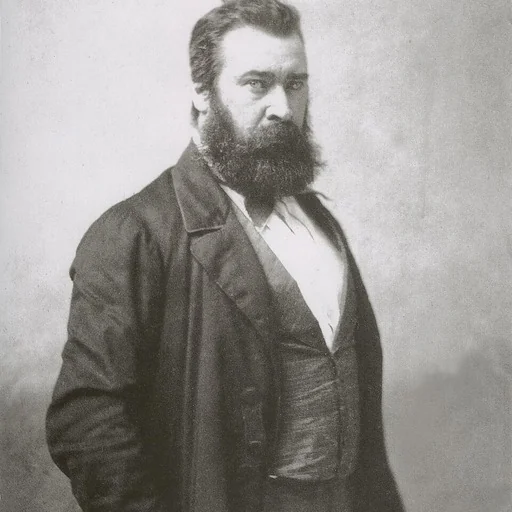
Jean-François Millet (French pronunciation: ; 4 October 1814 – 20 January 1875) was a French painter and one of the founders of the Barbizon school in rural France.


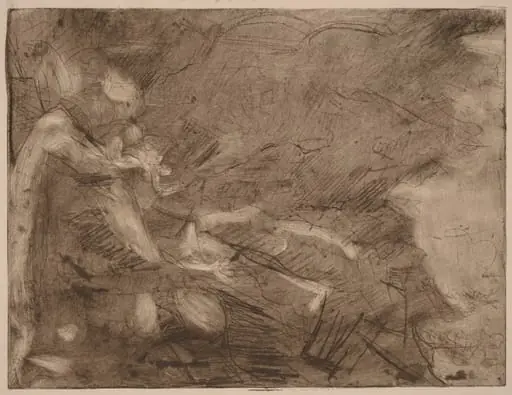 Mountain Stream with Bathers
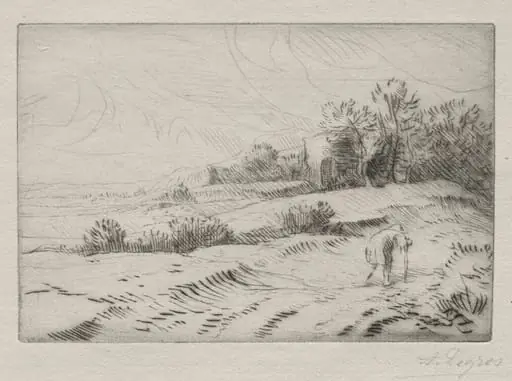 The Tower
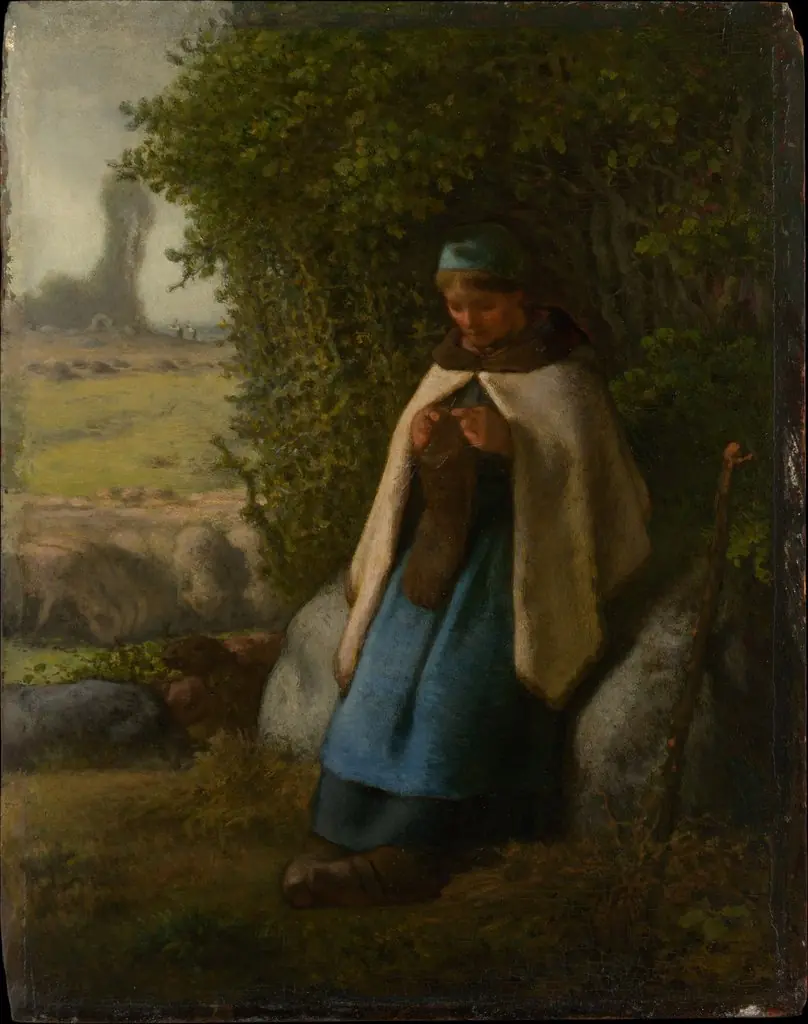
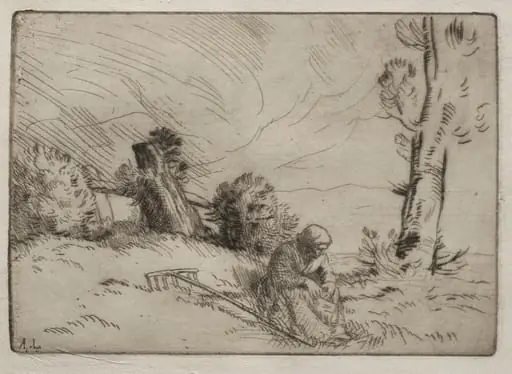 Peasant Woman Seated near a Hedge
![Landscape [Paesaggio], by Carlo Paolo Agazzi](https://artifactworldgallery.com/img/carlo-paolo-agazzi--landscape-paesaggio--e606f4ada87d2052-w320.webp) Landscape [Paesaggio]
Landscape [Paesaggio]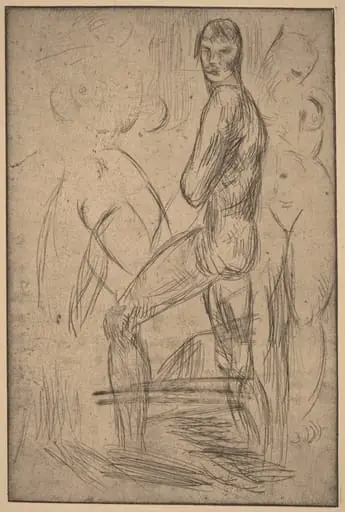 Standing Male Nude and Two Female Nudes
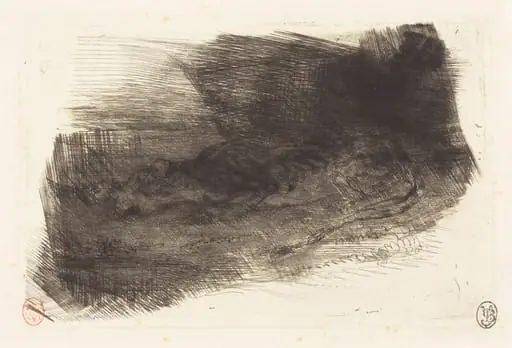 Tiger Sleeping at the Entrance to its Lair (Tigre couché à l'entrée de son antre)
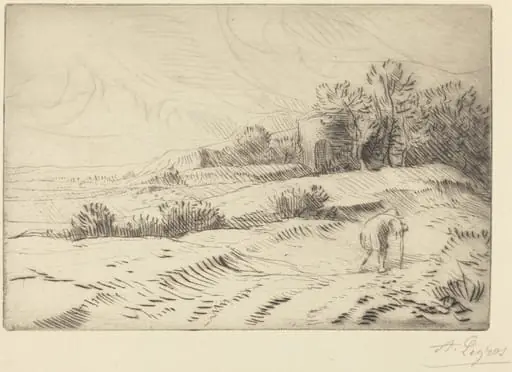 Tower (La tour)
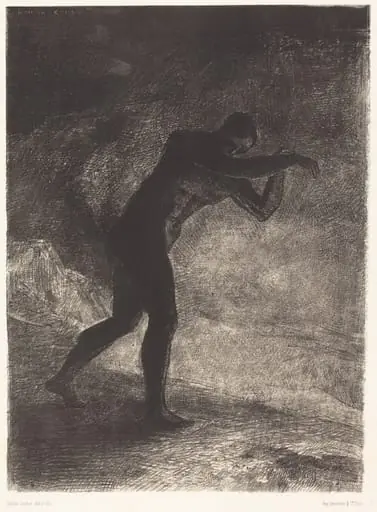 Et l'homme parut, interrogeant le sol d'ou il sort et qui l'attire, il se fraya la voie vers (And Man appeared; questioning theearth from which he emerged and which attracts hi m, he made his way toward somber brightness)
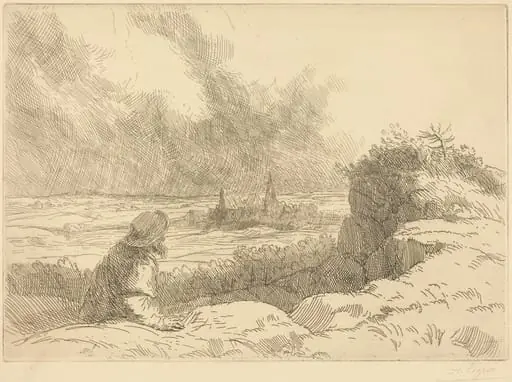 Landscape (Paysage)
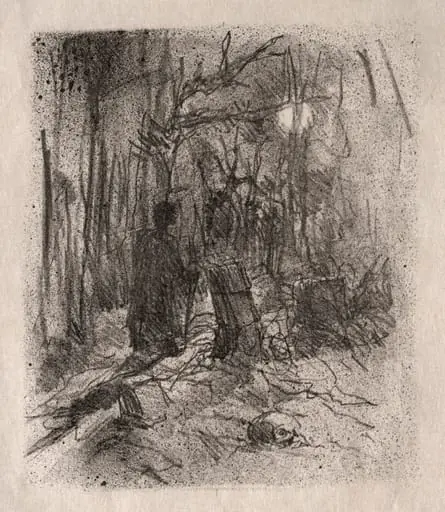 La Cimetière de Busk
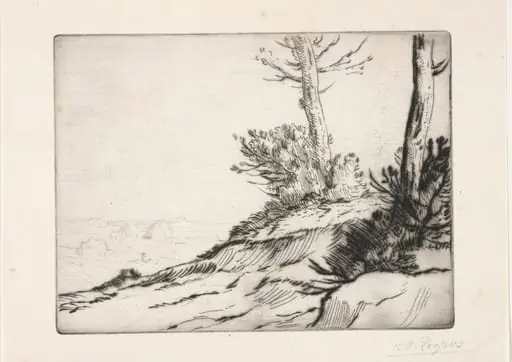 La butte aux broussailles
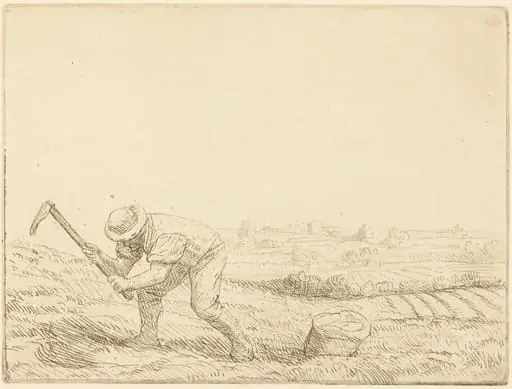 Digger (Le piocheur)