Artwork
Et l'homme parut, interrogeant le sol d'ou il sort et qui l'attire, il se fraya la voie vers (And Man appeared; questioning theearth from which he emerged and which attracts hi m, he made his way toward somber brightness)
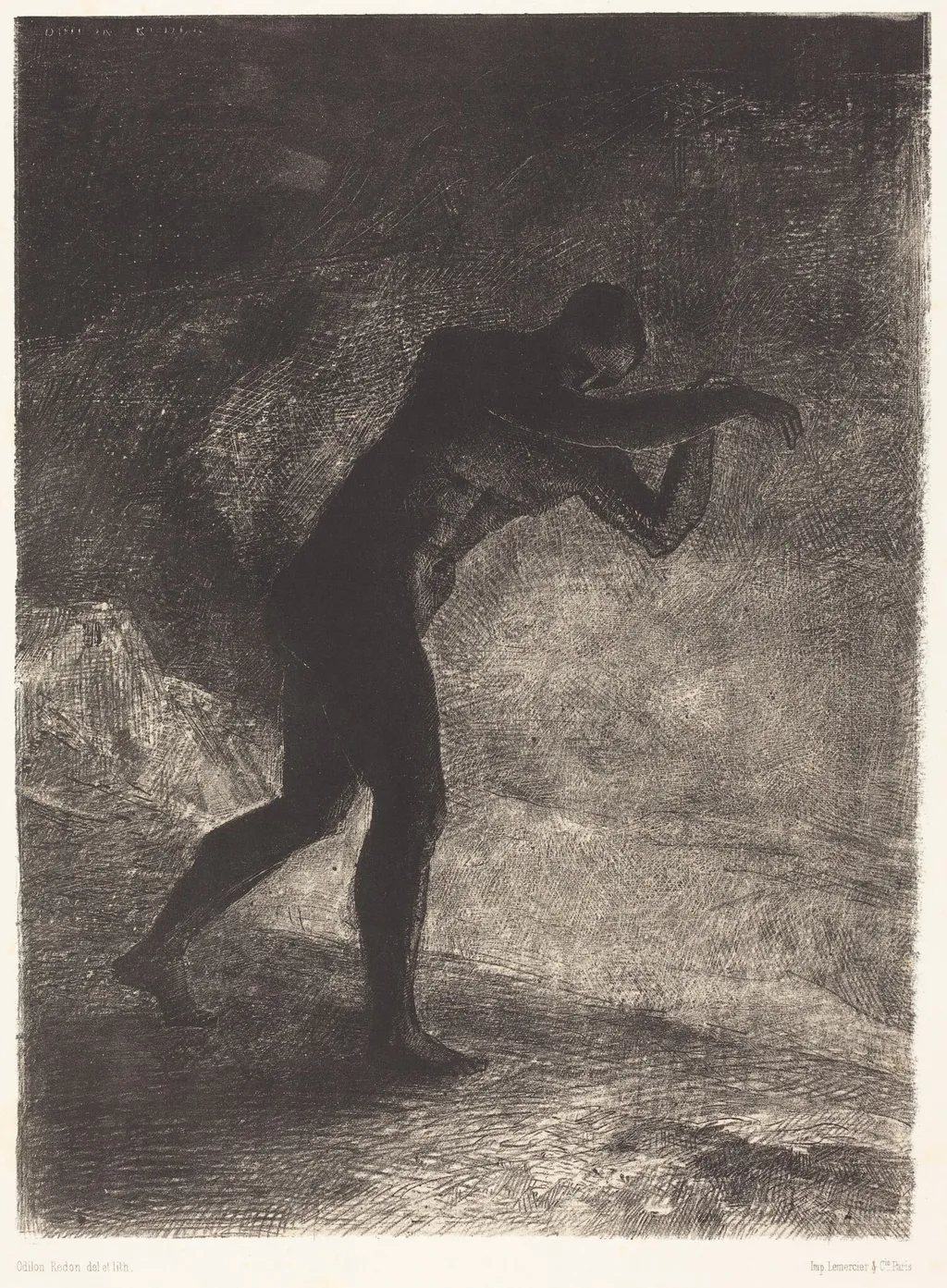
Et l'homme parut, interrogeant le sol d'ou il sort et qui l'attire, il se fraya la voie vers (And Man appeared; questioning theearth from which he emerged and which attracts hi m, he made his way toward somber brightness) is an ink print by the Impressionist artist Odilon Redon. It dates from 1883 and is held in the collection of the National Gallery of Art.
About this work
Overview
The work belongs to a series of prints from the artist’s early career, where he explored psychological and symbolic themes through monochromatic imagery.
Created in 1883, this lithograph by Odilon Redon depicts a solitary, ambiguous figure emerging from darkness. The work belongs to a series of prints from the artist’s early career, where he explored psychological and symbolic themes through monochromatic imagery. The medium—lithography—allowed for subtle tonal variations and a tactile, grainy surface that enhances the sense of ambiguity and introspection.
Subject & Meaning
The figure, hunched and motionless, appears to be in a state of contemplation or exhaustion, as if emerging from the earth itself. Its posture suggests both vulnerability and determination, evoking a primal moment of self-awareness. The title implies a philosophical inquiry into origin and destiny, framing the figure as an entity questioning its place within a force that both draws and obscures it.
Technique & Style
Redon employed lithography, using a greasy medium on a limestone surface to create the image, then transferred it to paper. The rough, uneven lines and uneven ink distribution produce a textured, almost atmospheric effect. Shadows dominate the composition, while a faint, diffuse glow on the left introduces a subtle contrast—neither fully illuminating nor resolving the scene’s mystery.
History & Provenance
This print was made during Redon’s formative years as a printmaker, before he gained wider recognition for his color works. It was likely produced in small editions and circulated among avant-garde circles in Paris. Its early date places it within a period when Redon was developing his distinctive visual language, influenced by Symbolist literature and the darker currents of Romanticism.
Context
In the 1880s, French artists increasingly turned away from realism toward inner experience and mythic imagery. Redon’s lithographs responded to this shift, aligning with Symbolist ideals that prioritized mood and suggestion over narrative clarity. The work reflects contemporary interests in existential questioning, the subconscious, and the liminal space between the material and the metaphysical.
Legacy
This print contributed to Redon’s reputation as a pioneer of symbolic printmaking. Its emphasis on psychological depth and atmospheric ambiguity influenced later Surrealist artists, who admired his ability to evoke the unseen. Though less known than his color works, this lithograph remains a key example of how printmaking could convey complex inner states with minimal means.
Own this work as a print
Artist & collection
Artist
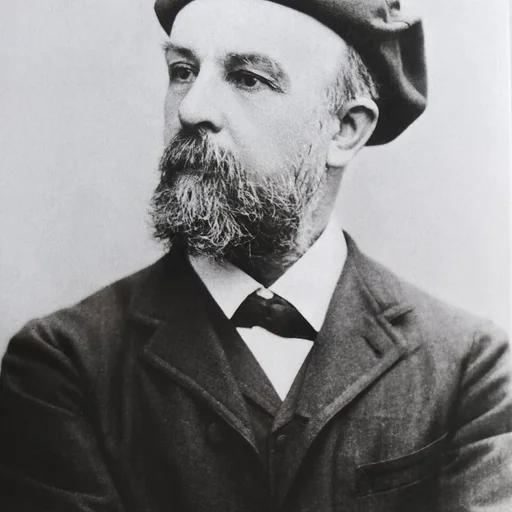
Born Bertrand-Jean Redon on 20 April 1840 in Bordeaux, the artist adopted the name Odilon from his mother, Marie-Odile.

 Untitled
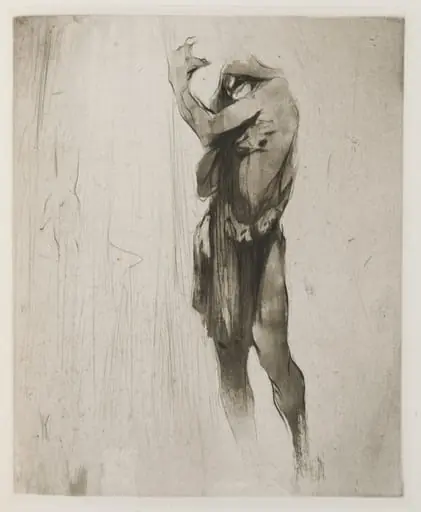 Herodias: Page 27, The voice rose: Woe to thee, Pharisees and Sadducees, race of vipers, bursting with pride!
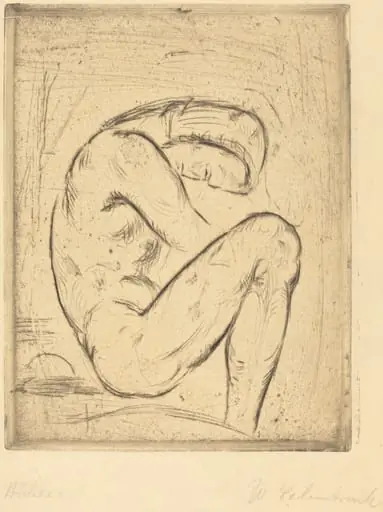 Büsser
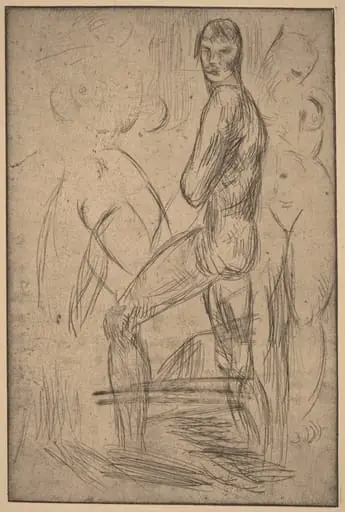 Standing Male Nude and Two Female Nudes
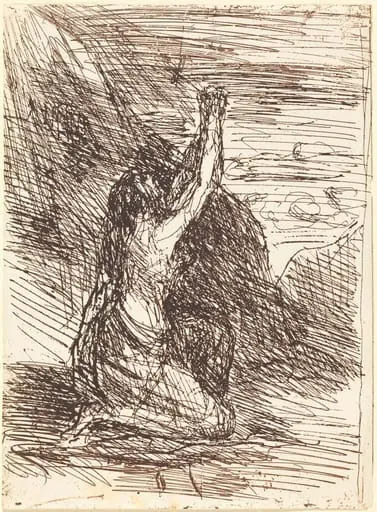 Mary Magdalene Kneeling (Madeleine a genoux)
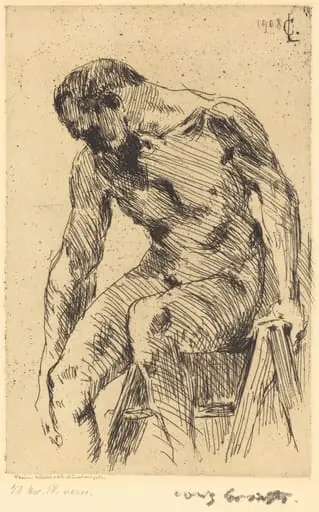 Sitzender Männlicher Akt (Seated Male Nude)
 Cain and Abel
 Standing Man in Pensive Pose
 Pélerin du monde sublunaire (Pilgrim of the sublunary world)
 Le Chaos (Chaos)
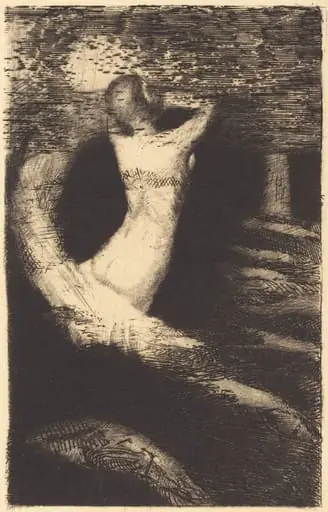 Passage d'une Ame (Passage of a Spirit)
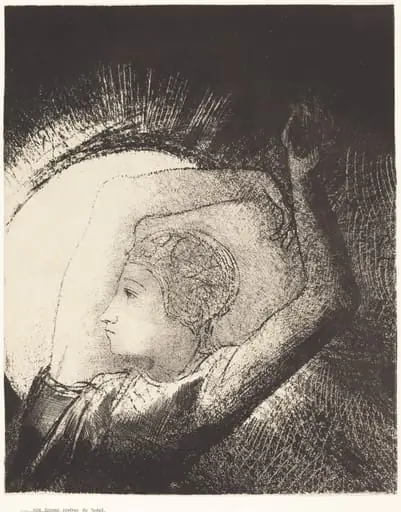 Une femme revêtue du Soleil (A woman clothed with the sun)