Artwork
The Diggers
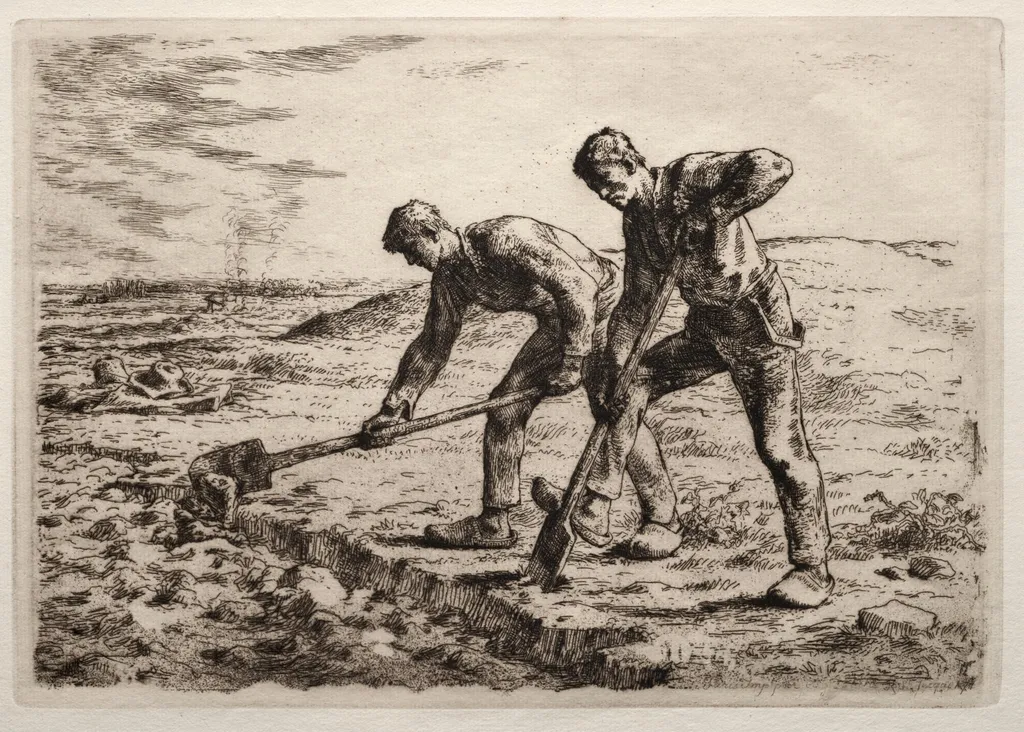
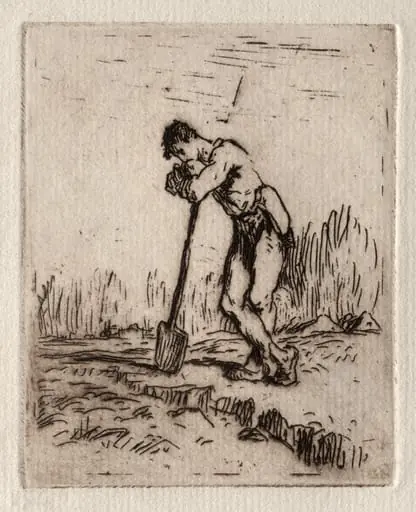
The Diggers is a print by the Impressionist artist Jean François Millet. It dates from 1856 and is held in the collection of the Cleveland Museum of Art.
About this work
Overview
Unlike grand historical or mythological subjects favored by academic art, Millet turned his attention to the quiet, unglamorous labor of rural workers.
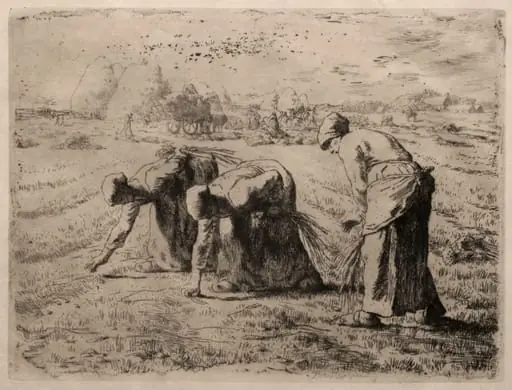
Created in 1856, *The Diggers* is an etching by Jean-François Millet, a key figure in the Barbizon school and a leading voice of 19th-century Realism. Unlike grand historical or mythological subjects favored by academic art, Millet turned his attention to the quiet, unglamorous labor of rural workers. This print captures two peasants engaged in agricultural work, emphasizing physical exertion over narrative drama.
Subject & Meaning
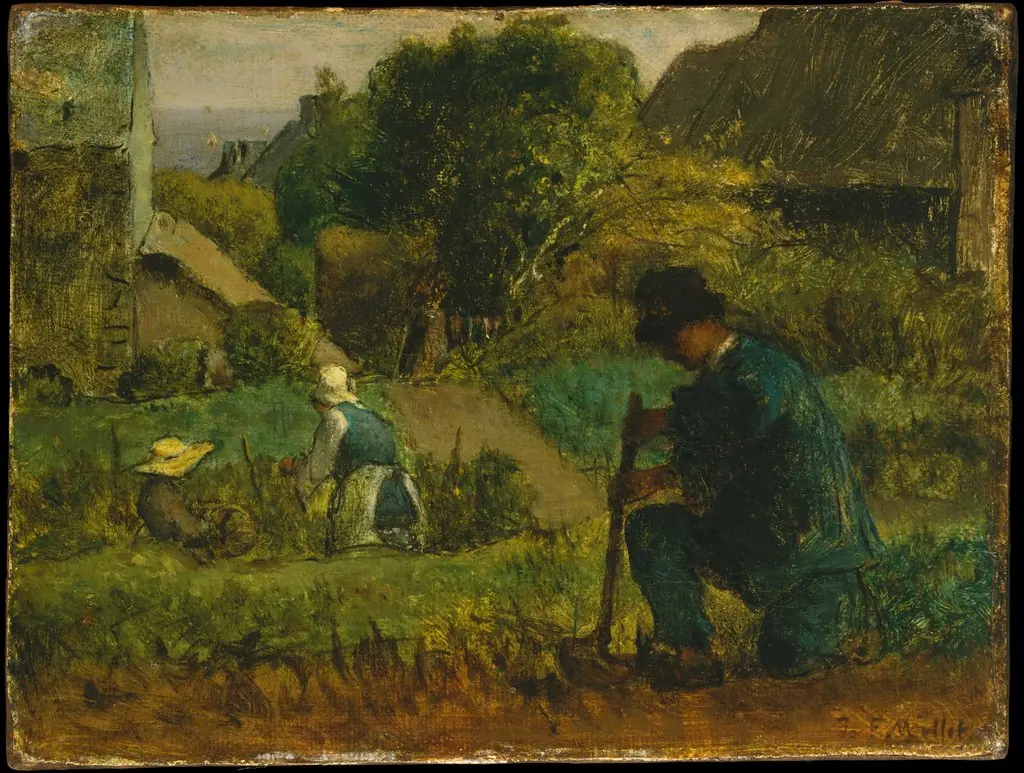
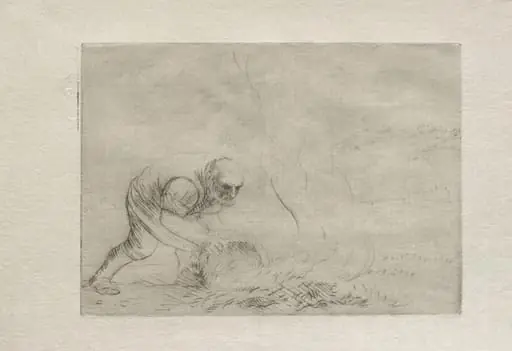
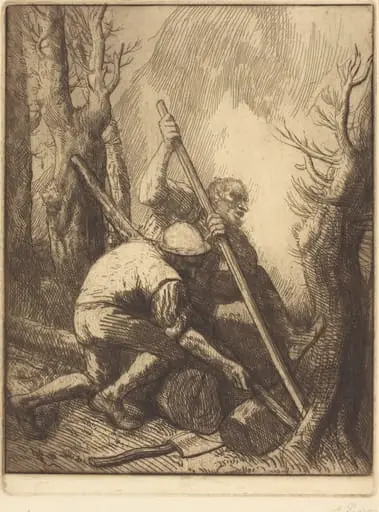
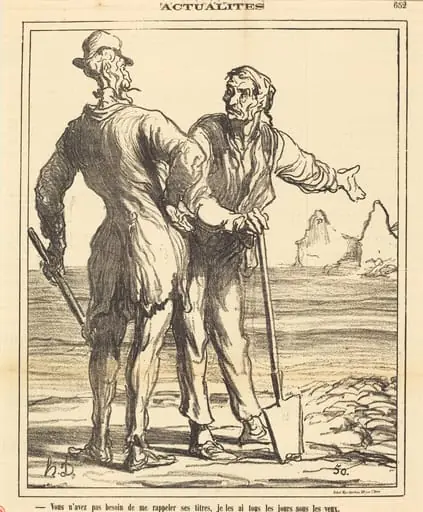
The scene depicts two farm laborers in a field: one actively pulling a long wooden tool, the other resting with a shovel, his posture suggesting exhaustion or vigilance. Their anonymity and simple attire underscore Millet’s focus on the collective experience of peasant life. The absence of idealization or sentimentality frames their labor as a natural, unvarnished condition of existence, not a spectacle.
Technique & Style
Millet employed rough, irregular etching lines to mimic the texture of plowed earth and the weight of manual work. The sky is reduced to a faint, indistinct horizon, directing focus to the figures and their labor. The unevenness of the lines echoes the unevenness of the land, reinforcing the physicality of the scene. The medium’s limitations are embraced, not concealed, enhancing the work’s raw authenticity.
History & Provenance
Produced during Millet’s most productive period in Barbizon, *The Diggers* emerged from his sustained study of rural life in the French countryside. It was likely made for a small circulation among collectors and artists interested in Realist themes. Though less known than his paintings, the print reflects his commitment to documenting agricultural labor through accessible, reproducible formats.
Context
In mid-19th-century France, industrialization and urbanization reshaped society, yet rural labor remained the backbone of the economy. Millet’s work stood in contrast to the romanticized or ignored depictions of peasants in mainstream art. By portraying their toil with dignity and precision, he contributed to a broader cultural reevaluation of the rural poor and their role in national identity.
Legacy
Millet’s prints, including *The Diggers*, influenced later generations of artists who sought to represent working-class life with honesty. His emphasis on labor as a subject worthy of artistic attention helped shift the boundaries of acceptable themes in visual art. Though not widely exhibited in his time, these works gained recognition for their quiet power and enduring social resonance.
Own this work as a print
Artist & collection
Artist
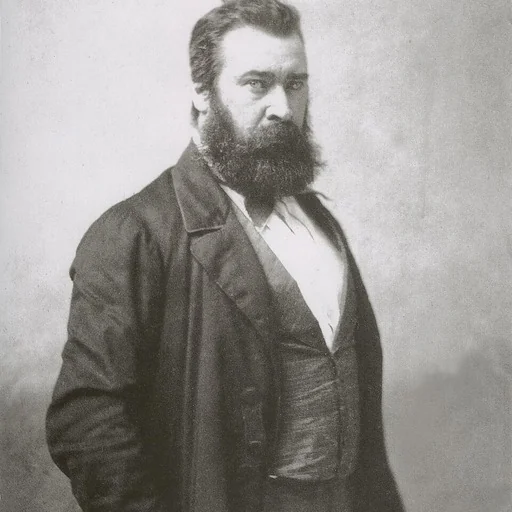
Jean-François Millet (French pronunciation: ; 4 October 1814 – 20 January 1875) was a French painter and one of the founders of the Barbizon school in rural France.