Artwork
The Gleaners
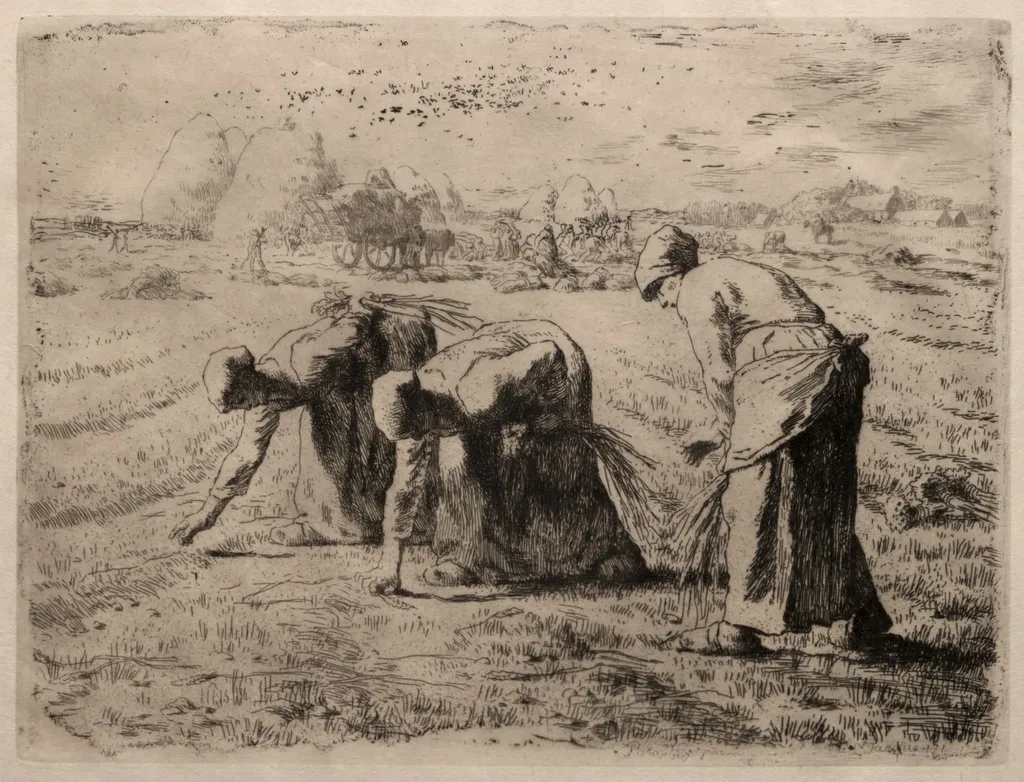
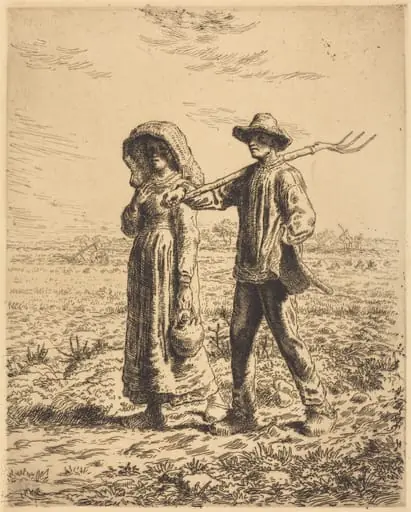
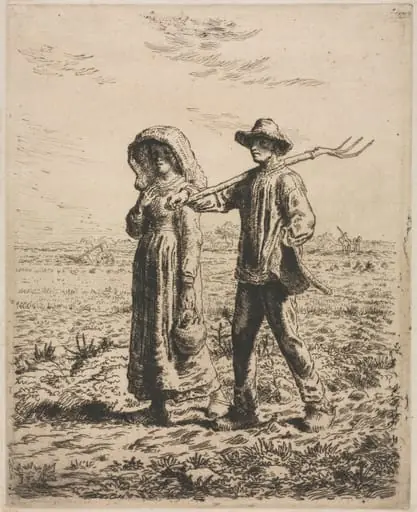
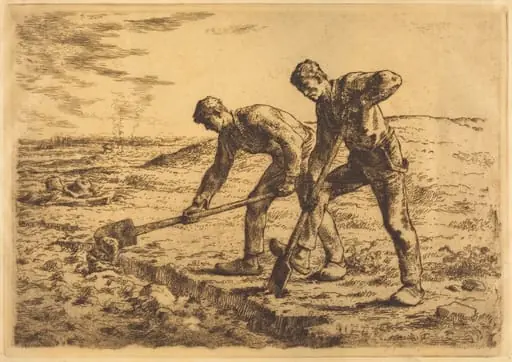
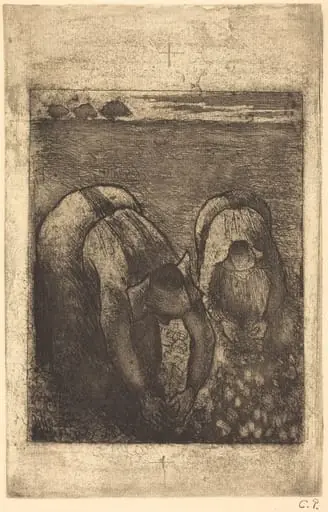
The Gleaners is a print by the Impressionist artist Jean François Millet. It dates from 1856 and is held in the collection of the Cleveland Museum of Art. Jean-François Millet produced this drawing around 1856 as part of his sustained study of rural labor.
About this work
Overview
Jean-François Millet produced this drawing around 1856 as part of his sustained study of rural labor. Though better known for his oil paintings, he frequently used charcoal and pastel to explore form and movement in the fields near Barbizon. This sketch captures the quiet endurance of peasant women, reflecting his commitment to documenting everyday agricultural life with dignity and precision.
Subject & Meaning
The three women are shown bent low, gathering stray grains after the harvest—a practice known as gleaning, legally reserved for the poor.
The three women are shown bent low, gathering stray grains after the harvest—a practice known as gleaning, legally reserved for the poor. Their postures convey physical strain and quiet persistence. The scene holds no drama or sentimentality; instead, it presents labor as an unvarnished, recurring necessity. The anonymity of the figures underscores the systemic nature of their toil rather than individual circumstance.
Technique & Style
Millet rendered the figures with loose, rhythmic strokes that mimic the texture of the field and the weight of movement. Dark, smudged contours define their forms against the pale earth, while the background is suggested rather than detailed. The scratchy, uneven lines echo the uneven ground, reinforcing the physicality of the work. His use of medium prioritizes immediacy over finish, aligning with Realist principles.
History & Provenance
This drawing predates Millet’s more famous 1857 oil painting of the same subject. It likely served as a preparatory study, part of a series of sketches he made while living in the village of Barbizon. The work remained in his personal collection until his death, later entering institutional holdings through family bequests and acquisitions by French public collections.
Context
In mid-19th century France, gleaning was a legally protected right for the rural poor, though increasingly contested as land ownership consolidated. Millet’s focus on this practice coincided with broader social debates about poverty and labor rights. His choice to elevate such scenes challenged academic art’s preference for mythological or aristocratic subjects, aligning him with emerging Realist circles.
Legacy
Though initially met with discomfort by urban audiences, Millet’s studies of peasant life influenced later generations of artists committed to social observation. His drawings, including this one, helped shift artistic attention toward the dignity of manual labor. They remain important for their unembellished documentation of rural existence in a time of rapid industrial change.
Own this work as a print
Artist & collection
Artist
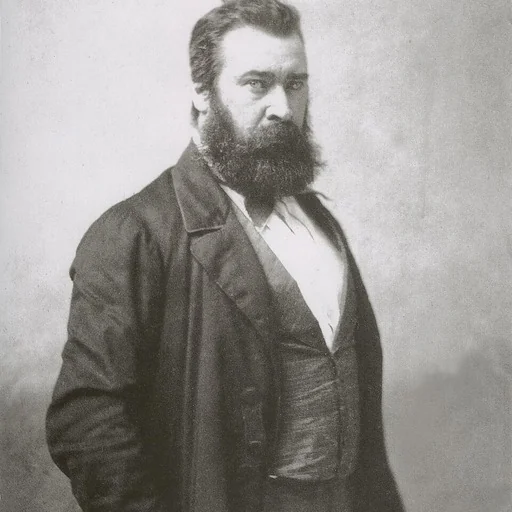
Jean-François Millet (French pronunciation: ; 4 October 1814 – 20 January 1875) was a French painter and one of the founders of the Barbizon school in rural France.