Artwork
Bacchanales: The Satyr's Family
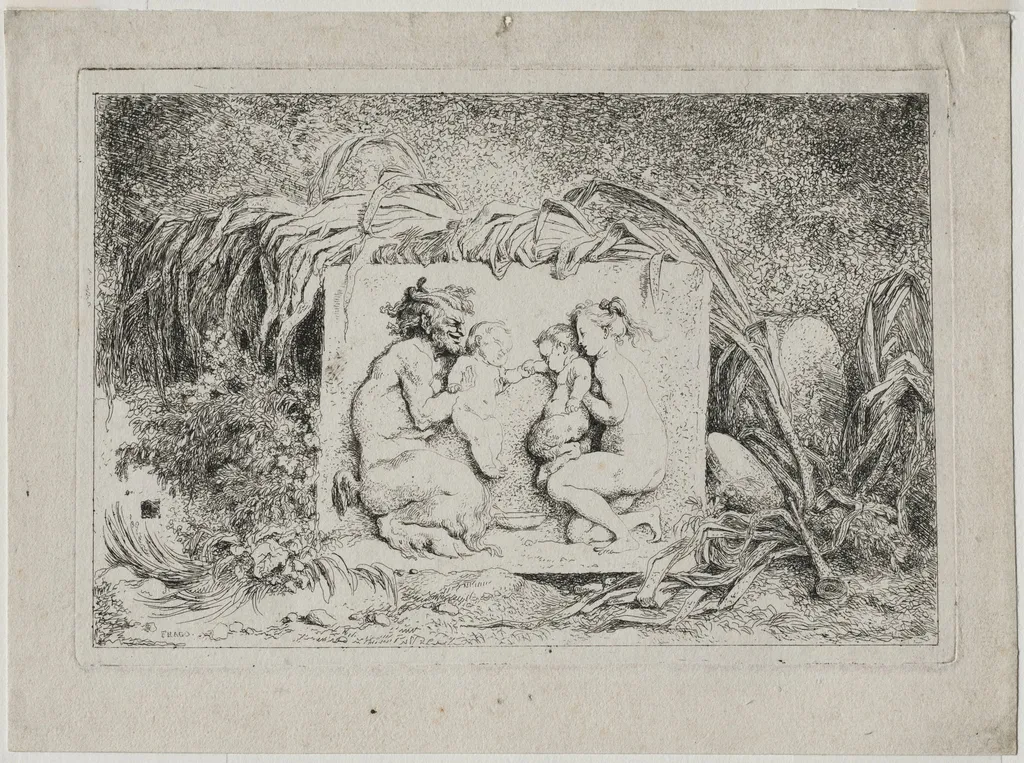
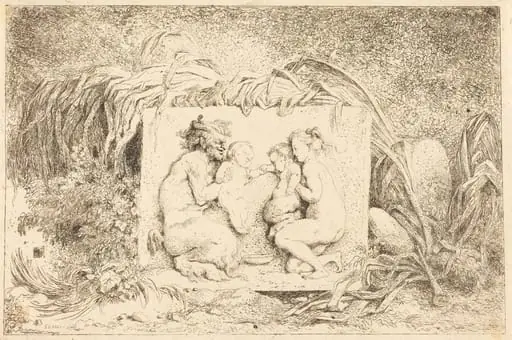
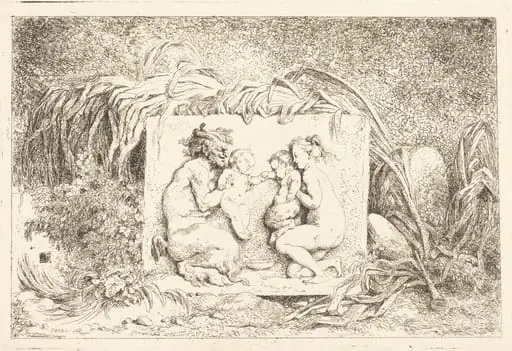
Bacchanales: The Satyr's Family is a print by the Romanticist artist Jean Honoré Fragonard. It dates from 1763 and is held in the collection of the Cleveland Museum of Art.
About this work
He skipped the usual wild parties and focused on quiet family moments instead.
This painting shows playful nymphs and satyrs tangled in vines and laughter. A mother satyr nurses her baby while others chase goats or nap in the shade. No god appears—just their daily, silly lives.
Fragonard made these four prints after studying old statues in Italy. He skipped the usual wild parties and focused on quiet family moments instead.
See how the light plays on their skin? It feels warm and alive. Next, check out Jean-Honoré Fragonard (French, 1732–1806).
Overview
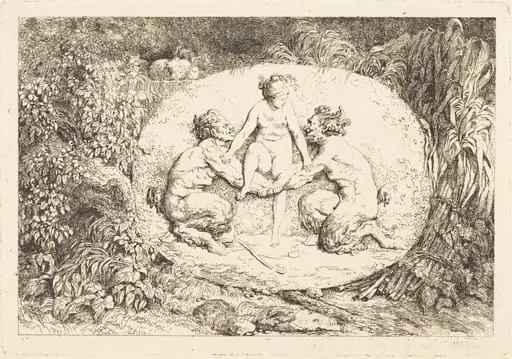
Jean-Honoré Fragonard produced a series of four etchings titled *Bacchanales: The Satyr’s Family* shortly after his return to Paris from a study trip in Italy. The images depict a group of Bacchic followers—nymphs, satyrs and other rustic figures—engaged in everyday, often humorous activities, set against a backdrop of dense foliage and stone fragments that suggest low‑relief sculpture.
Subject & Meaning
Rather than portraying the god Bacchus himself, Fragonard concentrates on the intimate moments of his devotees: a mother satyr nursing her infant, companions chasing goats, and figures lounging in shade. The scenes emphasize playful eroticism and domesticity, offering a light‑hearted view of mythological revelry that underscores the human side of these legendary beings.
Technique & Style
The prints were executed in etching, a medium that allowed Fragonard to render fine lines and subtle tonal variations. He arranged the figures as if they were carved in shallow relief on stone slabs, integrating them with abundant greenery. This compositional approach reflects his recent exposure to classical sculpture and the decorative motifs of contemporary vase designs.
History & Provenance
Created in the early 1760s, the series emerged after Fragonard’s Italian sojourn, during which he studied antique statuary and decorative arts. The works contributed to a broader French fascination with pastoral festivity in the latter eighteenth century, influencing garden ornamentation, architectural decoration, and the visual language of nature‑based revelry.
Artist & collection

Artist
Jean-Honoré Fragonard was born on 5 April 1732 in Grasse, the son of a glover, and moved with his family to Paris in 1738.