Artwork
Nymph Supported by Two Satyrs (Nymphe s'asseyant sur les mains de deux satyres)
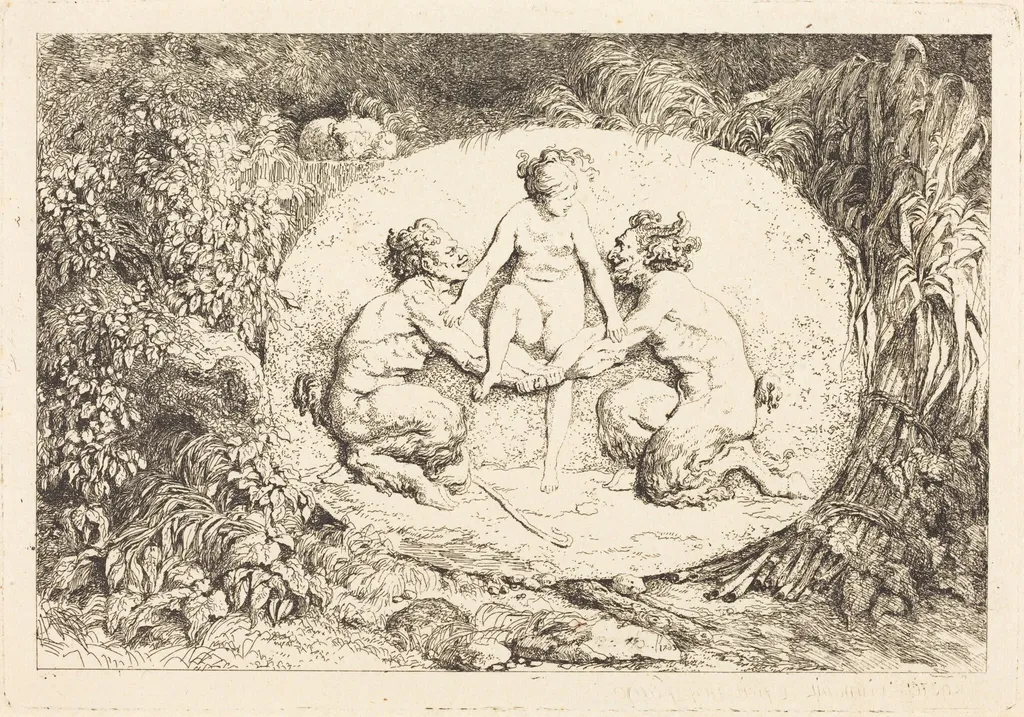
Nymph Supported by Two Satyrs (Nymphe s'asseyant sur les mains de deux satyres) is an ink print by the Romanticist artist Jean Honoré Fragonard. It dates from 1763 and is held in the collection of the National Gallery of Art. Jean‑Honoré Fragonard produced the etching titled Nymph Supported by Two Satyrs in 1763.
About this work
Overview
Jean‑Honoré Fragonard produced the etching titled Nymph Supported by Two Satyrs in 1763. The print presents a central nude female figure perched upon the outstretched hands of two satyrs, set against a leafy, wooded backdrop. The composition balances the playful interaction of the mythological characters with a tranquil natural environment.
Subject & Meaning
The work draws on classical mythology, pairing a nymph—a symbol of nature’s purity—with satyrs, creatures associated with revelry and rustic mischief. Their juxtaposition suggests a moment of flirtatious amusement, highlighting themes of sensuality and the harmonious coexistence of the civilized and the wild within the pastoral realm.
Technique & Style
Executed as an etching, Fragonard employed fine lines to render the delicate contours of the figures and the surrounding foliage. The tonal contrasts created by varying line density give the scene a subtle sense of depth, while the overall composition reflects the Rococo sensibility of lightness, elegance, and ornamental detail.
History & Provenance
Created in the mid‑18th century, the print belongs to Fragonard’s prolific output of mythological subjects during his Parisian period. It has circulated among private collections and museum holdings, illustrating the artist’s skill in translating his painterly approach to the medium of printmaking.
Artist & collection

Artist
Jean-Honoré Fragonard was born on 5 April 1732 in Grasse, the son of a glover, and moved with his family to Paris in 1738.

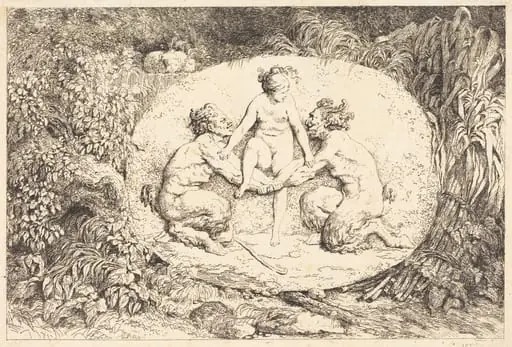 Nymph Supported by Two Satyrs (Nymphe s'asseyant sur les mains de deux satyres)
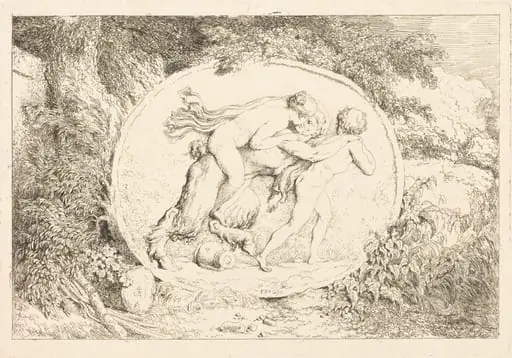 Nymph Astride a Satyr (Jeune fille a califourchon sur un satyre)
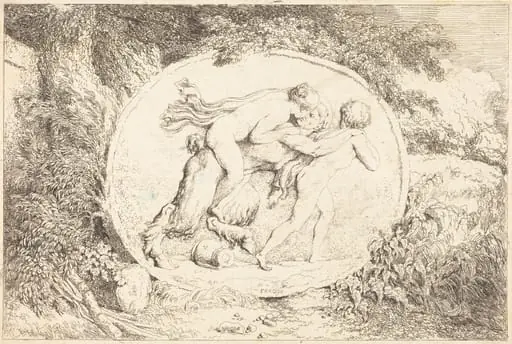 Nymph Astride a Satyr (Jeune fille a califourchon sur un satyre)
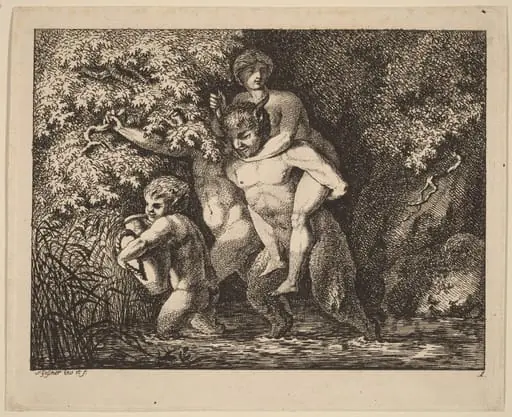 Satyr Carrying a Nymph
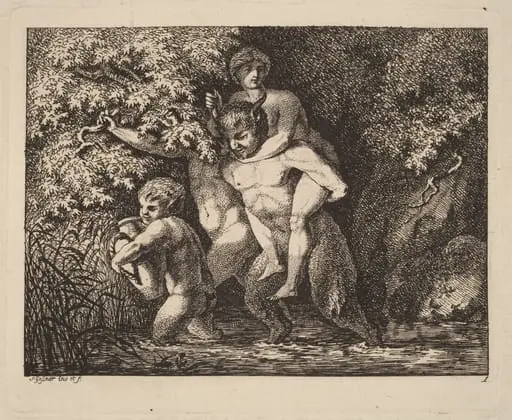 Satyr Carrying a Nymph on His Back
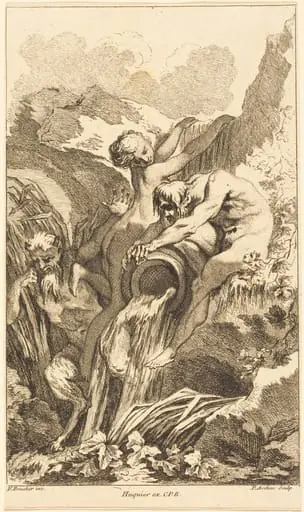 Satyr, Nymph and River God
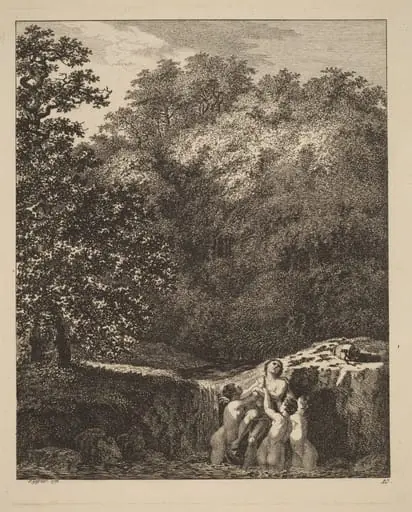 Hylas and the Nymphs