Artwork
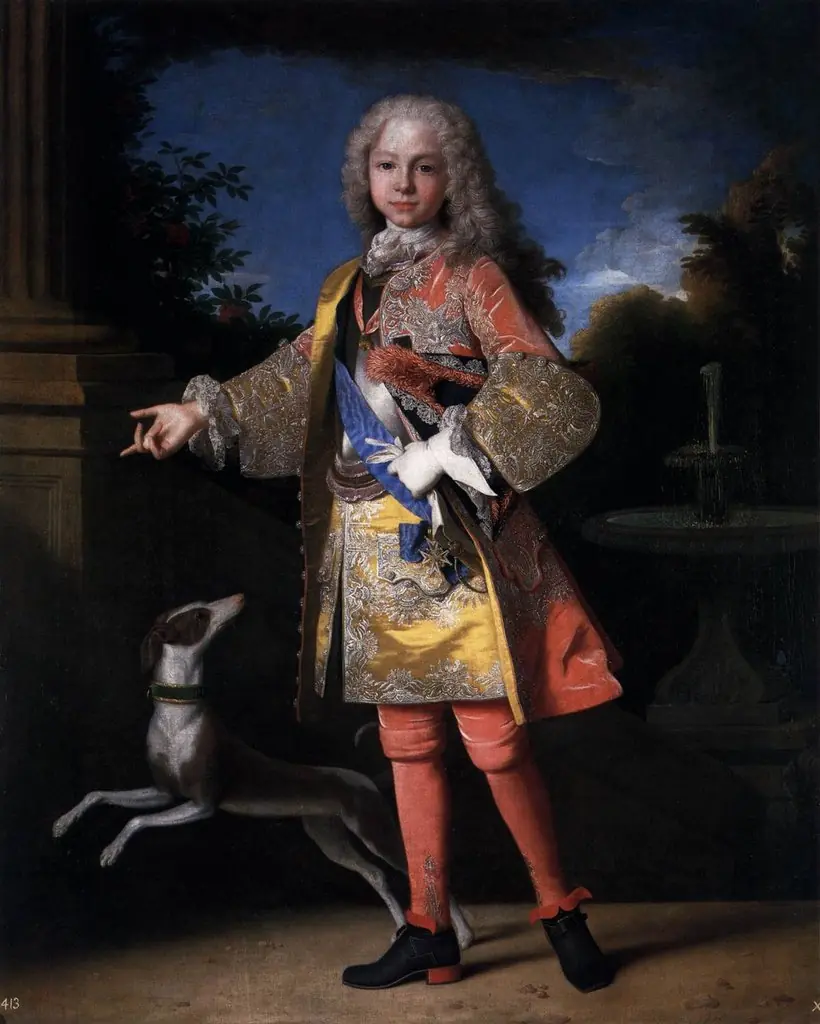
Fernando de Borbón y Saboya príncipe de Asturias (futuro Fernando VI de España)
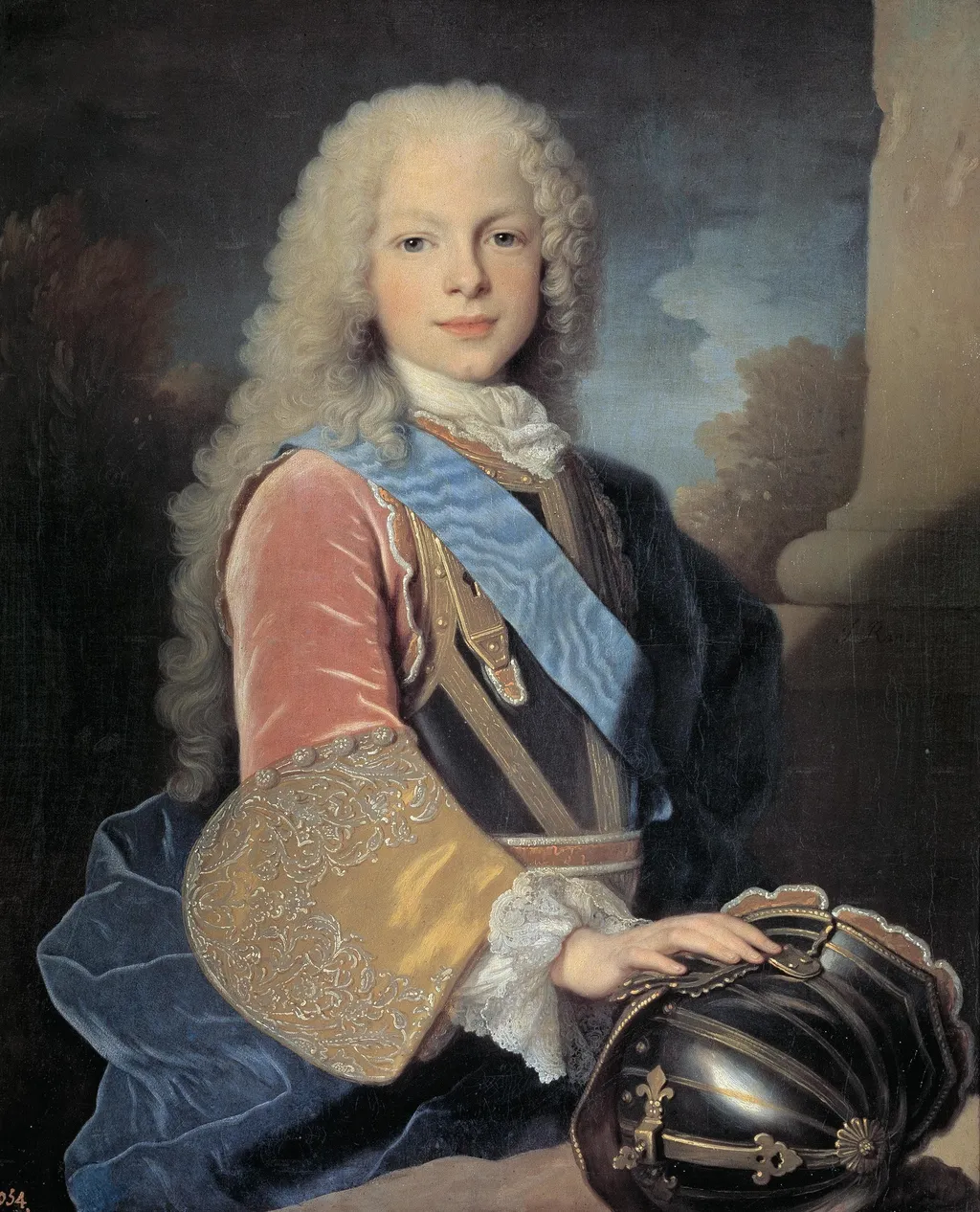
Fernando de Borbón y Saboya príncipe de Asturias (futuro Fernando VI de España) is an oil painting by the Rococo painting artist Jean Ranc. It dates from 1725 and is held in the collection of the Museo del Prado.
About this work
Overview
Jean Ranc’s 1725 oil portrait presents the future Ferdinand VI of Spain as a young prince of the House of Bourbon. Executed on canvas in a Rococo idiom, the work shows the heir in elaborate court dress, his left hand resting on a gleaming metal helmet against a subdued, shadowed backdrop.
Subject & Meaning
The sitter, then Prince of Asturias, is depicted with symbols of martial authority—a polished helmet and a chain—suggesting both his royal lineage and his expected role as a future monarch. The luxurious attire, including a blue coat with gold edging and a pink vest, underscores his aristocratic status.
Technique & Style
Ranc employs a restrained chiaroscuro, allowing the light to model the prince’s face and fabrics while the surrounding darkness heightens the three‑dimensional effect. The brushwork reflects the Rococo taste for elegance and refinement, with smooth rendering of textures such as silk and metal.
History & Provenance
A French portraitist trained by his father Antoine Ranc and the eminent Hyacinthe Rigaud, Jean Ranc served the courts of Louis XV, Philip V of Spain, and John V of Portugal. After remaining in the Spanish royal collection, the painting entered the Museo del Prado, where it is presently displayed.
Context
Created during the early reign of Philip V, the portrait aligns with the Bourbon strategy of reinforcing dynastic ties across Europe. By portraying the heir in a militaristic yet courtly manner, the image communicated continuity of power within the newly established Spanish Bourbon line.
Own this work as a print
Artist & collection
Artist
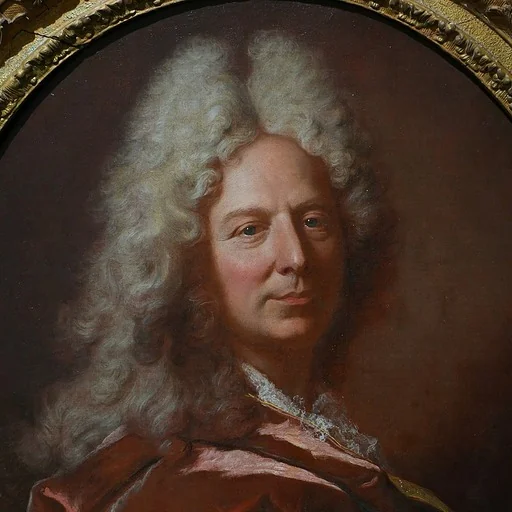
Jean Ranc (28 January 1674 – 1 July 1735) was a French painter, mainly active in portraiture.