Artwork
H Beard Print Collection
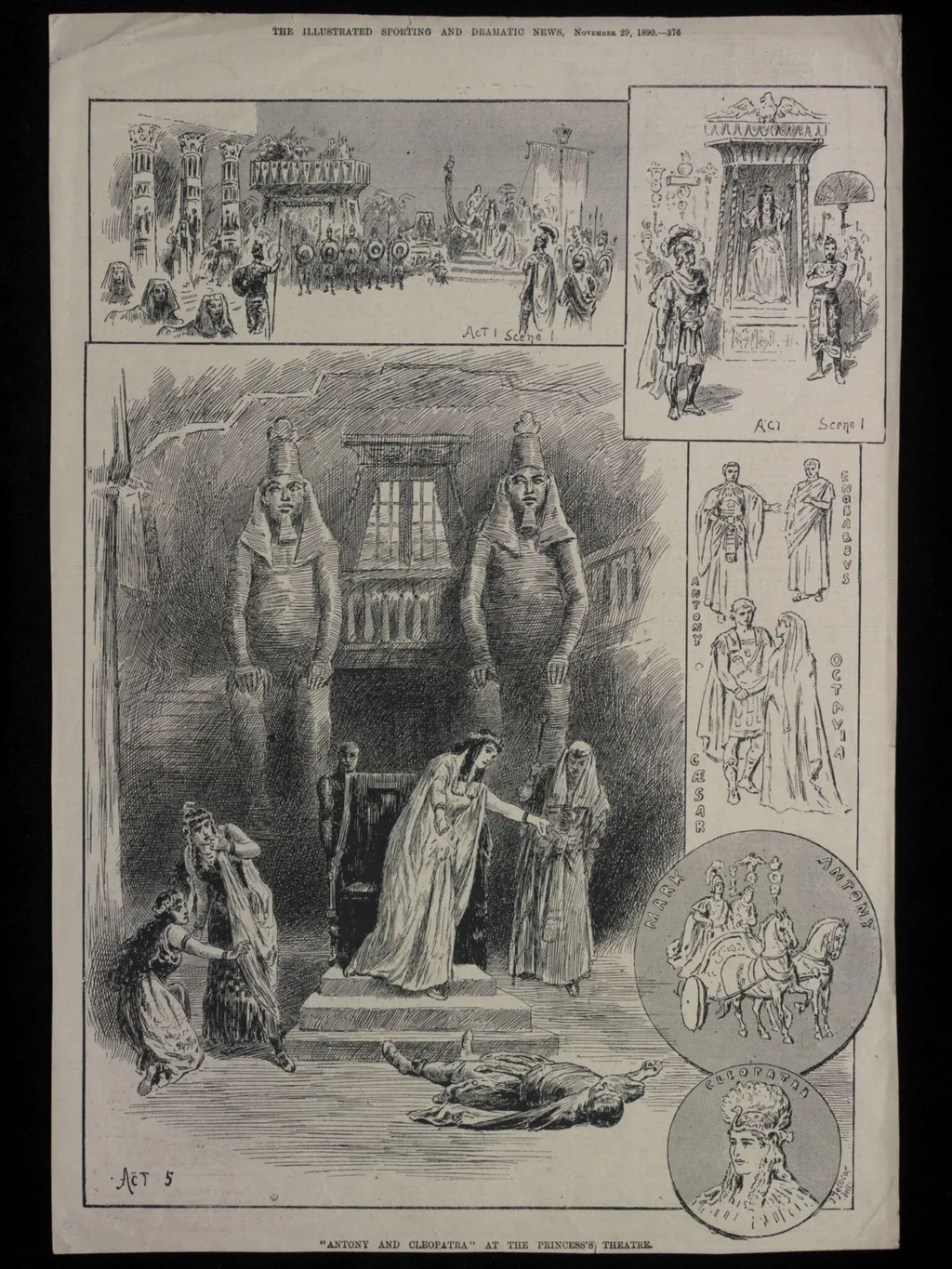
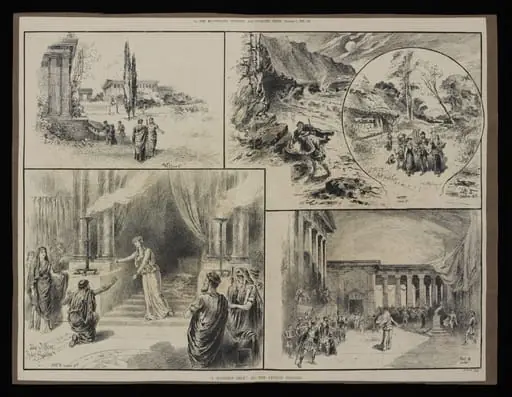
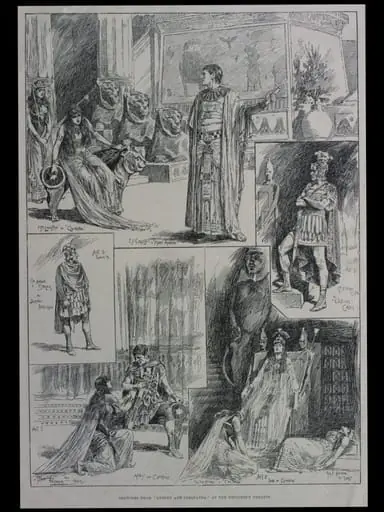
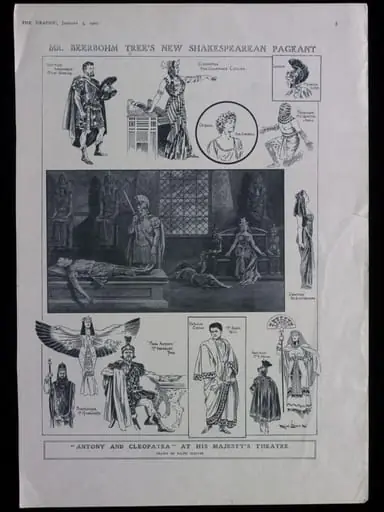
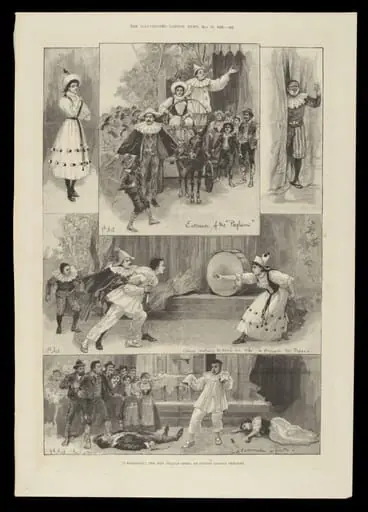
H Beard Print Collection is a print by the Impressionist artist John Jellicoe. It dates from 29 and is held in the collection of the Victoria and Albert Museum. This 1890 print captures key moments from a stage production of Antony and Cleopatra at London’s Princess’s Theatre.
About this work
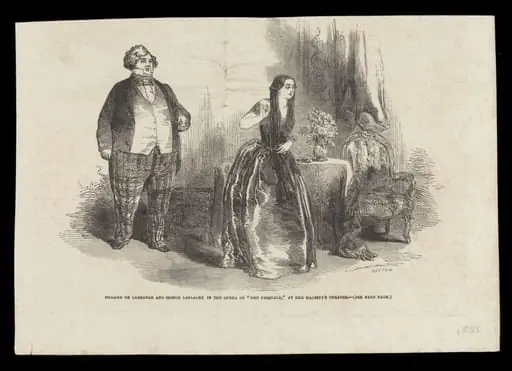
This print shows scenes and characters from “Antony and Cleopatra” on stage. It comes from a 1890 issue of Illustrated Sporting and Dramatic News. The artist used printmaking to catch the play’s drama in ink.
The print mixes Impressionist and Realist touches, typical of prints from that time. It was made on 29th November 1890.
Next look up the Victoria and Albert Museum.
Overview
Produced for the Illustrated Sporting and Dramatic News, it was created using printmaking techniques to translate live performance into a reproducible image.
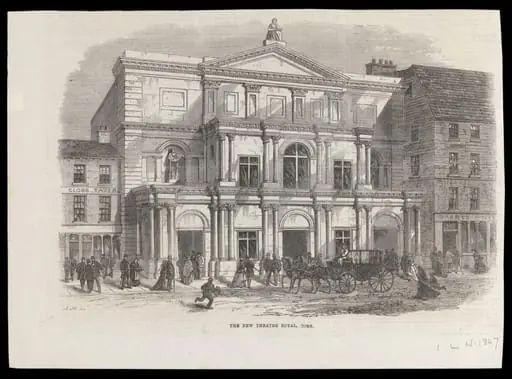
This 1890 print captures key moments from a stage production of Antony and Cleopatra at London’s Princess’s Theatre. Produced for the Illustrated Sporting and Dramatic News, it was created using printmaking techniques to translate live performance into a reproducible image. The date of issuance, November 29, 1890, anchors it in a specific theatrical season and reflects the period’s interest in documenting drama through illustrated periodicals.
Subject & Meaning
The print illustrates pivotal scenes and figures from Shakespeare’s tragedy, emphasizing the grandeur and emotional intensity of the play’s characters. Rather than a single moment, it composites multiple scenes to convey the narrative’s scope. The selection of moments suggests a focus on spectacle and personal drama, aligning with Victorian tastes for theatrical storytelling that balanced historical weight with emotional appeal.
Technique & Style
Rendered in ink, the print blends observational detail with looser, atmospheric strokes, reflecting a hybrid of Realist and Impressionist approaches common in illustrated journalism of the era. Line work defines figures and costumes with precision, while background elements are suggested with softer, quicker marks. This technique allowed for both clarity and visual dynamism, suited to the fast-paced production cycles of periodical publishing.
History & Provenance
The print originated in a weekly illustrated newspaper that documented sports and theatre for a middle-class readership. It was likely distributed widely across Britain and possibly abroad, serving as both entertainment and cultural record. The Victoria and Albert Museum holds examples of similar prints, indicating its inclusion in institutional collections focused on theatrical history and graphic arts.
Context
In 1890, London’s theatre scene was thriving, with Shakespearean revivals drawing large audiences. Illustrated newspapers like the one publishing this print played a crucial role in extending theatrical experiences beyond the auditorium. This print reflects a broader trend of visual media democratizing access to high culture, while also shaping public perception of classical drama through contemporary staging choices.
Legacy
As a document of late-Victorian stage practice, the print preserves details of costume, set design, and performance style now lost to time. Though not attributed to a single artist, its existence underscores the collaborative nature of theatrical illustration and the importance of print media in preserving ephemeral performances. It remains a valuable resource for scholars of 19th-century theatre and graphic design.
Artist & collection
Artist
John Jellicoe spent thirty years turning London’s street corners into his living room—every afternoon he’d sit on the same bench outside the Old Bailey, sketchbook in hand, drawing whatever caught his eye.