Artwork
Dr John Parry
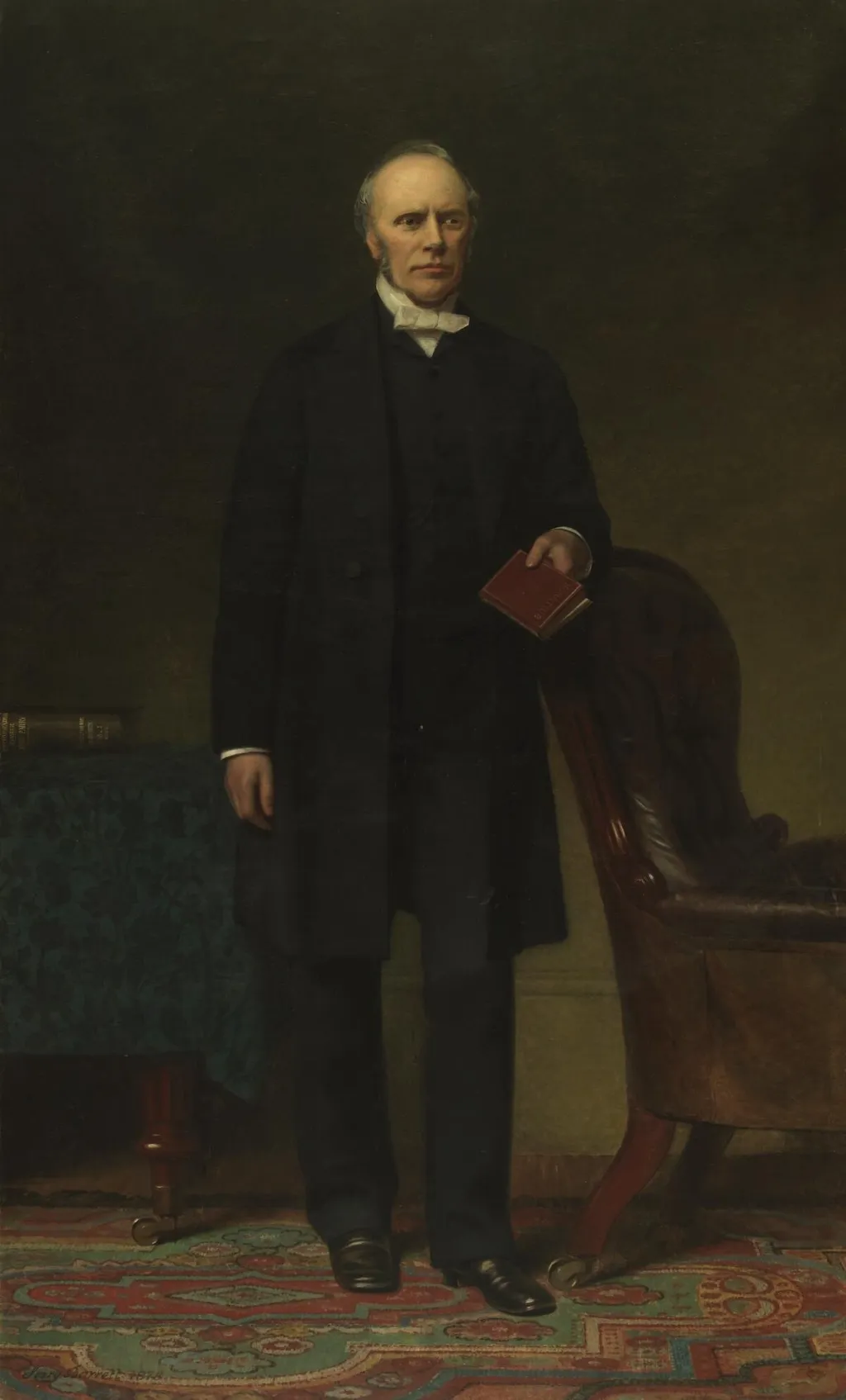
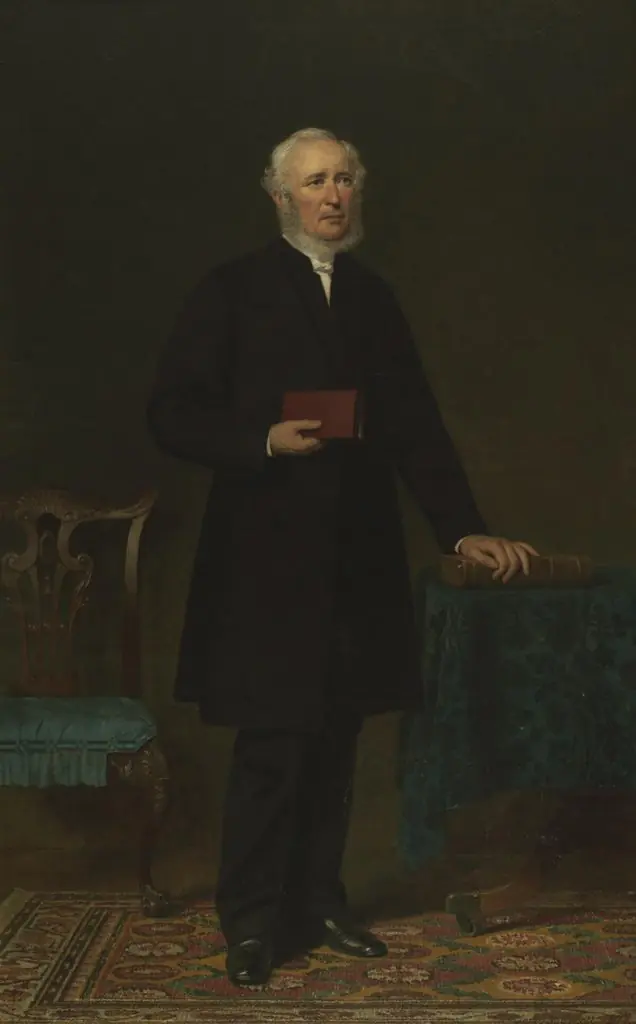
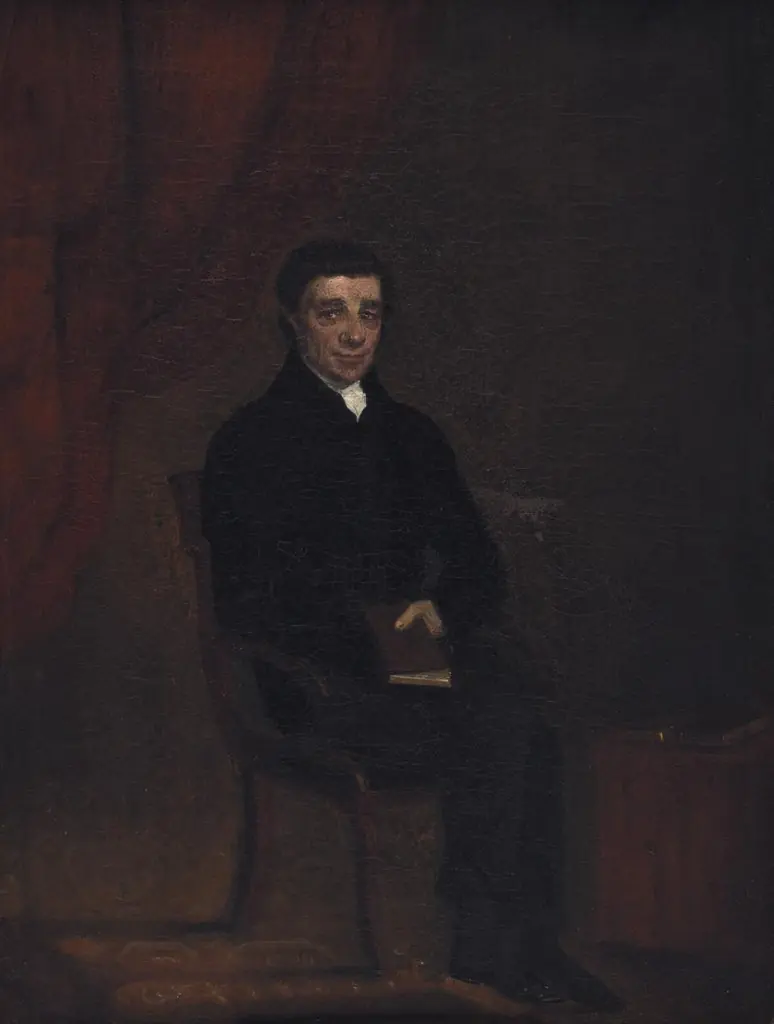
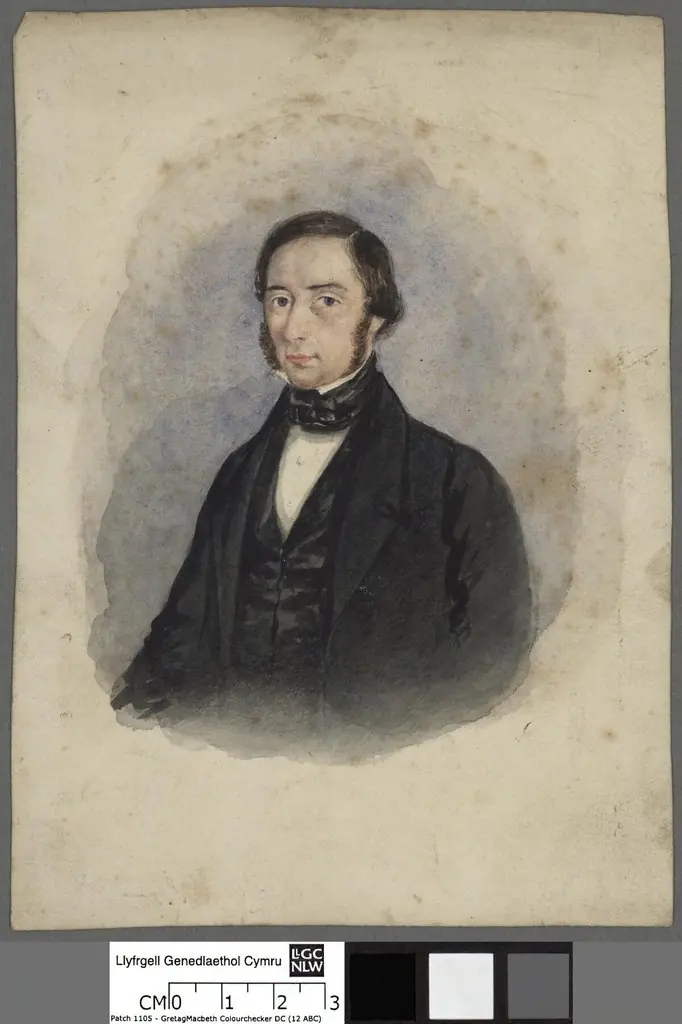
Dr John Parry is an oil painting by the Impressionist artist Jerry Barrett. It dates from 1890 and is held in the collection of the National Library of Wales.
About this work
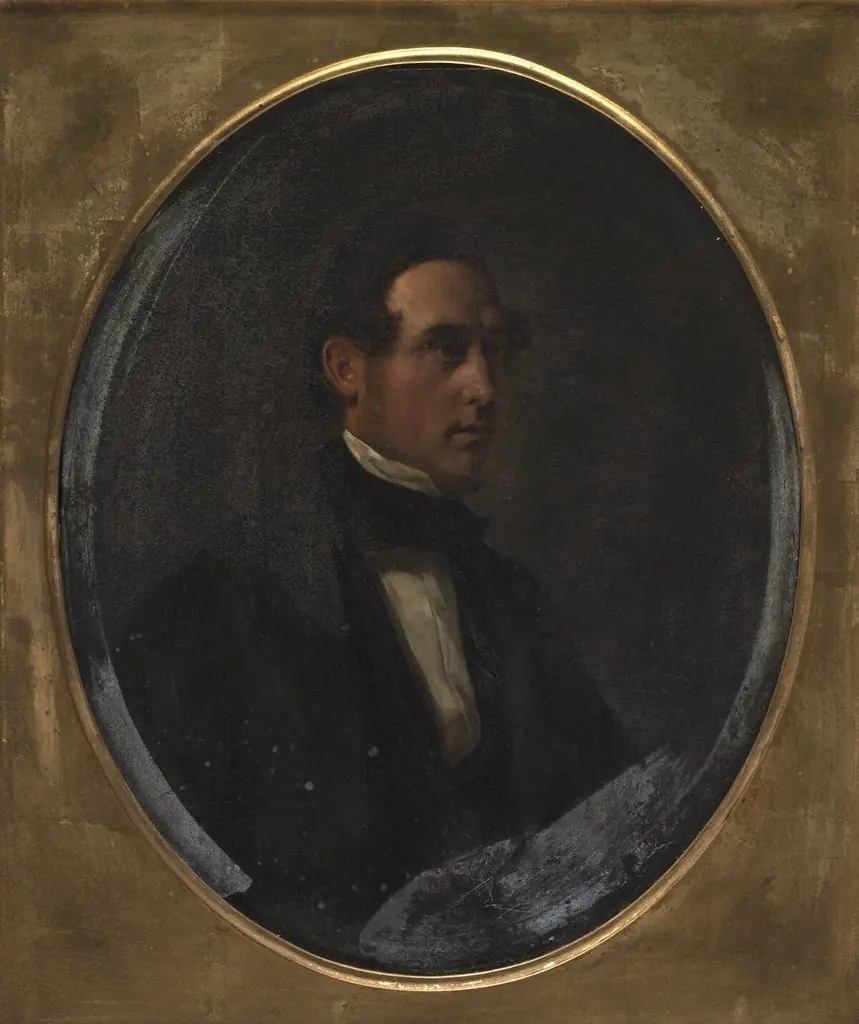
This painting depicts a man standing in a room, dressed in a long black coat with a white cravat and black shoes.
This painting depicts a man standing in a room, dressed in a long black coat with a white cravat and black shoes. He holds a book in his left hand. The room's background is dark, with a blue-patterned table and a brown leather chair visible behind him.
The man's attire and the room's furnishings suggest a formal setting, possibly from the 19th century. The artist's use of dark colors and subtle lighting creates a somber mood.
To learn more about the artist who created this piece, look up Jerry Barrett.
Overview
Painted in 1890 by Jerry Barrett, this oil portrait captures Dr. John Parry in a quiet, formal setting. Barrett, primarily known for historical narratives, turned his attention to portraiture in his later years. The work is part of the National Library of Wales collection, reflecting its cultural significance within Welsh institutional holdings. The painting’s restrained palette and composed posture align with Victorian conventions of dignified representation.
Subject & Meaning
Dr. John Parry is depicted standing, holding a book, suggesting scholarly engagement. His attire—a black coat, white cravat, and polished shoes—signals professional status and formality. The absence of overt symbols or narrative context invites interpretation centered on intellectual presence rather than achievement. The somber tone and minimal background emphasize introspection, consistent with 19th-century ideals of learned demeanor.
Technique & Style
Barrett employed oil paint with a muted, earthy palette, using dark tones to frame the figure against a shadowed interior. Subtle lighting models the face and hands, drawing focus to the book and cravat. The brushwork is precise but unobtrusive, avoiding theatricality. Background elements—a blue-patterned table, leather chair—are rendered with quiet detail, reinforcing spatial depth without distracting from the sitter’s presence.
History & Provenance
The portrait entered the National Library of Wales’ collection following its completion in 1890. While Barrett’s earlier works documented military history, this portrait represents a shift toward personal and civic portraiture. No record indicates public exhibition prior to its acquisition, suggesting it was commissioned privately, possibly by Parry’s associates or institution. Its preservation reflects institutional interest in Welsh intellectual figures.
Context
In late 19th-century Britain, portraits of professionals like physicians often served to affirm social standing and intellectual contribution. Barrett’s transition from battlefield scenes to individual likenesses mirrors broader trends in Victorian art, where domestic and civic subjects gained prominence. The painting’s subdued aesthetic aligns with the era’s preference for restraint over ornamentation in representing learned men.
Legacy
Though not widely reproduced or studied, the portrait remains a documented example of Barrett’s later work and a visual record of Dr. John Parry. It contributes to the National Library of Wales’ efforts to preserve the likenesses of regional intellectuals. Its quiet composition stands in contrast to the more dramatic works for which Barrett is better known, offering insight into the breadth of his artistic practice.
Own this work as a print
Artist & collection
Artist
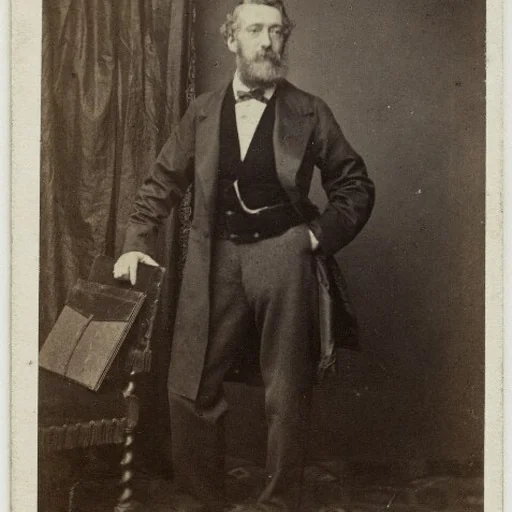
Jerry Barrett (1824–21 January 1906) was an English painter of the Victorian era.