Artwork
Untitled
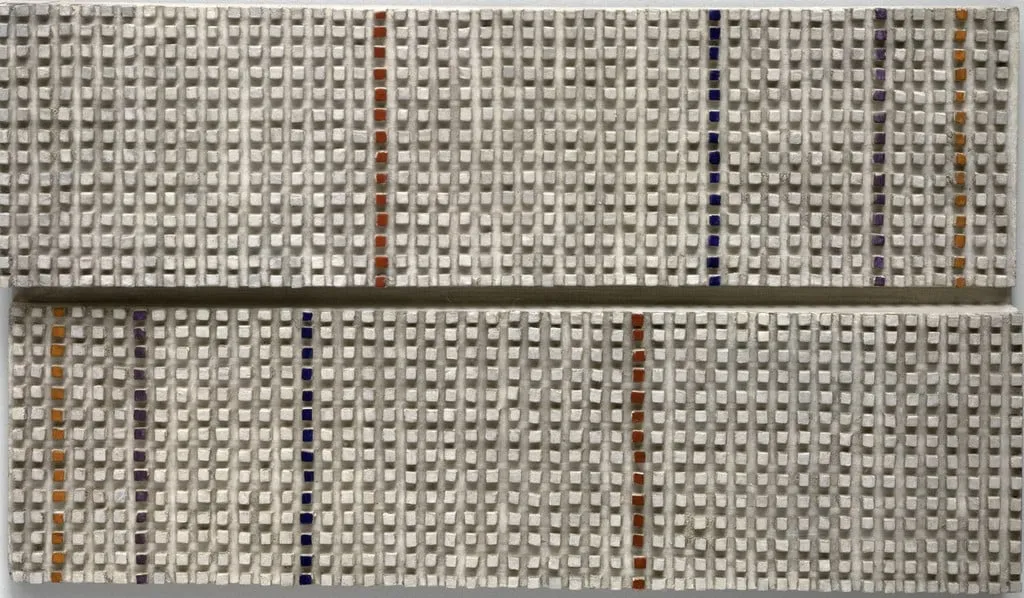
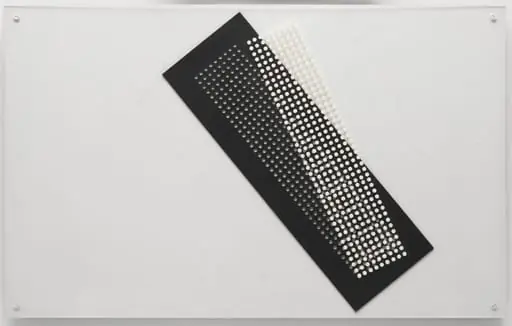
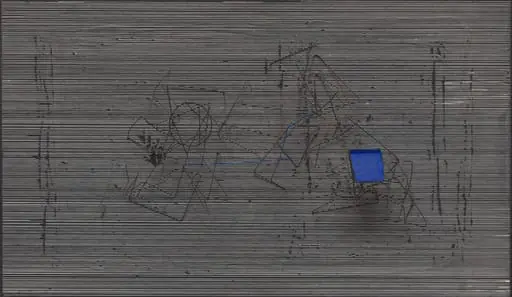
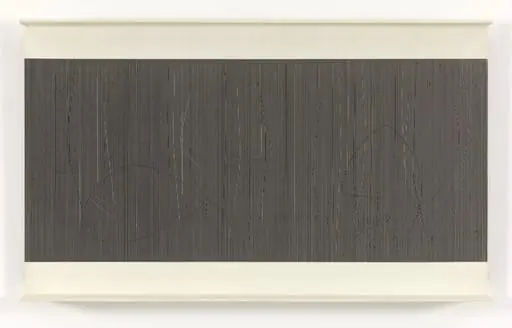
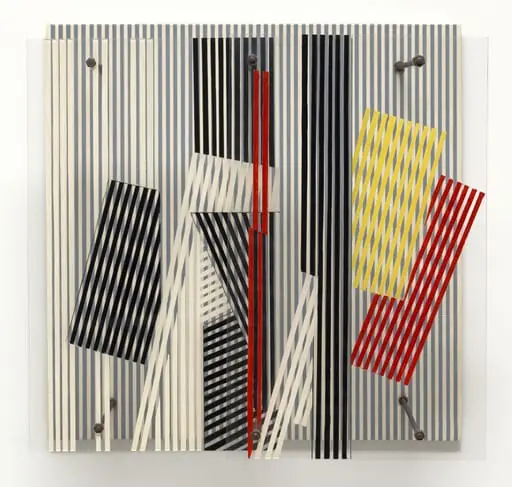
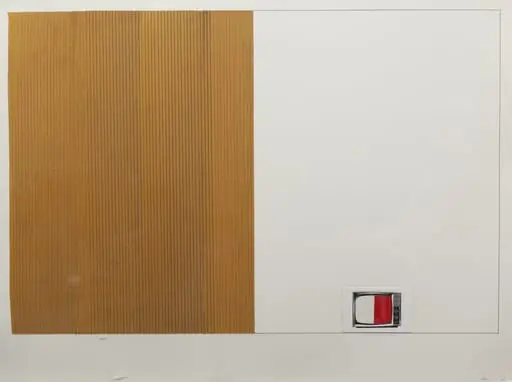
Untitled is a gouache painting by Jesús Rafael Soto. It dates from 1952 and is held in the collection of the Museum of Modern Art.
About this work
Overview
It belongs to The Museum of Modern Art’s collection in New York, where it is recognized as a formative piece in his transition toward kinetic art.
Jesús Rafael Soto created this 1952 gouache on wood painting as part of his early exploration into visual perception. The work is abstract, devoid of representational forms, and reflects his interest in how structured patterns can generate dynamic visual effects. It belongs to The Museum of Modern Art’s collection in New York, where it is recognized as a formative piece in his transition toward kinetic art.
Subject & Meaning
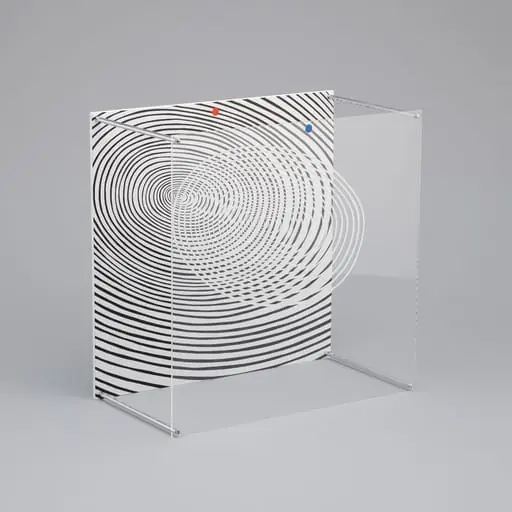
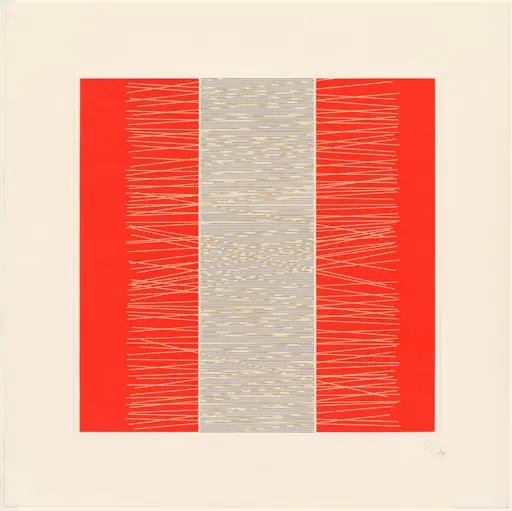
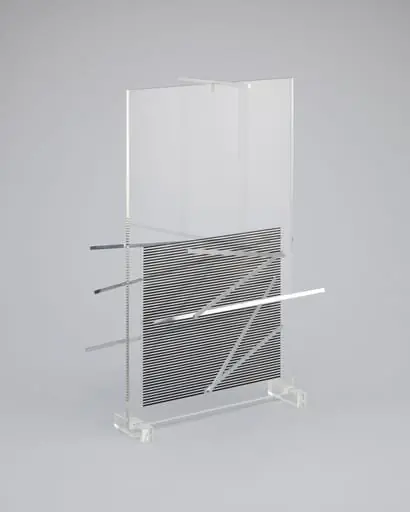
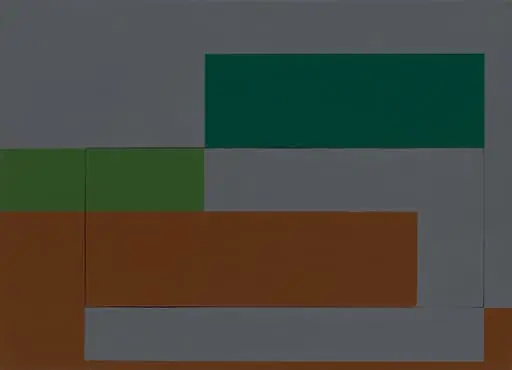
The painting presents a grid of white squares intersected by vertical columns of colored blocks—orange, blue, and purple. These elements do not depict a scene but instead investigate how color and repetition influence spatial perception. The arrangement suggests movement through stillness, inviting the viewer to sense subtle shifts in depth and rhythm without literal motion.
Technique & Style
Soto applied gouache, a matte, opaque water-based paint, onto a wooden panel, achieving flat, even surfaces with precise edges. The method allowed for sharp contrasts between the white grid and the saturated vertical bands. His style here is reductive, emphasizing geometry and color relationships over texture or brushwork, aligning with the principles of mid-century Latin American abstraction.
History & Provenance
Created in 1952, this work emerged during Soto’s formative years in Paris, where he engaged with European avant-garde circles. It predates his later installations with moving elements but already demonstrates his preoccupation with perceptual ambiguity. The piece entered The Museum of Modern Art’s collection as part of its broader effort to document international developments in postwar abstraction.
Context
In the early 1950s, artists across Latin America and Europe were redefining abstraction beyond expressionism, turning toward systems, structure, and viewer interaction. Soto’s work aligned with movements like Op and Kinetic Art, which questioned how static images could imply motion. This painting reflects a broader shift toward art that activates perception rather than merely representing the visible.
Legacy
Though modest in scale, this early work laid conceptual groundwork for Soto’s later immersive environments. Its disciplined use of color and grid became a foundation for his experiments with vibration and spatial illusion. The painting remains a key reference in studies of Latin American contributions to global modernism, illustrating how minimal means could provoke complex visual experiences.
Artist & collection
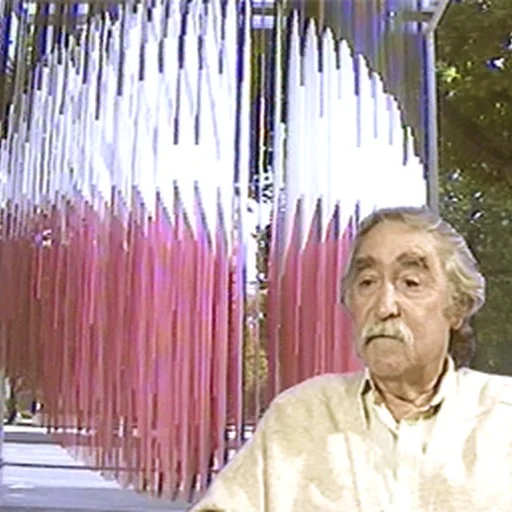
Artist
Jesús Rafael Soto (June 5, 1923 – January 14, 2005) was a Venezuelan kinetic and op artist, sculptor, and painter.