Artwork
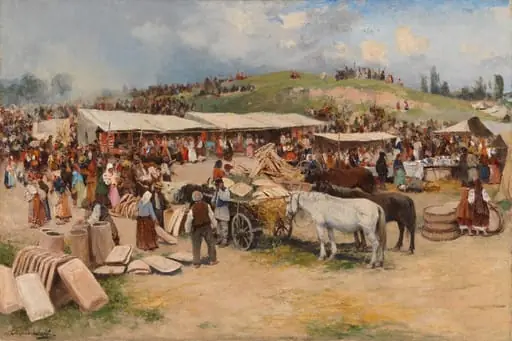
Market in Sora
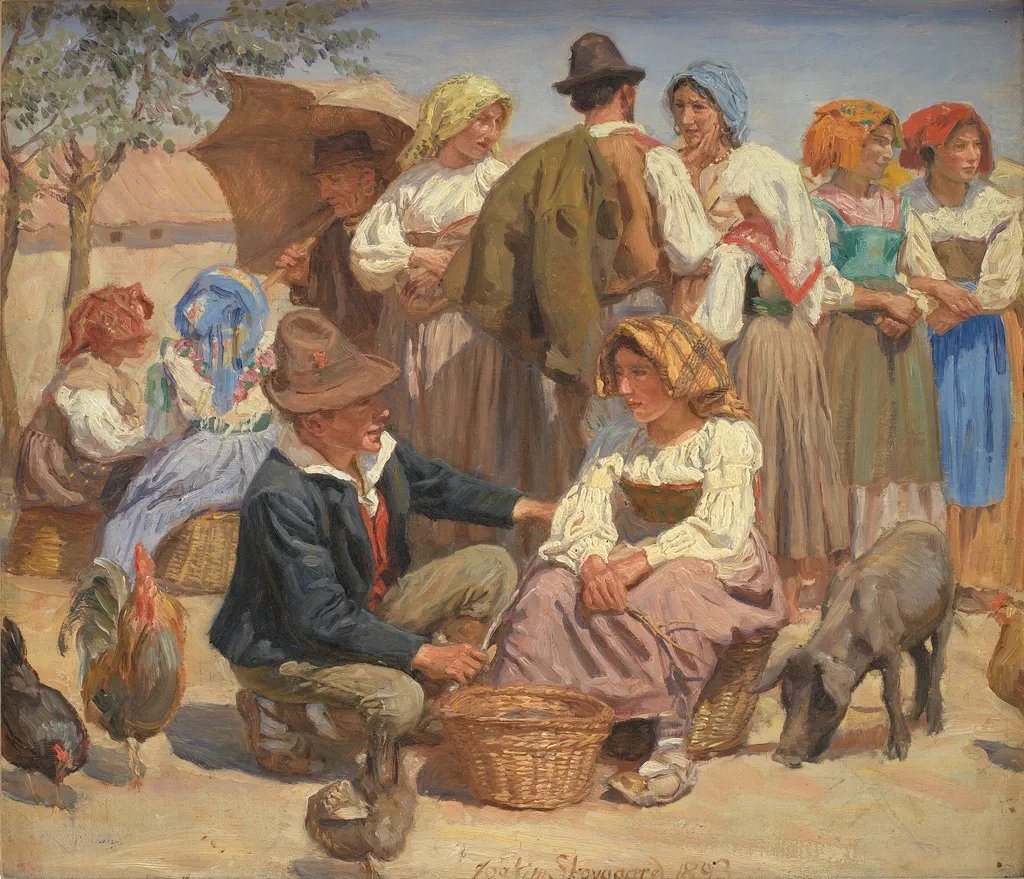
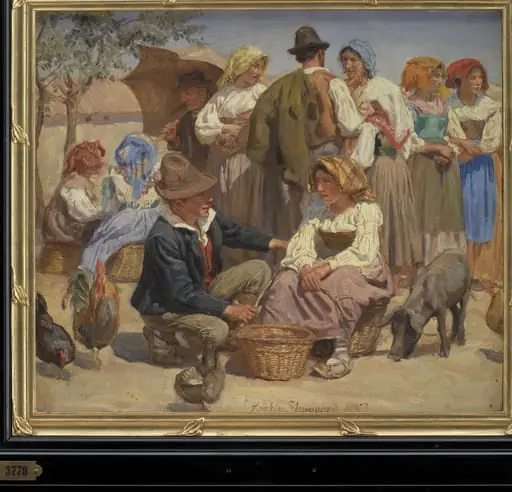
Market in Sora is an oil painting by Joakim Skovgaard. It dates from 1897 and is held in the collection of the Statens Museum for Kunst.
About this work
Overview
The piece resides in the collection of Statens Museum for Kunst in Copenhagen, offering a quiet counterpoint to his more monumental religious commissions.
Painted in 1897 by Danish artist Joakim Skovgaard, *Market in Sora* is an oil-on-canvas genre scene capturing everyday rural life. Though Skovgaard is best known for large-scale religious frescoes, this work reflects his interest in secular, observational painting. The piece resides in the collection of Statens Museum for Kunst in Copenhagen, offering a quiet counterpoint to his more monumental religious commissions.
Subject & Meaning
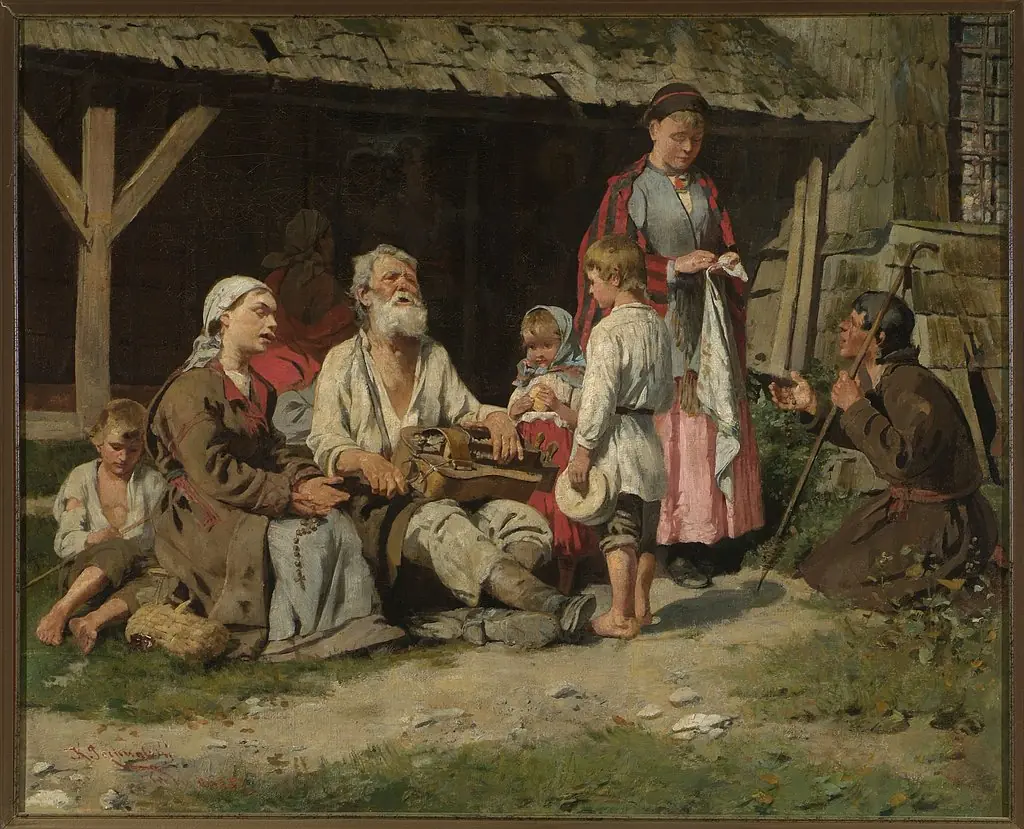
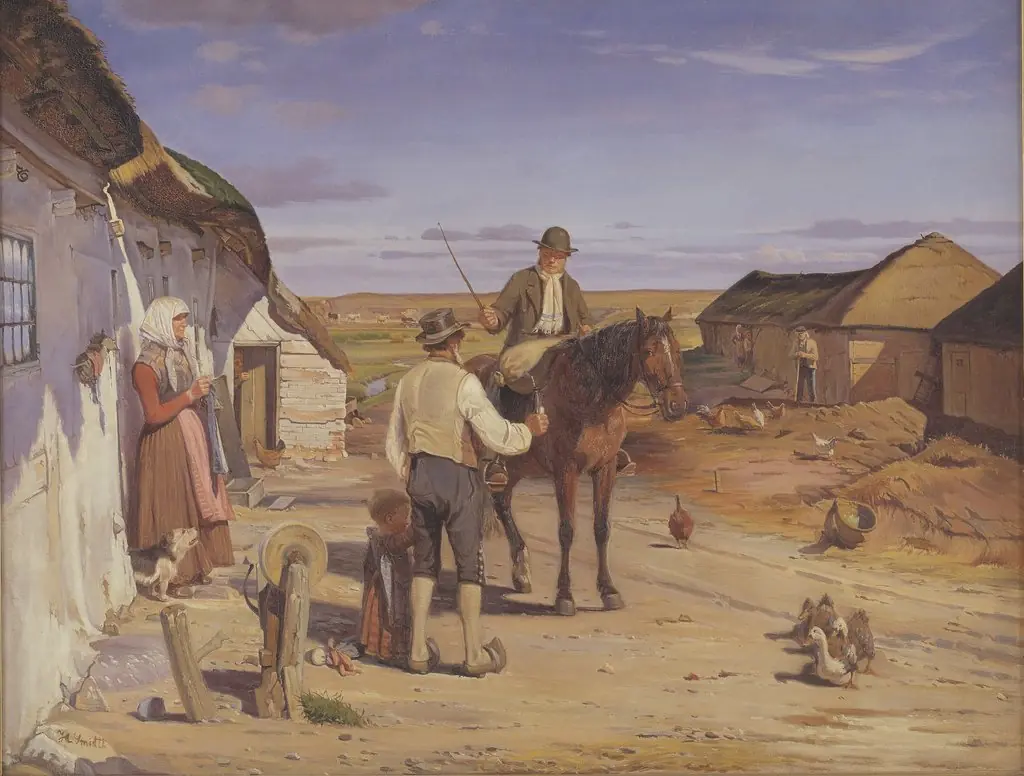
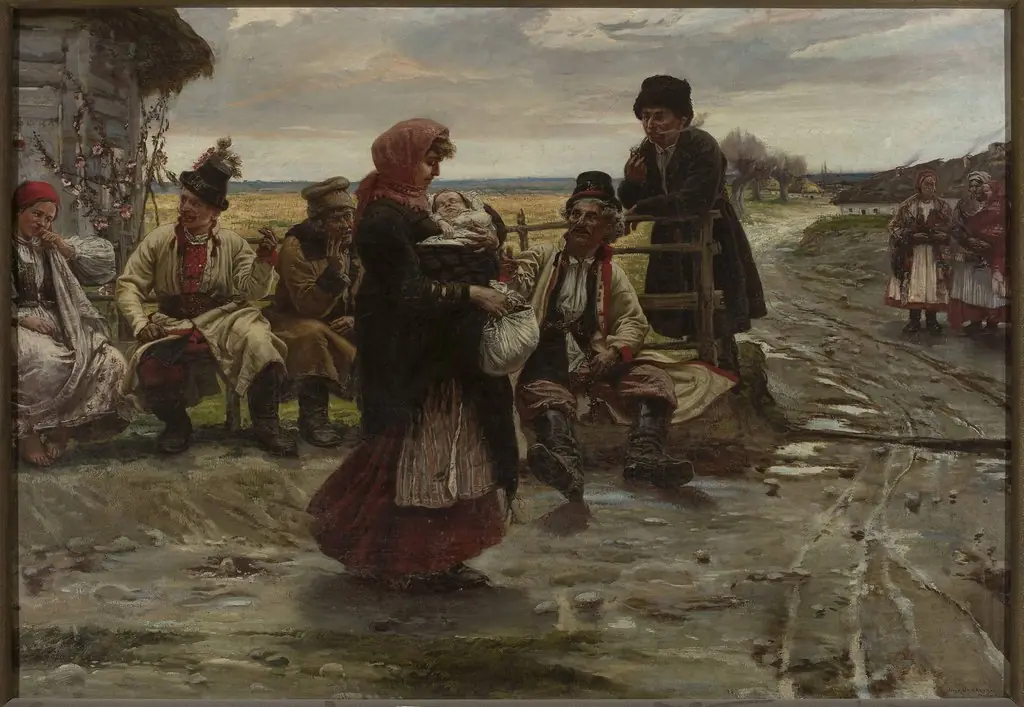
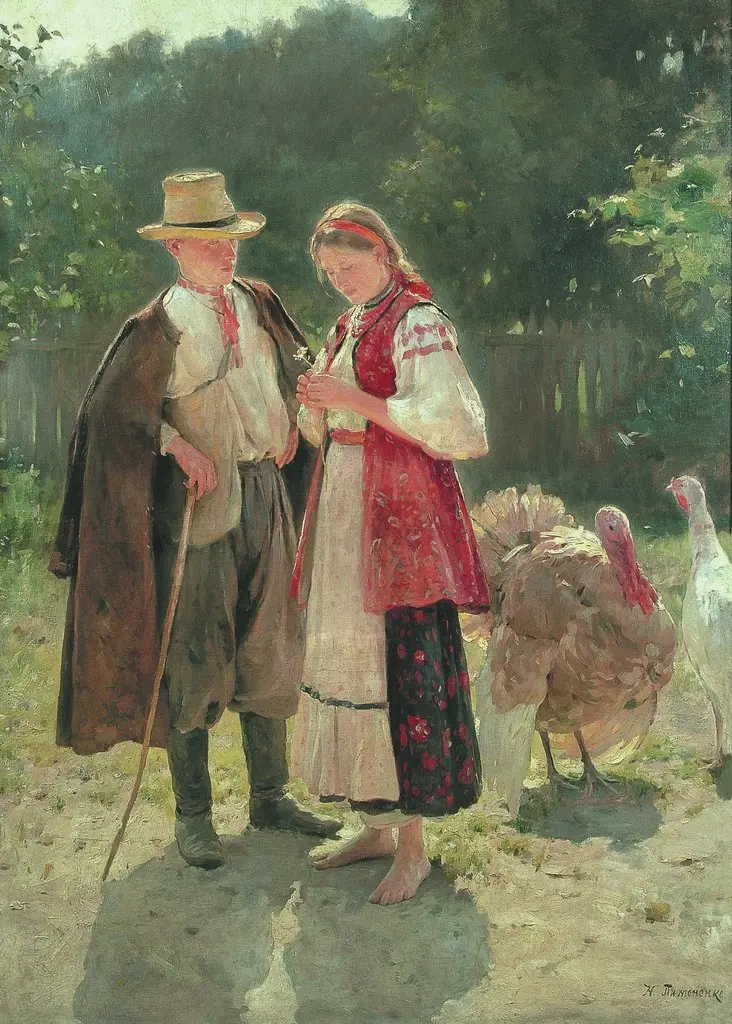
The painting portrays a modest market gathering in the Danish village of Sora, centered on two seated figures—a man in a dark jacket and hat, and a woman in a headscarf and white blouse—surrounded by baskets and livestock. Behind them, a small group of locals engage in quiet conversation. The scene conveys no grand narrative, instead emphasizing the dignity of ordinary routines and the rhythms of rural community life.
Technique & Style
Skovgaard employed loose, visible brushwork to convey movement and texture, from the woven baskets to the folds of clothing. His palette balances warm earth tones in garments and soil with cooler blues in the sky and shadows, creating a naturalistic harmony. The composition avoids formal symmetry, favoring an informal arrangement that mirrors the spontaneity of the moment, reinforcing the painting’s documentary quality.
History & Provenance
Completed in 1897, *Market in Sora* was acquired by the Danish state and entered the collection of Statens Museum for Kunst shortly thereafter. It remained relatively unremarked upon during Skovgaard’s lifetime, overshadowed by his cathedral frescoes. Its preservation reflects a broader late-19th-century interest in regionalist genre scenes, even as the artist’s primary legacy lay elsewhere.
Context
In the late 1890s, Danish artists increasingly turned to rural life as a subject, responding to industrialization and urban growth. Skovgaard’s depiction of Sora aligns with this trend, echoing the realism of contemporaries like P.S. Krøyer. Unlike idealized pastoral imagery, his scene avoids sentimentality, presenting labor and social interaction with unembellished observation.
Legacy
While *Market in Sora* does not dominate Skovgaard’s public reputation, it stands as a significant example of his engagement with everyday Danish life beyond religious art. The painting contributes to the understanding of how Danish painters balanced national identity with observational realism during a period of cultural transition, offering a modest but enduring record of rural community.
Own this work as a print
Artist & collection
Artist
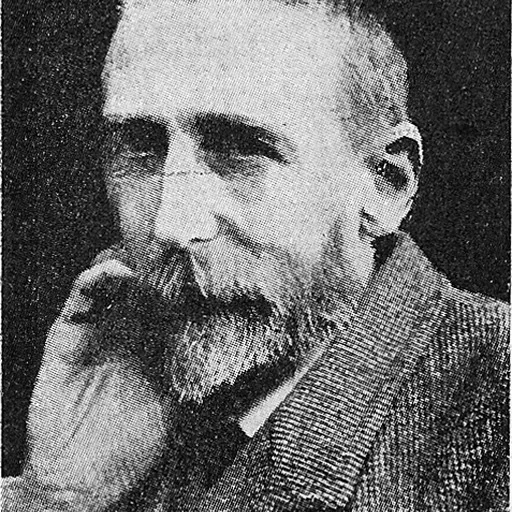
Joakim Frederik Skovgaard (18 November 1856 – 9 March 1933) was a Danish painter. He is remembered above all for the frescos which decorate Viborg Cathedral.