Artwork
At the entrance to a tavern
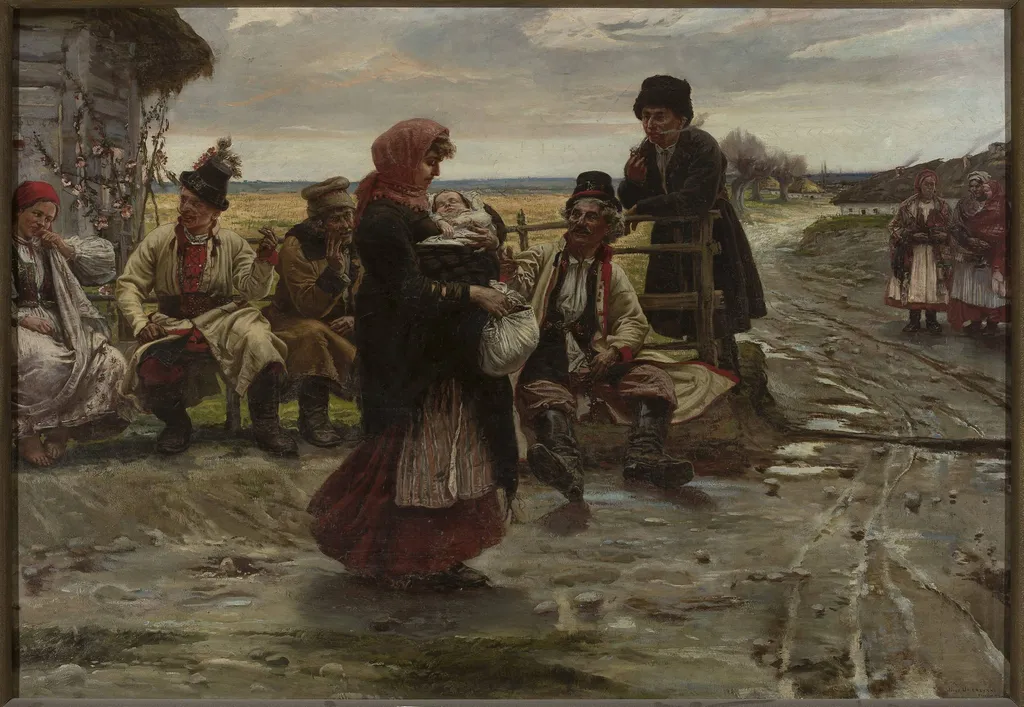
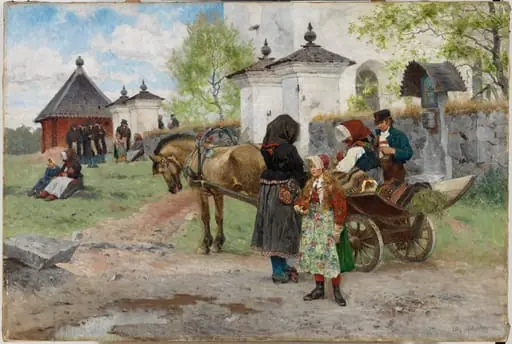
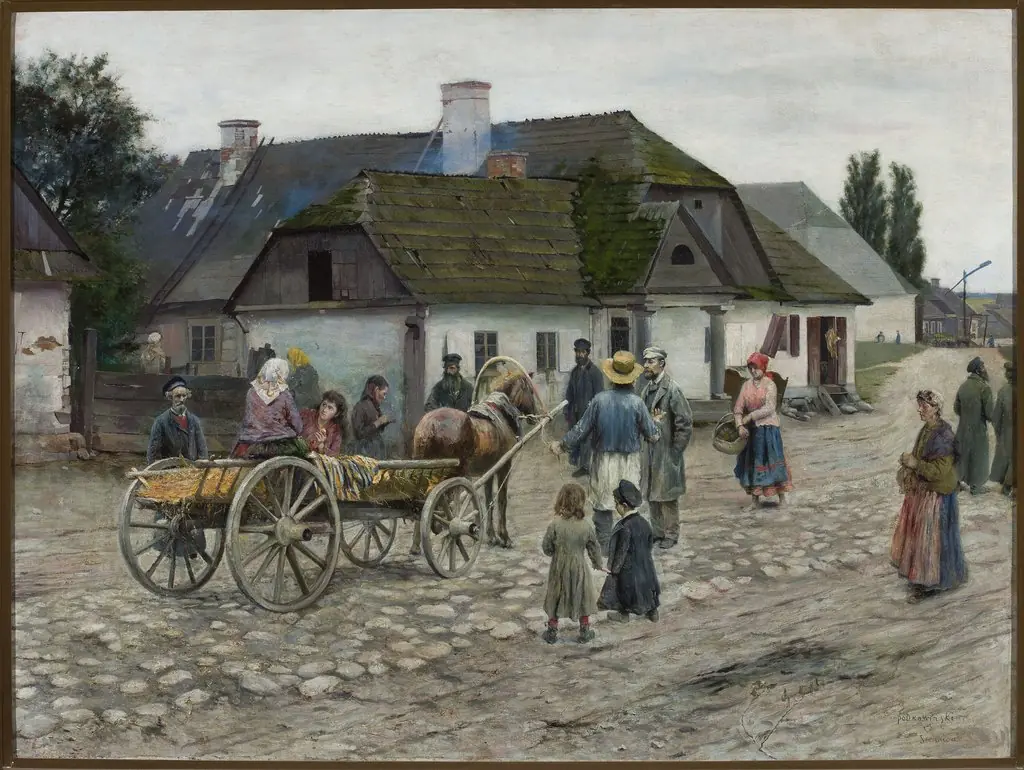
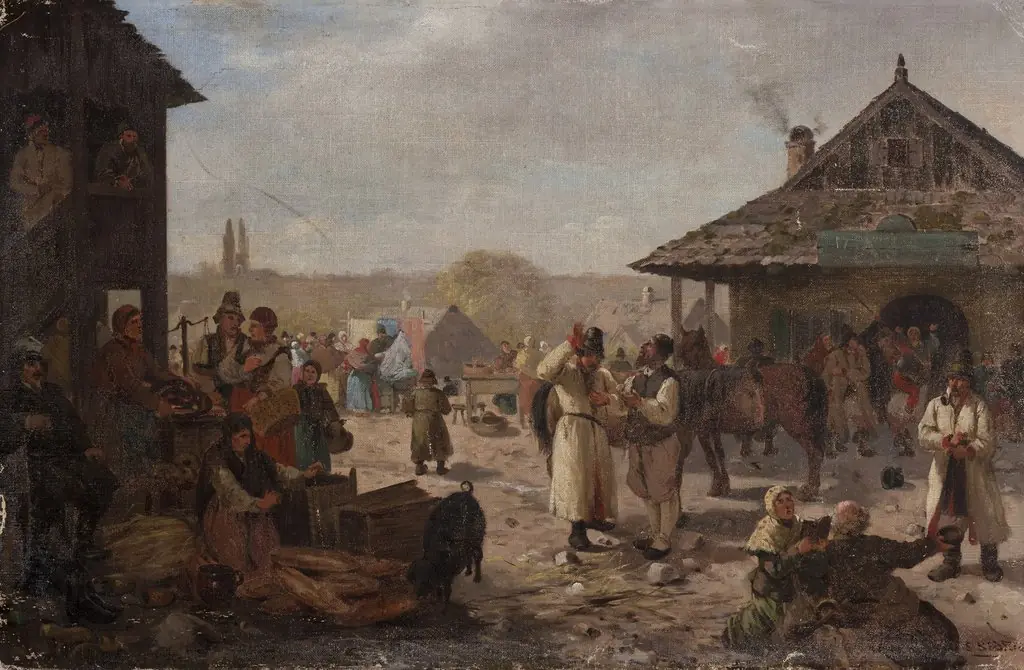
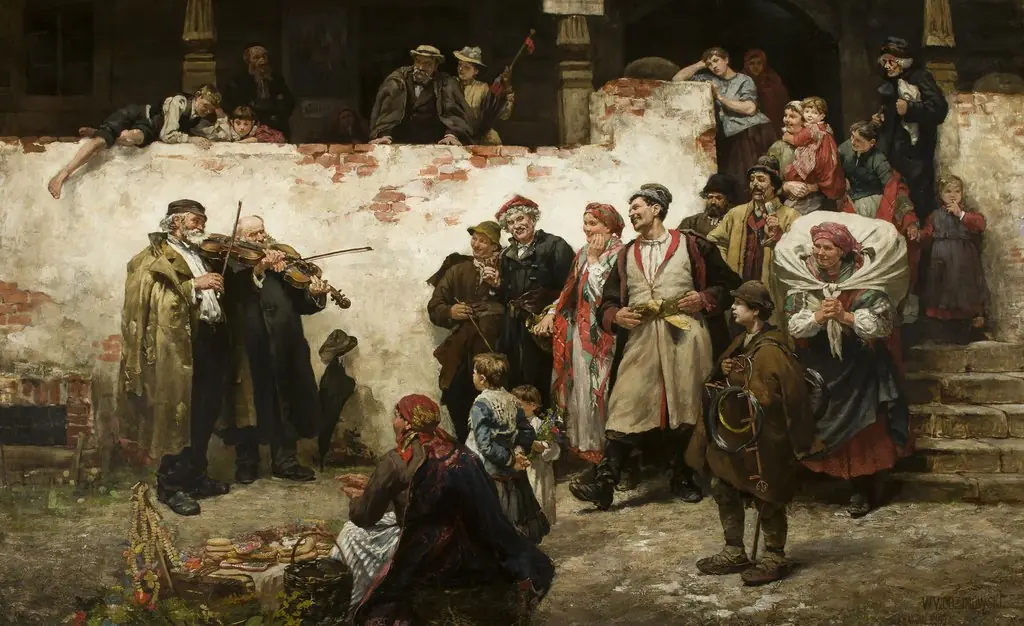
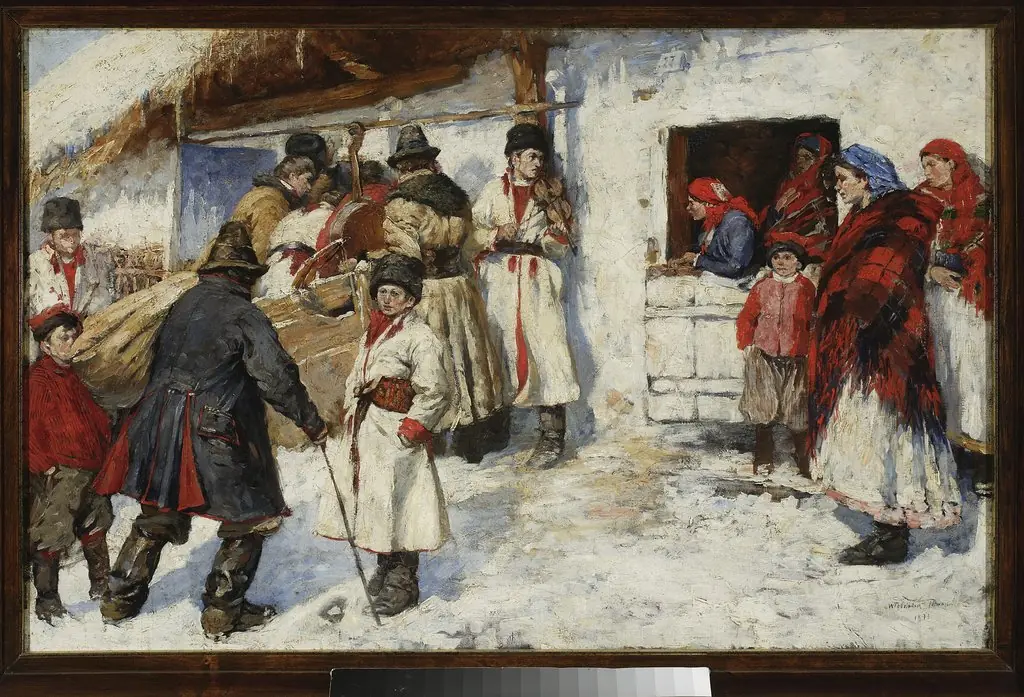
At the entrance to a tavern is an oil painting by the Post-Impressionist artist Józef Unierzyski. It dates from 1896 and is held in the collection of the National Museum in Warsaw.
About this work
Overview
Józef Unierzyski painted *At the entrance to a tavern* in 1896, employing oil on canvas. The composition captures a moment outside a rural drinking establishment, populated by a mother with an infant and several men gathered on a bench and a cart. The work is part of the National Museum in Warsaw’s holdings and reflects the artist’s engagement with post‑impressionist aesthetics.
Subject & Meaning
The scene presents everyday life in the countryside, focusing on communal interaction at a tavern doorway. A woman in a long skirt and headscarf cradles a baby, while surrounding men converse or rest, suggesting a pause in labor and a brief social respite. The setting conveys a sense of shared routine and modest hospitality typical of late‑19th‑century Polish villages.
Technique & Style
Unierzyski applies a palette of warm hues, using contrasts of light and shadow to model forms and suggest depth. The chiaroscuro treatment creates pronounced silhouettes against a softly illuminated background, while loose brushwork aligns the piece with post‑impressionist tendencies toward expressive color and atmospheric ambience rather than strict realism.
History & Provenance
Created while Unierzyski held a professorship at Kraków’s Jan Matejko Academy of Fine Arts, the painting entered the National Museum in Warsaw’s collection in the early 20th century. Its acquisition reflects the institution’s effort to preserve works that document Polish social life and artistic developments during the period following the country’s partitions.
Artist & collection
Artist
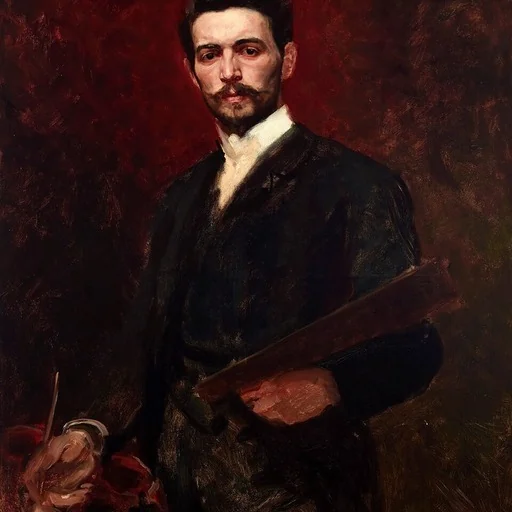
Józef Unierzyski (20 December 1863, Milewo – 29 December 1948, Kraków) was a Polish painter. From 1891, he served as a professor of drawing at the Jan Matejko Academy of Fine Arts in Kraków.