Artwork
Still Life with Dead Game Birds
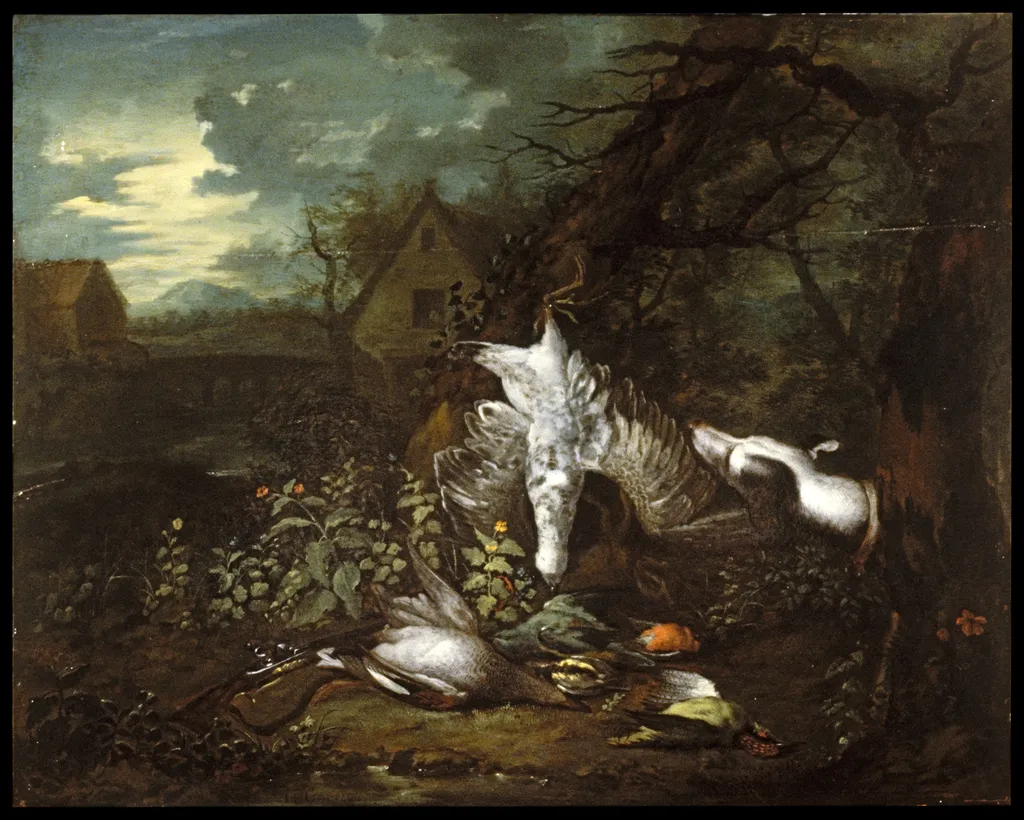
Still Life with Dead Game Birds is an oil painting by the Rococo painting artist Johan Baptist Govaerts. It dates from 1720 and is held in the collection of the Walters Art Museum.
About this work
Overview
Painted in 1720 by Johan Baptist Govaerts, this oil-on-canvas work is a still life centered on dead game birds. Govaerts, trained in Antwerp and later employed at the court in Mainz, specialized in animal and hunting-themed compositions. The painting reflects the Flemish tradition of detailed natural observation, framed within the ornate sensibilities of early 18th-century European art.
Subject & Meaning
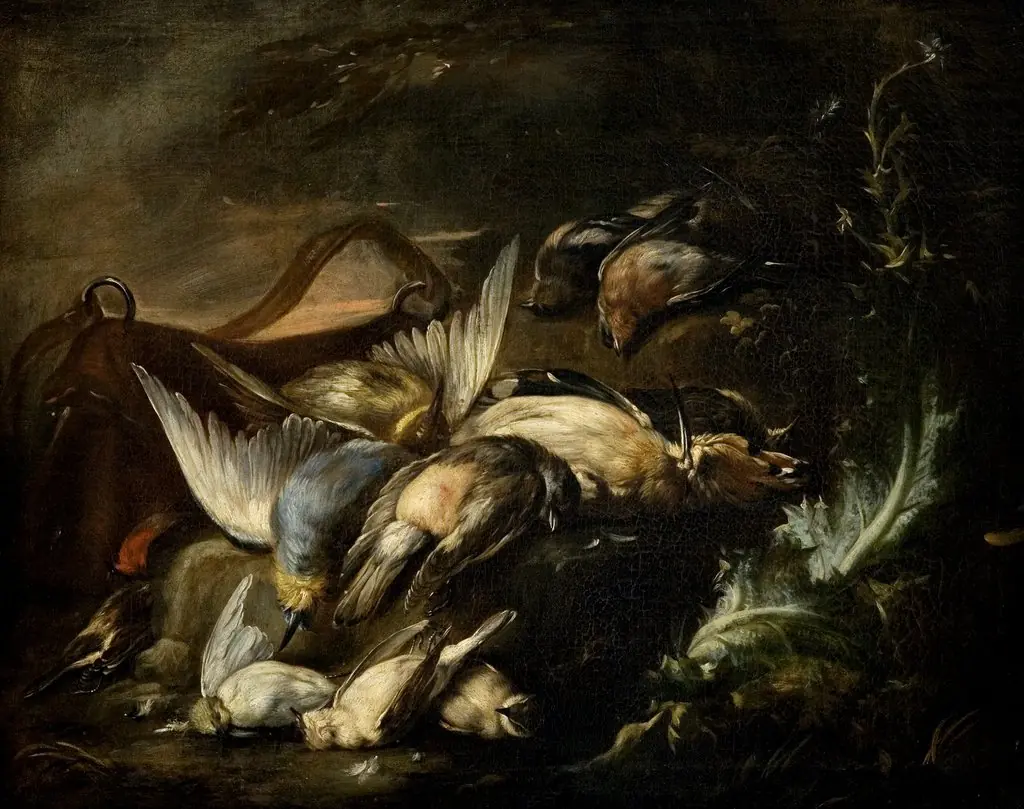
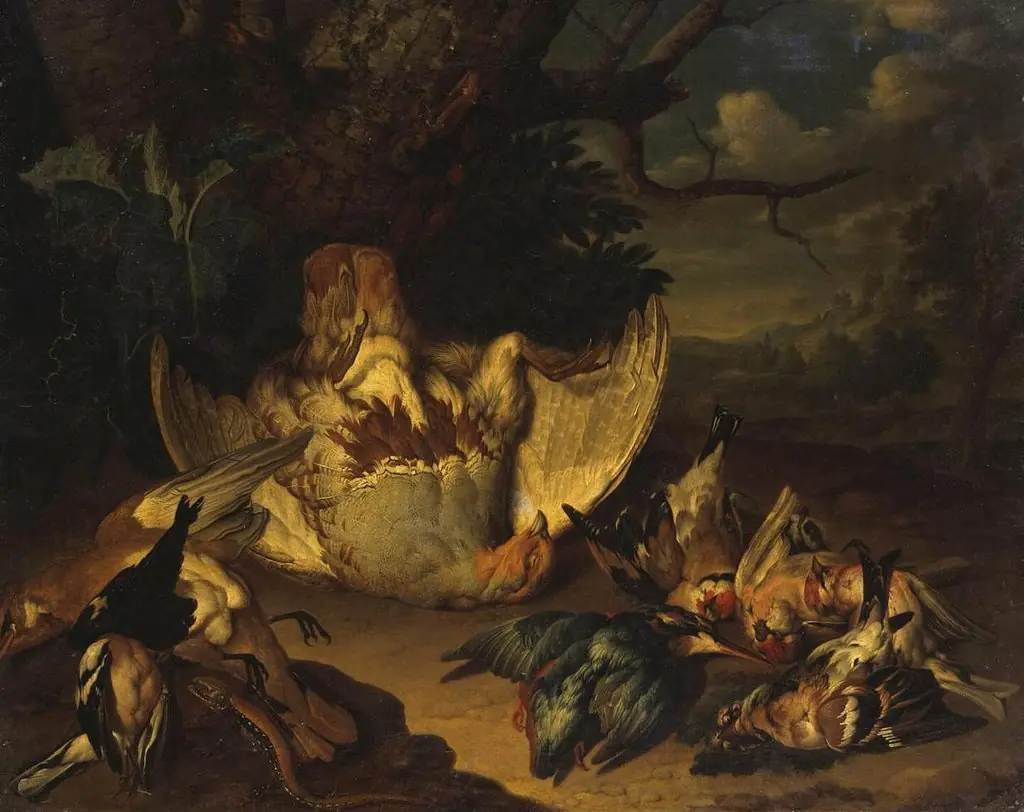
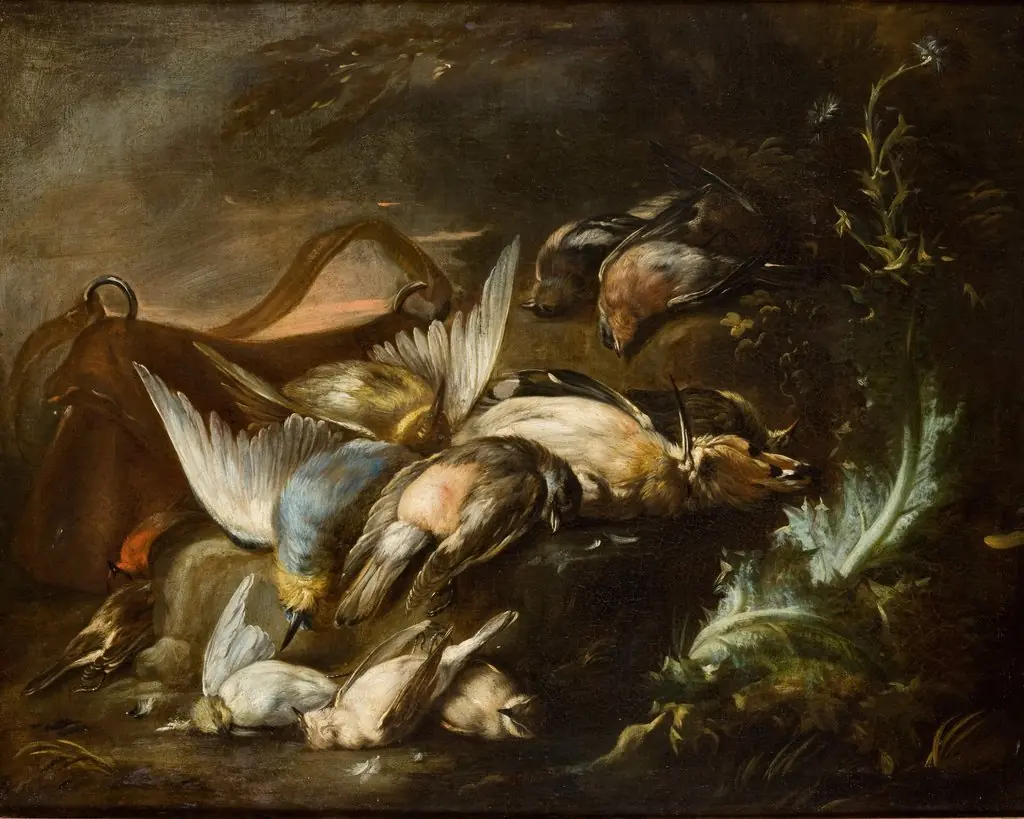
The arrangement of birds—likely pheasants, grouse, or partridges—suggests the aftermath of a hunt, not as a celebration but as a quiet record of capture. Their suspended posture implies motion arrested, evoking the fleeting moment between life and stillness. The absence of human figures or weapons shifts focus to the animals themselves, emphasizing their physical presence over narrative drama.
Technique & Style
Govaerts employed chiaroscuro to model each bird’s form, using subtle gradations of light to define feather texture and bodily volume. The dark, unobtrusive background isolates the subjects, enhancing their three-dimensionality. Feathers, beaks, and talons are rendered with precise brushwork, demonstrating close study of anatomy and surface variation without overt idealization.
History & Provenance
Created during Govaerts’s time in Mainz, the painting aligns with his role as a court artist producing decorative works for aristocratic patrons. While its early ownership is undocumented, its style and date place it within a broader network of Northern European still lifes commissioned by noble households seeking to display both wealth and refined taste in natural observation.
Context
In early 18th-century Europe, still lifes of game were common among elite collectors, reflecting hunting as both sport and status symbol. Govaerts’s work diverges from overtly theatrical compositions by emphasizing quiet realism. His approach aligns with scientific interest in natural forms, concurrent with Enlightenment-era curiosity about the physical world.
Legacy
Though not widely exhibited today, the painting exemplifies the transition from Baroque grandeur to Rococo intimacy in Flemish still life. Govaerts’s focus on texture and naturalism influenced later regional painters who prioritized observational accuracy over allegory, contributing to a quieter, more contemplative strand of animal painting in the 18th century.
Own this work as a print
Artist & collection
Artist
Johan Baptist Govaerts (c. 1701 – after 1745) was a Flemish painter known for his still lifes and genre paintings. After training and working in Antwerp he worked as a court painter in Mainz.

 Still Life
 Dead Game
 Portrait of a Woman with a Photograph of a Man
 Two Peacocks Threatening a Hen with Chicks, Known as ‘The Threatened Hen’
 Still Life with Animals
 Still Life of Game including a Hare, Black Grouse and Partridge, a Spaniel looking on with a Pigeon in Flight
 Ein toter Hase
 Landscape with Wild Beasts