Artwork
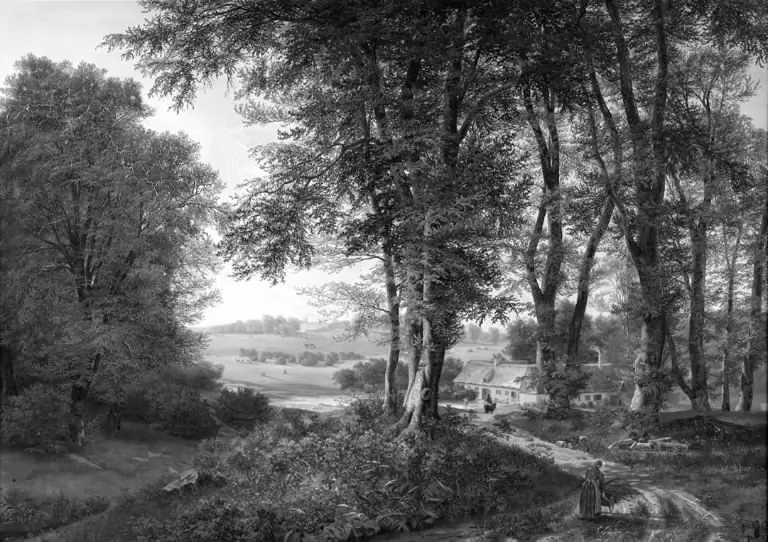
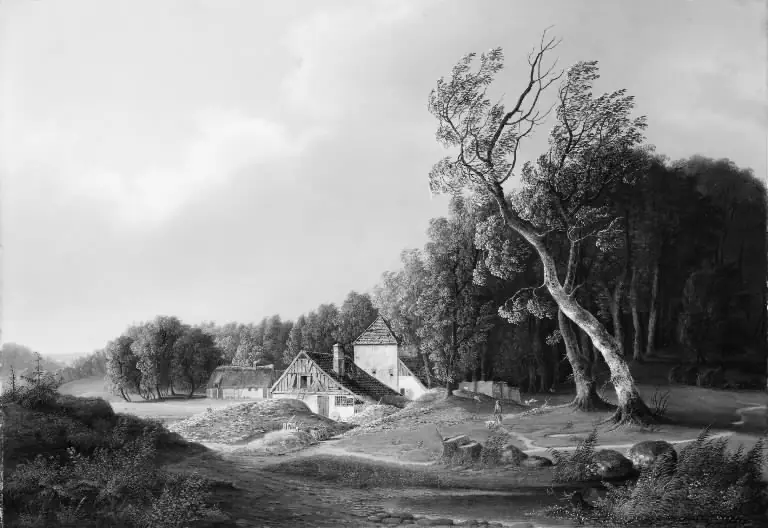
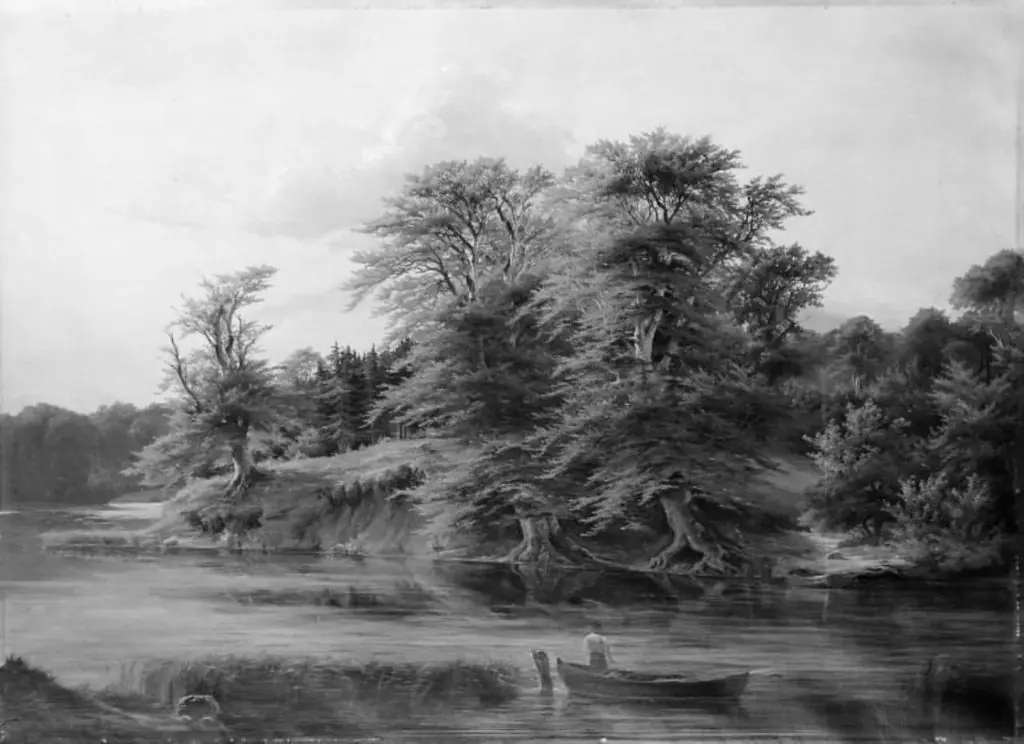
Parti af Terkelskoven med kalkbrænderiet ved Farum
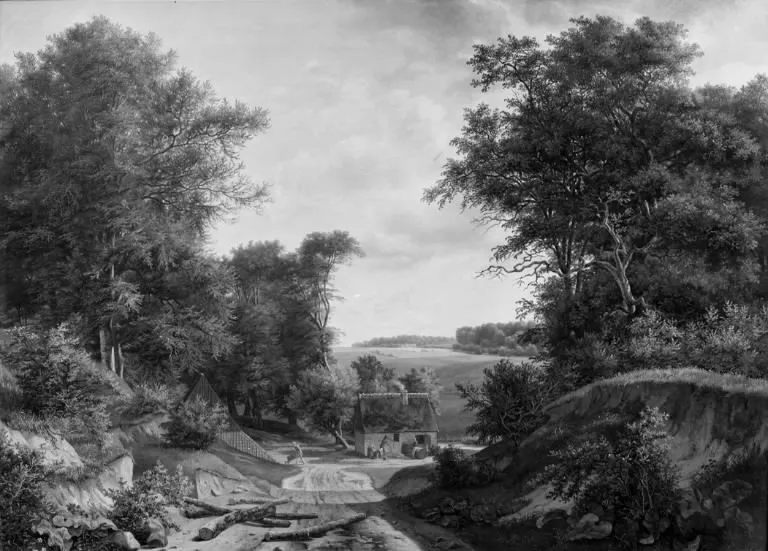
Parti af Terkelskoven med kalkbrænderiet ved Farum is an oil painting by the German Romanticist artist Johan Stroe. It dates from 1828 and is held in the collection of the Statens Museum for Kunst.
About this work
Overview
The composition centers on a solitary, expansive tree in the foreground, its limbs reaching upward against a soft, overcast sky.
Painted in 1828 by Johan Stroe, this oil on canvas work captures a quiet corner of Terkelskoven forest near Farum, Denmark. The composition centers on a solitary, expansive tree in the foreground, its limbs reaching upward against a soft, overcast sky. Behind it, gentle hills recede into the distance, where a modest structure hints at human activity. The painting belongs to the collection of Statens Museum for Kunst in Copenhagen.
Subject & Meaning
The scene presents a modest, unidealized view of the Danish countryside, emphasizing harmony between nature and subtle human presence. The lime kiln in the distance suggests local industry, yet it is rendered with restraint, not as a focal point. The dominant tree, rooted firmly in the foreground, may symbolize endurance or the quiet persistence of the natural world amid rural labor.
Technique & Style
Stroe employs a restrained palette of earth tones and muted greens, with careful modulation of light to suggest atmospheric depth. Soft transitions between shadow and highlight guide the viewer’s eye from the textured bark of the tree to the hazy horizon. The brushwork is deliberate but unobtrusive, favoring quiet observation over dramatic effect, reflecting the influence of Danish landscape traditions of the period.
History & Provenance
Created in 1828, the painting entered the collection of Statens Museum for Kunst shortly after its completion, likely acquired during the museum’s early years of building a national artistic record. It has remained in public ownership since, with no documented changes in custody. Its preservation reflects its role as a representative example of early 19th-century Danish landscape painting.
Context
In the 1820s, Denmark saw a growing interest in depicting its own landscapes as expressions of national identity, moving away from foreign models. Artists like Stroe focused on local sites, often recording rural scenes with scientific precision and emotional restraint. This work aligns with that trend, capturing a specific place with attention to topography and seasonal atmosphere.
Legacy
Though not widely exhibited today, the painting remains a quiet reference point in Danish art history for its understated realism and sensitivity to local environment. It exemplifies the shift toward intimate, non-heroic landscape representation that influenced later generations of Danish painters seeking authenticity over grandeur.
Artist & collection