Artwork
Stilleben mit Früchten, Blumen und Tieren (links ein Dompfaff)
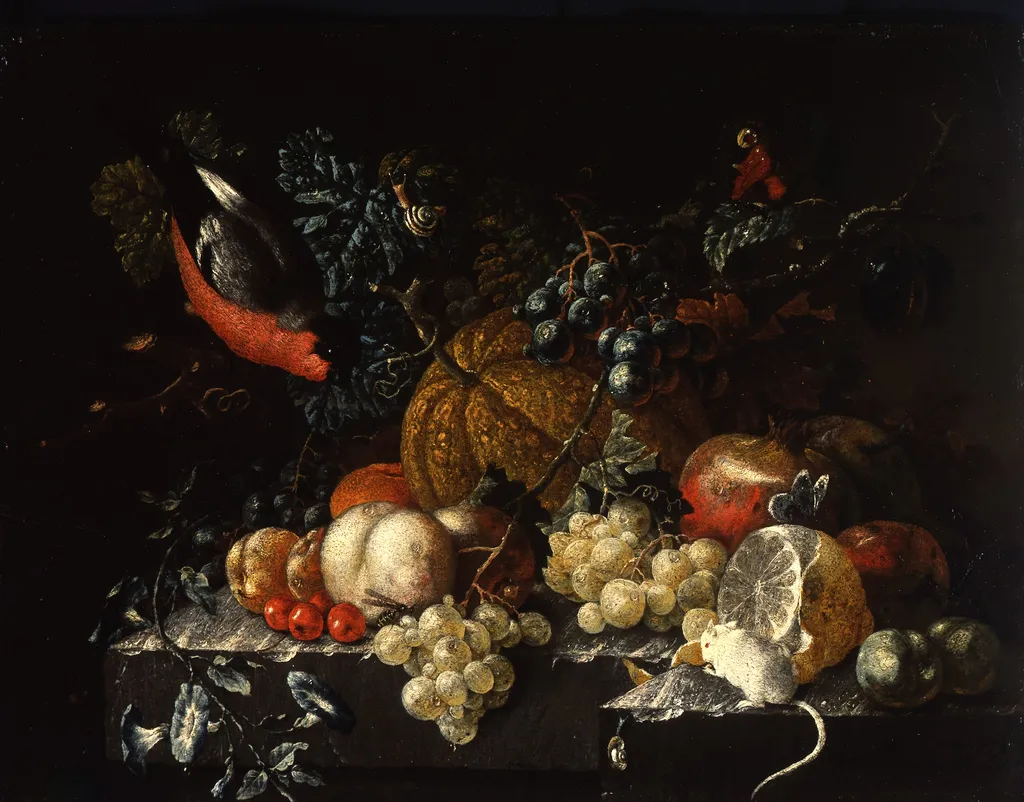
Stilleben mit Früchten, Blumen und Tieren (links ein Dompfaff) is an unspecified painting by Johann Amandus Winck. It dates from 1792 and is held in the collection of the Gemäldegalerie Berlin.
About this work
Overview
Stilleben mit Früchten, Blumen und Tieren (links ein Dompfaff) is a still life painting created by Johann Amandus Winck around 1792. It is part of the collection at the Gemäldegalerie Berlin.
Subject & Meaning
The painting depicts a composed still life featuring a variety of fruits and vegetables, including grapes, lemons, and pumpkins, some of which are sliced open.
The painting depicts a composed still life featuring a variety of fruits and vegetables, including grapes, lemons, and pumpkins, some of which are sliced open. The inclusion of a bird (identified as a Dompfaff, or European peafowl) and a mouse adds a layer of interaction within the scene, though the overall meaning of their presence alongside the produce is not explicitly clear and may invite viewer interpretation.
Technique & Style
Winck employed meticulous detail in rendering the textures of the subjects, from the skin of the fruits and vegetables to the feathers of the bird. The palette is characterized by subdued tones, predominantly browns and greens, contributing to a sense of naturalism and understated elegance.
History & Provenance
Created circa 1792, the work is attributed to Johann Amandus Winck. Its current location is the Gemäldegalerie Berlin, though the full provenance history prior to its acquisition by the gallery is not detailed here.
Context
This still life reflects the late 18th-century European tradition of depicting everyday objects with precision, often blending the natural world with domestic elements. The emphasis on detail and the choice of subjects may also hint at the artist's interest in the observational aspects of still-life painting prevalent during this period.
Legacy
While specific influences of 'Stilleben mit Früchten, Blumen und Tieren' on subsequent art movements or direct successors are not highlighted in available information, it contributes to the broader legacy of European still-life painting of its era, exemplifying the period's attention to detail and compositional balance.
Own this work as a print
Artist & collection

 Still Life with Fruits, Flowers and Animals
 Still-life with Dish of Fruit
 Still Life with Fruits
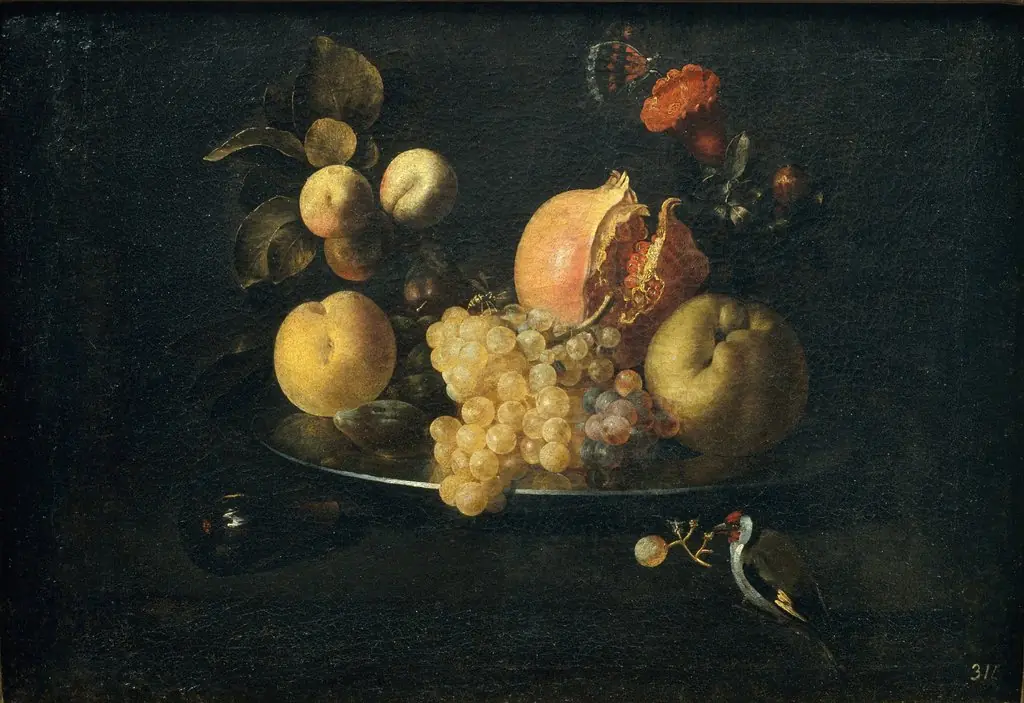 Still Life with Fruit and Goldfinch
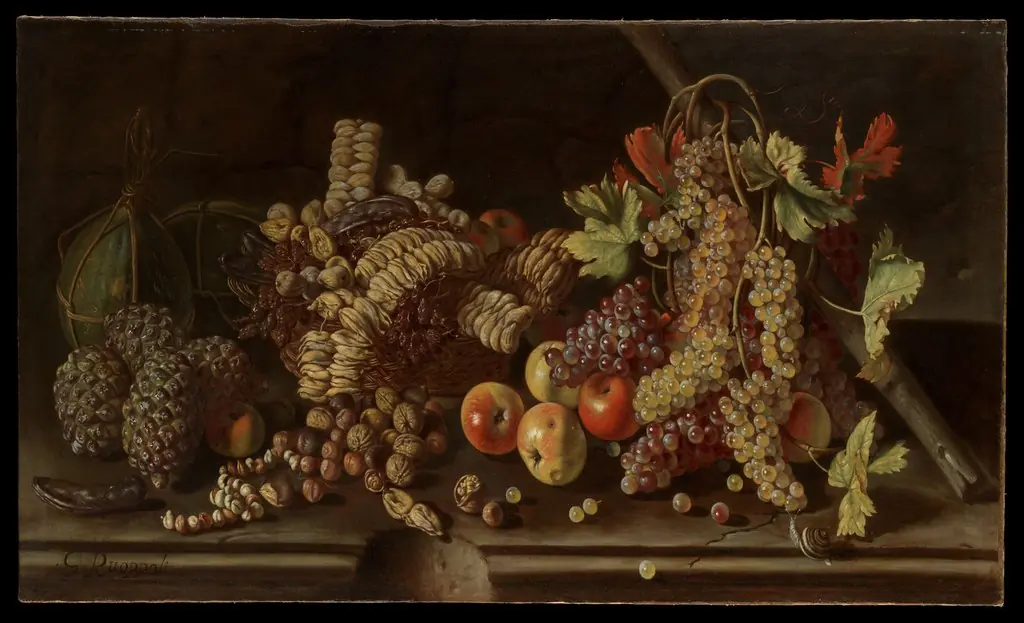 Still Life of Fruit and Nuts
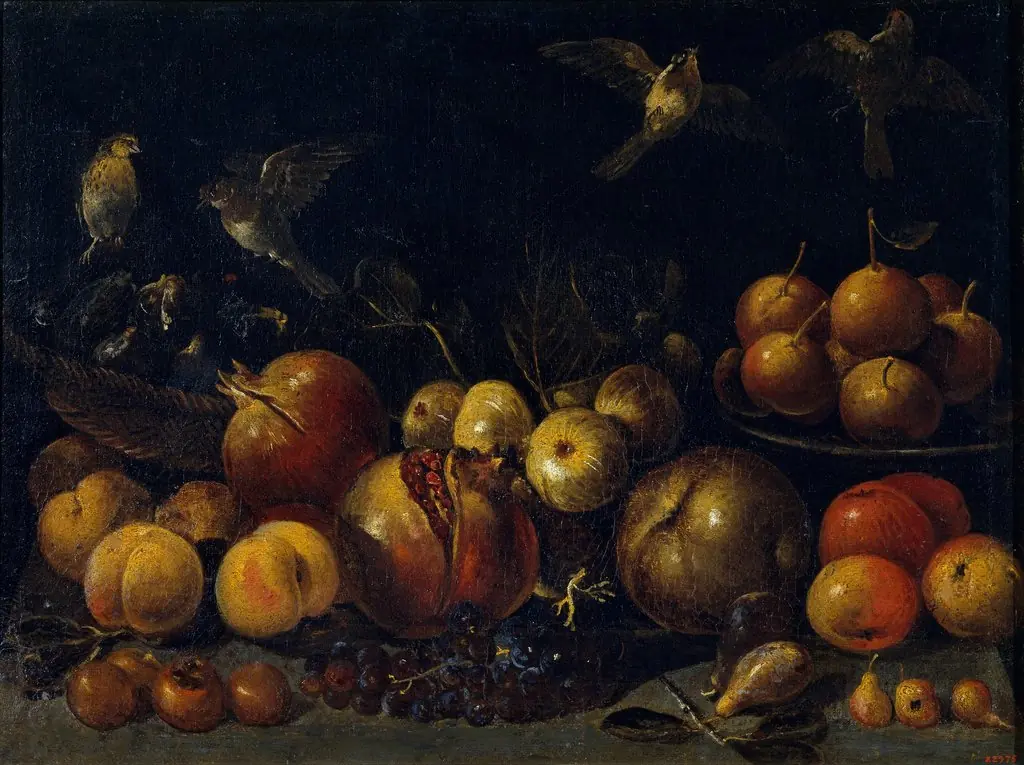 Still Life with Pomegranates, Apples, Pears, Grapes, Figs and Birds
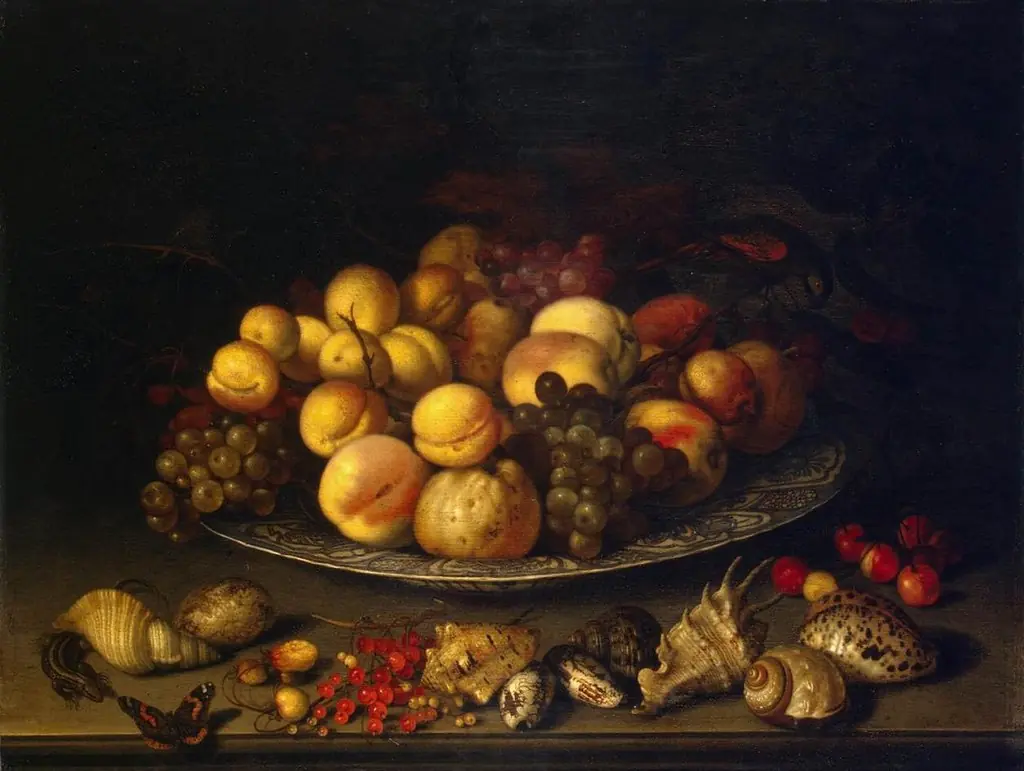 Plate with Fruits and Shells
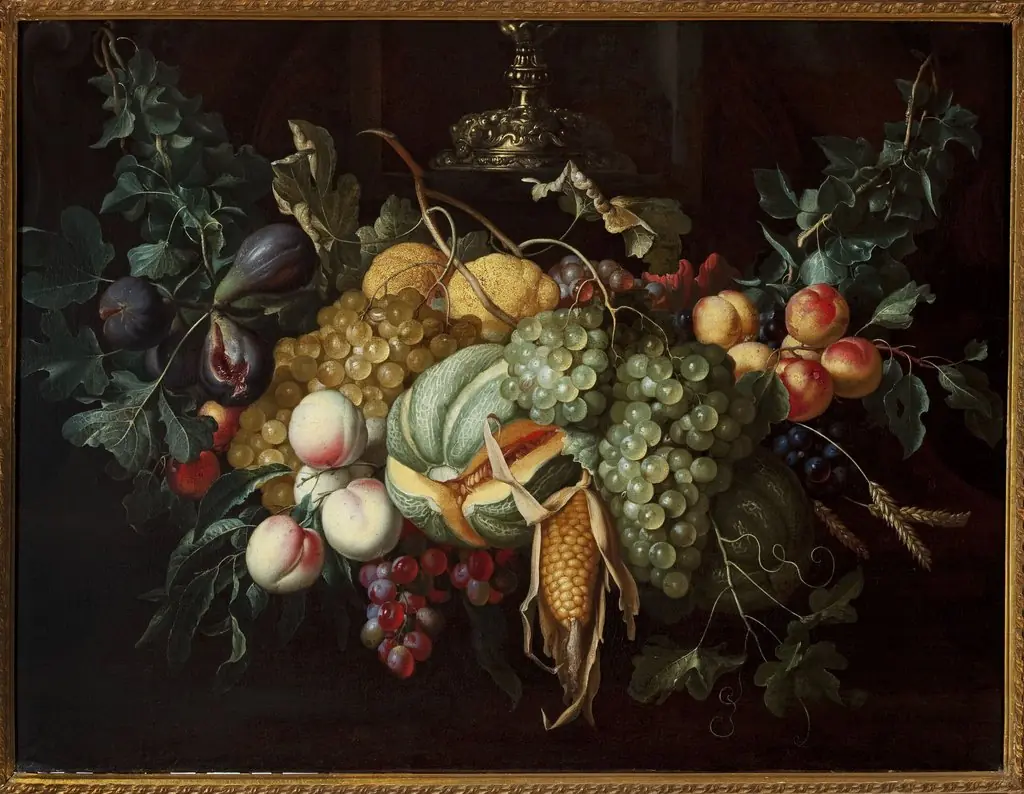 Still life with fruits and corn
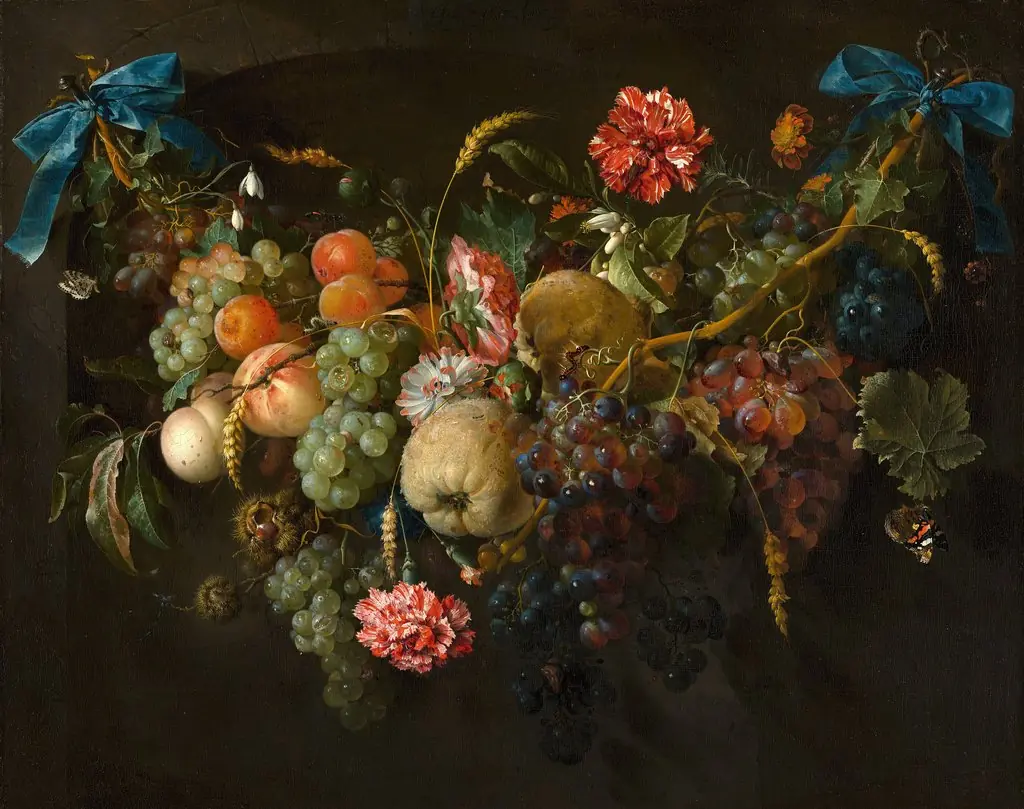 Garland of Fruit and Flowers
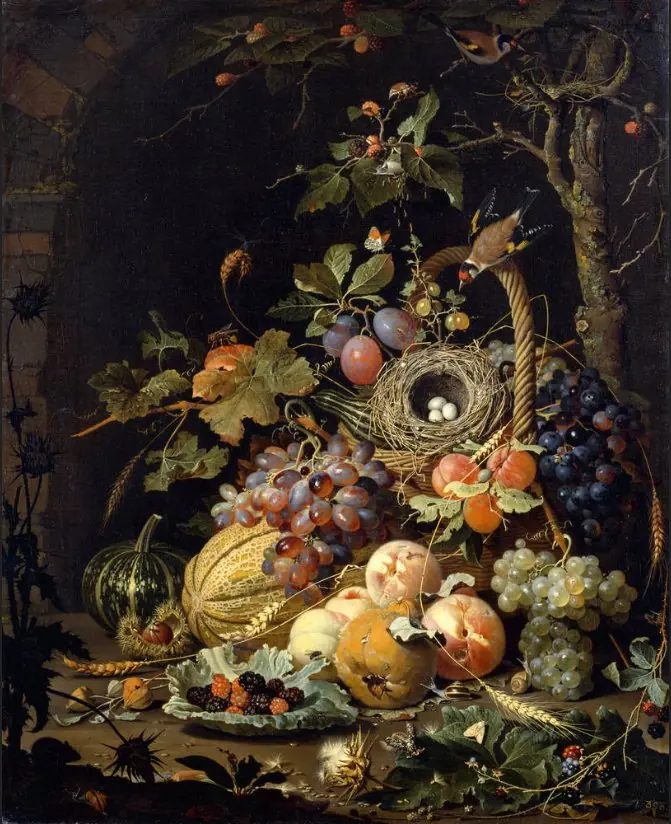 A bird's nest in a fruit basket
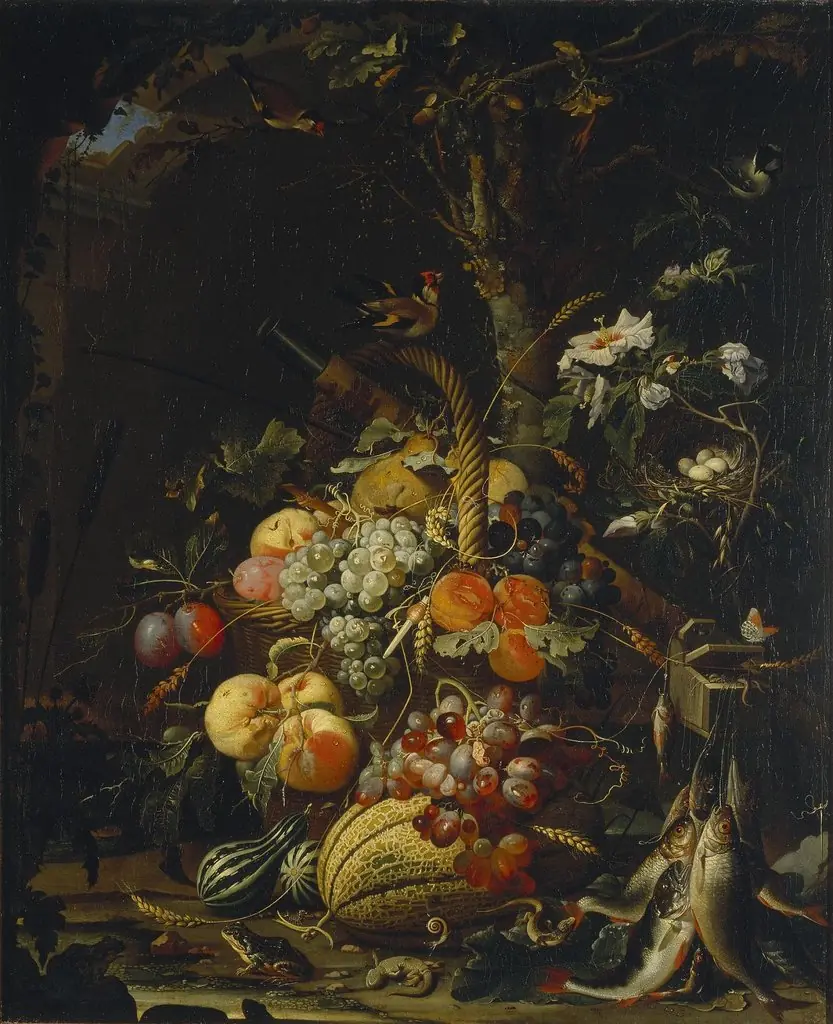 Forest floor still life with fruit, fish and a bird's nest
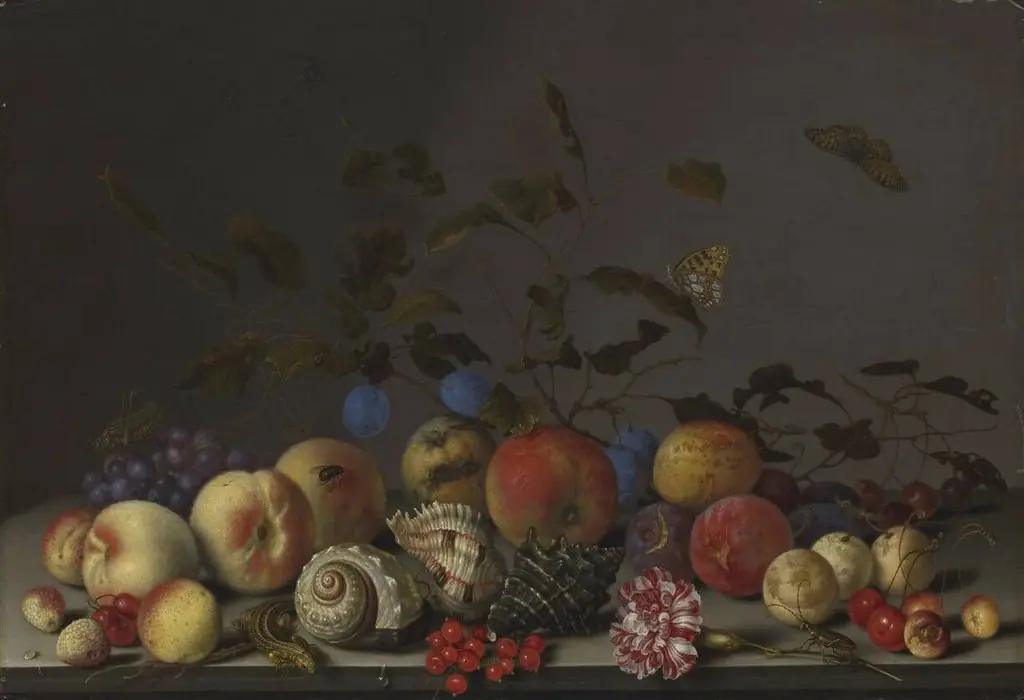 Stillleben mit Früchten und Seeschneckenhäusern