Artwork
Garland of Fruit and Flowers
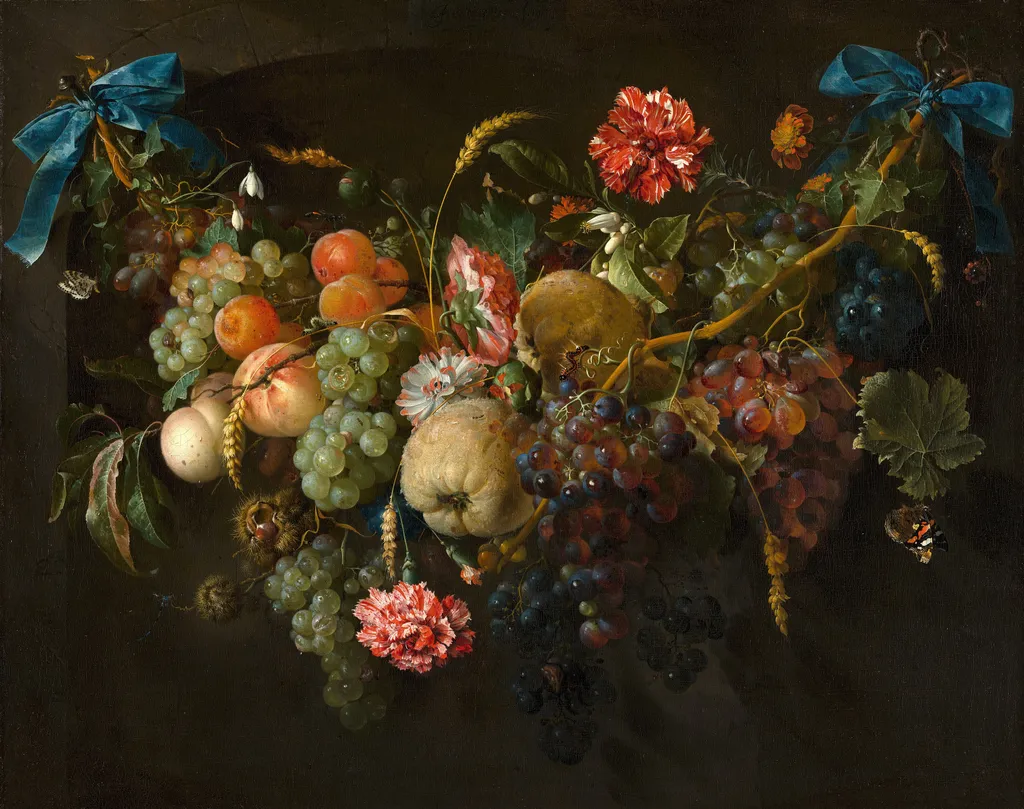
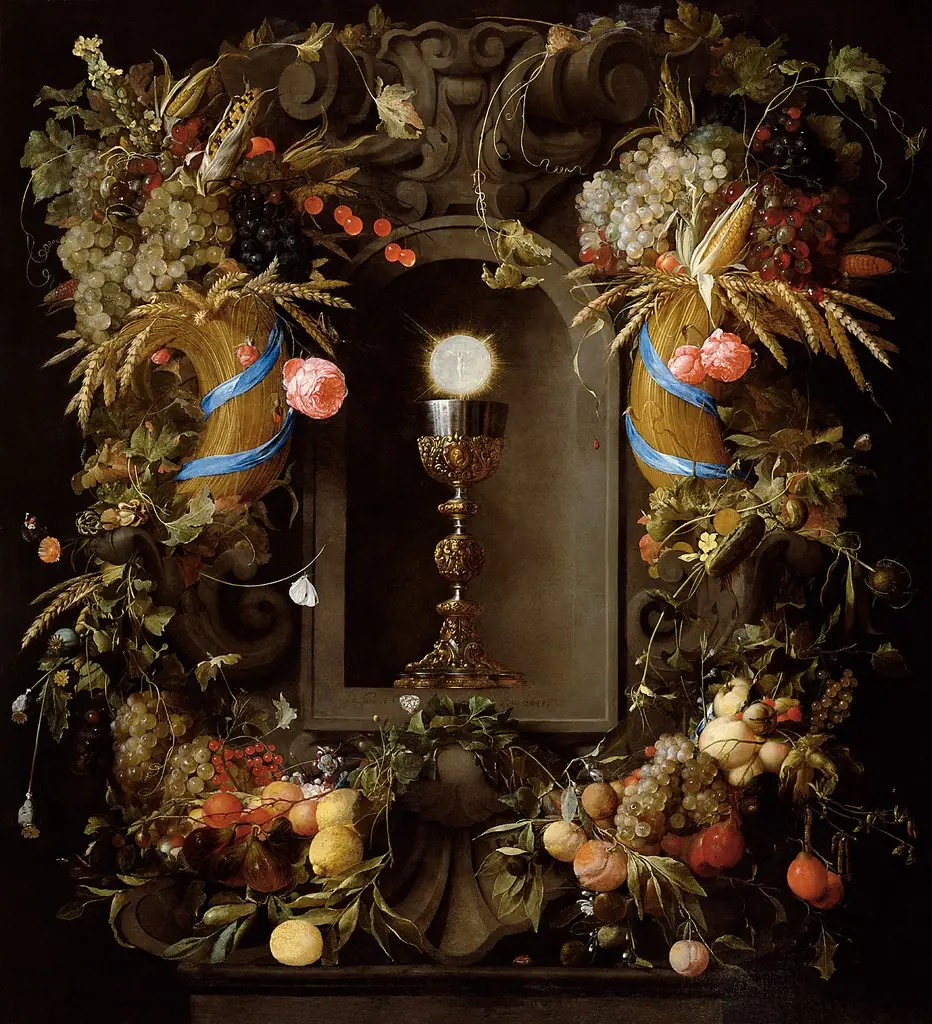
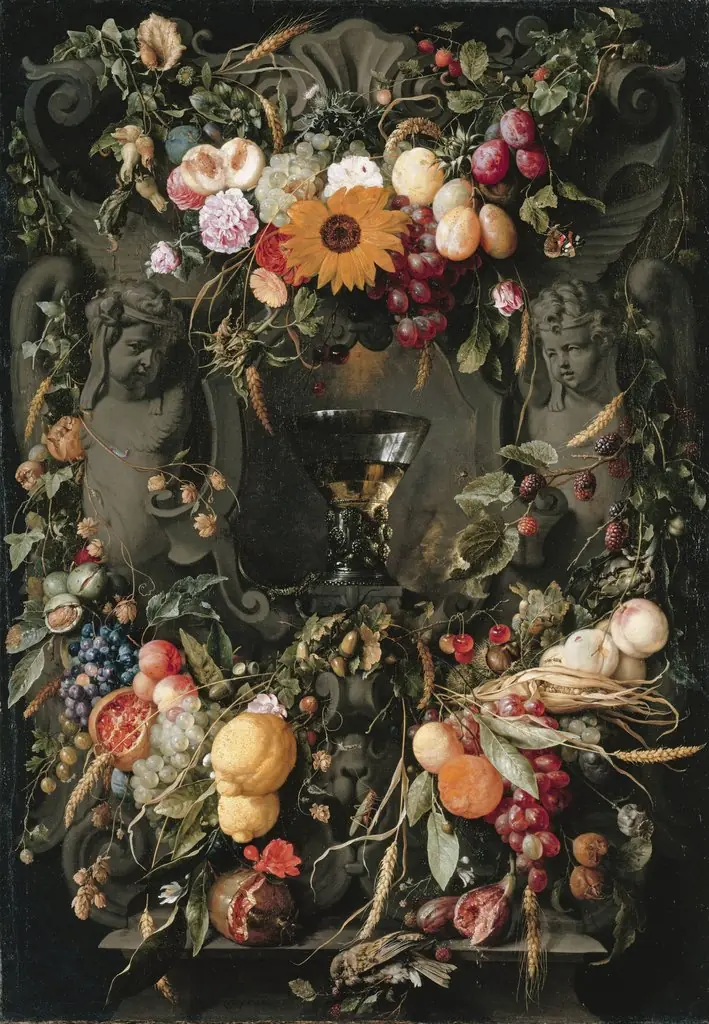
Garland of Fruit and Flowers is an oil painting by the Dutch Golden Age artist Jan Davidsz. de Heem. It dates from 1650 and is held in the collection of the Mauritshuis.
About this work
Overview
Garland of Fruit and Flowers is a 17th-century oil painting created by Jan Davidsz. de Heem around 1650, characteristic of the Dutch Golden Age’s meticulous still-life tradition.
Subject & Meaning
The painting depicts a vibrant, ribbon-tied garland combining assorted fruits (grapes, peaches, pears) and red and white flowers, emphasizing sensory detail over symbolic depth.
Technique & Style
De Heem showcases his mastery of texture and color, rendering each element with precision: the softness of petals, the sheen of fruit, and the intricacy of blue ribbons.
History & Provenance
The work is part of the Mauritshuis collection in The Hague, reflecting de Heem’s influence as a leading still-life artist of the Dutch Golden Age.
Context
Created during the 17th century’s flourishing of Dutch still-life painting, this work contributes to the genre’s popularity, highlighting the era’s appreciation for domestic, observable subjects.
Legacy
As a quintessential example of de Heem’s oeuvre, Garland of Fruit and Flowers continues to represent the technical excellence and aesthetic preferences of 17th-century Dutch still-life art.
Own this work as a print
Artist & collection
Artist
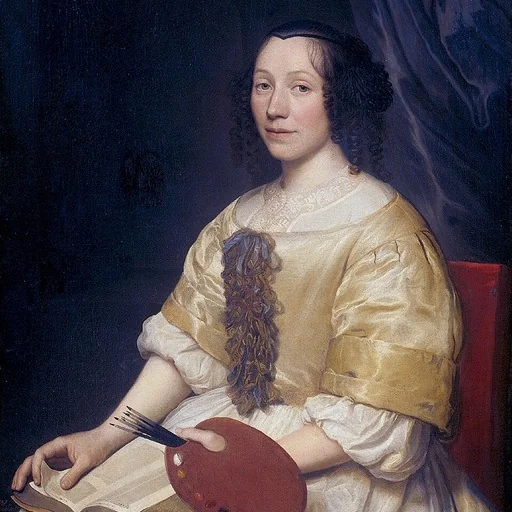
Maria van Oosterwijck (1630–1693), also spelled Oosterwyck, was a Dutch Golden Age painter, specialising in richly detailed flower paintings and other still lifes.

 Still Life with Fruits
 Früchtestilleben
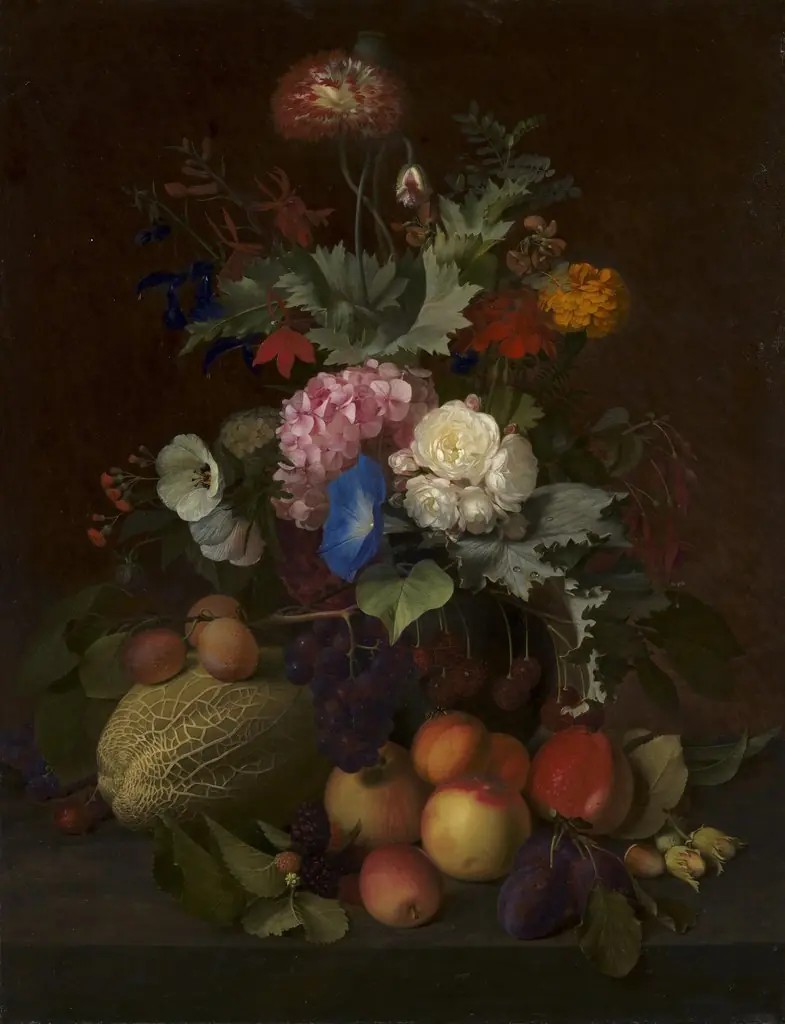 Still Life with Fruit and Flowers
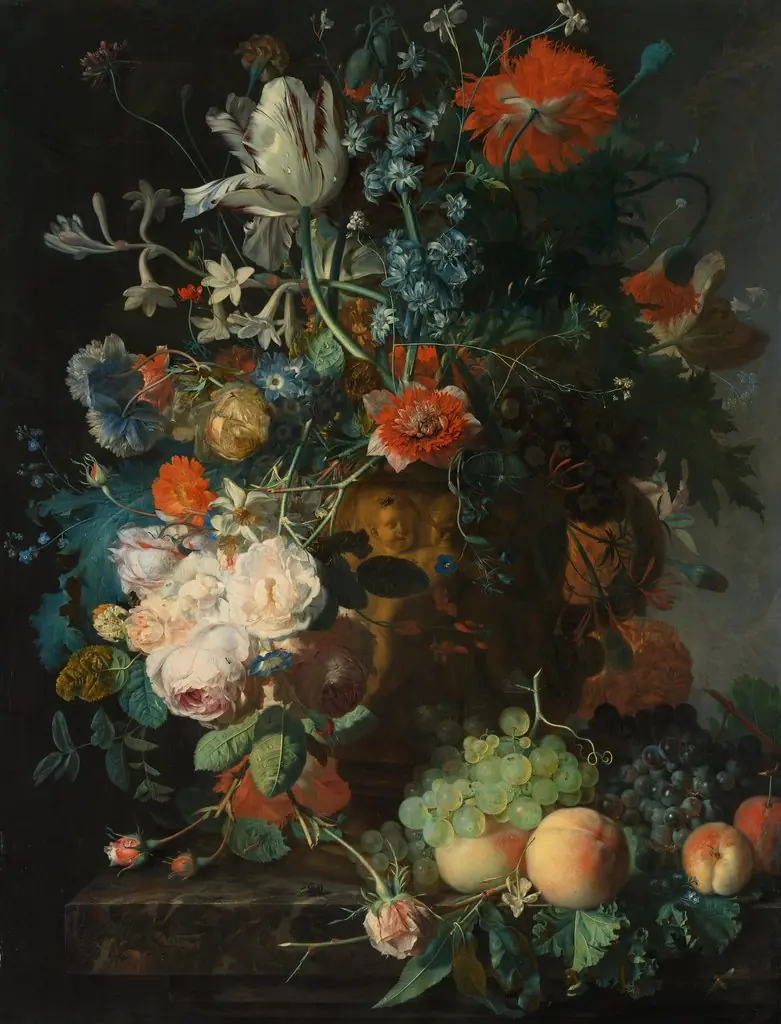 Still life with flowers and fruit
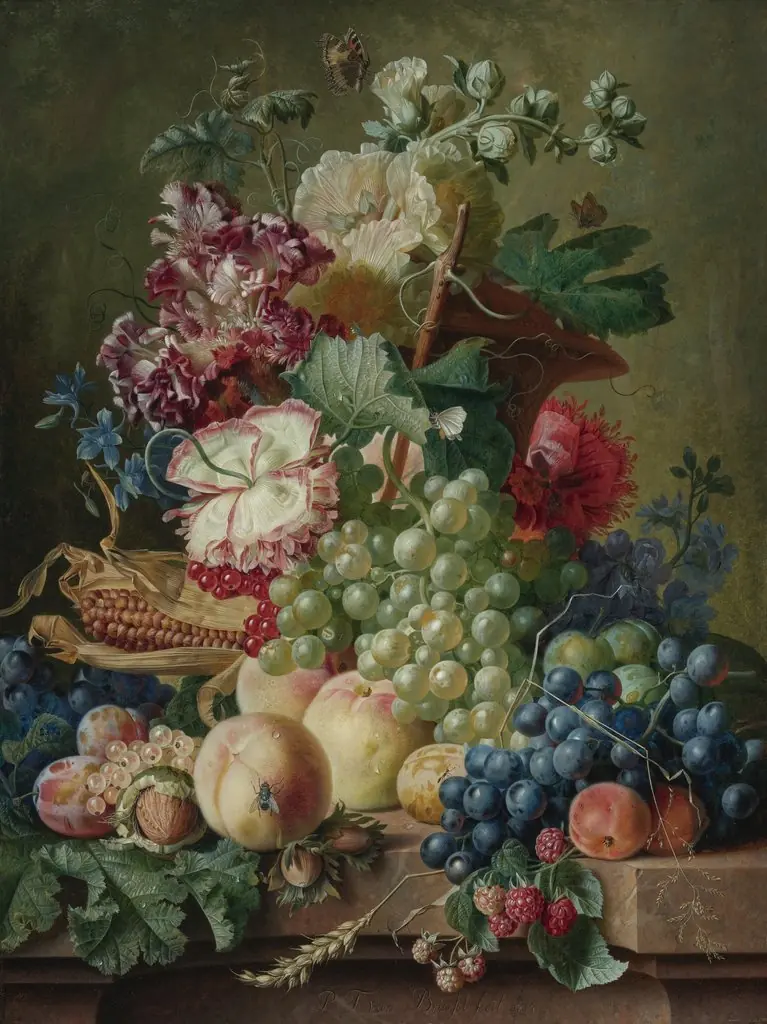 Still life of flowers and fruits on a marble ledge
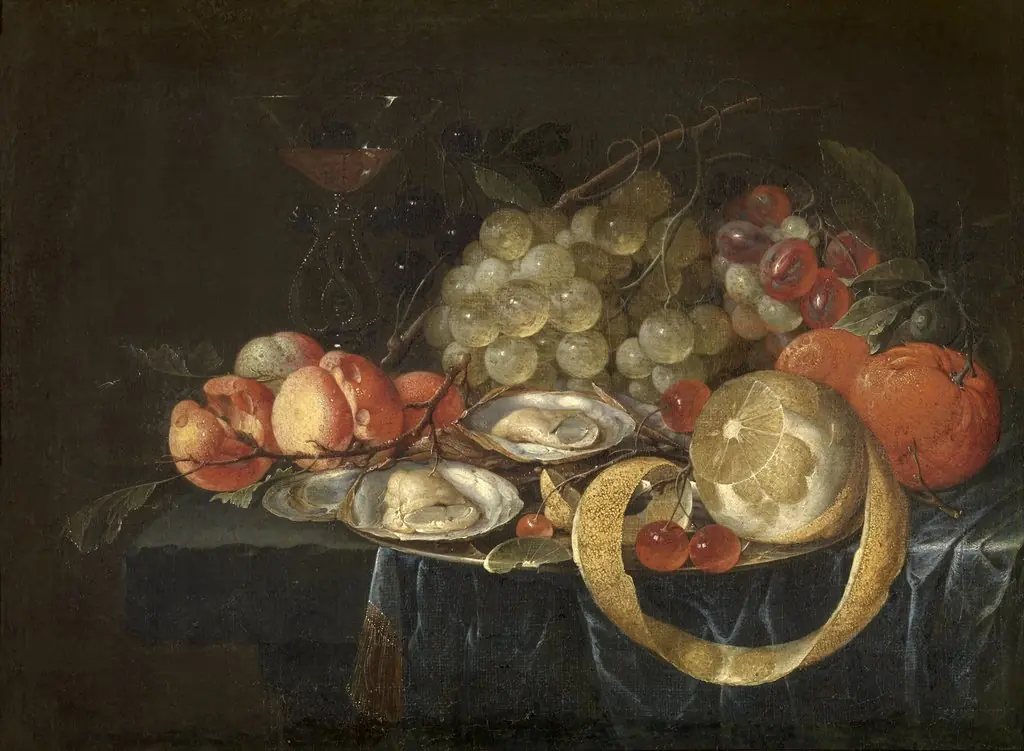 Still Life
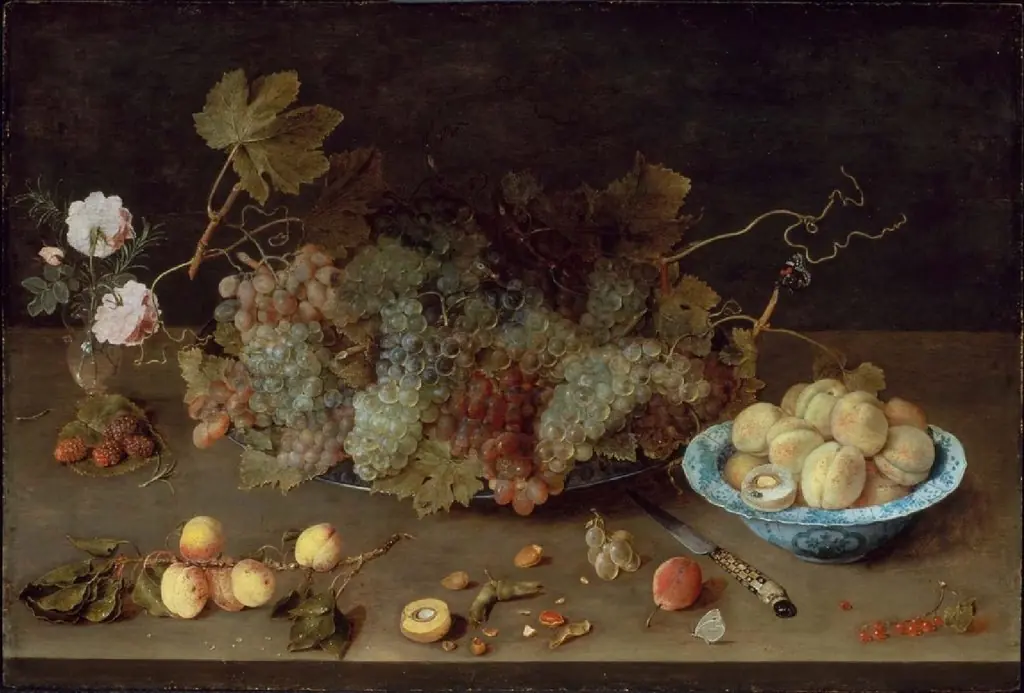 Still Life with Grapes on a Platter
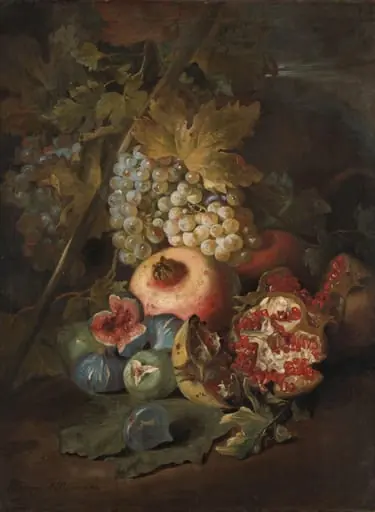 Bunches of Grapes, Pomegranates and Figs in a Landscape
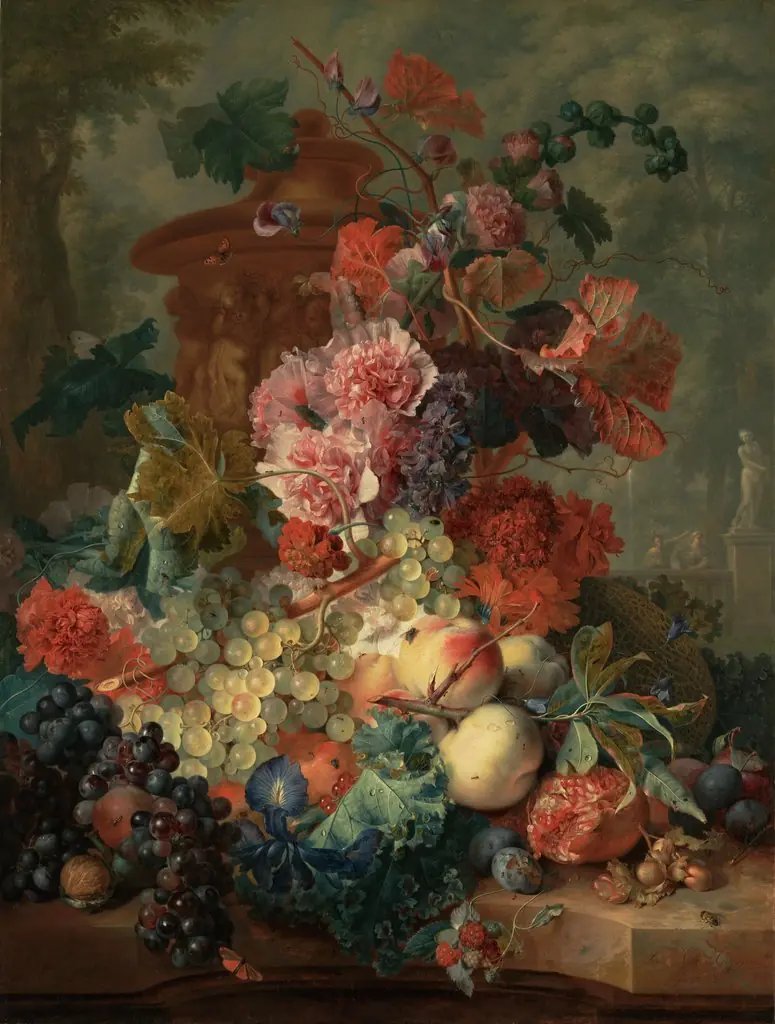 Fruit Piece
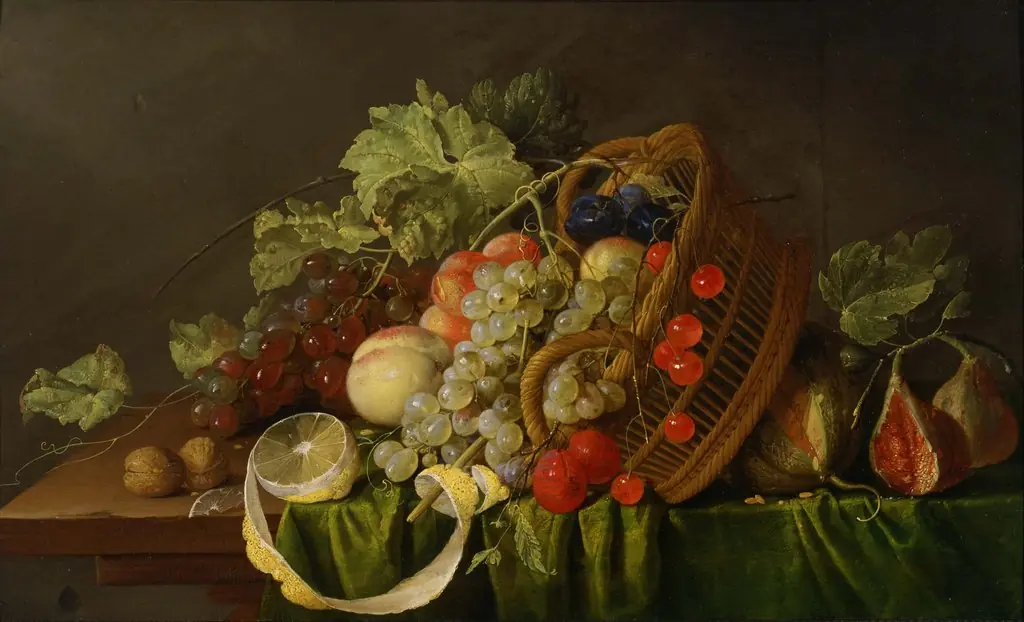 Still Life with a Basket of Fruit
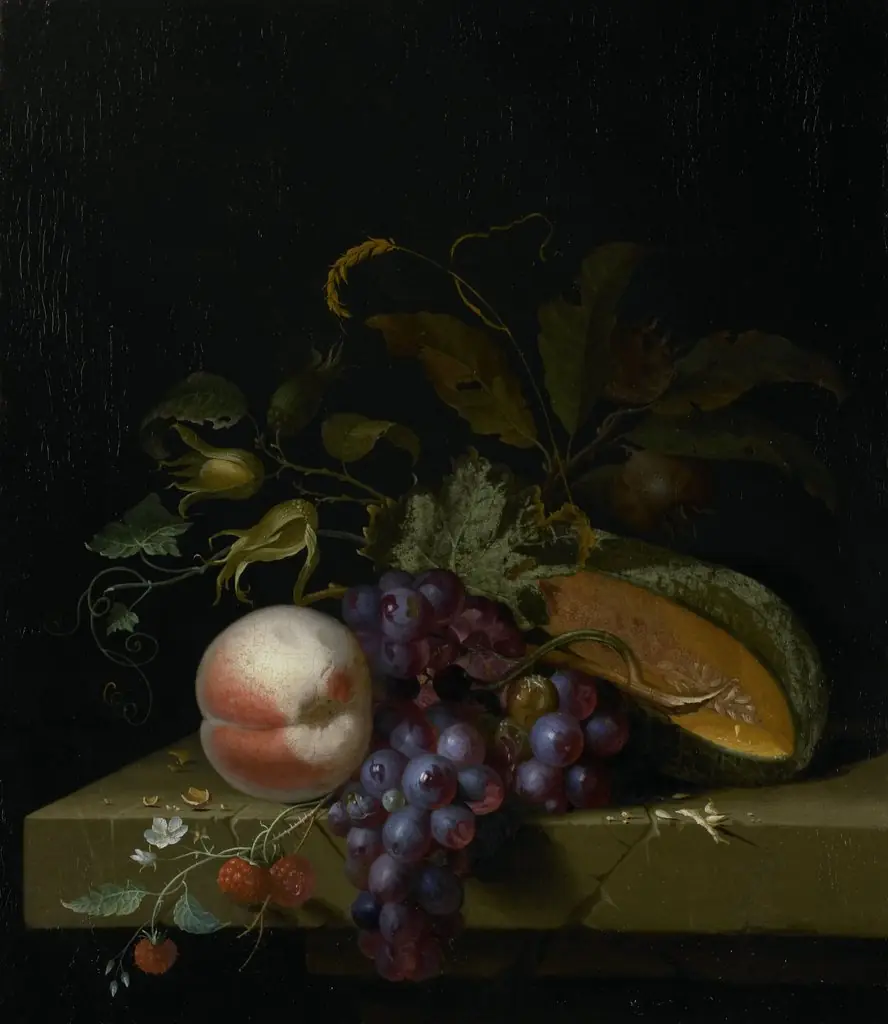 Still life with fruit
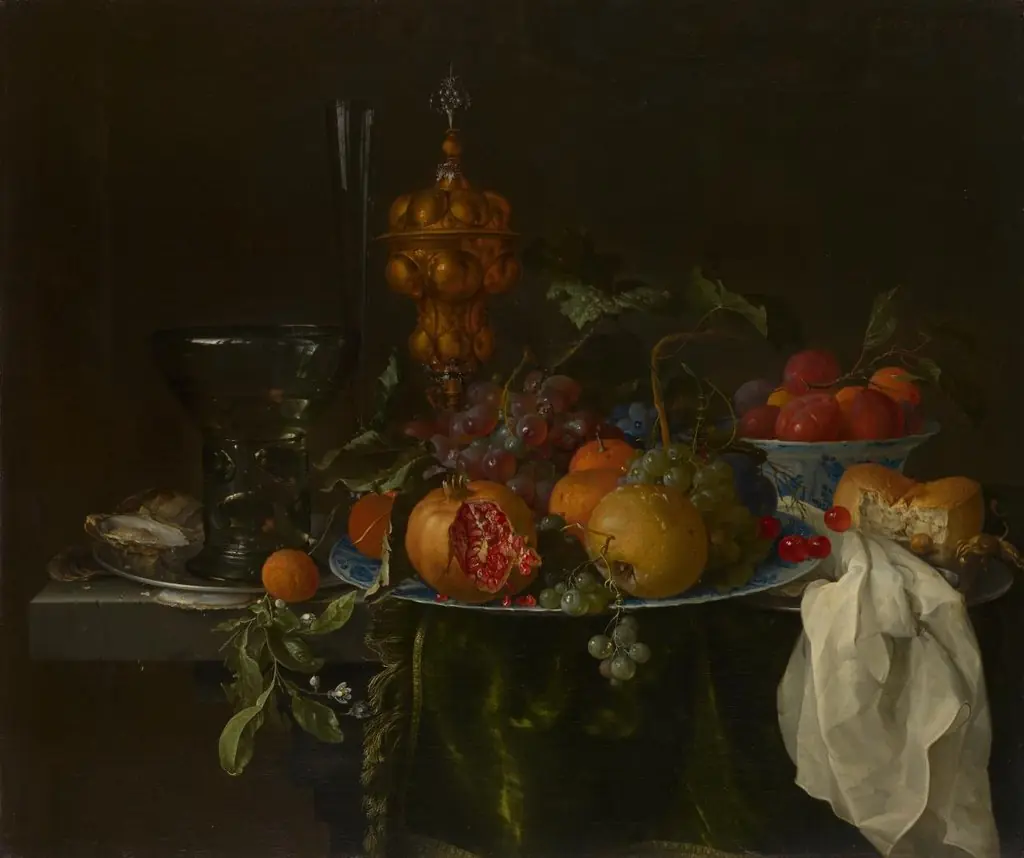 Still life with fruit