Artwork
Eleazar and Rebekah at the Well
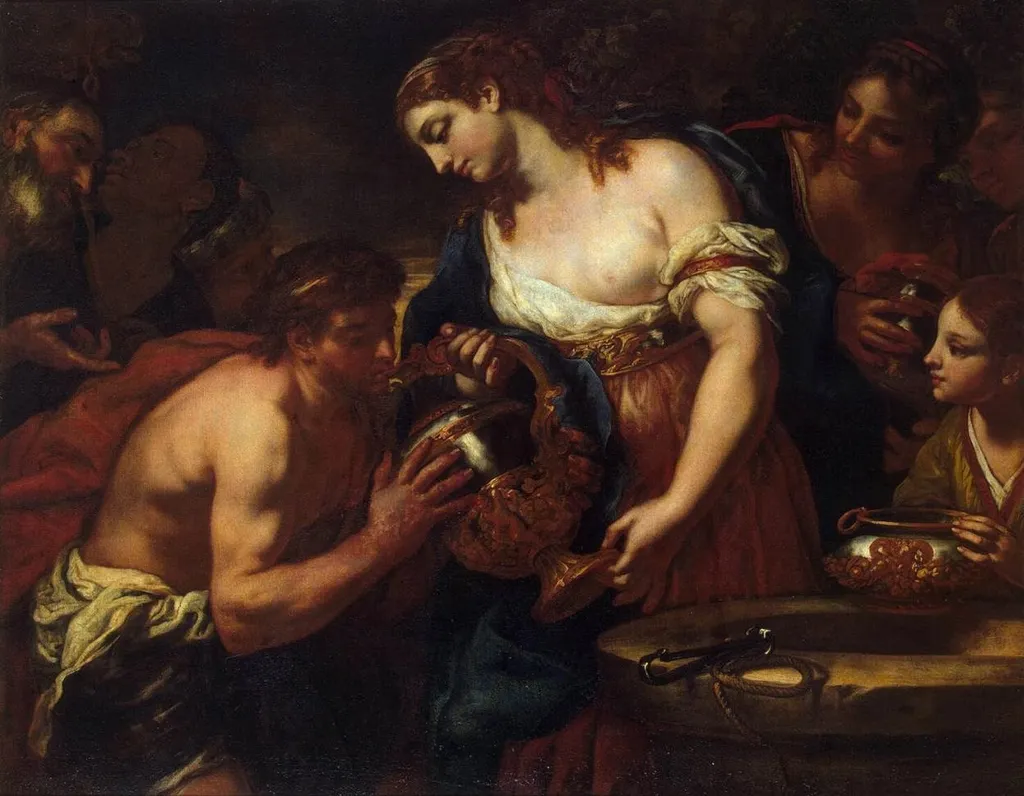
Eleazar and Rebekah at the Well is an oil painting by Johann Carl Loth. It dates from 1670 and is held in the collection of the Hermitage Museum.
About this work
Overview
Johann Carl Loth’s oil on canvas, dated 1670, portrays the biblical encounter between Eliezer and Rebecca at a well. The work is part of the collection of the State Hermitage Museum. Central figures—a woman in a flowing blue garment offering water from a jug to a shirtless man—are set against a dimly lit backdrop populated by onlookers.
Subject & Meaning
The scene references the Genesis narrative in which Abraham’s servant, Eliezer, seeks a sign of hospitality and finds Rebecca, who willingly provides water. The painting emphasizes themes of generosity and divine providence, using the exchange of water as a symbolic gesture of covenant and future marriage.
Technique & Style
Loth employs a pronounced chiaroscuro, contrasting illuminated flesh and fabric with deep shadows that recede into the background. The light catches the subjects’ faces and hands, creating a luminous focus, while surrounding figures remain muted, enhancing the drama of the central interaction. The composition balances Baroque dynamism with a restrained palette.
History & Provenance
Executed in the late seventeenth century, the canvas entered the State Hermitage Museum’s holdings, where it remains on display. Its attribution to Loth, a German-born painter active in Venice, reflects his engagement with Italian Baroque traditions and his reputation for narrative religious works.
Artist & collection