Artwork
Surroundings of the Habsburg ruins
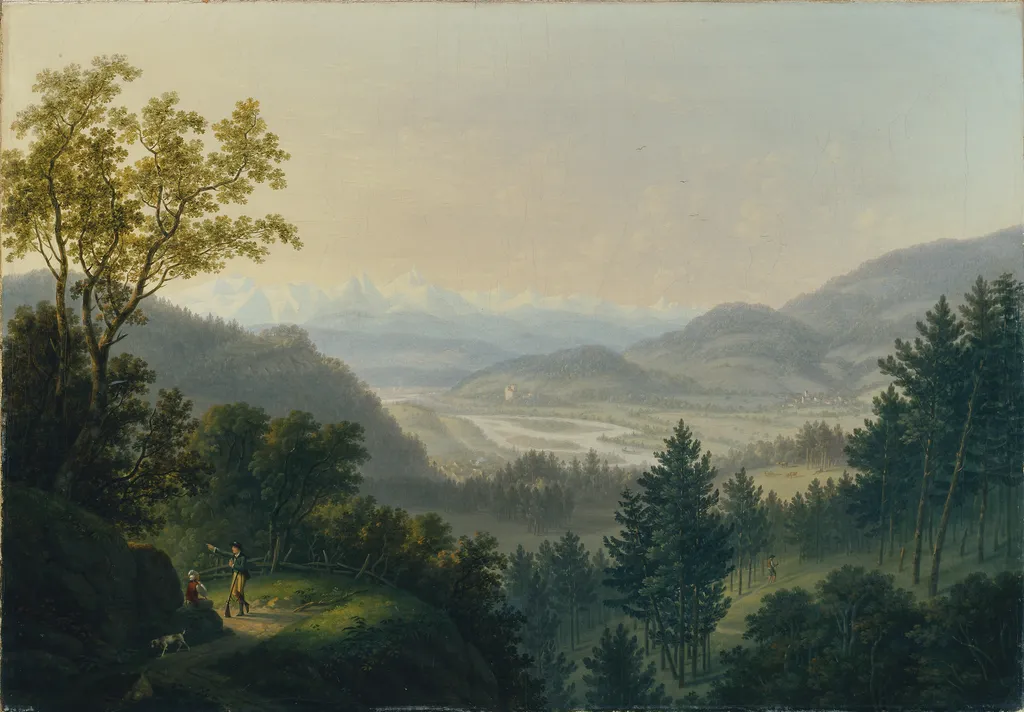
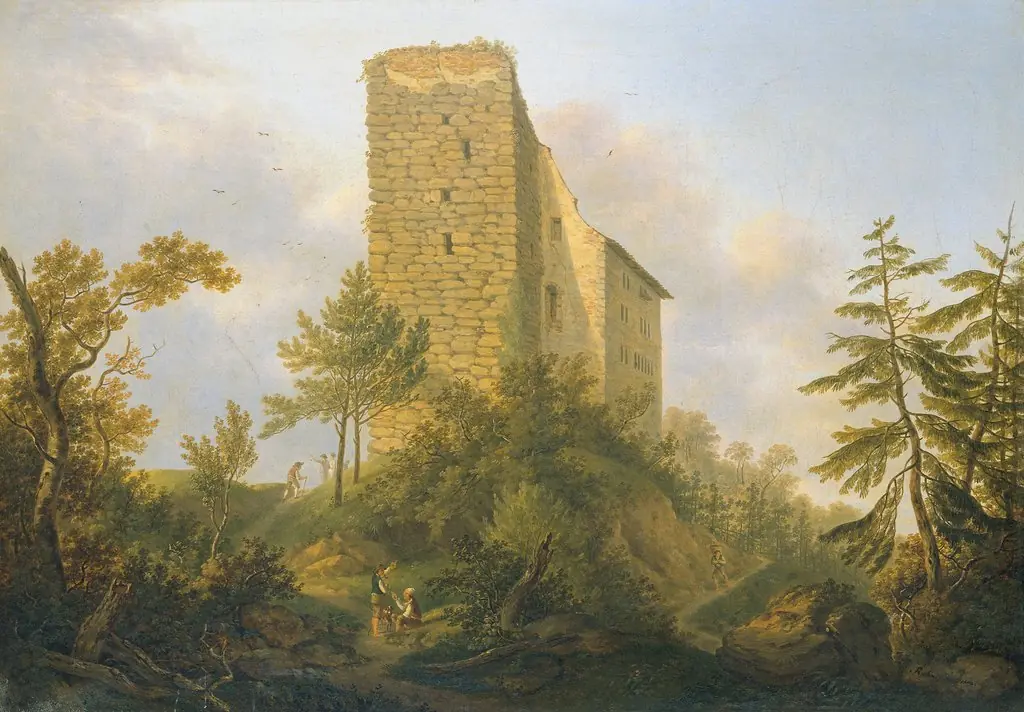
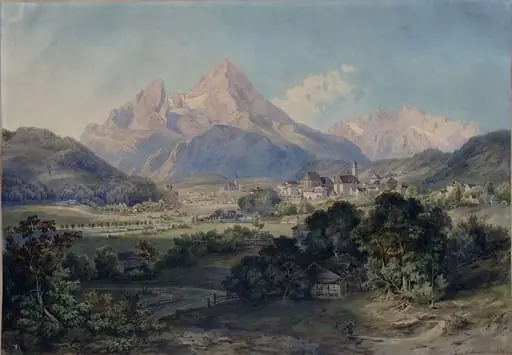
Surroundings of the Habsburg ruins is an oil painting by Johann Caspar Rahn. It dates from 1803 and is held in the collection of the Kunsthistorisches Museum.
About this work
Overview
Painted in 1803 by Johann Caspar Rahn, this oil on canvas depicts the ruins of Habsburg Castle nestled within a quiet alpine valley. The work belongs to the collection of the Kunsthistorisches Museum in Vienna. Rahn captures the site not as a grand monument but as a quiet relic absorbed into the surrounding terrain, emphasizing solitude and the passage of time over architectural grandeur.
Subject & Meaning
The painting centers on the weathered remains of Habsburg Castle, perched on a distant hill, its presence subdued rather than heroic. Figures and a dog in the foreground suggest quiet human presence, reinforcing the theme of nature reclaiming human history. The absence of drama or narrative invites contemplation of decay, memory, and the enduring calm of the landscape over political legacy.
Technique & Style
Rahn employs a restrained palette of soft grays, muted greens, and pale blues to evoke atmospheric stillness. Brushwork is delicate, with hazy skies and gently blurred contours enhancing the sense of distance and tranquility. Light is diffused, unobtrusive, and evenly distributed, allowing the natural topography to dominate the composition without dramatic contrast or focal intensity.
History & Provenance
Created during the early 19th century, the painting reflects a growing interest in regional heritage and landscape as subjects worthy of artistic attention. It entered the Kunsthistorisches Museum’s collection in the 19th century, likely through acquisition or donation tied to Austrian cultural preservation efforts. Its provenance remains largely unaltered since its creation.
Context
Rahn worked during a period when Swiss and Austrian artists increasingly turned to local topography as subjects, moving away from idealized classical scenes. The depiction of Habsburg Castle aligns with a broader trend of romanticizing ancestral sites not through glorification, but through quiet integration into the natural world, reflecting contemporary shifts in historical consciousness.
Legacy
Though not widely exhibited outside institutional collections, the painting exemplifies a quiet strain of early 19th-century landscape painting in Central Europe. Rahn’s approach—subdued, observational, and devoid of sentimentality—offers a counterpoint to more dramatic Romantic works, influencing later regional artists who favored understated naturalism over narrative spectacle.
Own this work as a print
Artist & collection

 Bergisel
 Mountain landscape
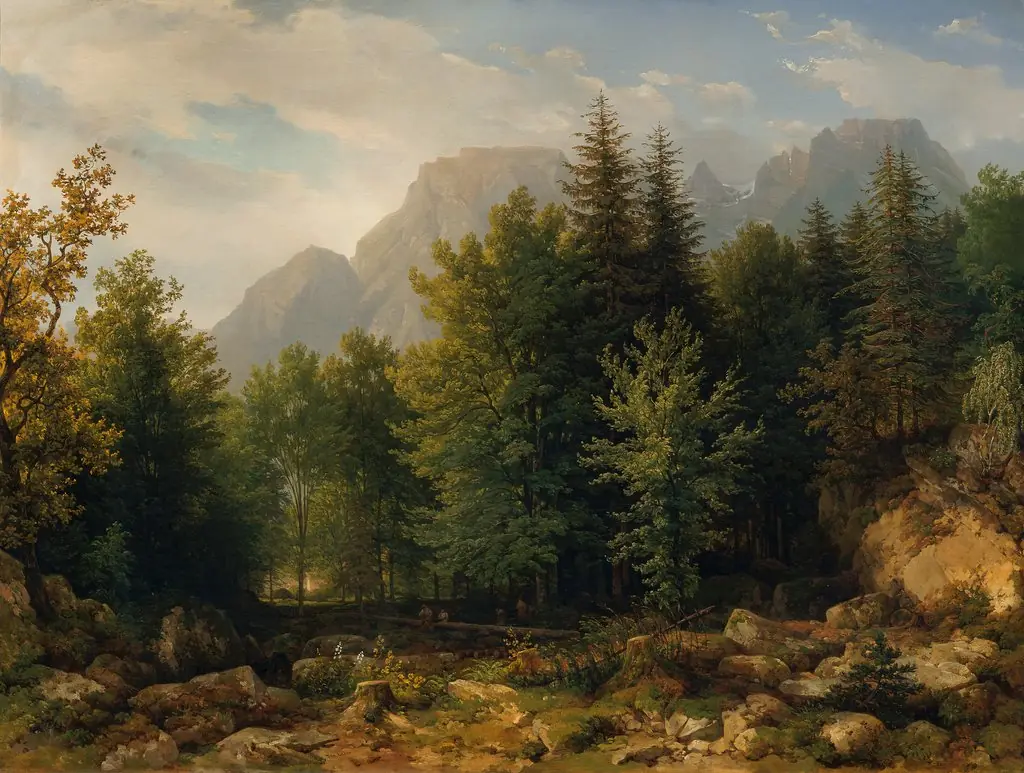 Forest Landscape in the High Mountains
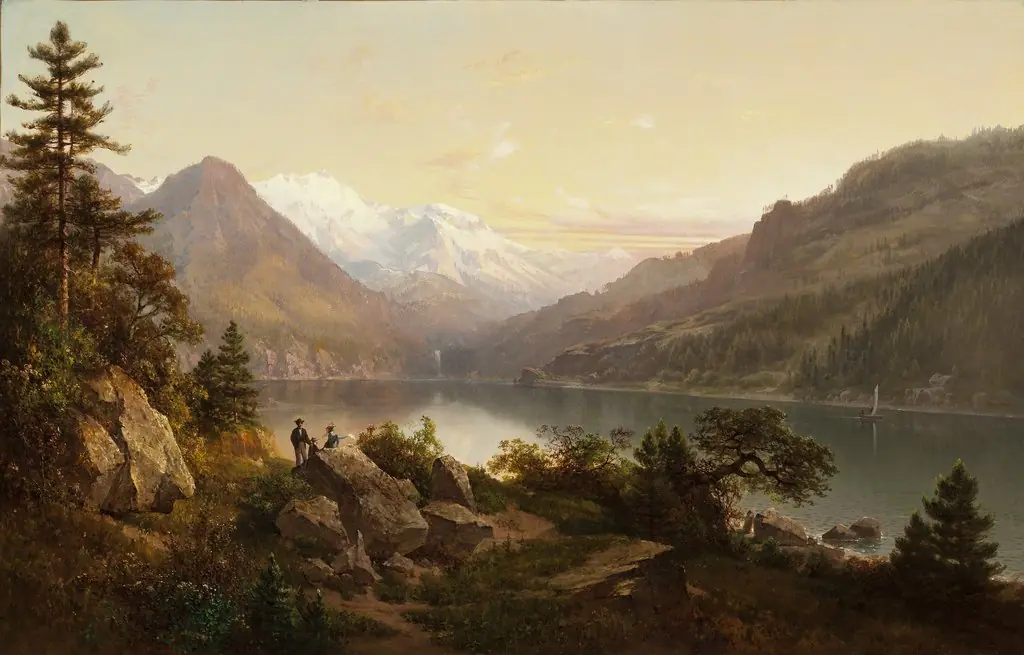 Emerald Bay, Lake Tahoe
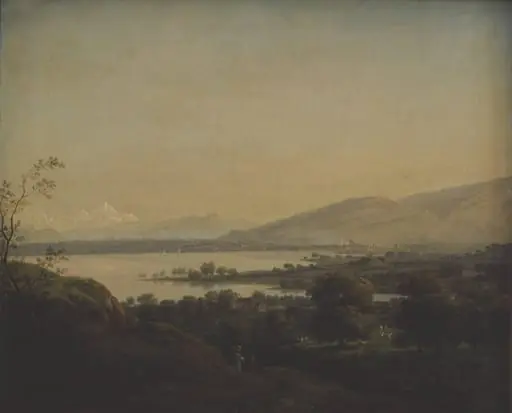 A View Across Lake Leman Towards Mont Blanc and Geneva
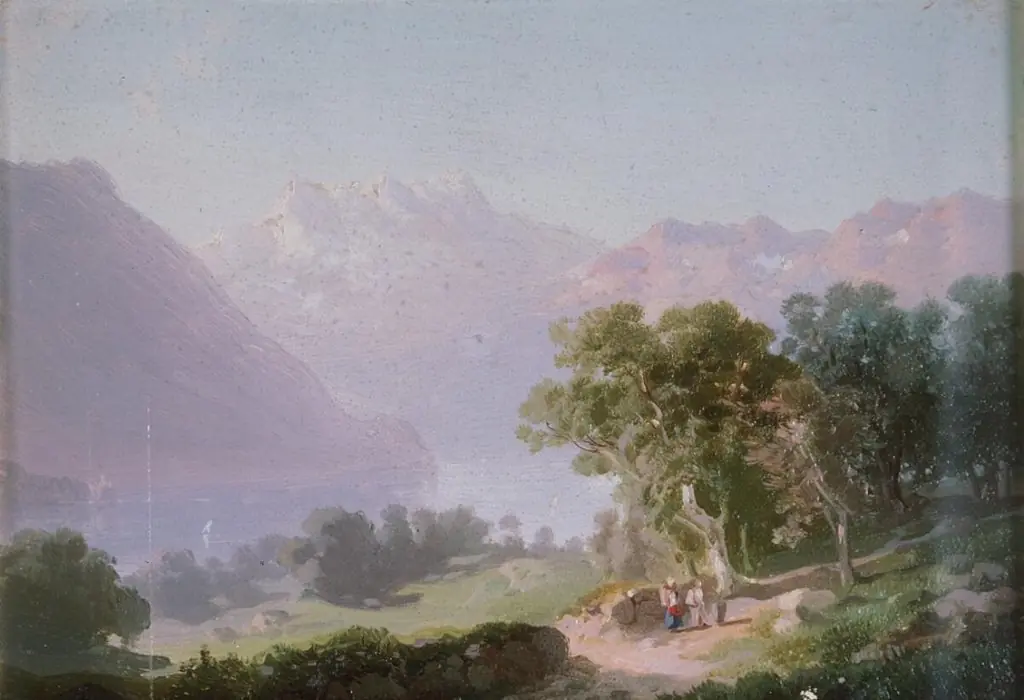 Mountain landscape II
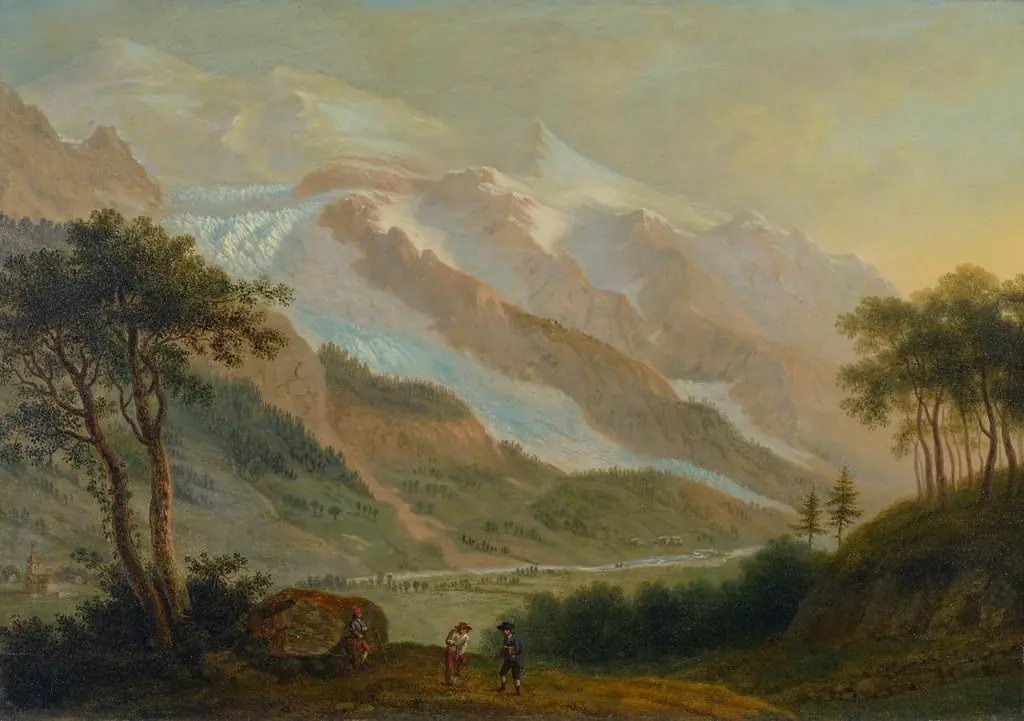 Chamonix mit dem Montblanc
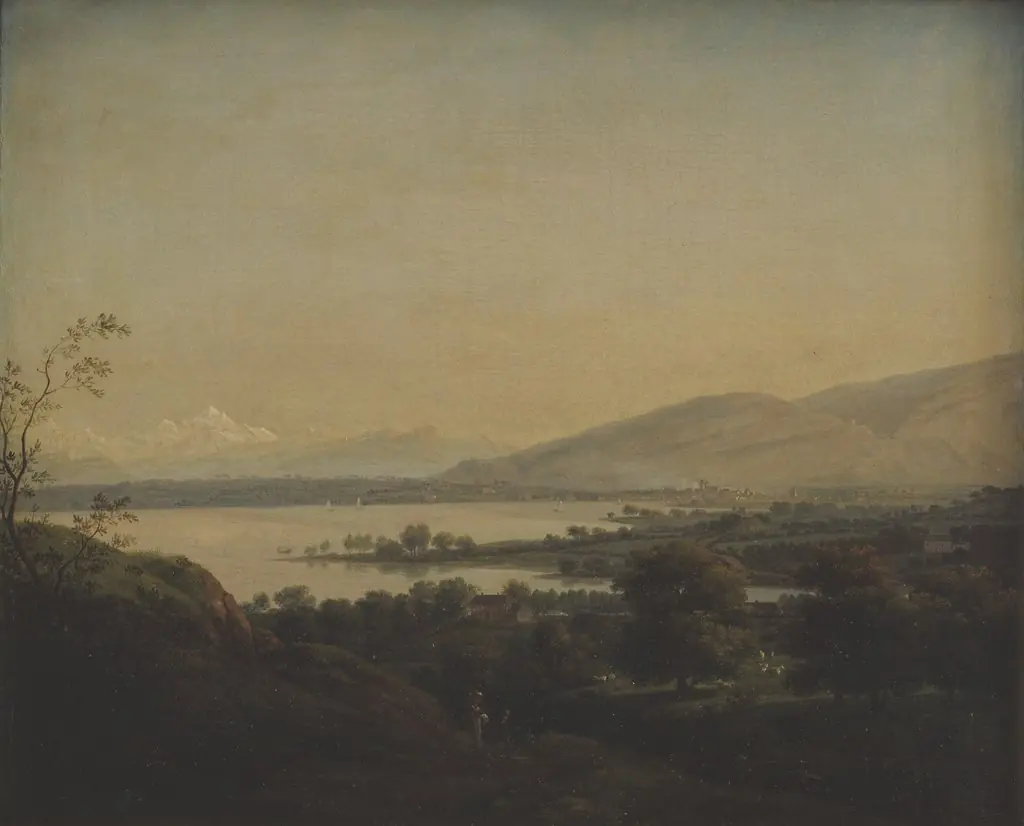 A View Across Lake Leman Towards Mont Blanc and Geneva
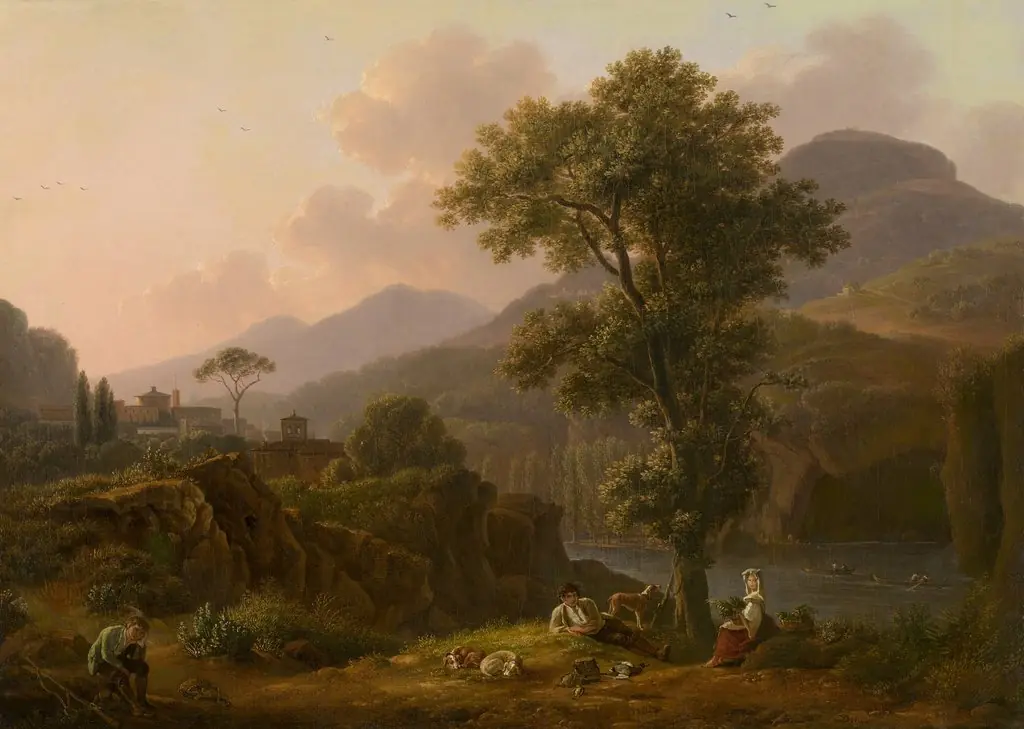 Italian Landscape
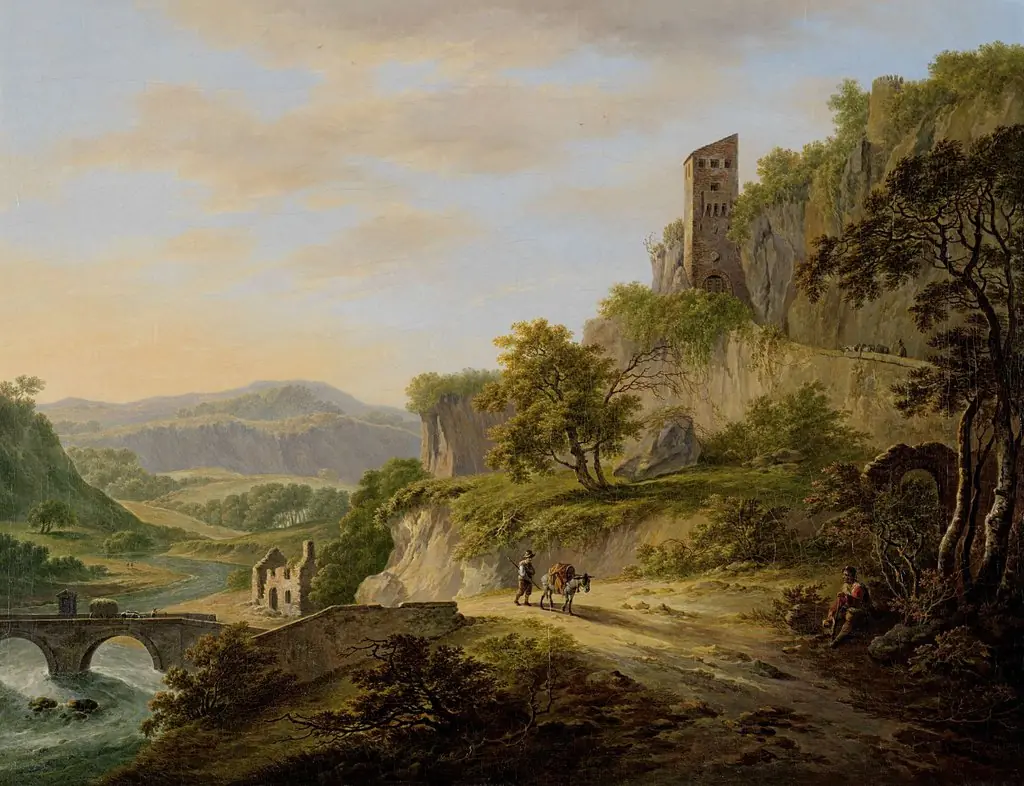 Gezicht op Civita Castellana
 The Watzmann and town of Berchtesgaden, Bavaria