Artwork
The Watzmann and town of Berchtesgaden, Bavaria
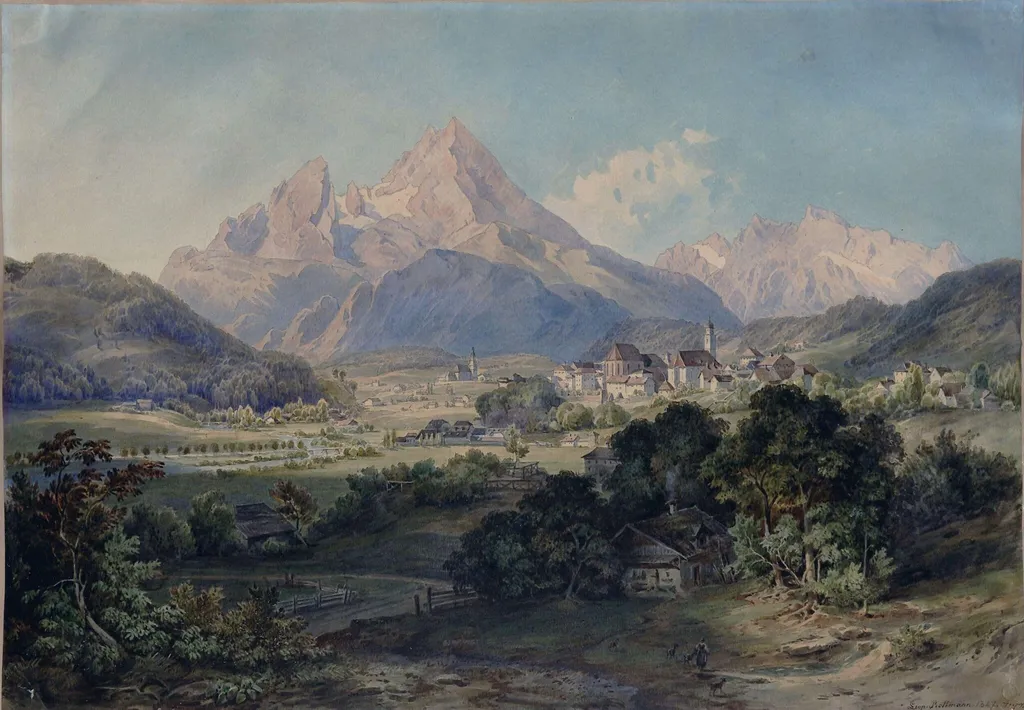
The Watzmann and town of Berchtesgaden, Bavaria is a watercolor work on paper by the German Romanticist artist Leopold Rottmann. It dates from 1847 and is held in the collection of the Victoria and Albert Museum.
About this work
Overview
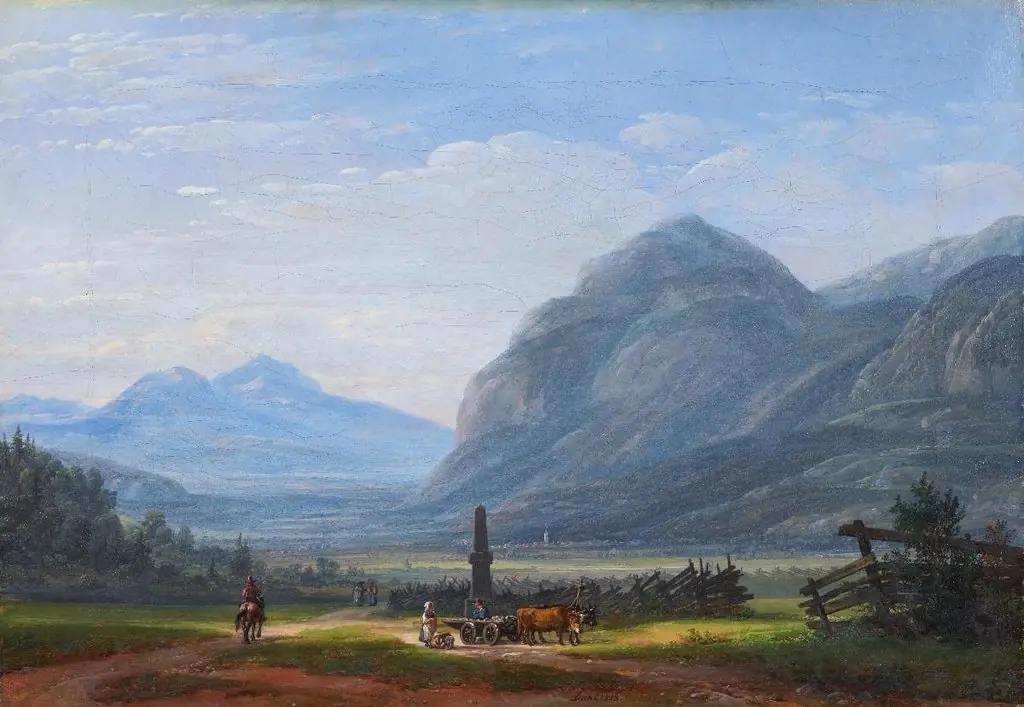
Leopold Rottmann’s 1847 watercolour depicts the Bavarian landscape of the Watzmann massif rising behind the modest settlement of Berchtesgaden. The composition balances the dramatic, snow‑capped peaks with a tranquil foreground of houses and trees, all rendered in a light blue sky punctuated by scattered clouds.
Subject & Meaning
The work juxtaposes the imposing natural grandeur of the Watzmann range with the human presence of Berchtesgaden, reflecting Romantic interests in the sublime power of nature alongside everyday rural life. The contrast between rugged, dark‑toned mountains and the softer, greener town suggests a harmonious coexistence of wilderness and habitation.
Technique & Style
Executed in transparent watercolour, Rottmann employs a muted palette of browns, grays, and greens to differentiate geological forms from foliage and architecture. Delicate washes convey atmospheric depth, while finer brushwork details the town’s structures and the snow‑lined summits, exemplifying the Romantic emphasis on precise observation within a lyrical setting.
History & Provenance
Signed and dated by the artist, the painting originates from Rottmann’s productive mid‑career period, when he frequently traveled through the Alpine regions. Its documented provenance traces back to the artist’s estate, though subsequent ownership records remain limited.
Context
Rottmann was associated with the German Romantic movement, which valorized dramatic landscapes as expressions of emotional and spiritual experience. The Watzmann, a frequent motif for Romantic painters, symbolized the awe‑inspiring aspects of the Alps that captivated early‑19th‑century audiences.
Own this work as a print
Artist & collection


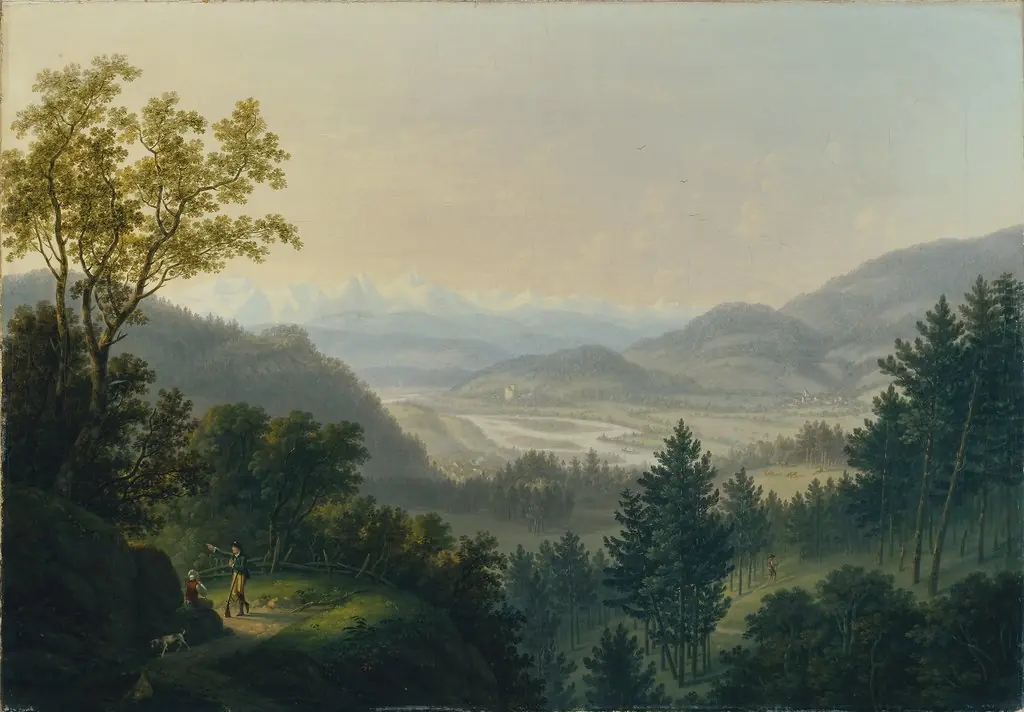 Surroundings of the Habsburg ruins
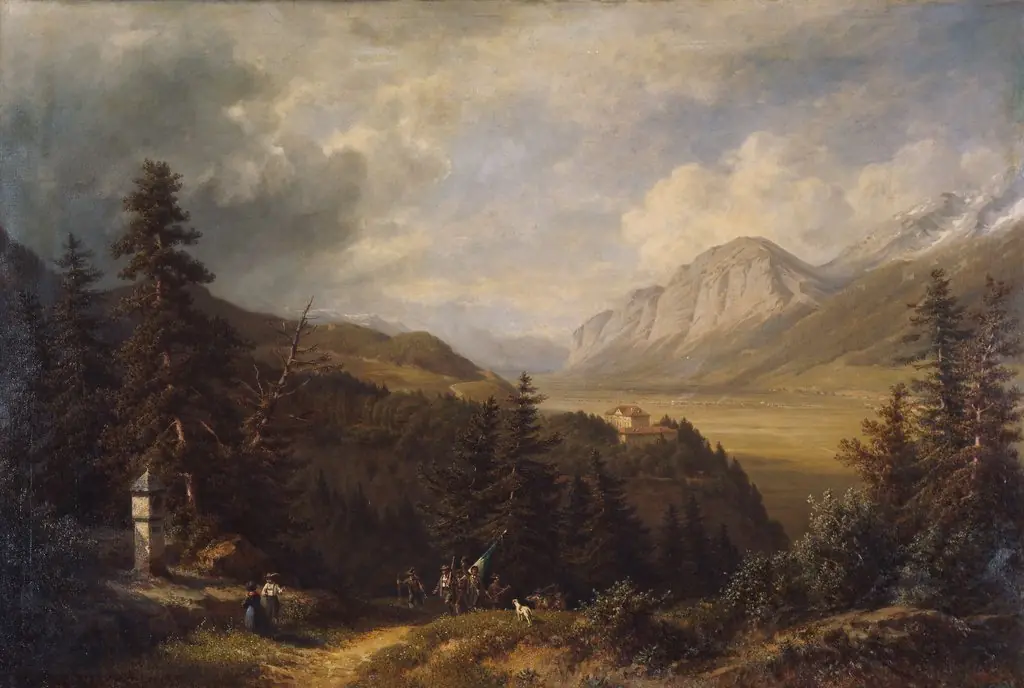 Bergisel
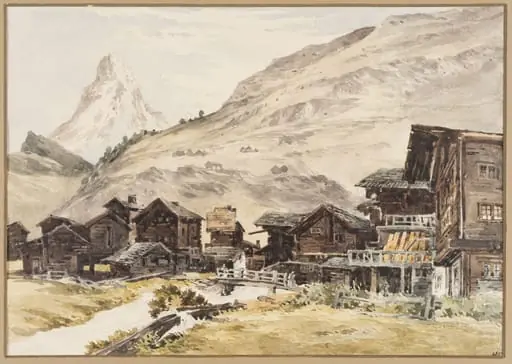 Houses and Stream at Zermatt, Switzerland
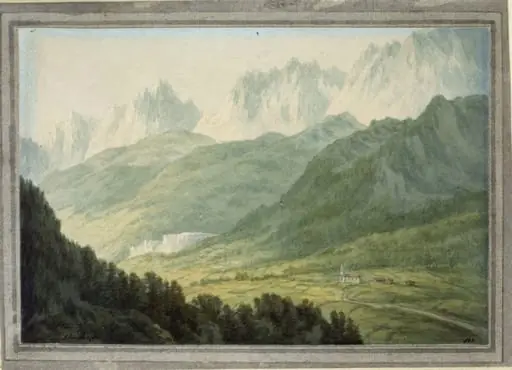 The Valley of Chamouni (Chamonix)
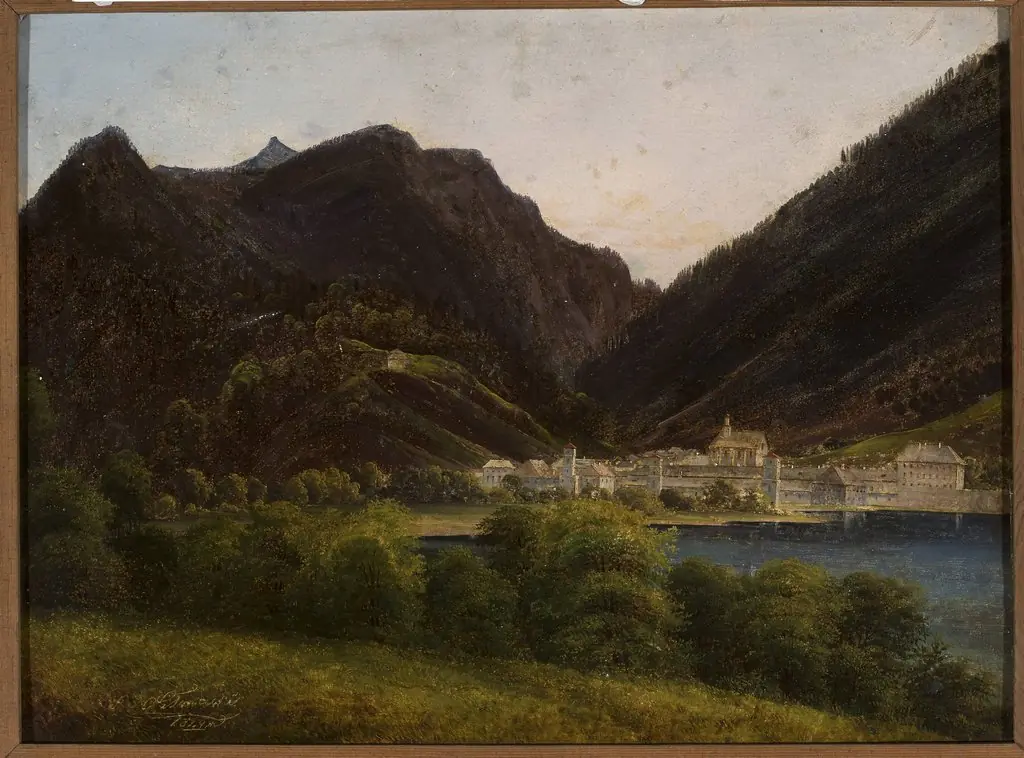 View of the city in the valley
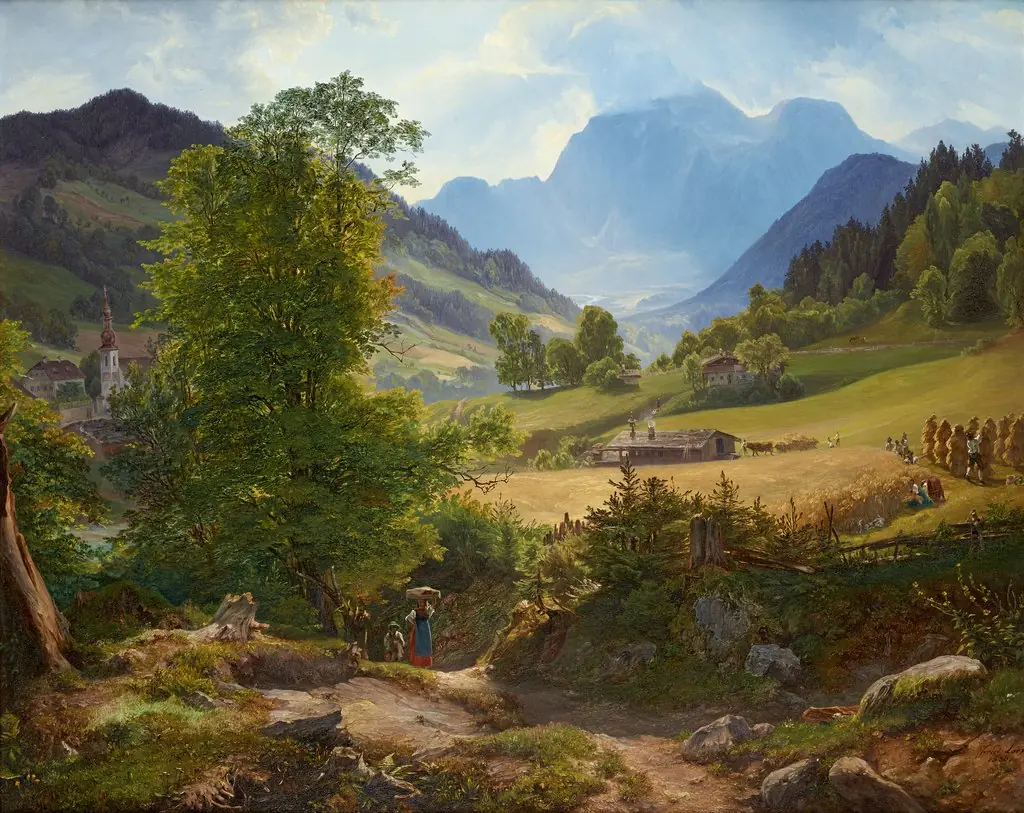 Die Ramsau bei Berchtesgaden
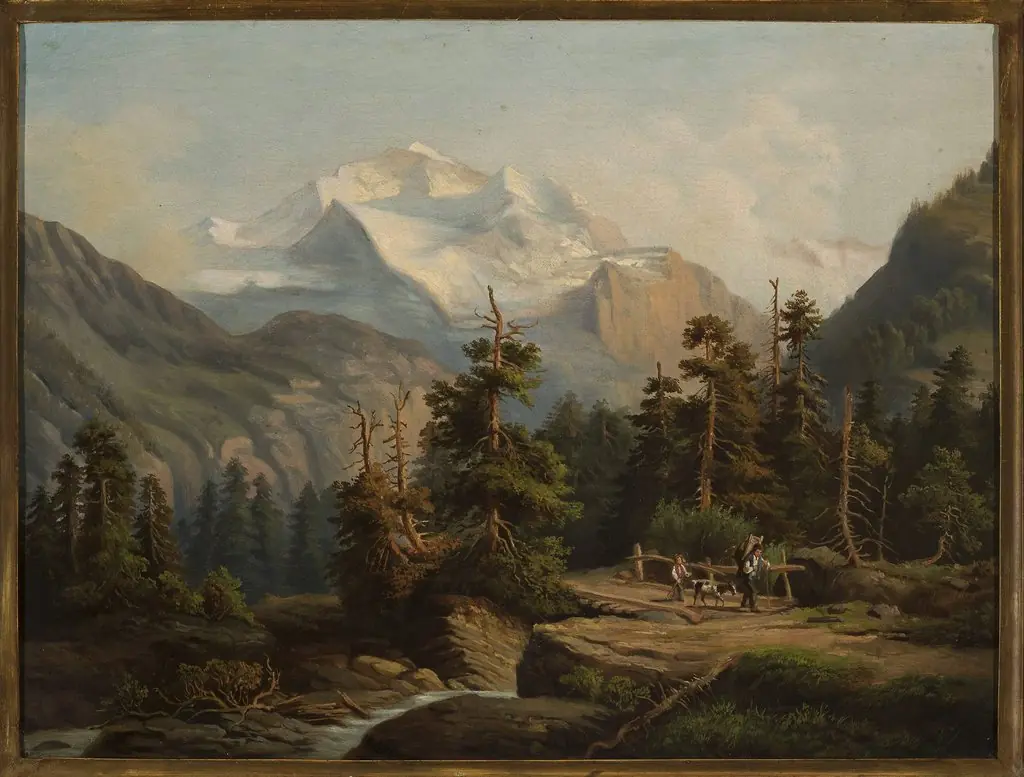 Mountain landscape
 In the Southern Alps
 Aihe Ramsausta
 The Morskie Oko Lake in the Tatra Mountains
 Church at Zermatt, Switzerland
 Landscape near Innsbruck