Artwork
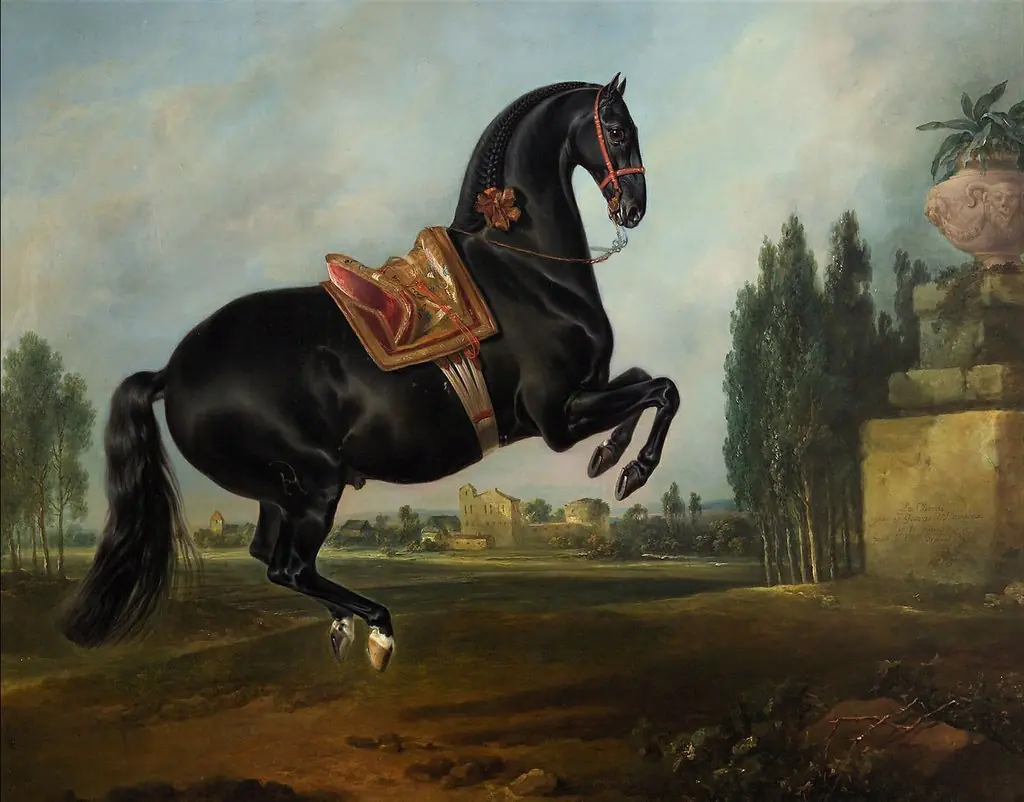
Rappe in der Levade
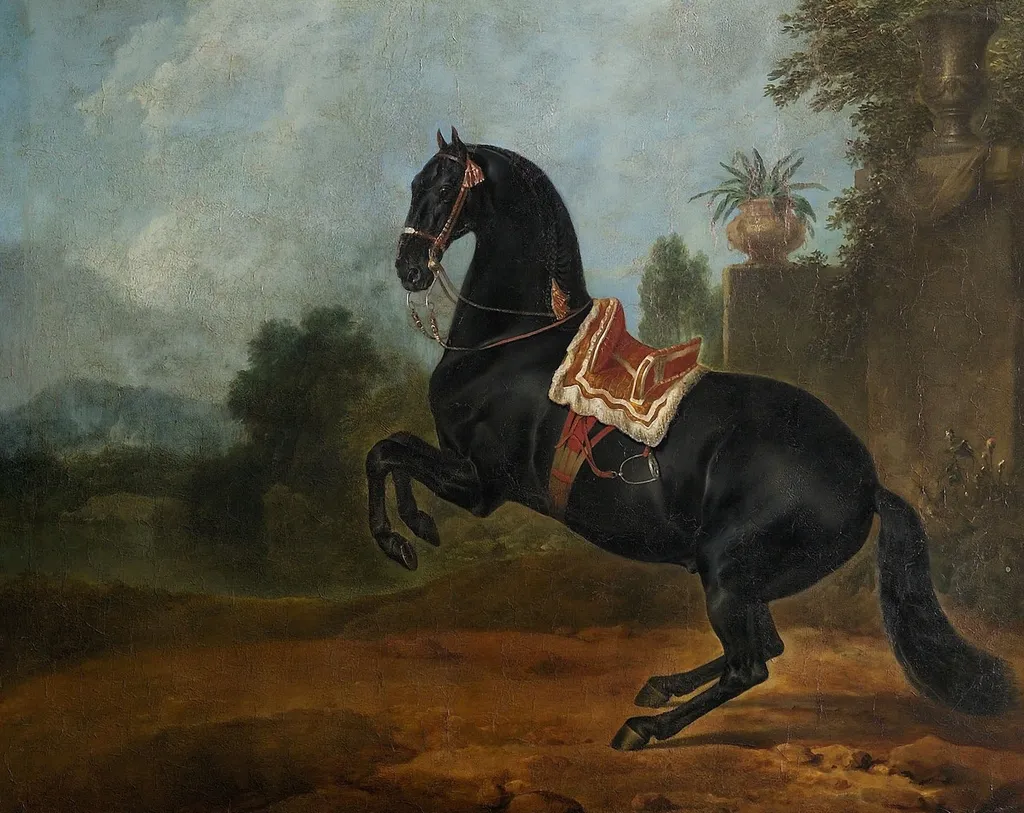
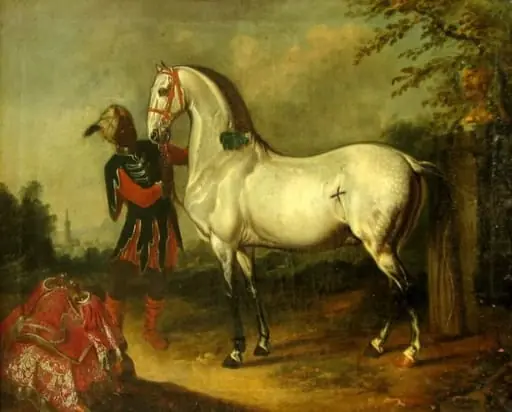
Rappe in der Levade is an unspecified painting by the Rococo painting artist Johann Georg de Hamilton. It dates from 1721 and is held in the collection of the Kunsthistorisches Museum.
About this work
Overview
This 1721 painting by Johann Georg de Hamilton depicts a single horse in a dramatic, elevated posture. Executed in oil, the work emphasizes the animal’s physical power and movement, set against a muted outdoor backdrop. The composition isolates the subject, drawing attention to its anatomical precision and the tension of the moment.
Subject & Meaning
The central figure is a black horse captured in the *levade* position—a controlled rearing on hind legs, historically associated with classical dressage. The red saddle and bridle suggest training or performance, while the rugged terrain implies a natural setting. The pose conveys both discipline and raw energy, reflecting the artist’s focus on equine vitality.
Technique & Style
Hamilton employs bold, expressive brushwork to define the horse’s musculature and movement, contrasting with the softer, indistinct landscape. Vibrant colors, particularly the red saddle, heighten the drama, while the blurred background ensures the viewer’s attention remains on the animal. The style aligns with Baroque conventions of dynamic realism and theatrical lighting.
History & Provenance
Created in 1721, the painting has been part of the Kunsthistorisches Museum’s collection since its acquisition. Little is documented about its early ownership, but its preservation suggests it was valued as both an artistic and equestrian study. The work remains a key example of Hamilton’s specialization in animal subjects.
Context
Johann Georg de Hamilton, active in the early 18th century, was known for his depictions of horses, often commissioned by European nobility. This painting reflects the era’s fascination with equestrian art, blending scientific observation with aesthetic appeal. The *levade* pose, rooted in classical riding traditions, underscores the cultural importance of horsemanship.
Legacy
The painting exemplifies Hamilton’s influence on equine art, a genre that bridged naturalism and Baroque dynamism. Its focus on anatomical accuracy and dramatic composition influenced later artists, while its inclusion in a major museum collection ensures its continued study as a document of early modern animal painting.
Artist & collection