Artwork
Bird piece, with four different vultures
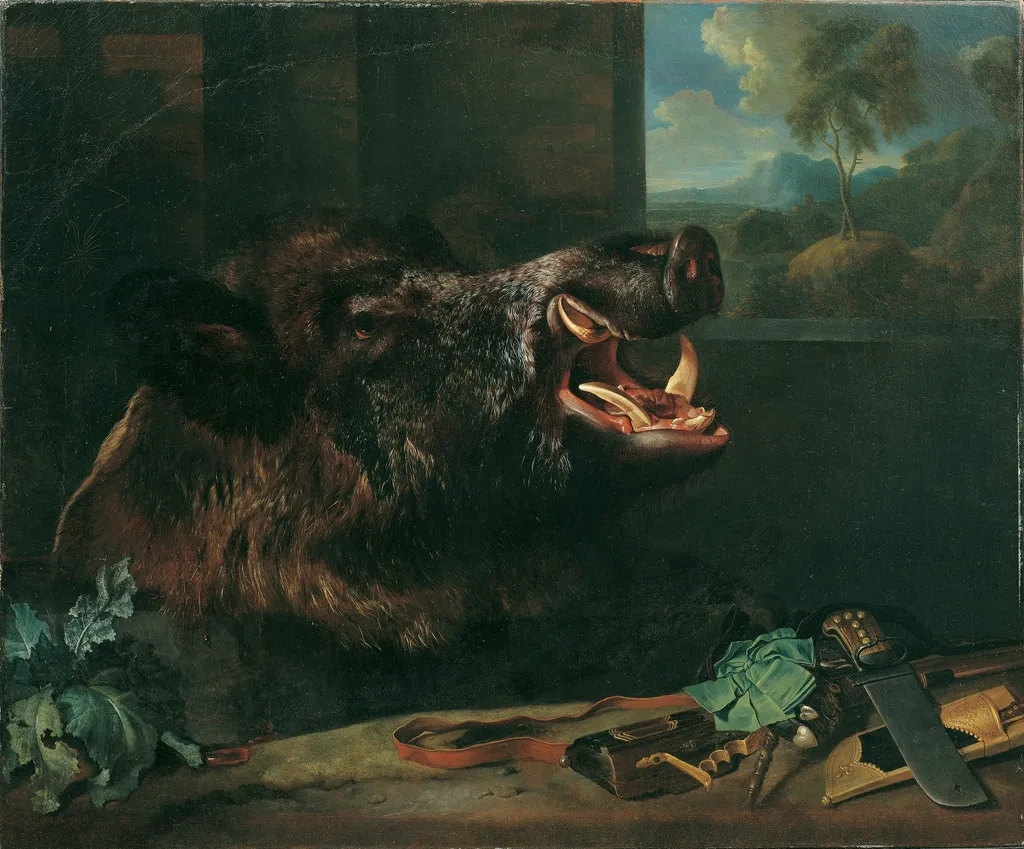
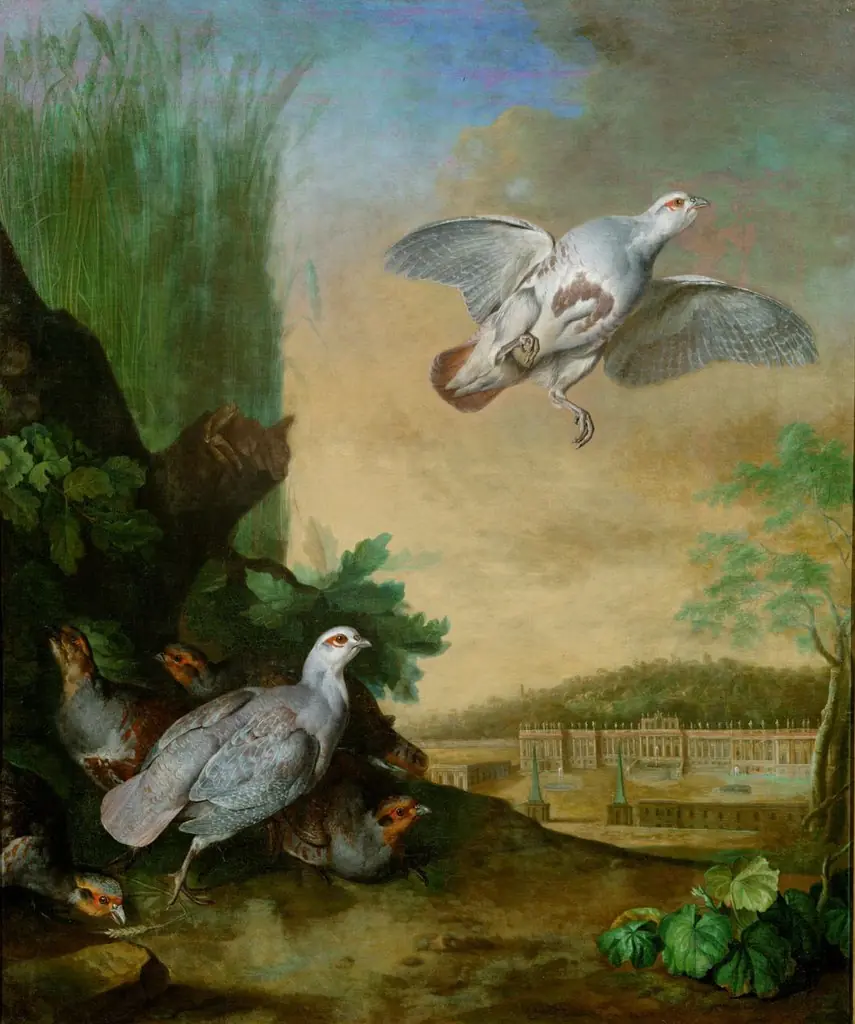
Bird piece, with four different vultures is an oil painting by the Dutch Golden Age artist Johann Georg de Hamilton. It dates from 1718 and is held in the collection of the Kunsthistorisches Museum.
About this work
Overview
The composition is tightly focused, with no human figures present, inviting contemplation of the aftermath of the hunt.
Painted in 1718 by Johann Georg de Hamilton, this oil work presents a dead wild boar as its central subject, surrounded by hunting implements and sparse vegetation. Though titled with reference to vultures, the painting emphasizes the carcass and its context rather than scavengers. The composition is tightly focused, with no human figures present, inviting contemplation of the aftermath of the hunt.
Subject & Meaning
The boar, depicted in a moment of stillness after death, lies with its mouth agape, suggesting a final breath. Tools scattered nearby—shovel, firearm, helmet—imply recent human activity without showing the hunters themselves. The absence of people shifts focus to nature’s reclamation, hinting at themes of mortality and the quiet transition from hunt to decay.
Technique & Style
Hamilton employs chiaroscuro to model the boar’s thick, matted fur with striking depth, using sharp contrasts between light and shadow to enhance tactile realism. The background recedes into a dim forest under a luminous sky, directing attention to the carcass. Brushwork is detailed yet unpolished, preserving the raw texture of the animal’s hide and the earth beneath it.
History & Provenance
Created in 1718, the painting entered the collection of the Kunsthistorisches Museum in Vienna, where it remains today. Its attribution to Hamilton, an Austrian painter known for animal and still-life subjects, aligns with regional traditions of naturalistic hunting scenes in early 18th-century Central Europe.
Context
This work reflects a broader trend in Baroque art that favored detailed depictions of dead game, often symbolizing the transience of life. Unlike grand hunting portraits, Hamilton’s scene omits human triumph, instead emphasizing the physicality of death and the quiet environment left behind.
Legacy
The painting contributes to a lesser-known branch of Baroque still life that prioritizes ecological realism over symbolic allegory. Its unembellished treatment of death and absence of moralizing tone distinguishes it from more theatrical contemporaries, offering a restrained meditation on nature’s cycles.
Own this work as a print
Artist & collection

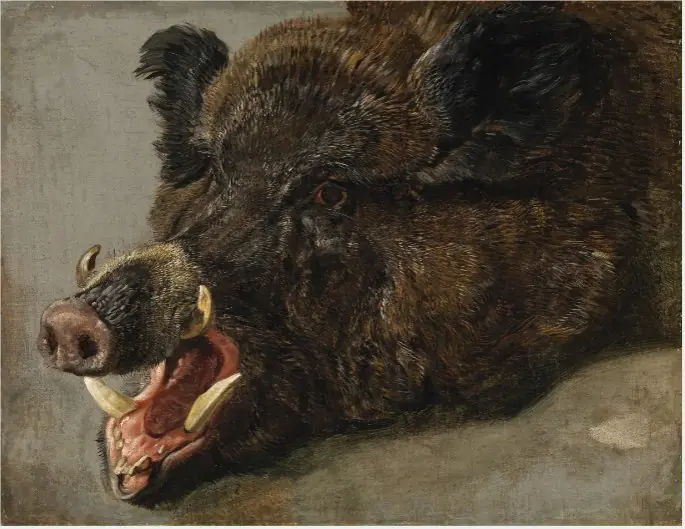 The Head of a Wild Boar
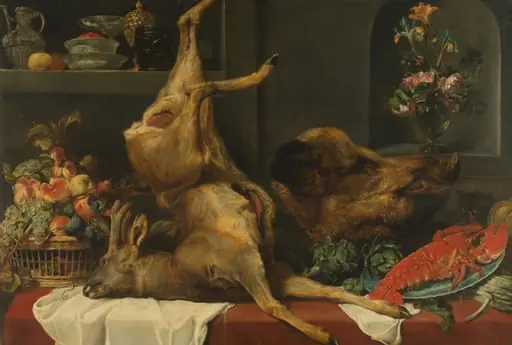 Larder Still life
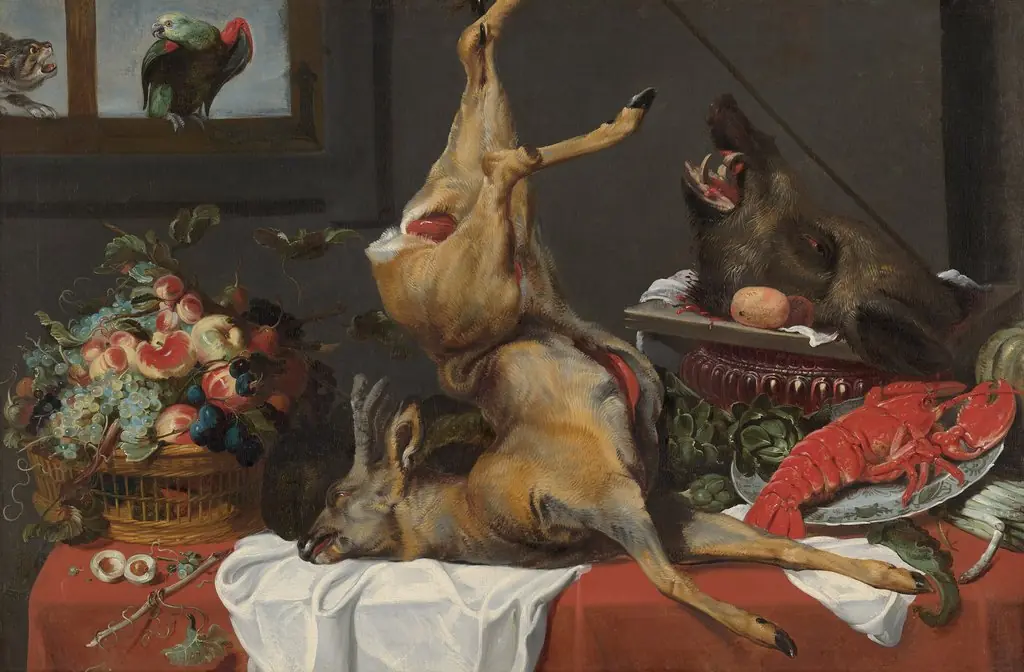 Still Life with a Dead Stag
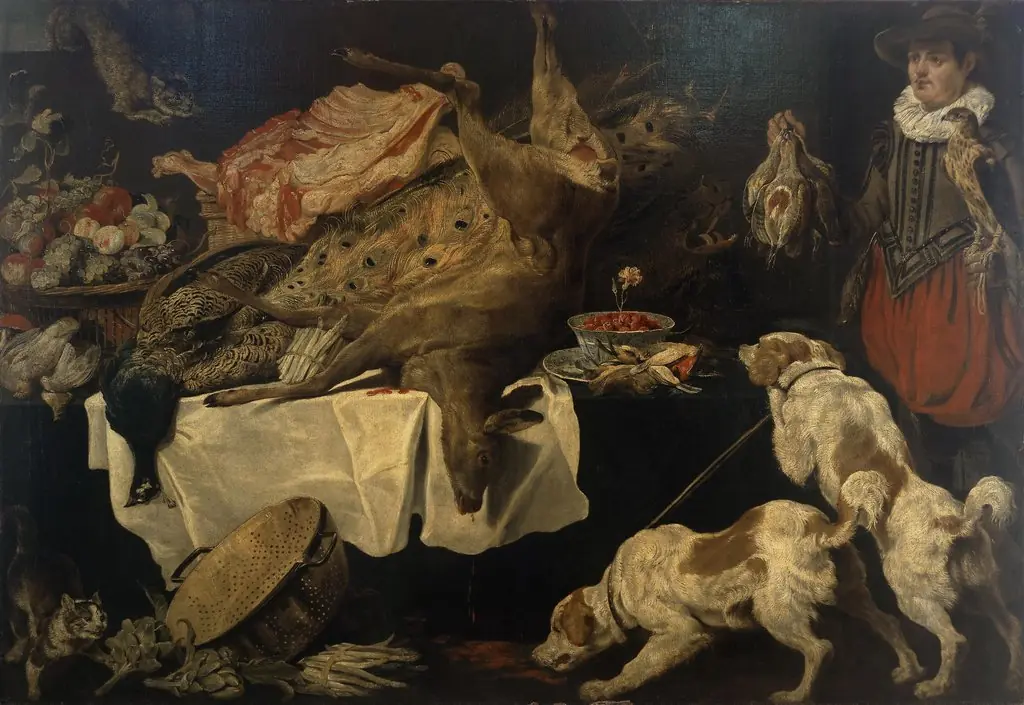 Hunter and Dogs by a Table with Dead Game and Fruit
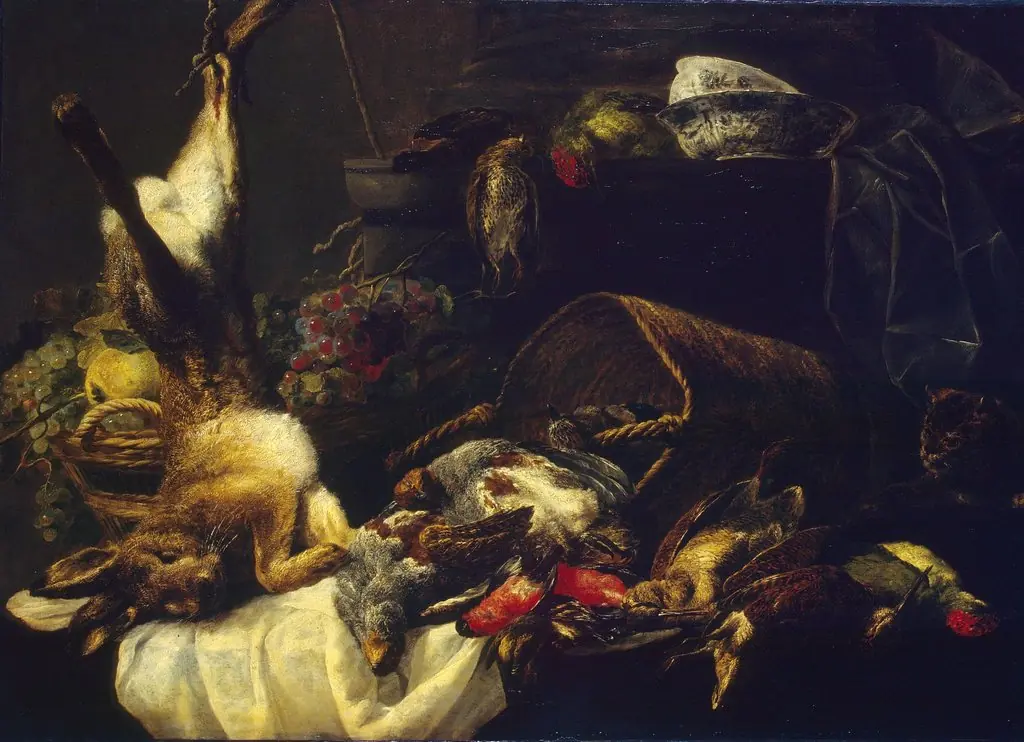 Dead Game
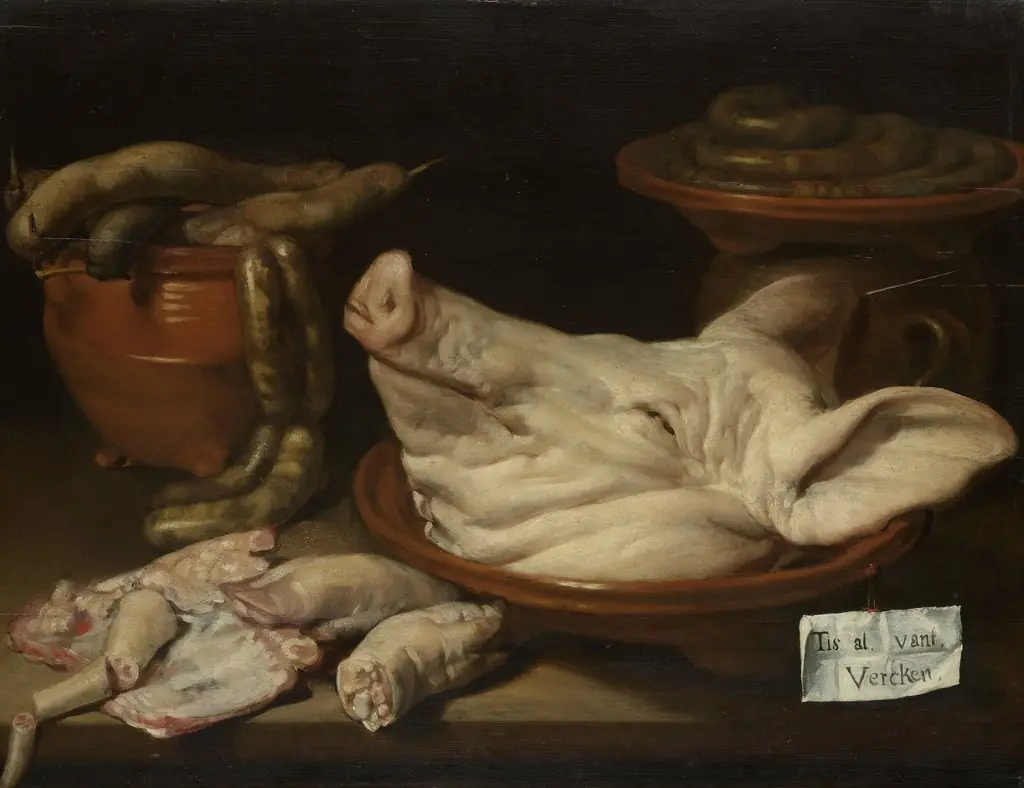 Still Life with Pig's Head, Trotters and Sausage
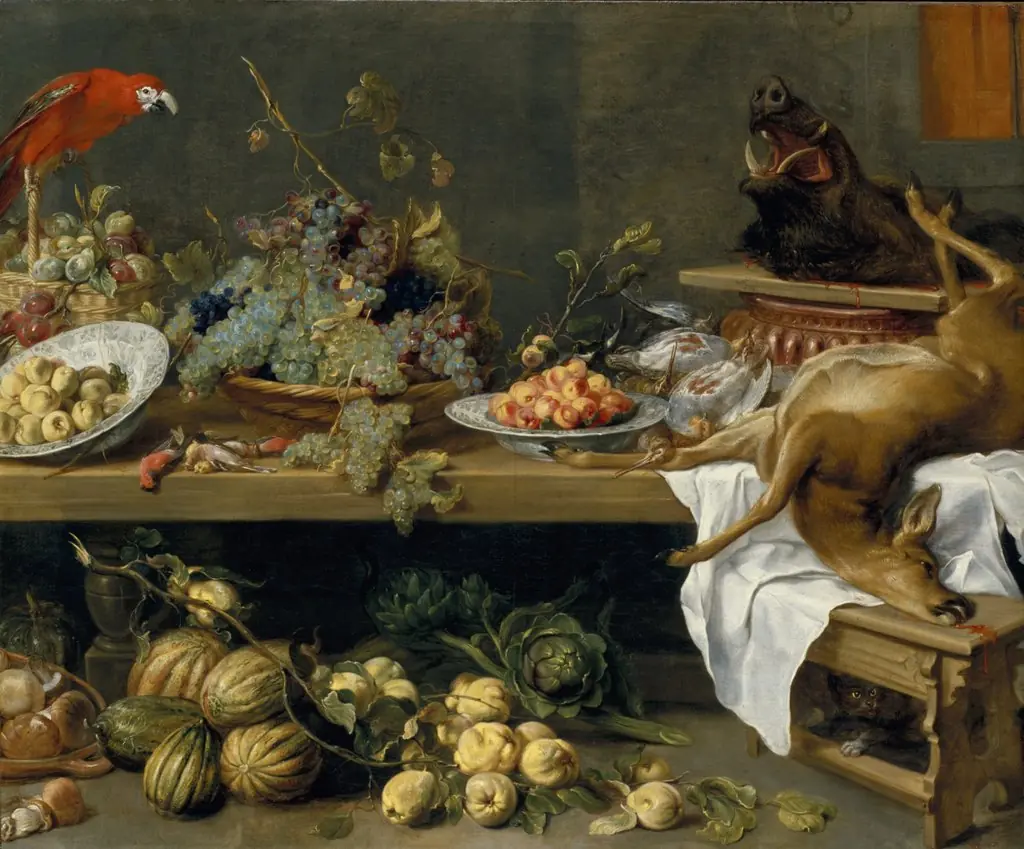 Still Life with Fruit, Vegetables and Dead Game
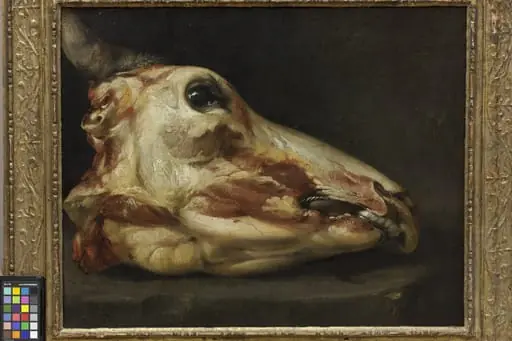 Skinned Head of an Ox
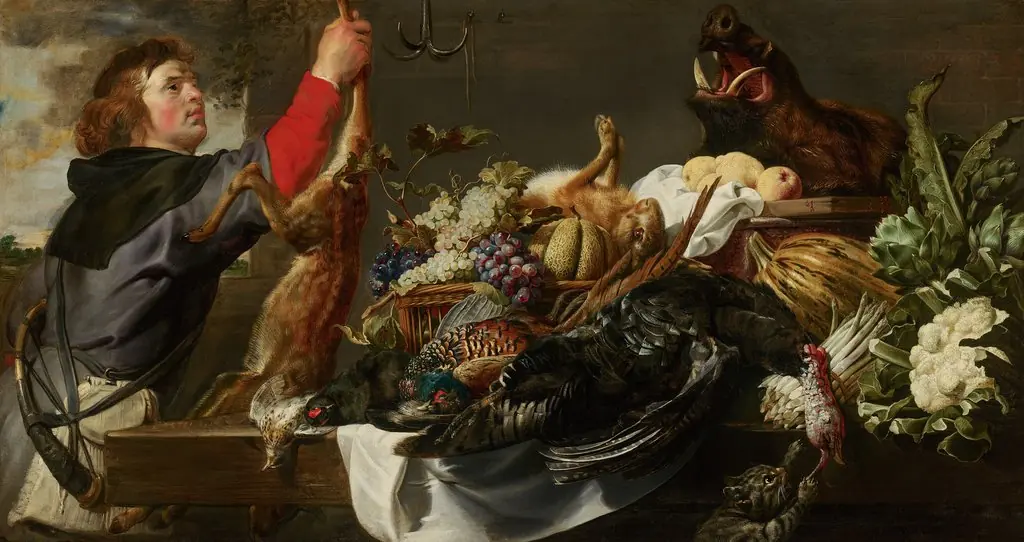 Still Life with Huntsman
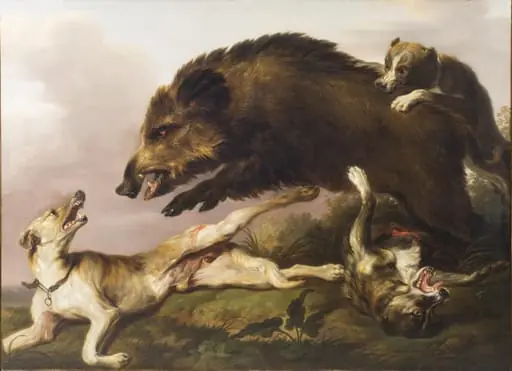 Vildsvinejagt
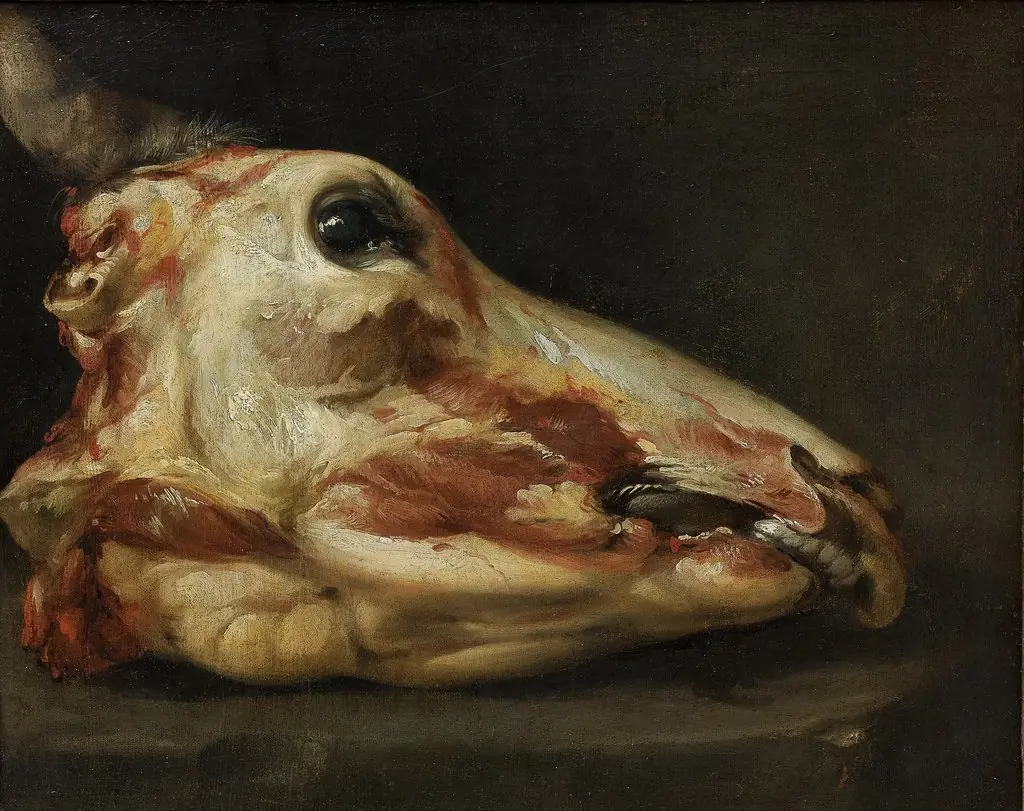 Skinned Head of a Young Bull
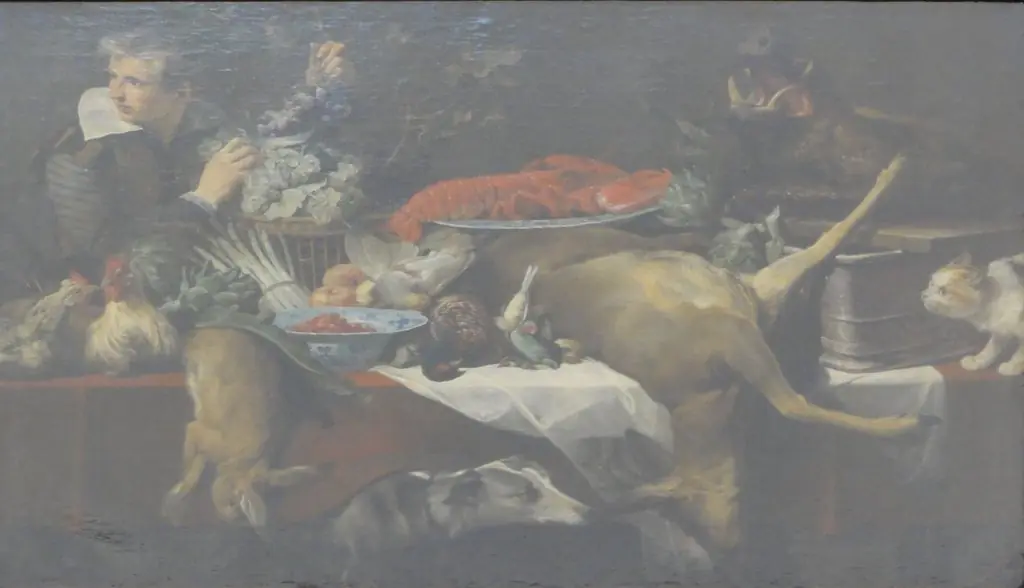 Kitchen scene with game and vegetables, with a serving boy holding a bunch of grapes