Artwork
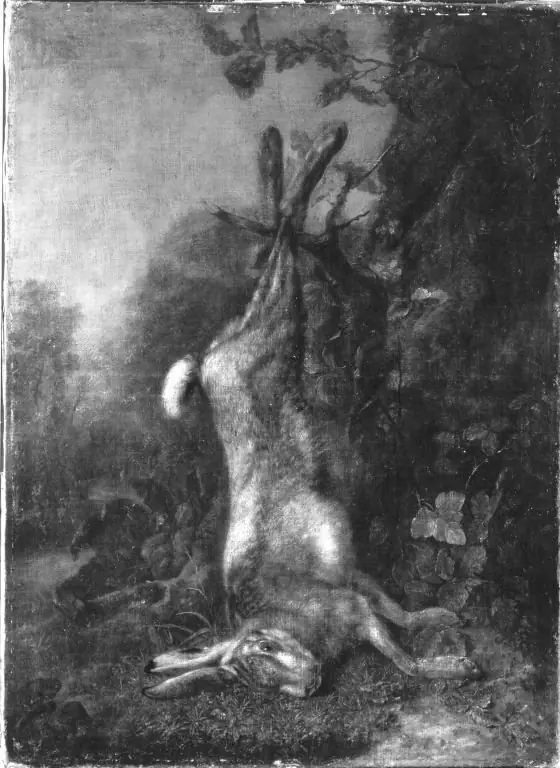
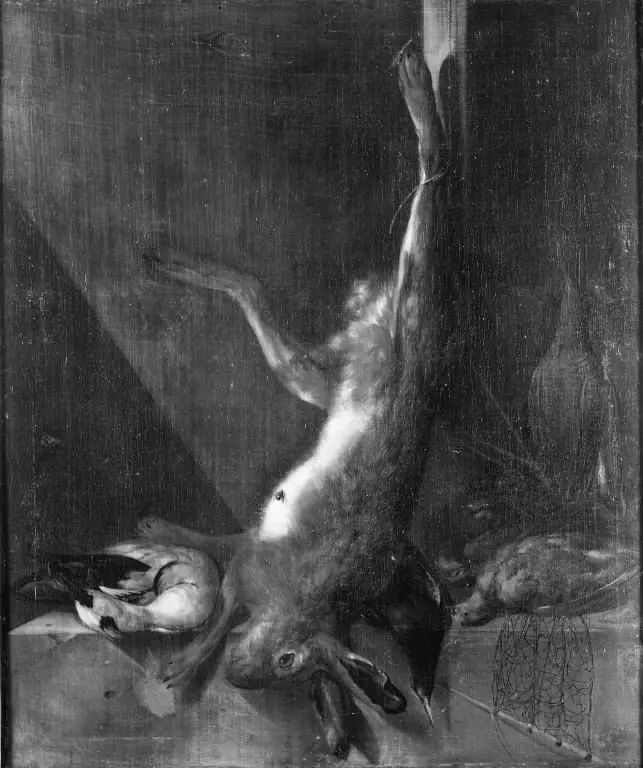
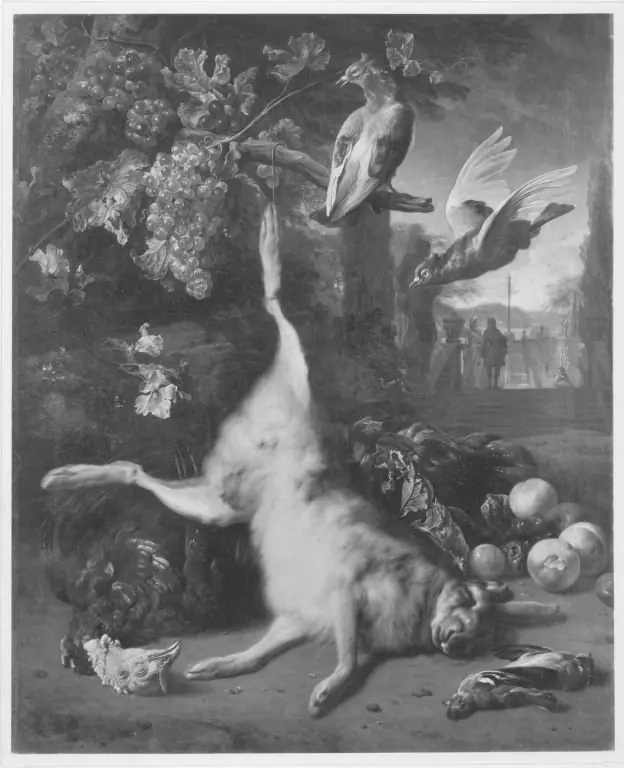
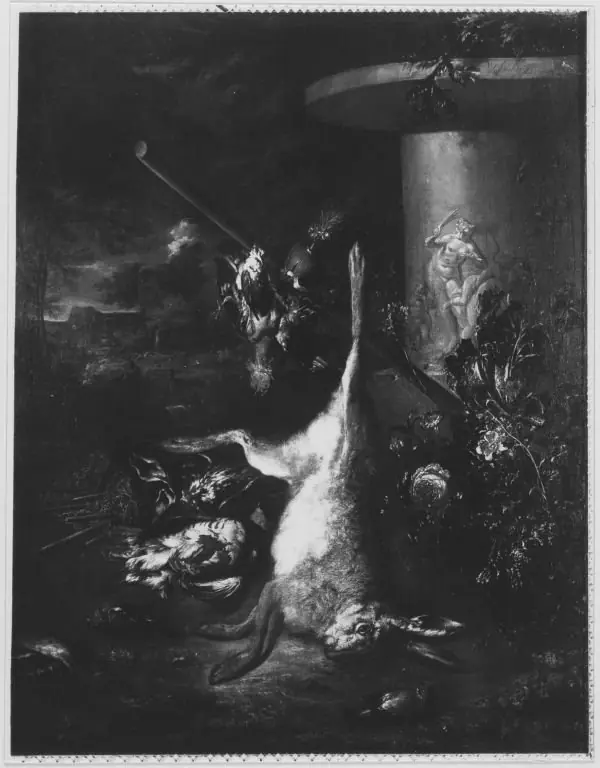
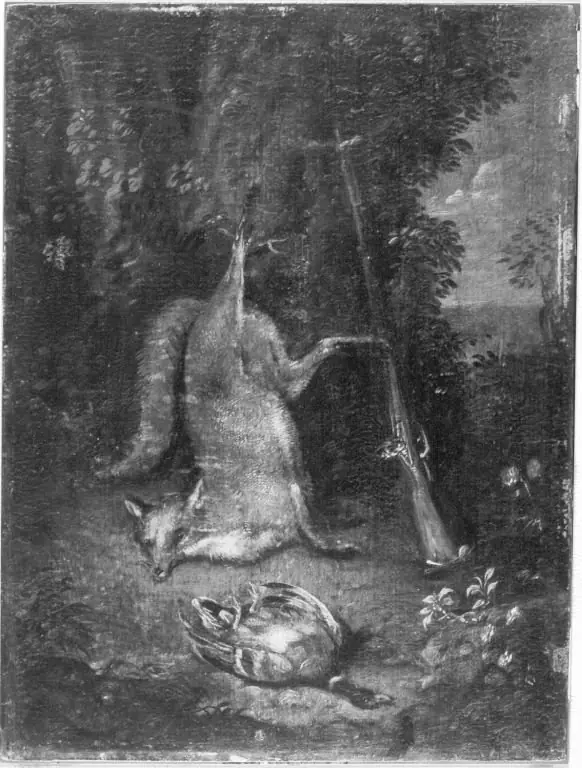
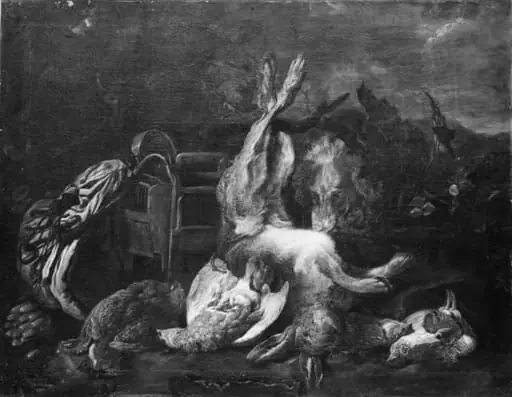
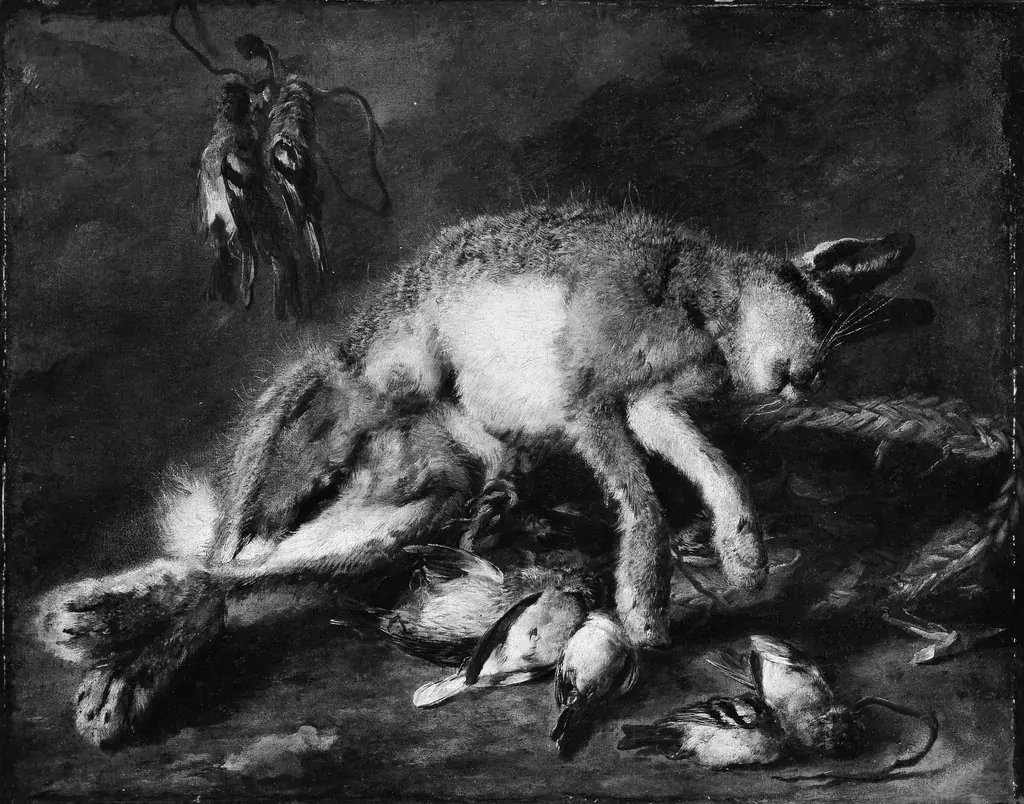
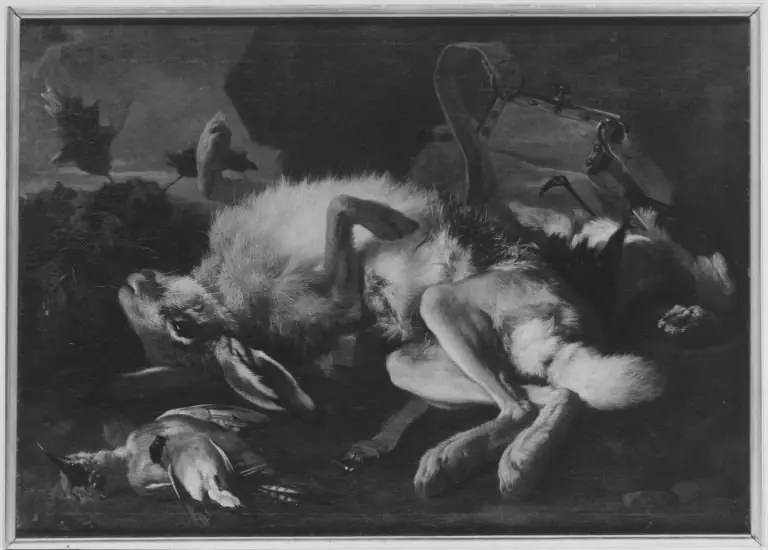
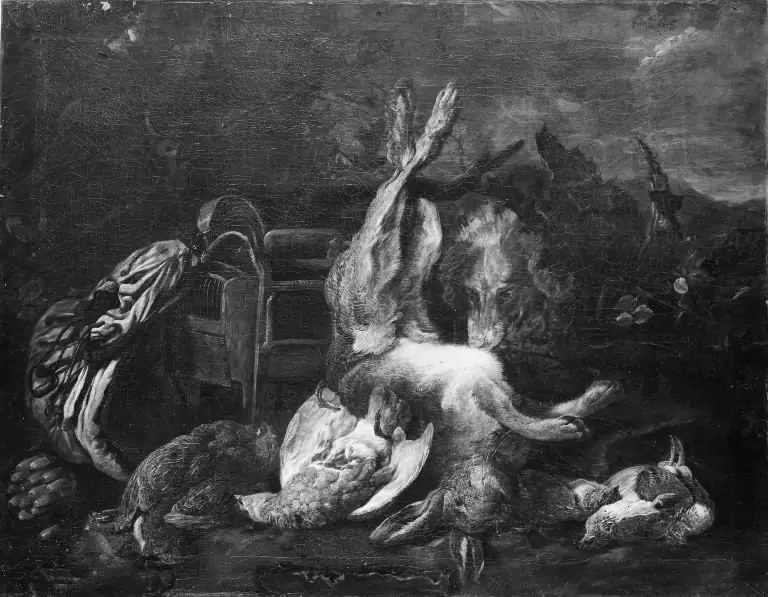
Toter Hase
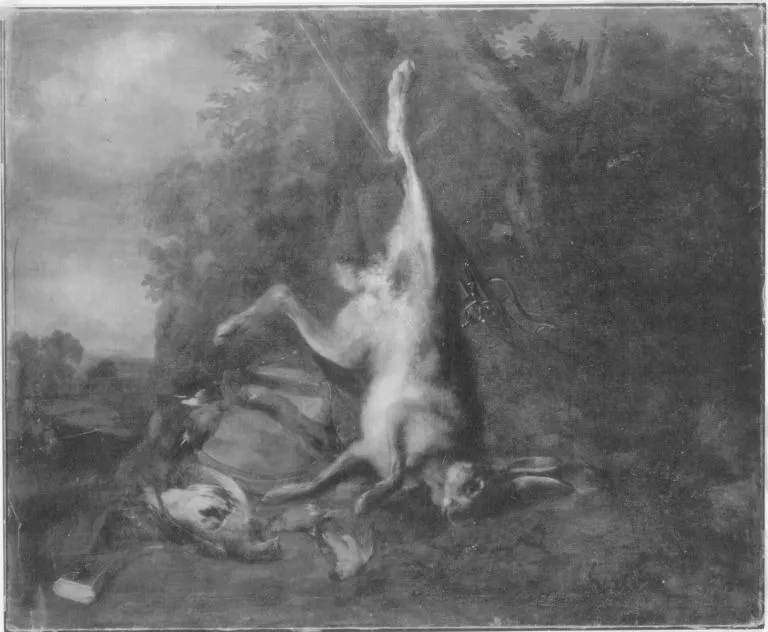
Toter Hase is an unspecified painting by the Rococo painting artist Johann Georg Waxschlunger. It dates from 1713 and is held in the collection of the Bavarian State Painting Collections.
About this work
Overview
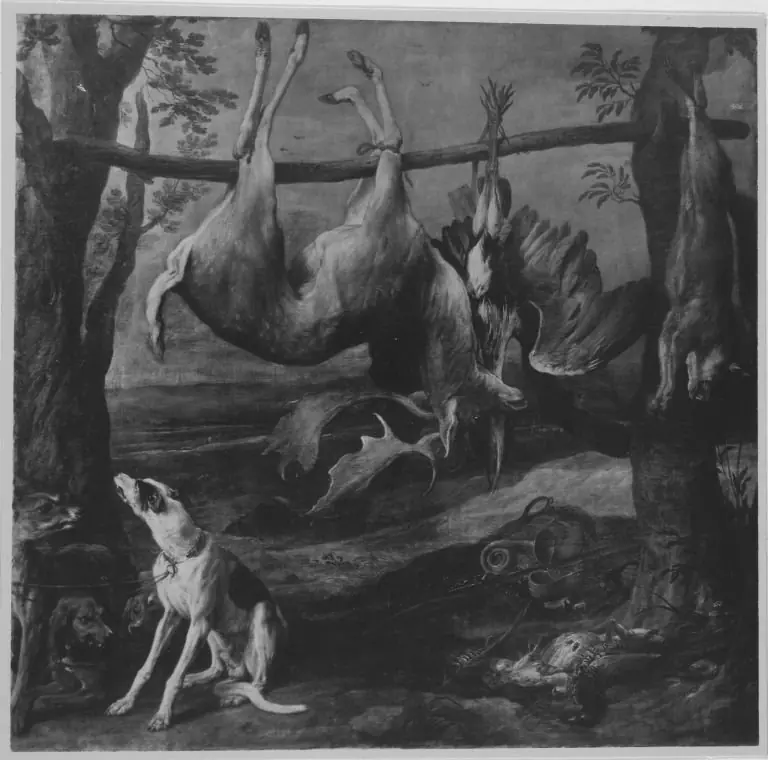
Created in 1713 by Johann Georg Waxschlunger, this oil painting is part of the collection of the Alte Pinakothek. The composition centers on a lifeless animal suspended from a tree branch, rendered with meticulous attention to fur, bark and surrounding foliage. The work measures a modest size and is presented in a restrained palette that emphasizes the quiet atmosphere of the scene.
Subject & Meaning
The canvas depicts a dead deer, its limbs spread and its body hanging upside down from a branch. The animal’s stillness contrasts with the subtle movement of leaves and branches in the background, suggesting a meditation on mortality and the transient nature of life within a natural setting.
Technique & Style
Waxschlunger employs chiaroscuro to model the deer’s form, using strong light and shadow to give the figure a three‑dimensional presence. Fine brushwork captures the texture of the animal’s coat and the roughness of the bark, while a muted tonal range creates depth and draws the eye toward the central figure.
History & Provenance
The painting entered the Alte Pinakothek’s holdings in the 19th century, where it has remained on public display. Its attribution to Waxschlunger has been confirmed through stylistic analysis and archival records linking the work to the artist’s output in the early 1700s.
Context
Produced during the early Baroque period in southern Germany, the work reflects contemporary interests in naturalistic observation and the moralizing genre of vanitas. Waxschlunger’s focus on a solitary, lifeless animal aligns with broader artistic trends that used nature to explore themes of impermanence and human contemplation.
Artist & collection
Artist
This 1713 painter made three oil-on-canvas scenes of Vienna’s Danube riverfront, all dated that year.