Artwork
Landschaft mit Tieren
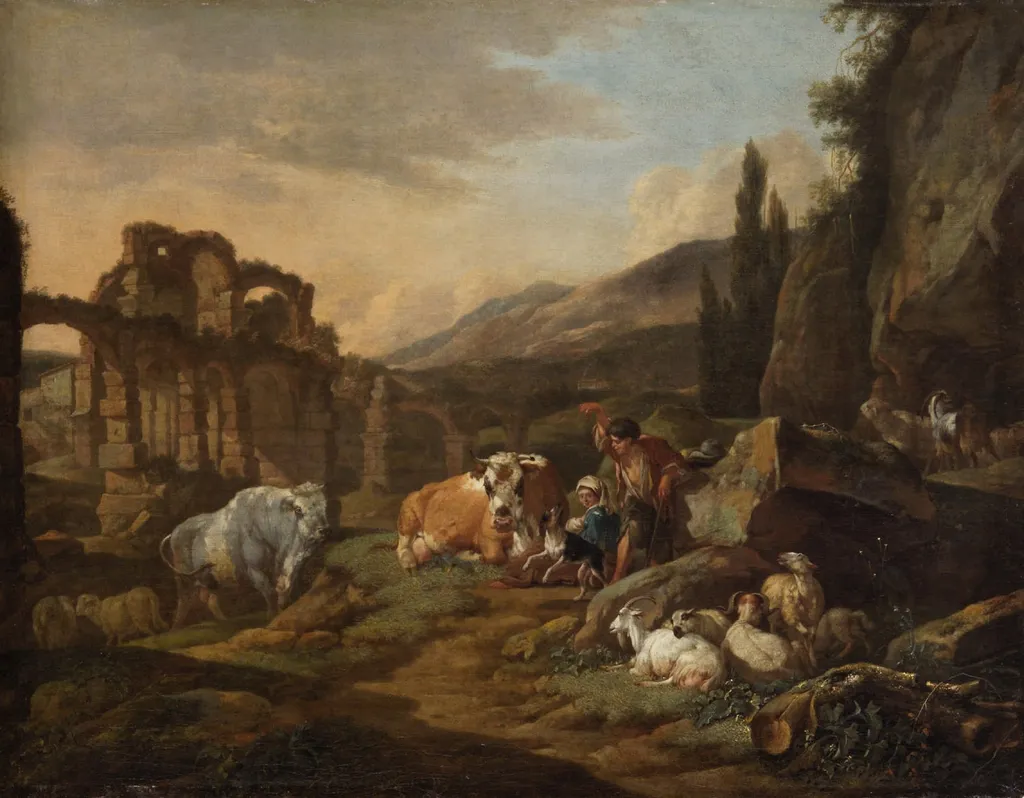
Landschaft mit Tieren is an unspecified painting by the Barbizon school artist Johann Heinrich Roos. It is held in the collection of the Kunsthistorisches Museum.
About this work
Overview
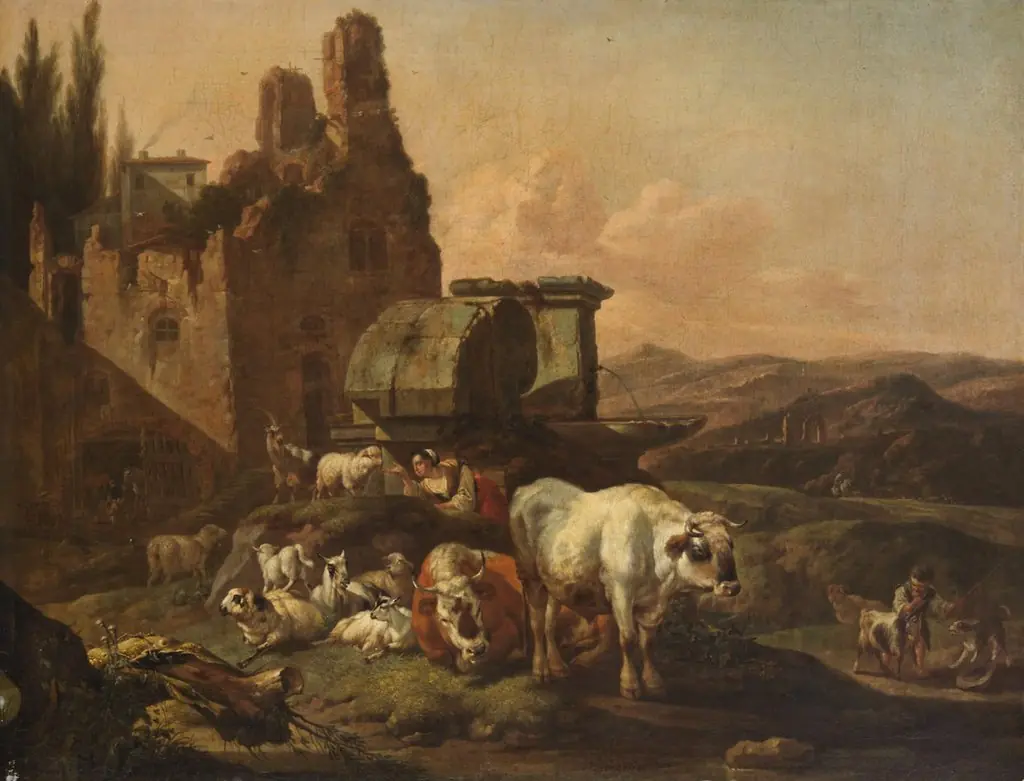
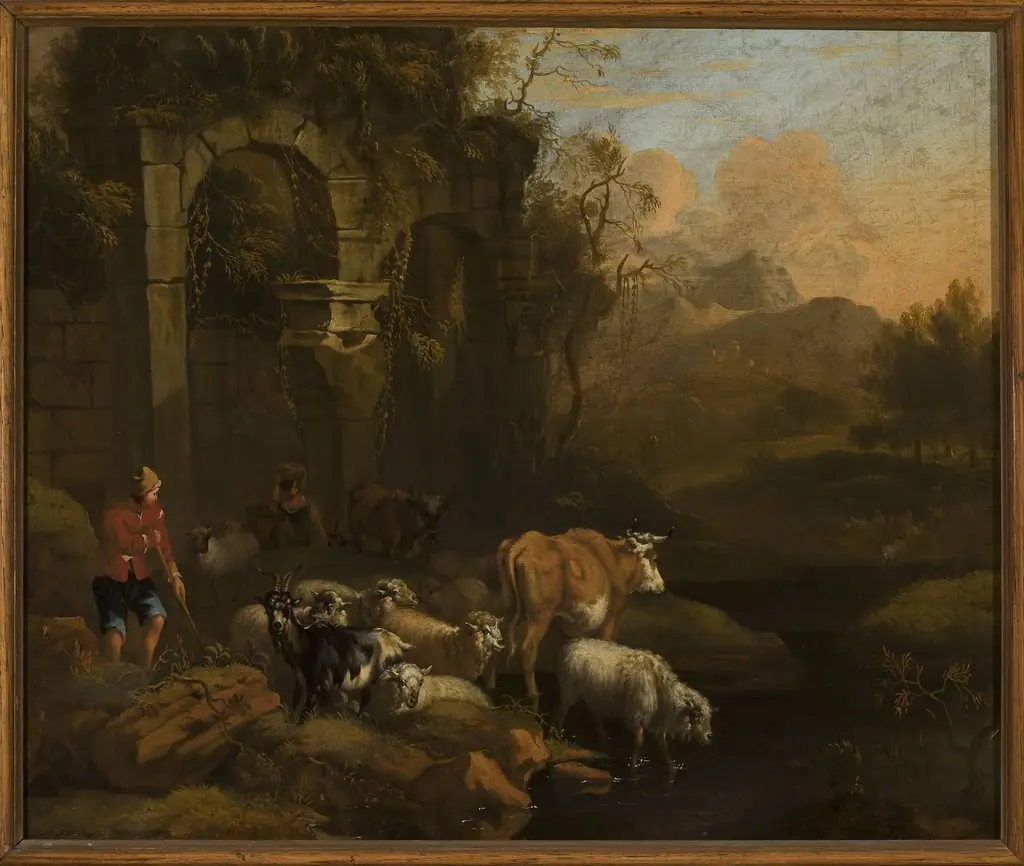
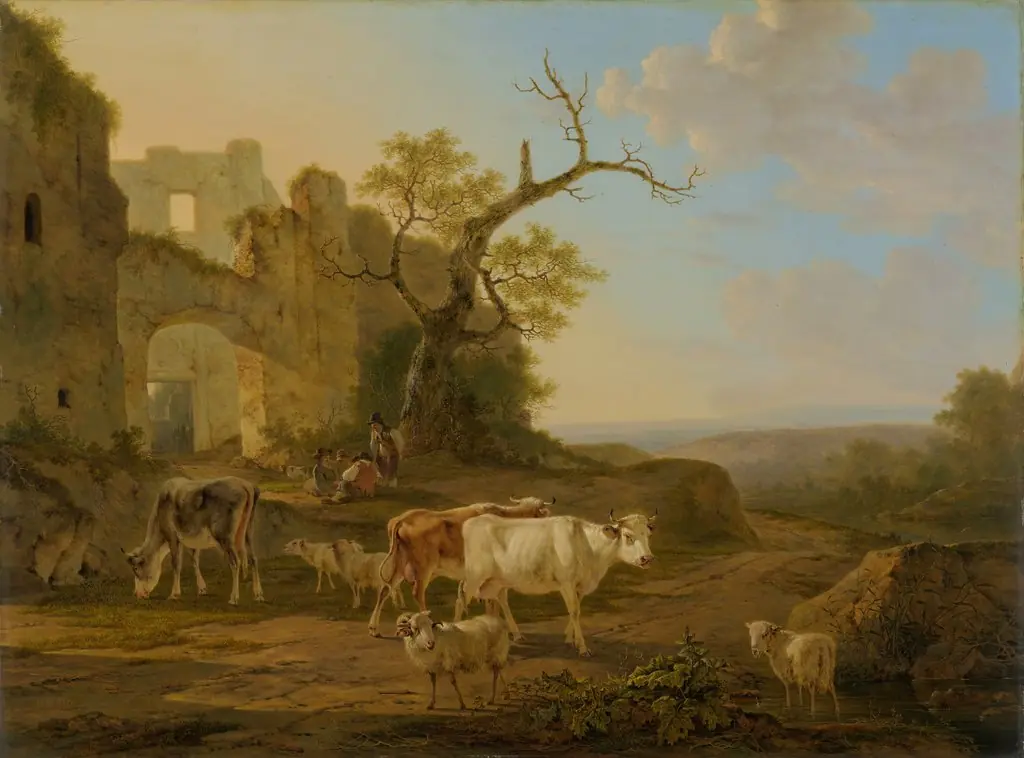
Johann Heinrich Roos painted this rural landscape in 1692, and it now belongs to the Kunsthistorisches Museum. The composition presents a tranquil countryside where a shepherd guides two cows and a small flock of sheep across a gentle terrain, while a child watches nearby. In the distance, a weathered stone bridge and the faint outlines of ancient ruins frame the scene beneath a soft, hazy sky.
Subject & Meaning
The work captures an everyday moment of agrarian life, emphasizing the harmony between humans, livestock, and the surrounding land. The shepherd’s modest attire and the calm demeanor of the animals convey a sense of routine and stability. The inclusion of distant ruins hints at the passage of time, suggesting that the present pastoral activity unfolds within a landscape layered with history.
Technique & Style
Roos employs a restrained palette of earthy browns, muted greens, and subdued blues, creating a naturalistic atmosphere. His handling of light softens the horizon, while delicate brushwork renders the textures of fur, foliage, and stone. The composition balances detailed foreground figures with a more atmospheric background, a hallmark of late‑17th‑century Dutch‑German landscape painting.
History & Provenance
Created in 1692, the painting entered the collection of the Kunsthistorisches Museum, where it has been displayed as part of the museum’s holdings of Baroque landscape art. Documentation traces its ownership from the artist’s workshop through several private collections before its acquisition by the museum in the 19th century.
Context
Roos, known for his animal and landscape scenes, worked during a period when Northern European painters increasingly focused on bucolic subjects that combined genre observation with idealized nature. This piece reflects the era’s interest in depicting the quiet dignity of rural labor while subtly integrating architectural remnants that allude to classical antiquity.
Artist & collection

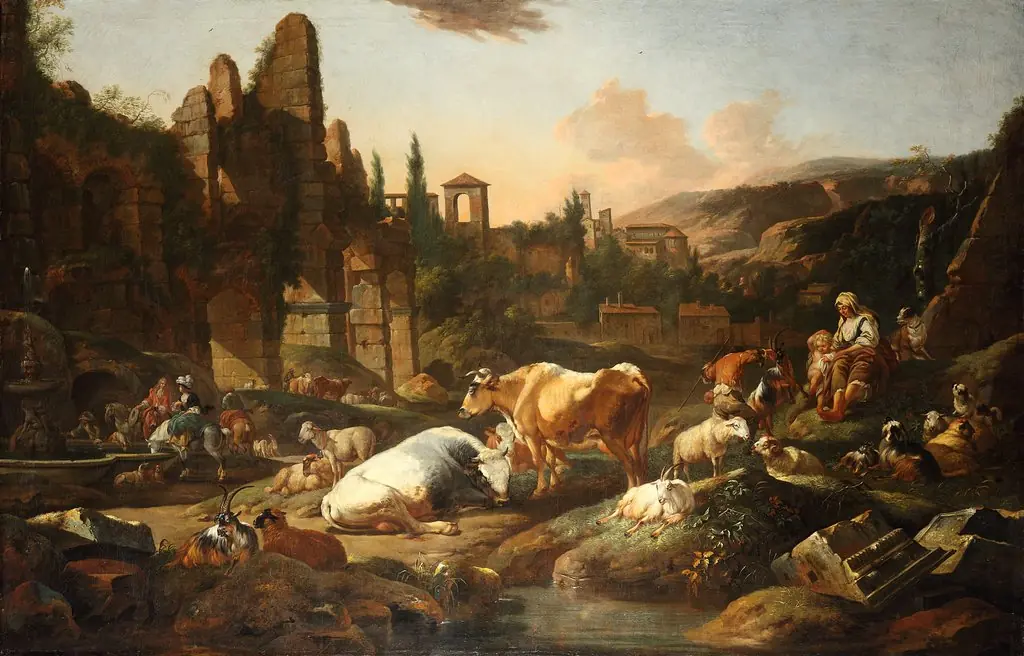 An Italian Landscape with Cattle
 Cattle at the waterhole
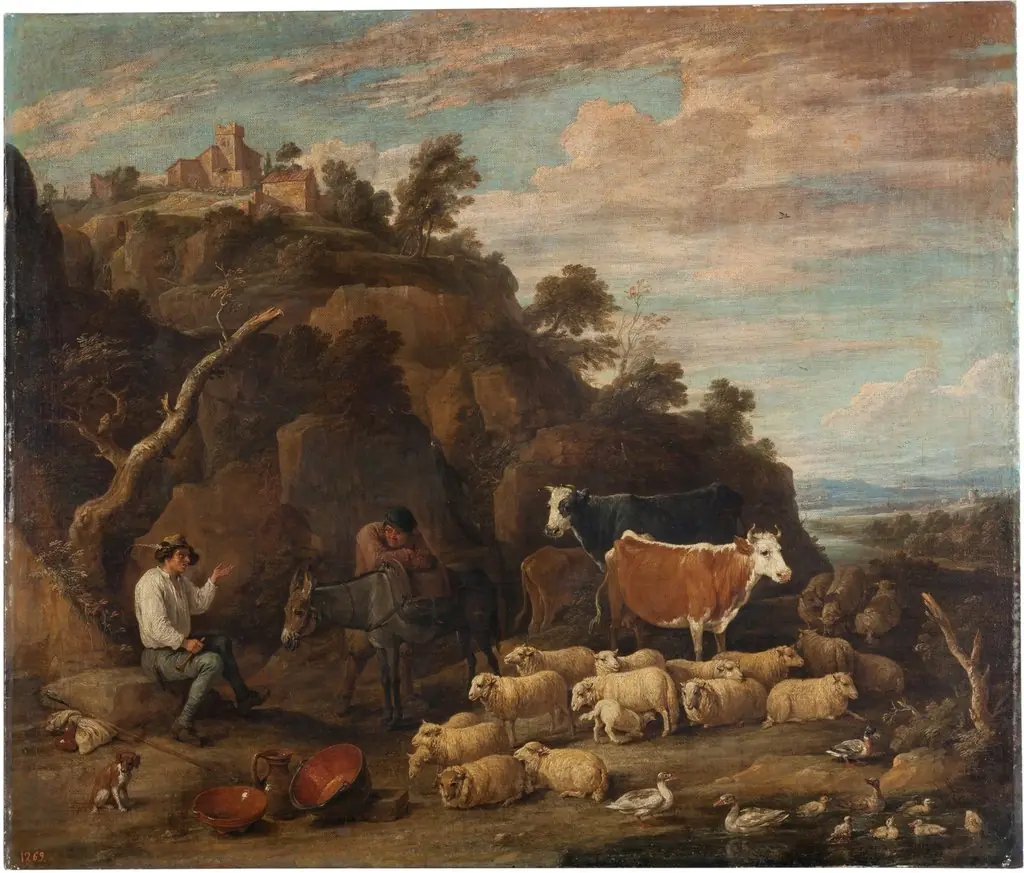 Peasants conversing
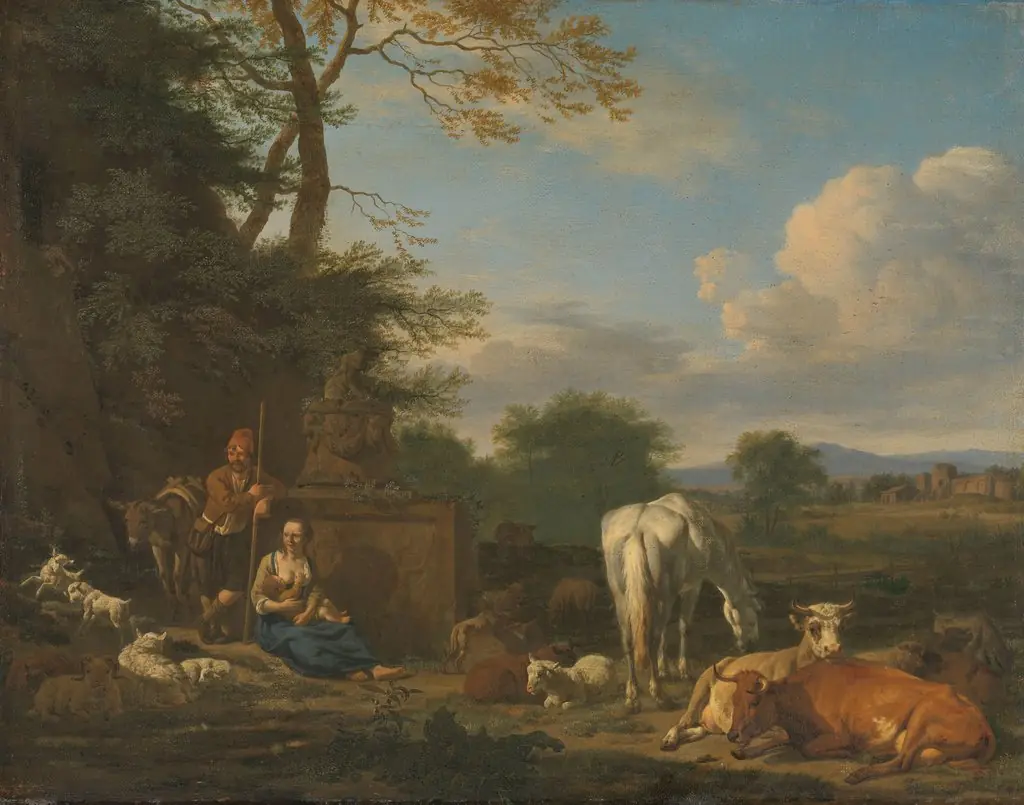 Arcadian landscape with resting herdsmen and cattle
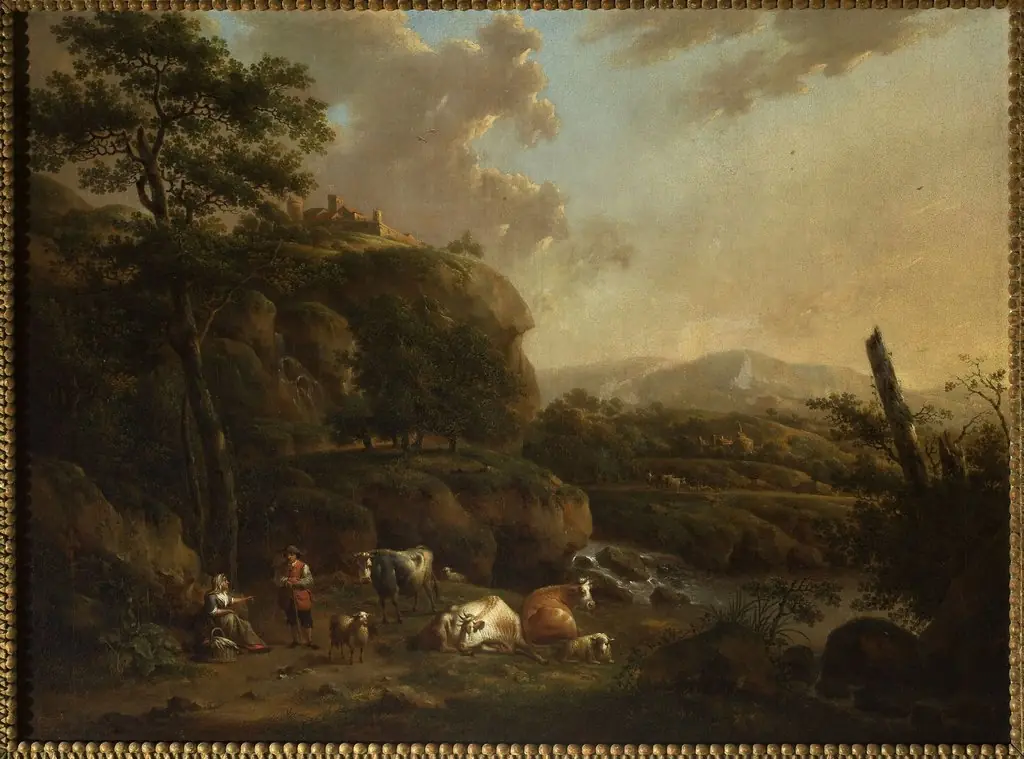 Mountain Landscape with Shepherds
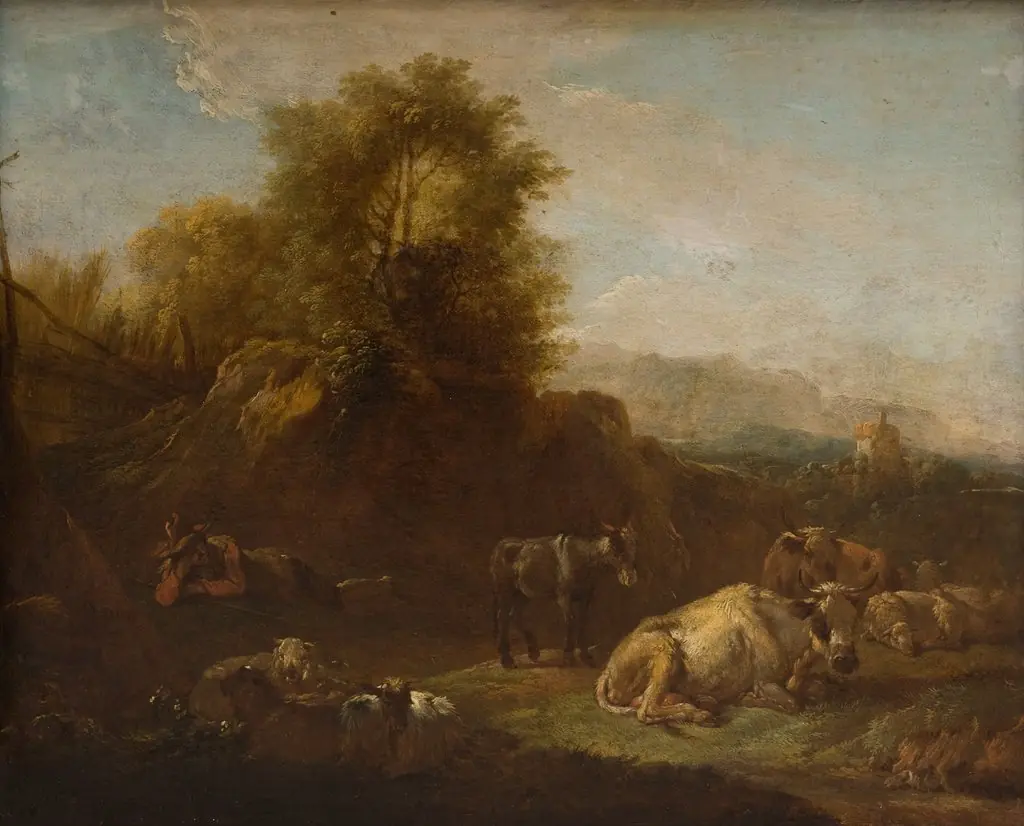 Landscape with Animals and a Shepherd
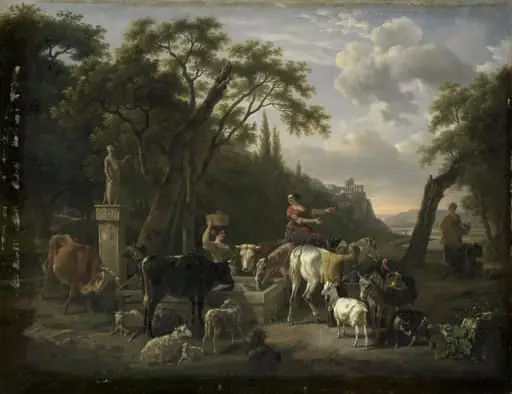 Italian Landscape with Shepherds and Animals at a Fountain
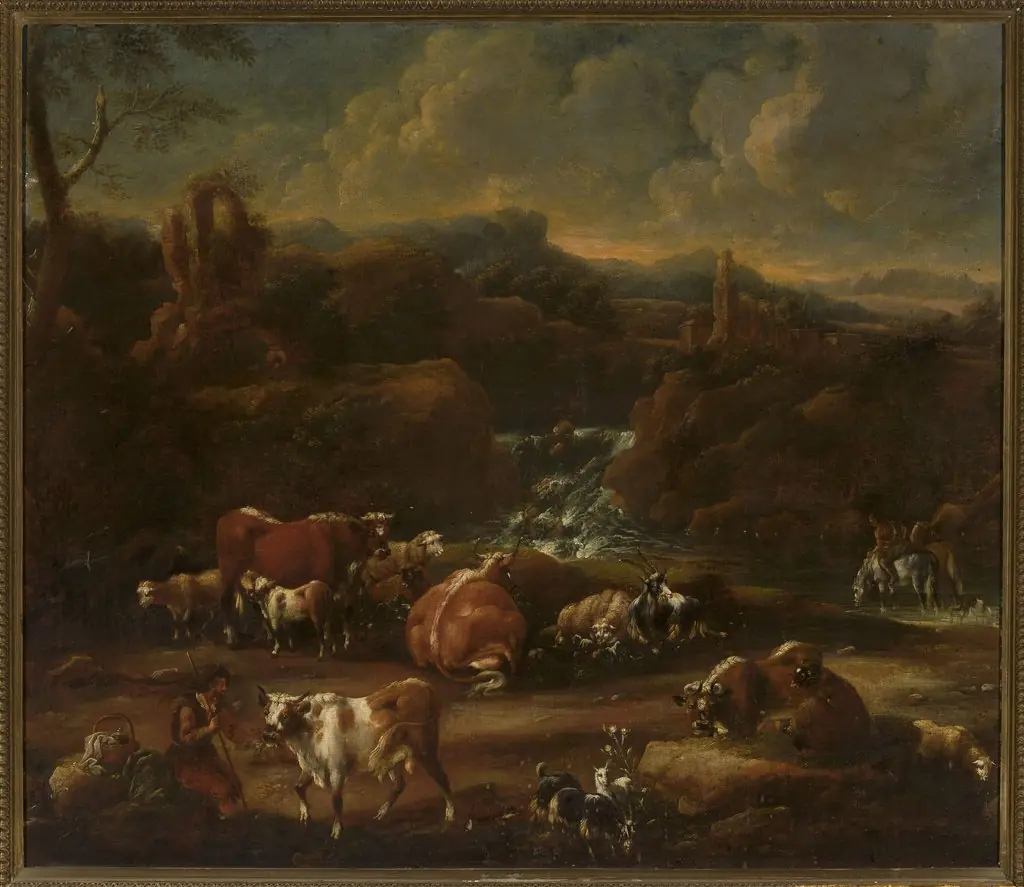 Herd in the mountains
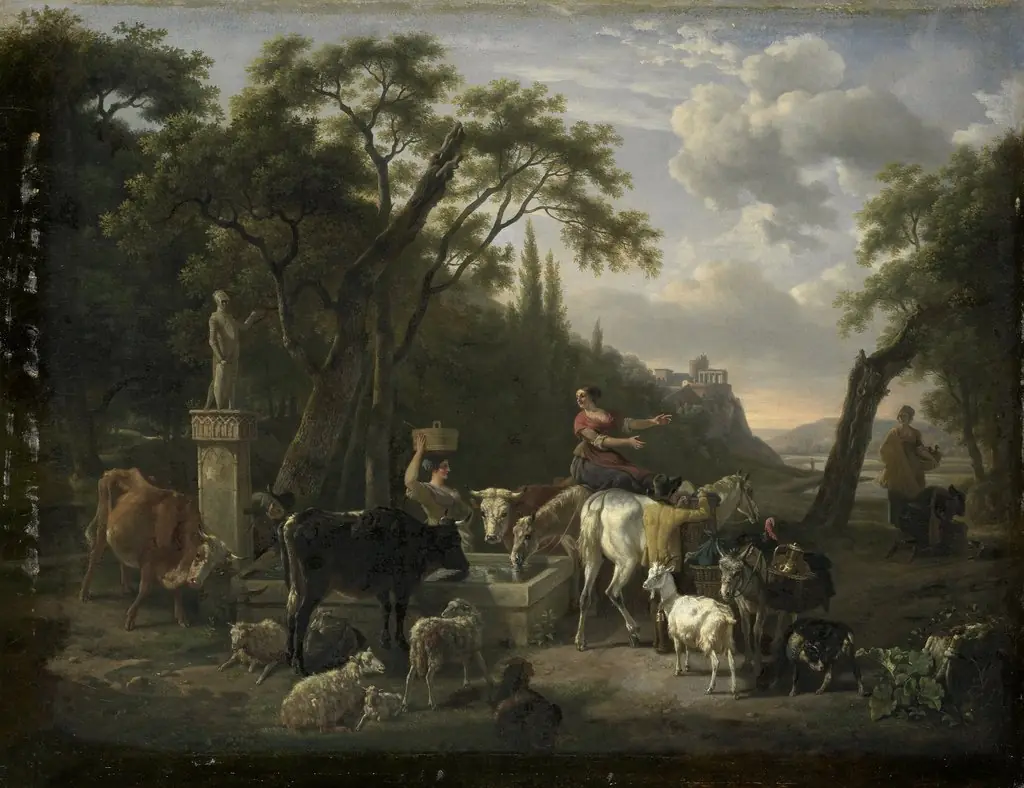 Italian Landscape with Shepherds and Animals at a Fountain
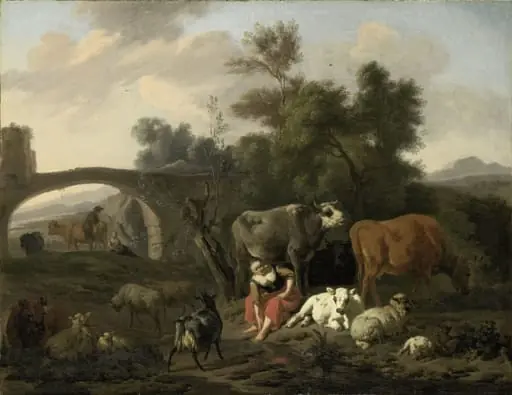 Landscape with Herdsmen and Cattle
 Landscape with Cows near a Ruin