Artwork
Arcadian landscape with resting herdsmen and cattle
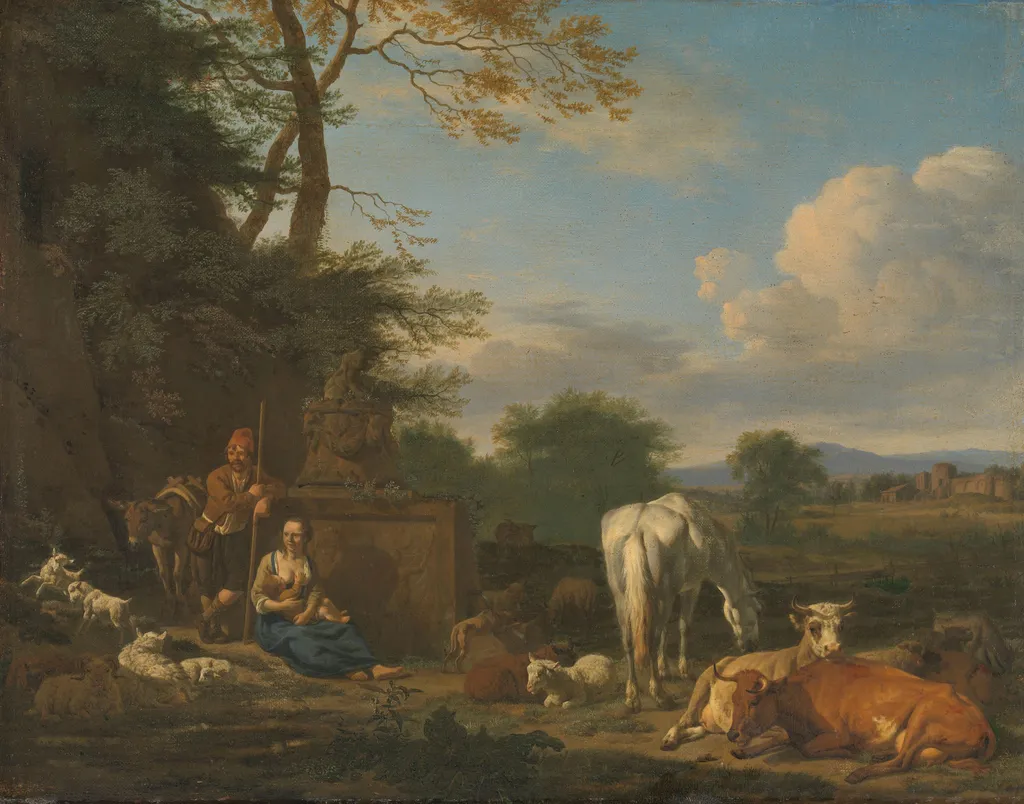
Arcadian landscape with resting herdsmen and cattle is an oil painting by the Dutch Golden Age artist Adriaen van de Velde. It dates from 1664 and is held in the collection of the Rijksmuseum.
About this work
Overview
Van de Velde employs a warm, golden palette and delicate brushwork to render the textures of fur, foliage, and fabric with remarkable precision.
Painted in 1664, Adriaen van de Velde's Arcadian landscape with resting herdsmen and cattle exemplifies the artist's mastery of the Dutch Golden Age pastoral tradition. The composition centers on a tranquil rural idyll where two herdsmen and a woman holding an infant rest beneath the shade of trees alongside a herd of cattle, sheep, and a white horse. A dog lies in the foreground grass, contributing to the scene's serene stillness. Van de Velde employs a warm, golden palette and delicate brushwork to render the textures of fur, foliage, and fabric with remarkable precision. The background opens to a distant horizon under a bright sky filled with soft, billowing clouds, creating a sense of expansive depth. This work reflects van de Velde's transition from detailed animal studies to more integrated landscape compositions, where human and animal figures are harmoniously woven into the natural environment. The painting captures an idealized, timeless vision of country life, characteristic of the artist's mature style and his significant contribution to 17th-century Dutch landscape painting.
Subject & Meaning
The work depicts a small group of shepherds: a man in a red cap rests against a staff, a woman seated nearby cradles an infant, and a dog lies lazily in the grass. Around them, sheep, cows and a white horse gather under trees, suggesting a harmonious coexistence between humans and nature typical of Arcadian ideals.
Technique & Style
Van de Velde employs a nuanced handling of light and shadow, creating subtle contrasts that model the figures and animals with a sense of three‑dimensionality. The gradations of illumination across the foliage and the sky enhance the atmospheric calm, while the delicate brushwork renders the textures of fur, fabric and distant stone.
History & Provenance
Executed in the mid‑seventeenth century, the painting entered the Rijksmuseum’s holdings as part of its Dutch Golden Age collection. Its provenance traces back to private Dutch collections before being acquired by the museum, where it has been displayed as an example of van de Velde’s landscape oeuvre.
Context
During the 1660s, Dutch artists frequently idealized rural life, drawing on classical Arcadia to convey moral and aesthetic values. Van de Velde’s scene aligns with this trend, integrating realistic observation of light with a composed, bucolic narrative that reflects contemporary tastes for pastoral serenity.
Own this work as a print
Artist & collection

Artist
Adriaen van de Velde, was a Dutch painter, draughtsman, and print artist. His favorite subjects were landscapes with animals and genre scenes. He also painted beaches, dunes, forests, winter scenes, portraits in…

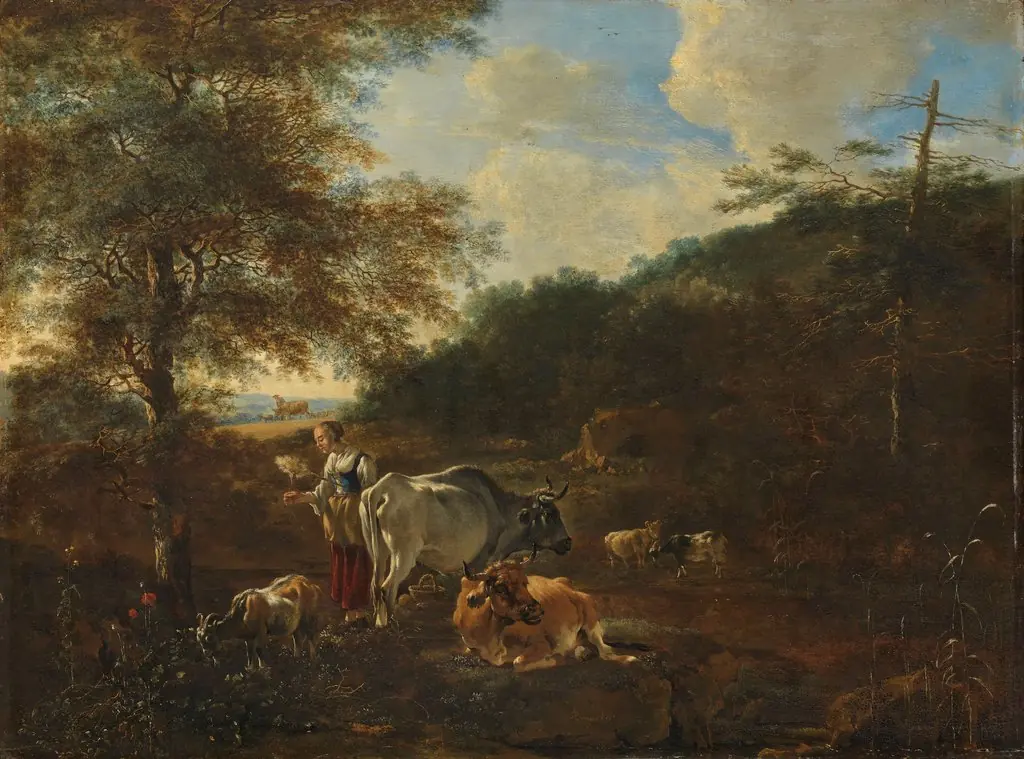 Landscape with cattle
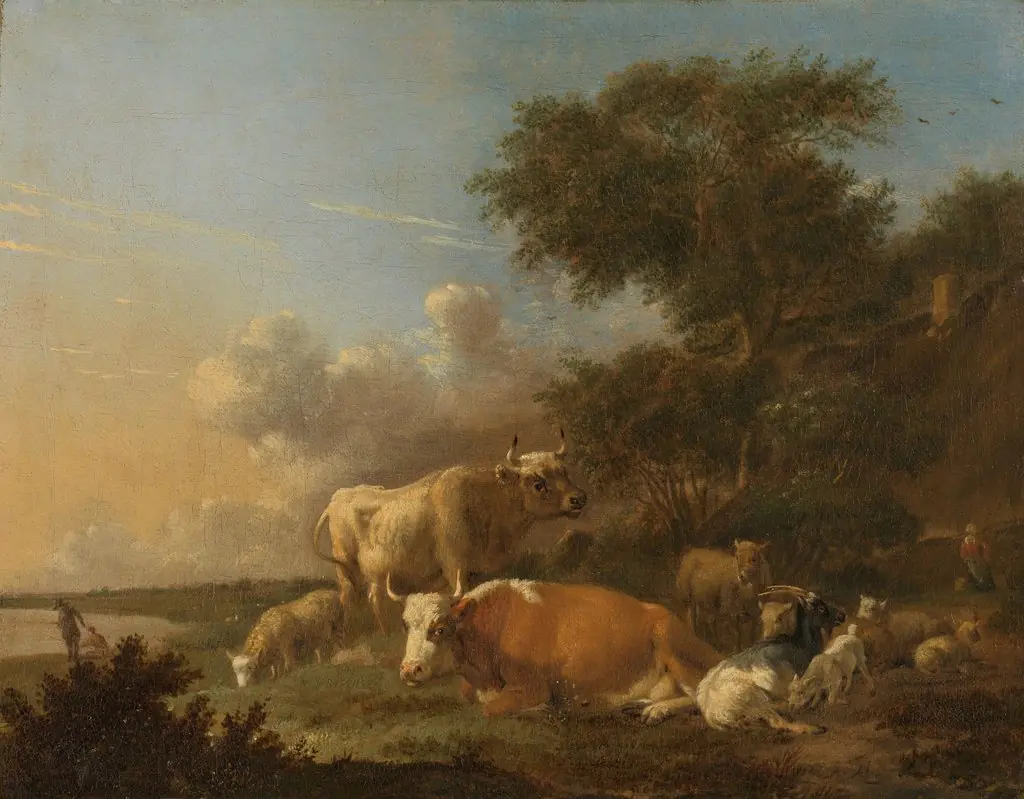 Landscape with cattle
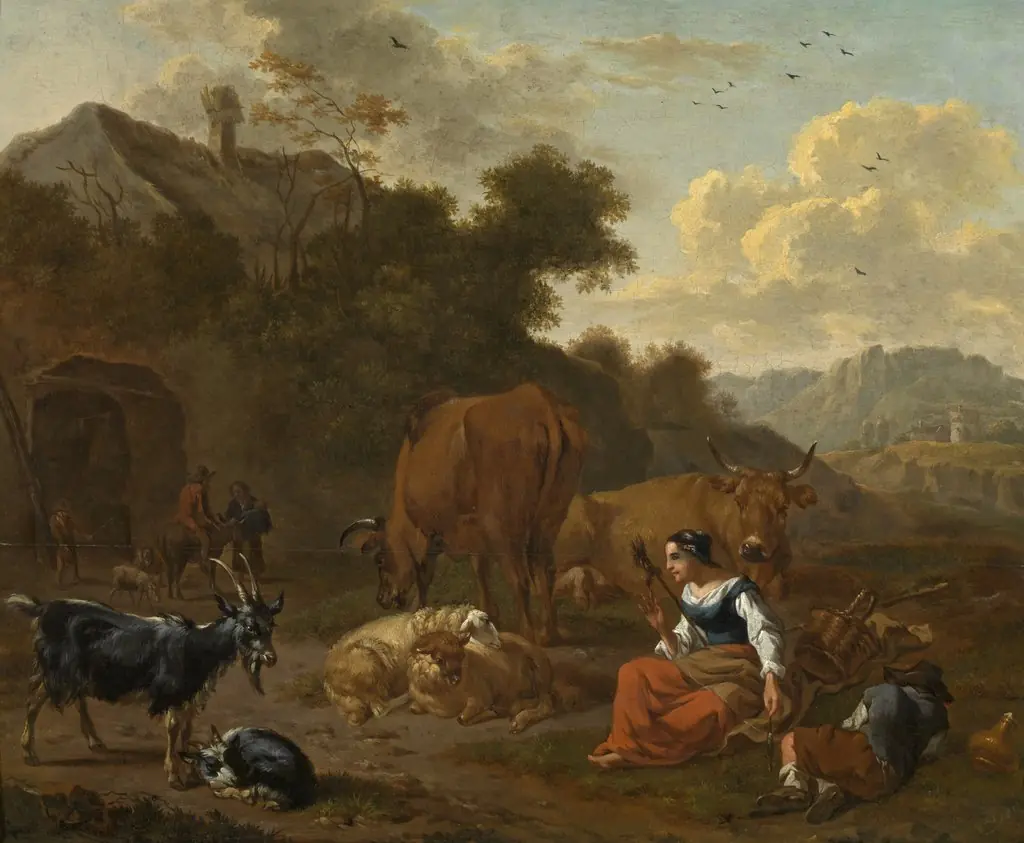 Landscape with a Spinner and Cattle
 Landscape with sheperd, sheperdess and cattle
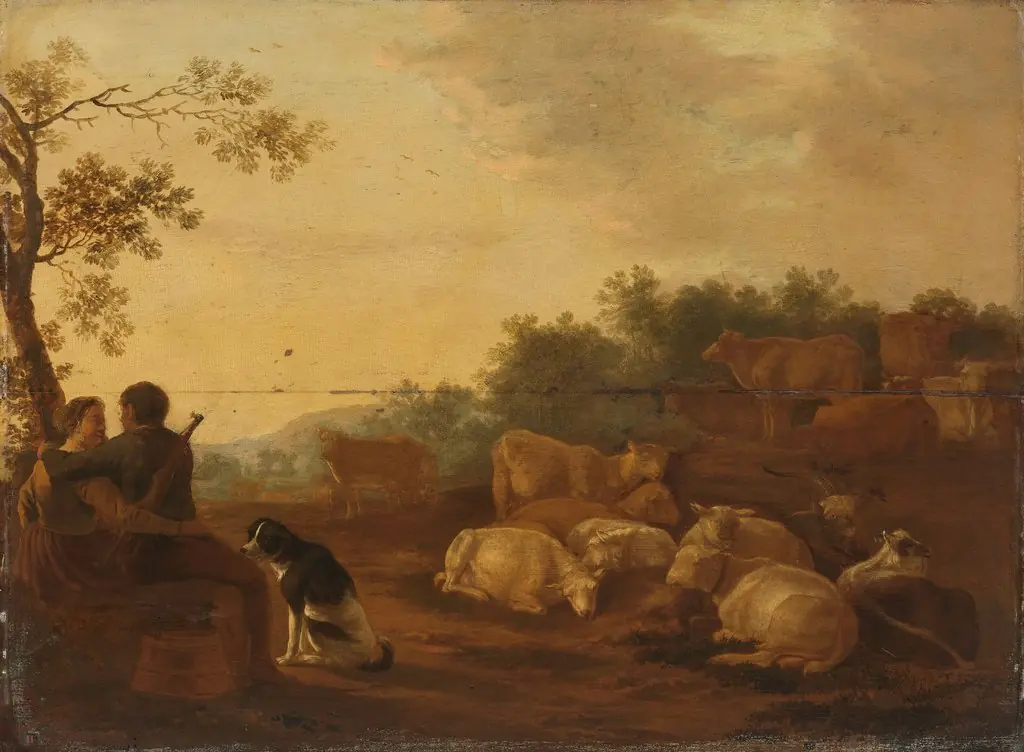 Landscape with sheperd, sheperdess and cattle
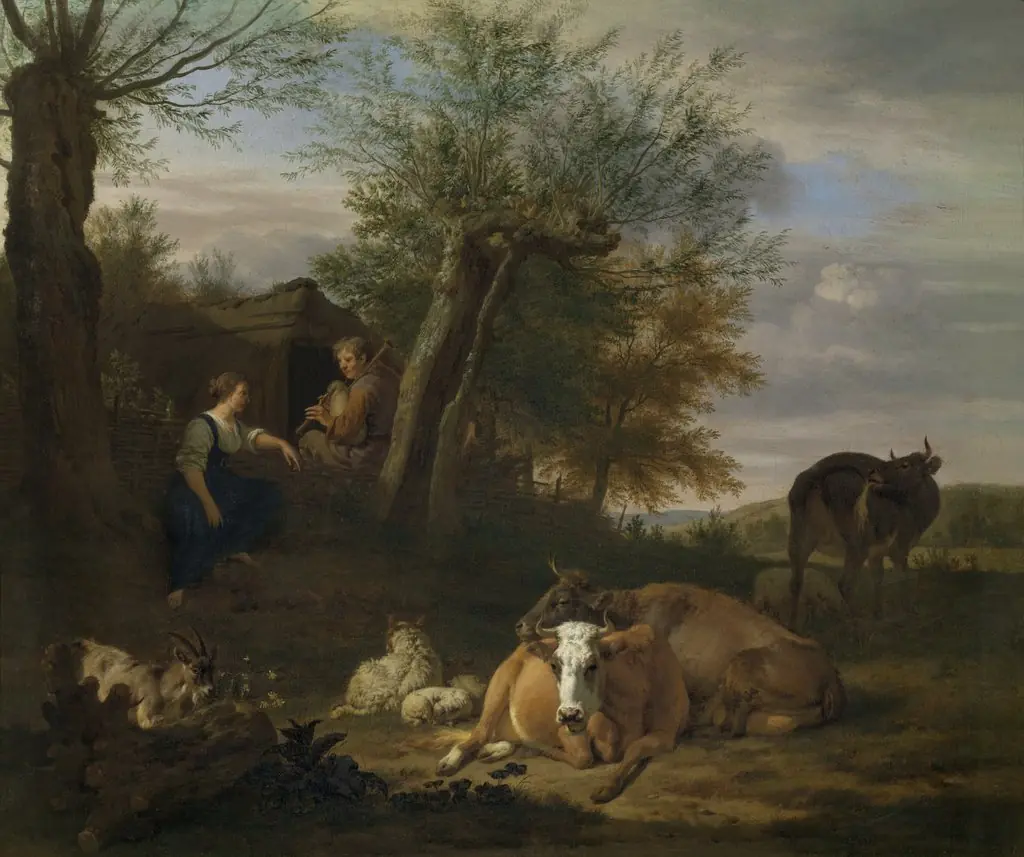
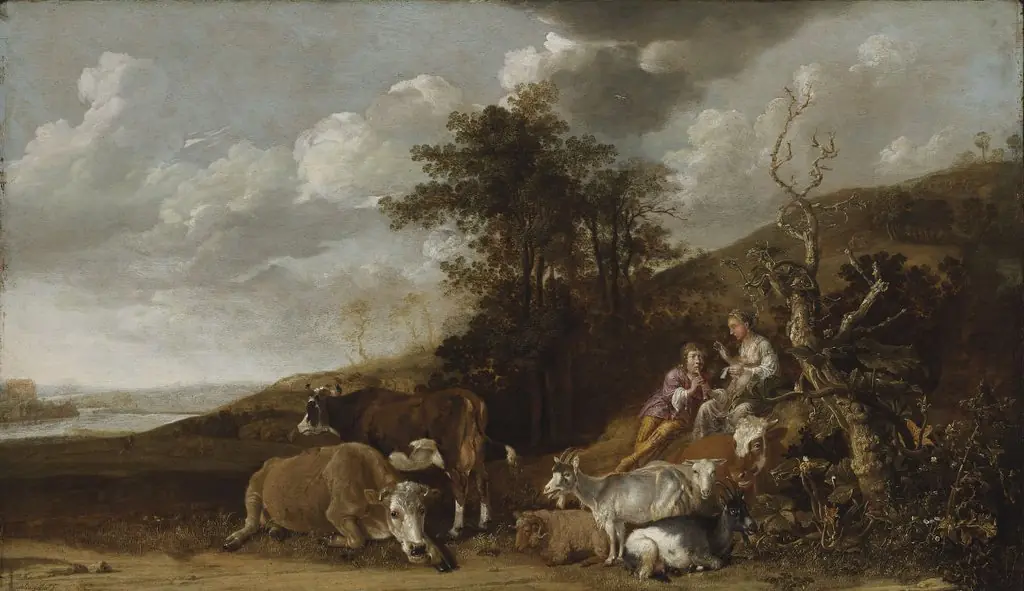 Landscape with Shepherdess and Shepherd Playing Flute
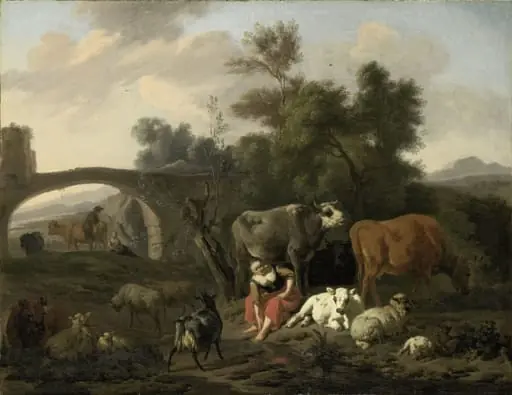 Landscape with Herdsmen and Cattle
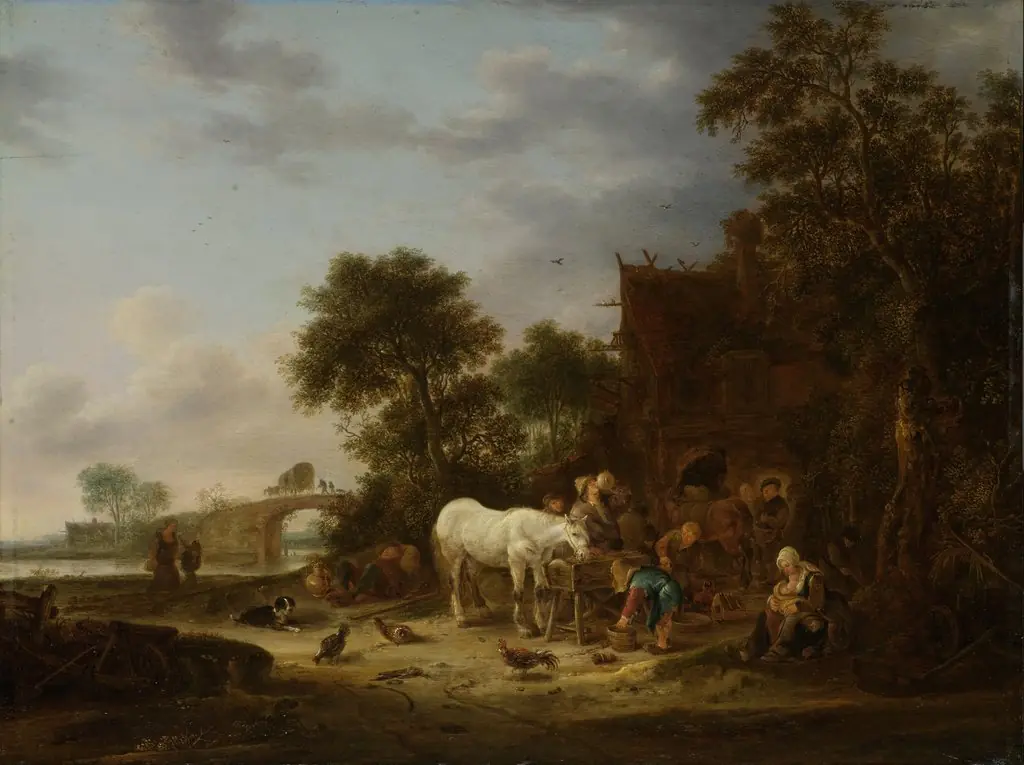 Country inn with a horse at the trough
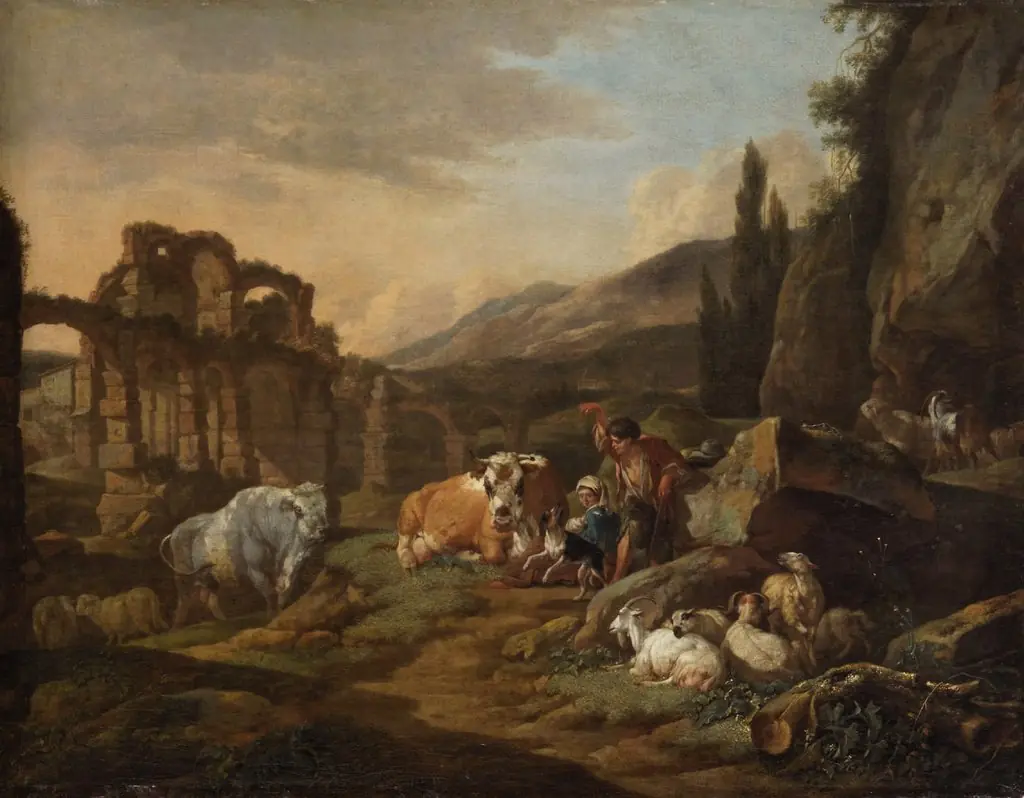 Landschaft mit Tieren