Artwork
Portait of a Woman by the Sea
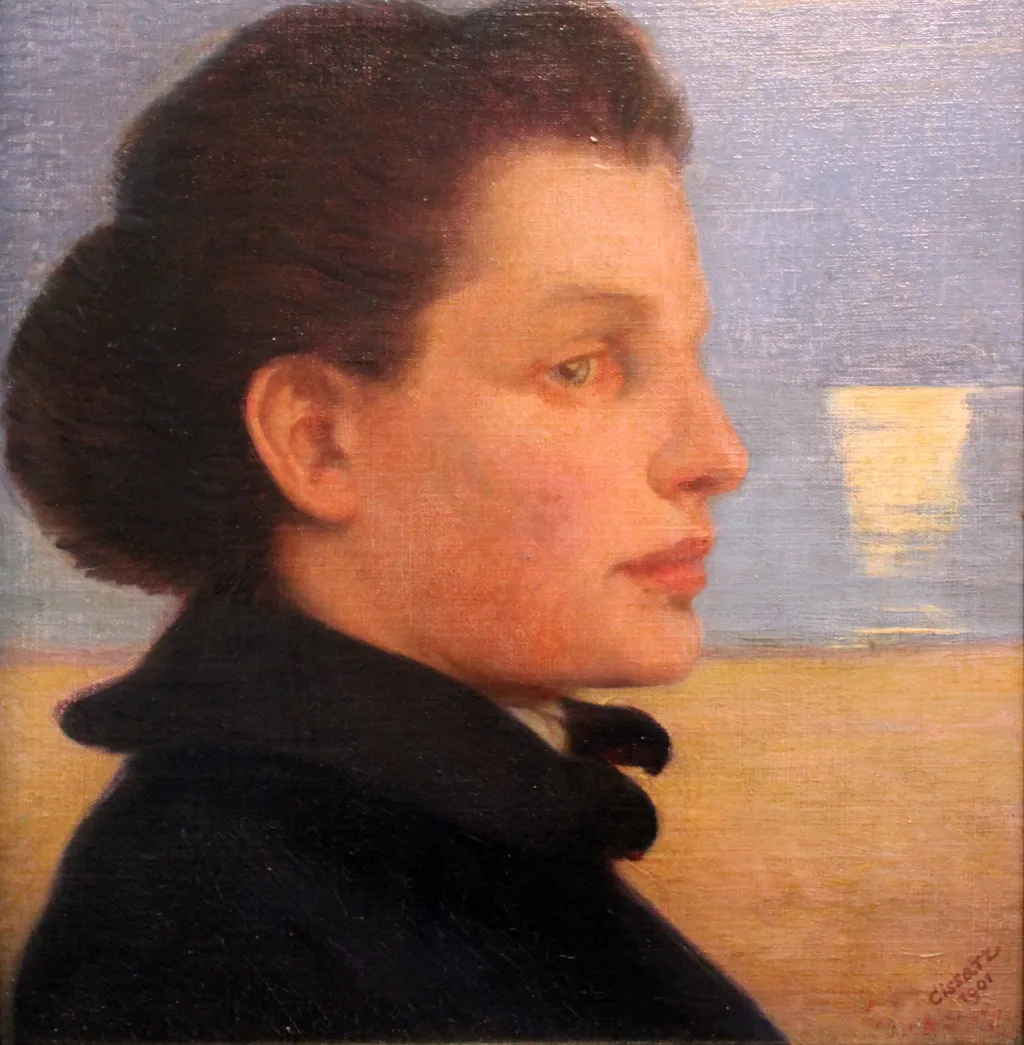
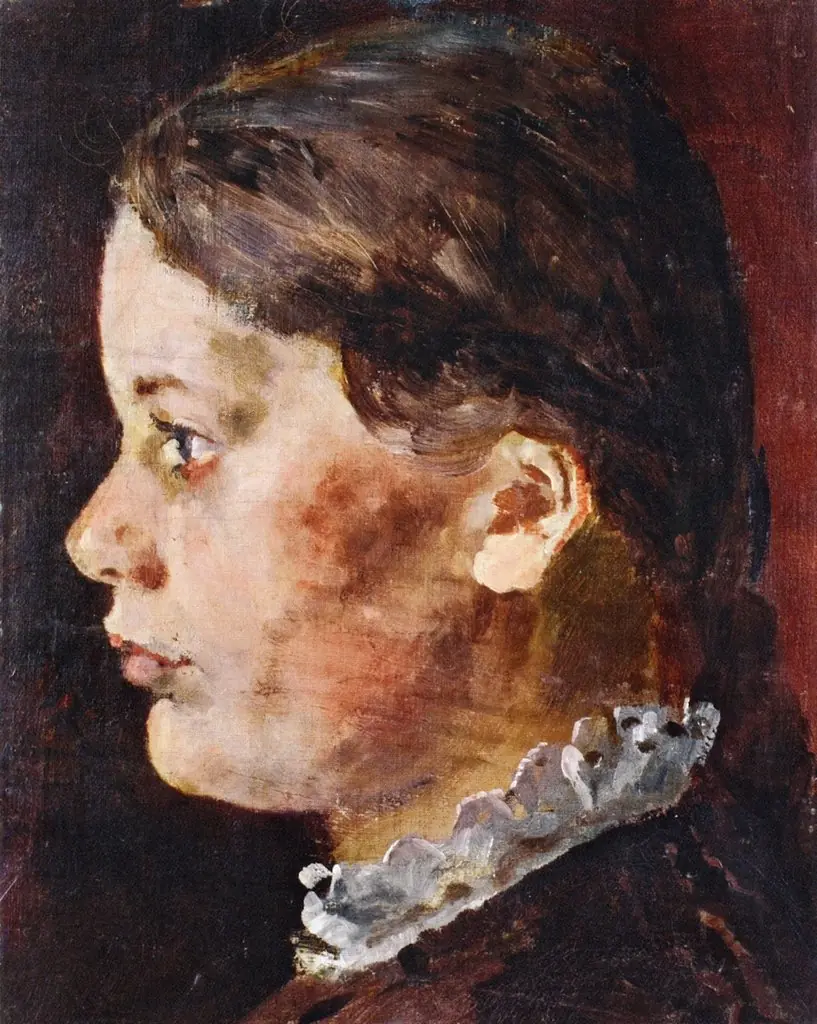
Portait of a Woman by the Sea is an unspecified painting by the Impressionist artist Johann Vincenz Cissarz. It dates from 1901 and is held in the collection of the Städel Museum.
About this work
Overview
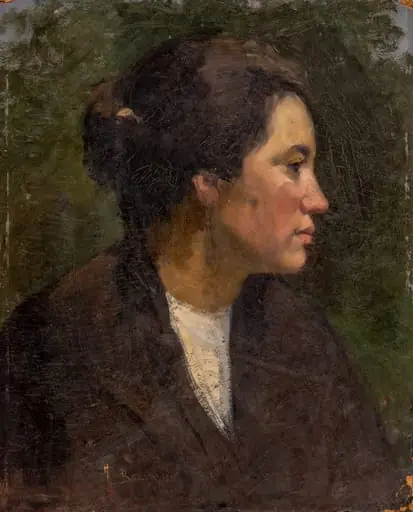
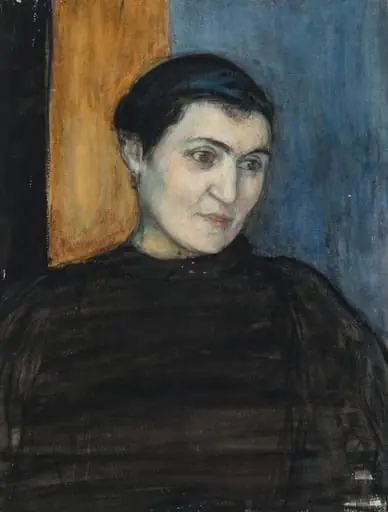
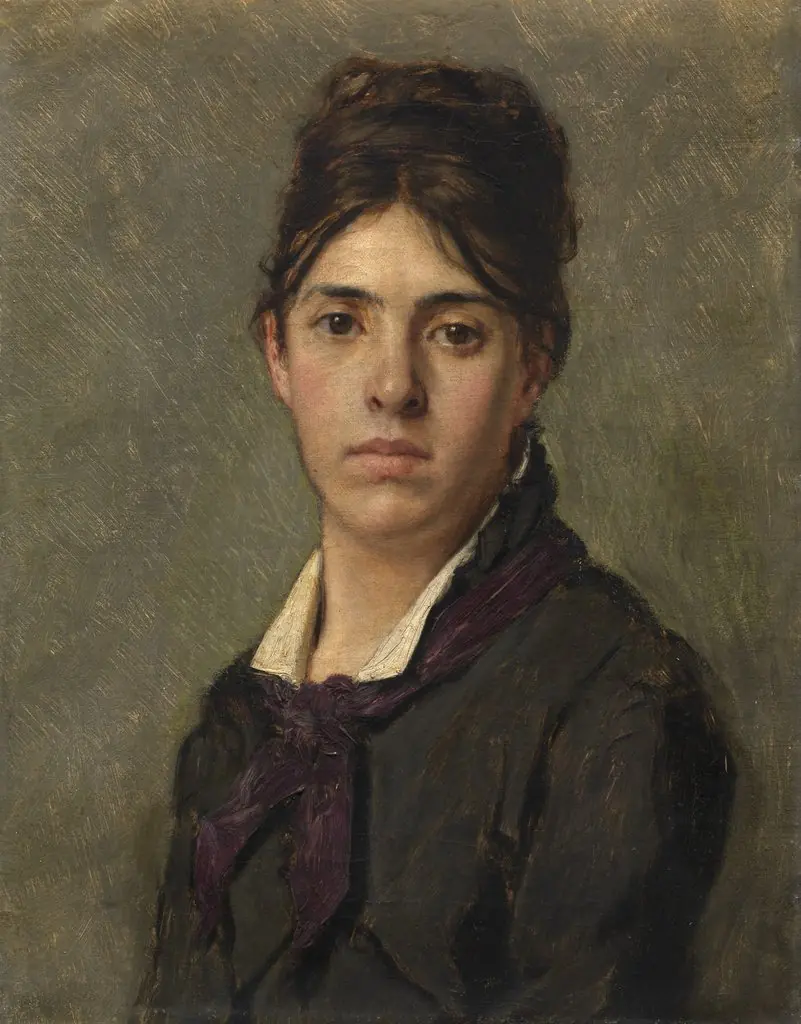
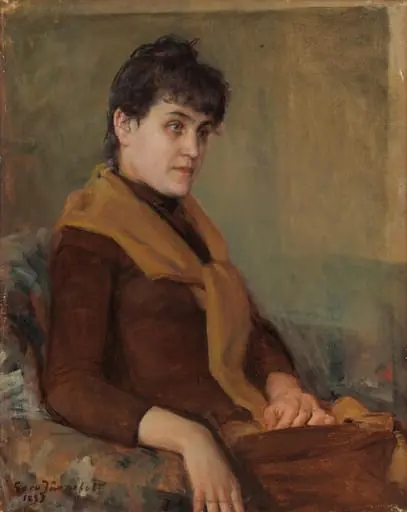
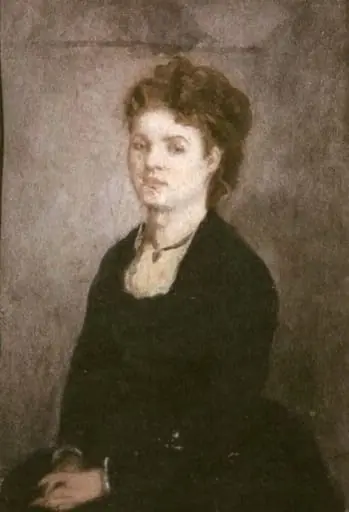
Painted in 1901 by Johann Vincenz Cissarz, this portrait depicts a solitary woman near a coastal or open landscape. The work resides in the Städel Museum’s collection and exemplifies late 19th-century German portraiture, emphasizing stillness and introspection over narrative drama. The composition is restrained, focusing on the figure’s presence within a muted natural setting.
Subject & Meaning
The woman, with dark hair pulled tightly back, looks toward the right edge of the frame, her expression unreadable yet composed. Her attire—a dark jacket with a high collar and white shirt—suggests modesty and formality. The absence of identifiable objects or context invites interpretation as a meditation on solitude, with the sea or open land serving as a quiet counterpoint to her inner state.
Technique & Style
Cissarz employs soft, diffused lighting to model the woman’s face, creating a gentle transition between light and shadow without harsh contrasts. The background is rendered in loose, atmospheric brushwork, with pale blues and earth tones suggesting sky and ground. The technique avoids dramatic chiaroscuro, favoring a subdued tonal harmony that reinforces the painting’s tranquil mood.
History & Provenance
The painting entered the Städel Museum’s holdings in the early 20th century, likely acquired during a period of expanded focus on contemporary German artists. Its provenance remains largely undocumented beyond institutional records, reflecting its status as a lesser-known work within Cissarz’s oeuvre rather than a widely exhibited piece.
Context
Created at the turn of the century, the portrait aligns with a broader European trend toward psychological portraiture, where inner life supersedes social display. While Cissarz was not part of major avant-garde movements, his work reflects the quiet realism favored by regional academies, balancing traditional technique with emerging interest in emotional subtlety.
Legacy
The painting remains a quiet example of early 20th-century German portraiture, valued for its restraint and atmospheric sensitivity. Though not widely reproduced or studied, it contributes to understanding the diversity of artistic approaches outside dominant movements, preserving a moment of personal stillness in a rapidly changing artistic landscape.
Own this work as a print
Artist & collection