Artwork
Allegorie op de Franse invasie in 1672
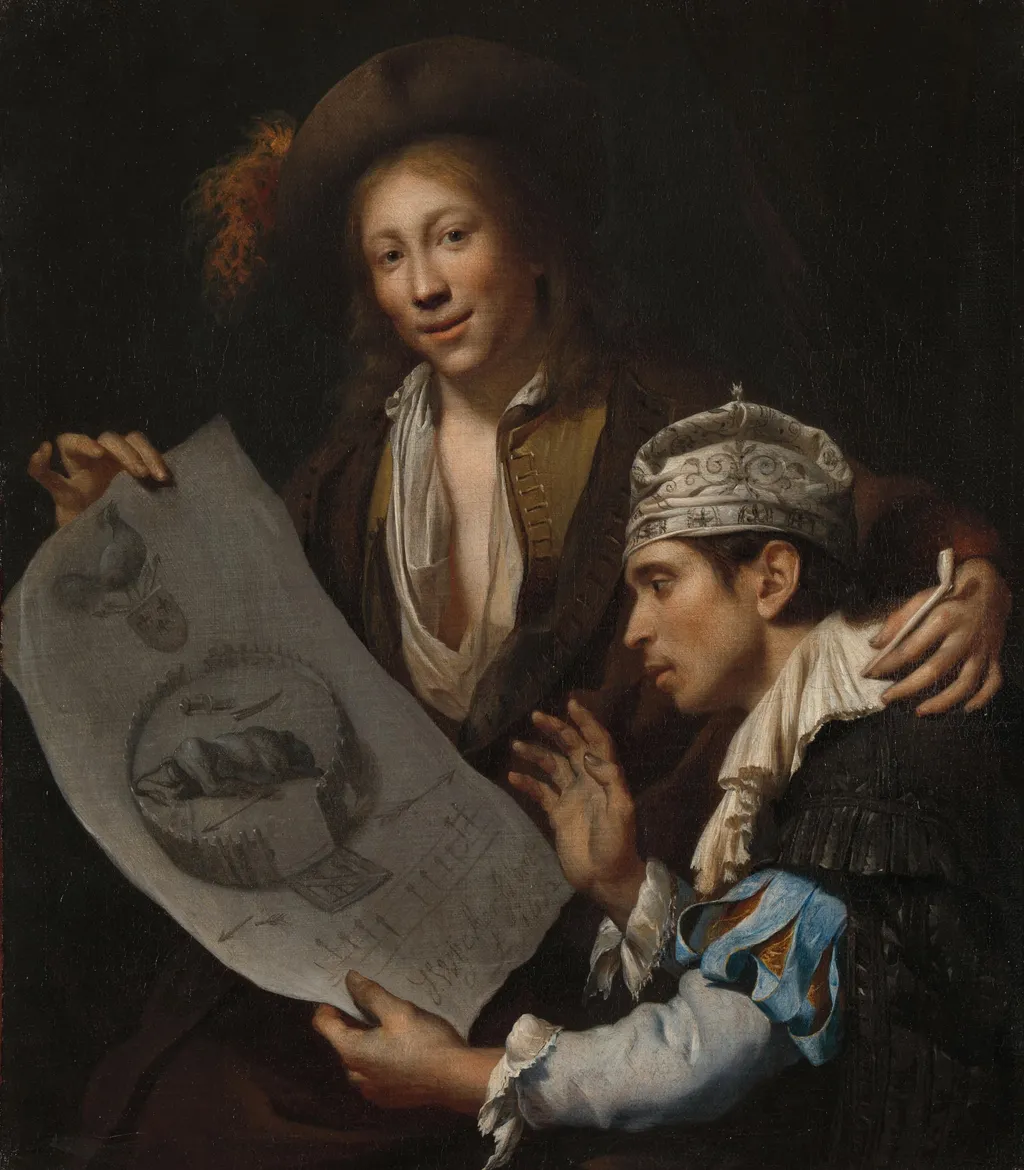
Allegorie op de Franse invasie in 1672 is an unspecified painting by the Dutch Golden Age artist Johannes van Wijckersloot. It dates from 1672 and is held in the collection of the Rijksmuseum. This painting presents an allegorical scene commenting on the French invasion of the Netherlands in 1672.
About this work
You see a man sitting at a table, staring at a drawing of a broken lion and a crowing rooster.
You see a man sitting at a table, staring at a drawing of a broken lion and a crowing rooster. Another man stands behind him, wearing an orange feather in his cap.
The drawing is a cartoon of the French invasion of the Netherlands in 1672. The lion is the Dutch symbol, its weapons shattered. The rooster is France, gloating. The orange feather hints at William III, who would later push the French out.
To see more works like this, look up the Dutch School.
Overview
This painting presents an allegorical scene commenting on the French invasion of the Netherlands in 1672. At its center, a seated man contemplates a drawing that depicts national catastrophe through animal symbolism. Behind him stands a second figure, distinguished by a prominent orange feather in his cap. The composition juxtaposes despair with quiet resistance, using the act of viewing as a frame for political commentary. The work belongs to the Dutch School and functions as a visual document of crisis and hoped-for recovery.
Subject & Meaning
The drawing within the painting carries layered symbolism. A broken lion, traditional emblem of the Dutch Republic, lies amid shattered weapons and a ruined gate—an image of military defeat and violated sovereignty. Above this fallen figure, a crowing rooster represents triumphant France. The standing figure's orange feather identifies him as a partisan of William III of Orange, the stadtholder who would eventually lead resistance against French occupation. This pairing of images suggests a narrative arc from disaster to anticipated redemption.
Technique & Style
The painting employs a picture-within-a-picture structure common in Dutch art, creating distance between viewer and political message while still permitting sharp commentary. The interior setting, with its table and seated observer, grounds the allegory in everyday experience. The Dutch School approach favors legible symbolism over subtlety, rendering political ideas accessible to a broad audience. The restrained palette and domestic scale typical of such works underscore the intimate urgency of national crisis.
Own this work as a print
Artist & collection
Artist
Johannes van Wijckersloot (c. 1625-1630 – 1687) was a Dutch Golden Age painter. Wijckersloot was born in Utrecht and little is known of his early years, though he probably learned to paint at the newly opened drawing…

 The Drawing Lesson
 Young Painter in His Studio
 Young Man by Candlelight
 The Construction of Copenhagen´s Dock in the Reign of Christian VI
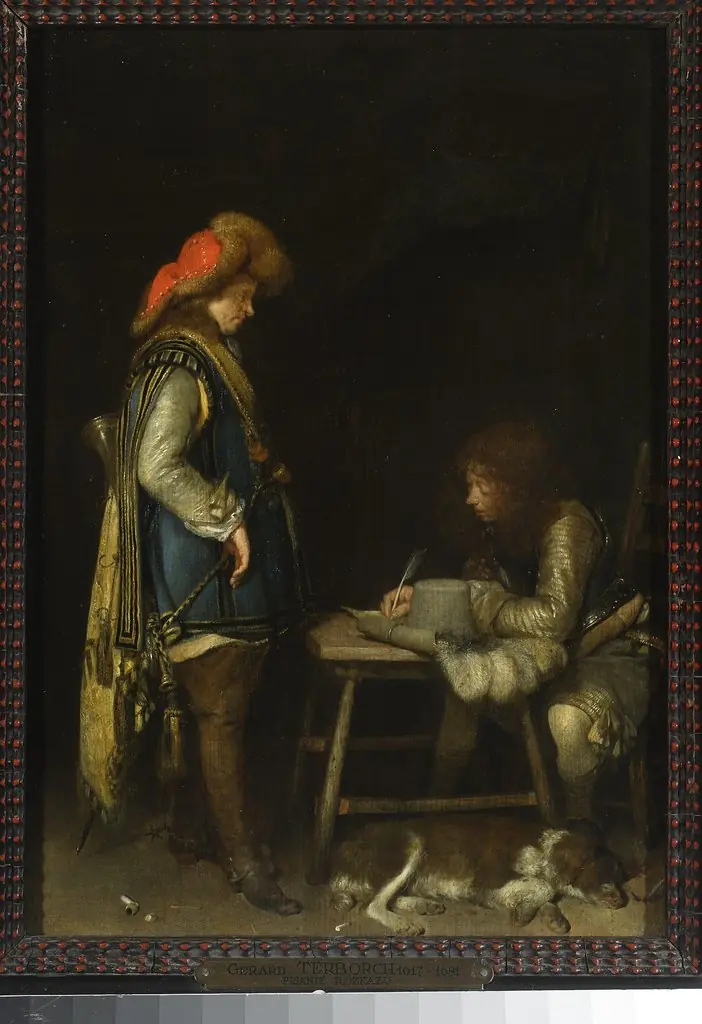 Officer writing a letter
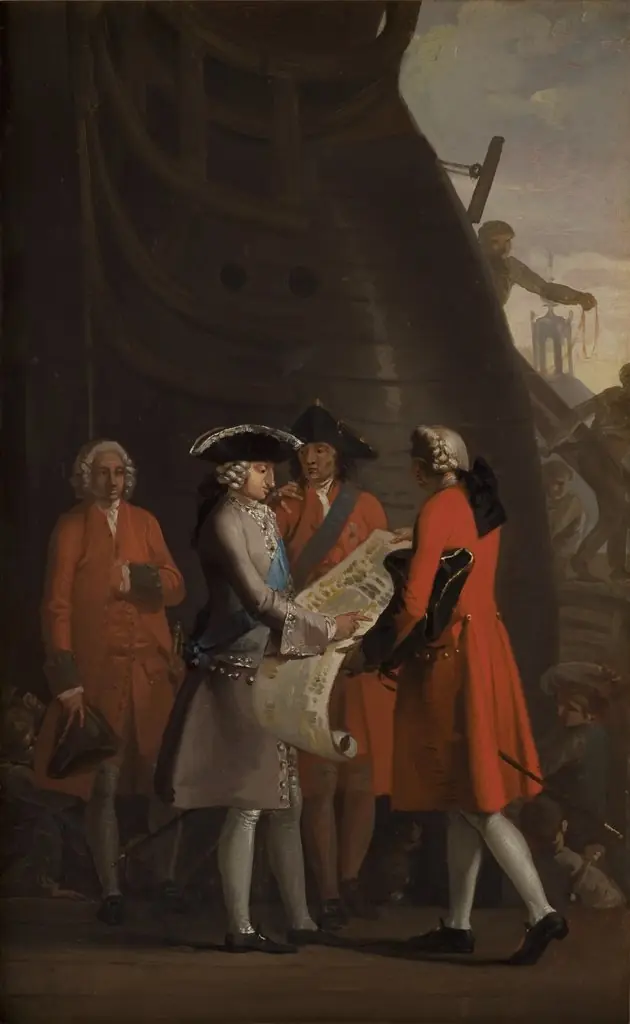 The Construction of Copenhagen´s Dock in the Reign of Christian VI
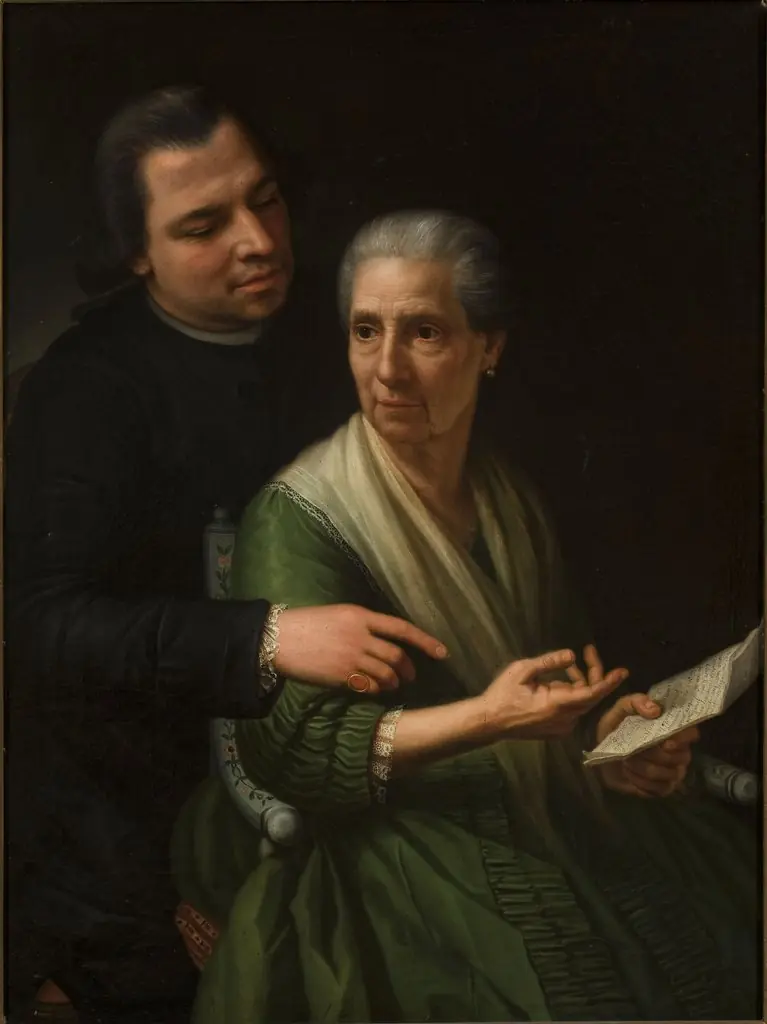 Portrait of Marcello Bacciarelli’s mother and brother
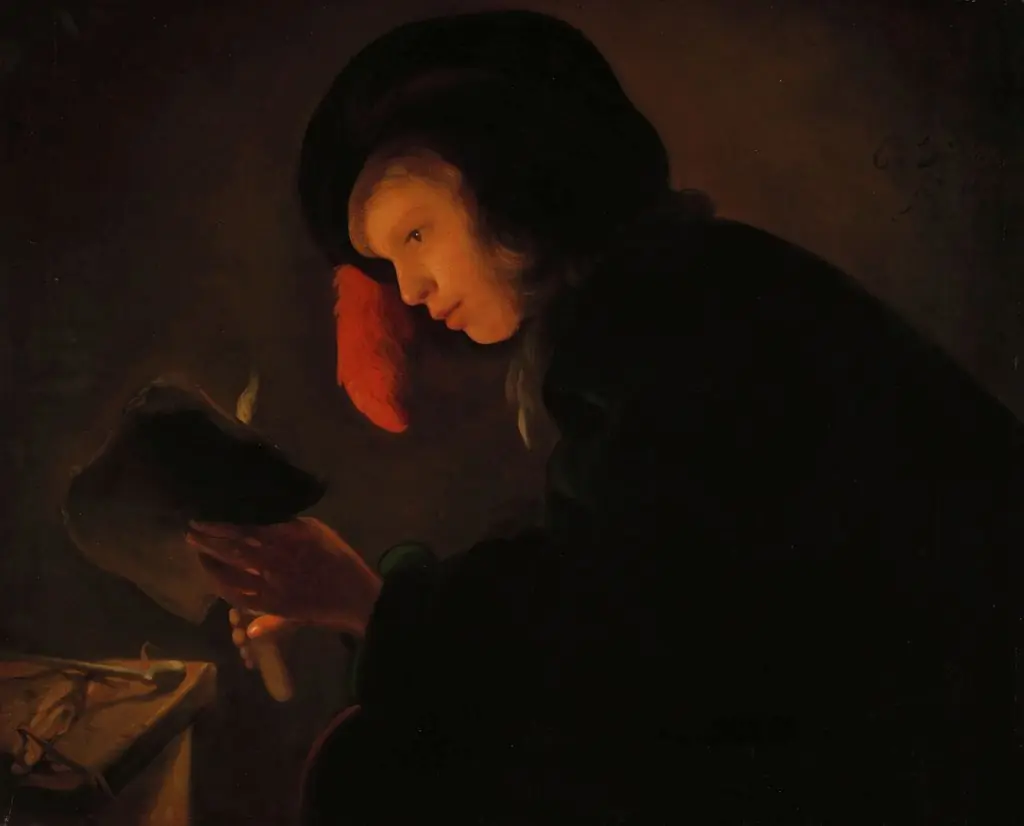 Young man by candle light
 Socrates and two students
 Magnus Stenbock Surrenders the Fortress of Tønningen to Frederik IV in 1714
 Concert