Artwork
Haying at Lapham's Farm, Auburn, Maine
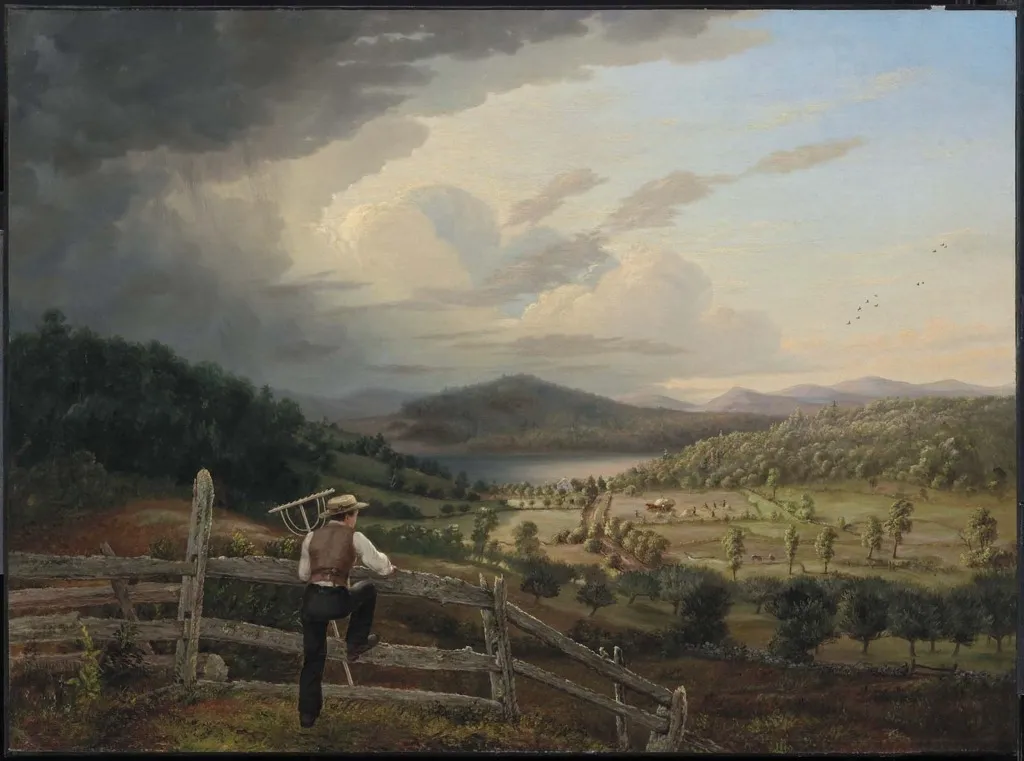
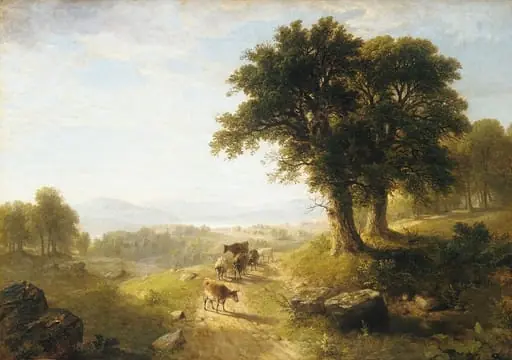
Haying at Lapham's Farm, Auburn, Maine is an oil painting by the Realist artist John Bradley Hudson, Jr.. It dates from 1859 and is held in the collection of the Museum of Fine Arts Boston.
About this work
Overview
It captures a moment of stillness in agricultural life, focusing on a solitary figure observing the landscape during the haying season.
Painted in 1859 by John Bradley Hudson, Jr., this oil on canvas depicts a quiet rural scene in Auburn, Maine. The work is part of the Museum of Fine Arts, Boston’s collection. It captures a moment of stillness in agricultural life, focusing on a solitary figure observing the landscape during the haying season. The composition balances natural elements with human presence, evoking contemplation rather than action.
Subject & Meaning
A lone man stands atop a wooden fence, gazing across a field where hay has been gathered. His posture suggests introspection, not labor. The surrounding landscape—trees, distant lake, and shifting sky—frames him as an observer rather than a participant. The painting conveys a quiet reverence for rural life, emphasizing solitude and the passage of time over the physical toil of farming.
Technique & Style
Hudson employs chiaroscuro to model forms through subtle shifts in light and shadow, enhancing the three-dimensionality of the figure and terrain. Warm sunlight breaks through darkening clouds, illuminating the field while leaving the foreground in softer tone. Brushwork is restrained, favoring atmospheric harmony over detail. The palette, dominated by earth tones and muted greens, reinforces the painting’s calm, introspective mood.
History & Provenance
Created in 1859, the painting remained in private hands until acquired by the Museum of Fine Arts, Boston. Hudson, a lesser-known 19th-century American artist, produced few documented works, making this piece a rare example of his engagement with landscape and rural subject matter. Its preservation and institutional acquisition reflect its value as a regional artifact of mid-century American life.
Context
Painted during a period of industrial expansion, the work offers a quiet counterpoint to urbanization. Rural Maine, still largely agrarian, provided Hudson with subjects rooted in local experience. Unlike Hudson River School grandeur, this scene avoids drama, instead focusing on the ordinary rhythms of farm life—a quiet affirmation of place amid broader societal change.
Legacy
Though not widely exhibited or studied, the painting contributes to the understanding of regional American art beyond major artistic movements. Its understated realism and emotional restraint distinguish it from more theatrical contemporaries. As one of Hudson’s few surviving works, it remains a modest but significant record of 19th-century Maine’s visual culture.
Artist & collection

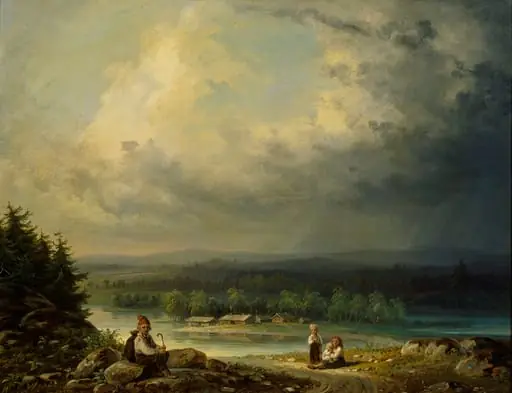 Neljä talonpoikaislasta maisemassa
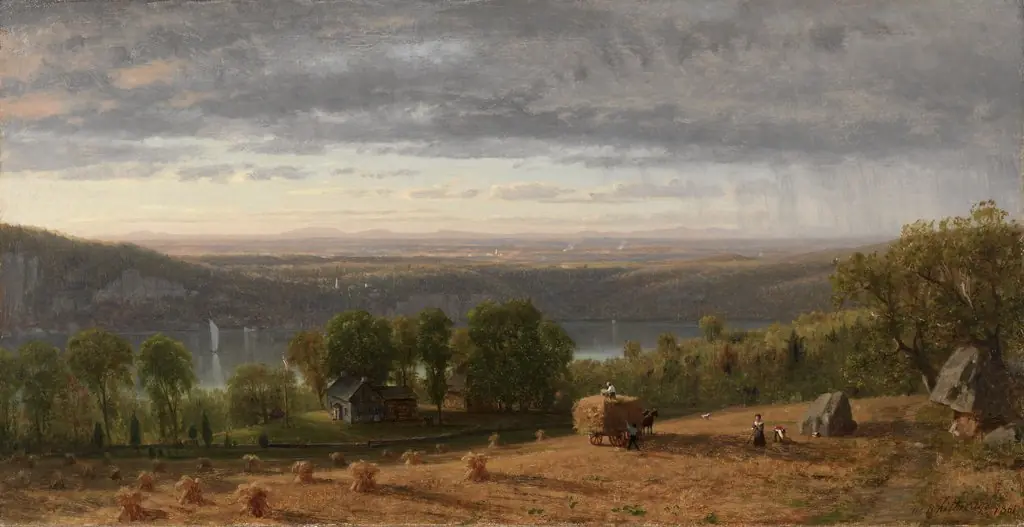 Landscape with Haywain
 Landscape with Haywain
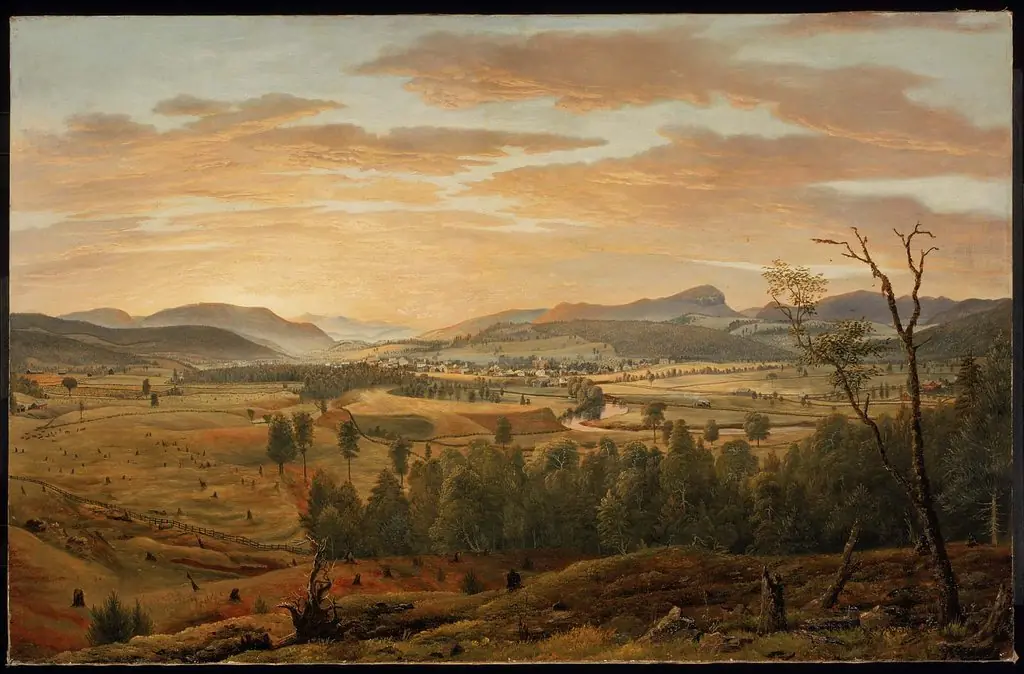 Bird Mountain, Castleton, Vermont
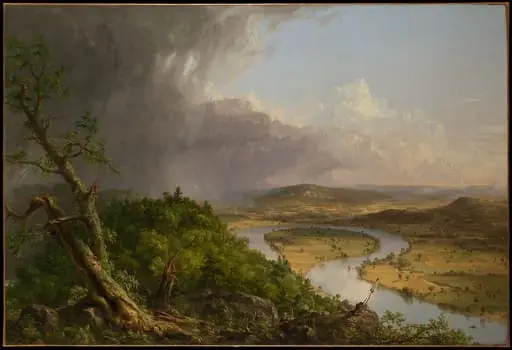 View from Mount Holyoke, Northampton, Massachusetts, after a Thunderstorm—The Oxbow
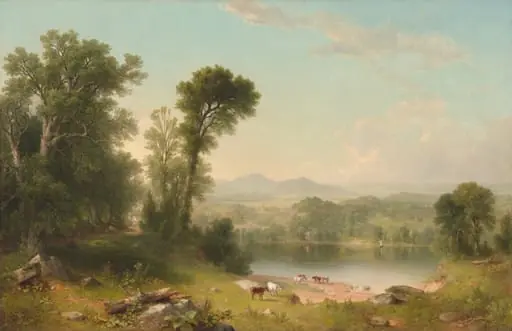 Pastoral Landscape
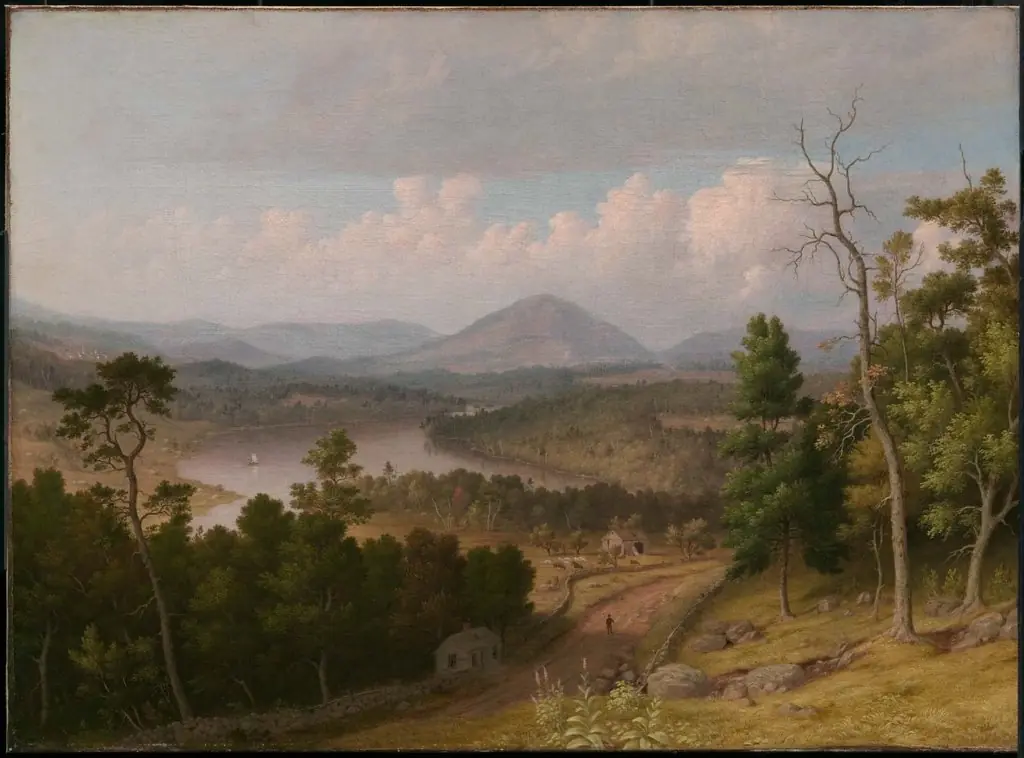 View from Stacey Hill, Stoddard, New Hampshire
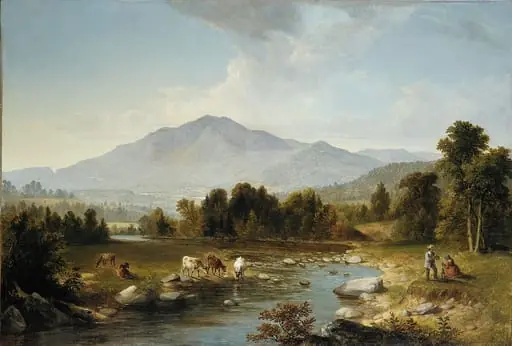 High Point: Shandaken Mountains
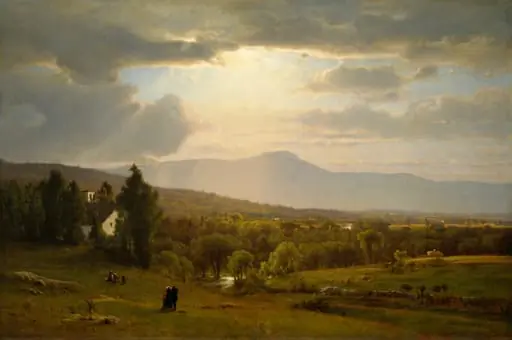 Catskill Mountains
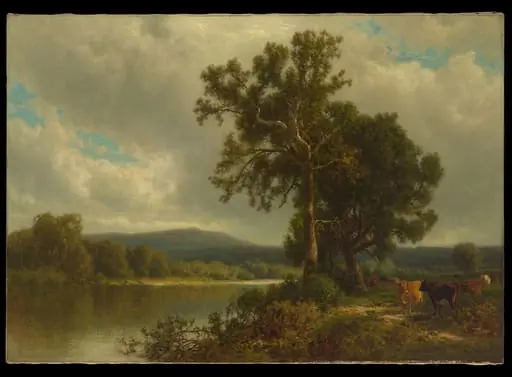 Scene at Napanoch
 Catskill Mountains
 River Scene