Artwork
Neljä talonpoikaislasta maisemassa
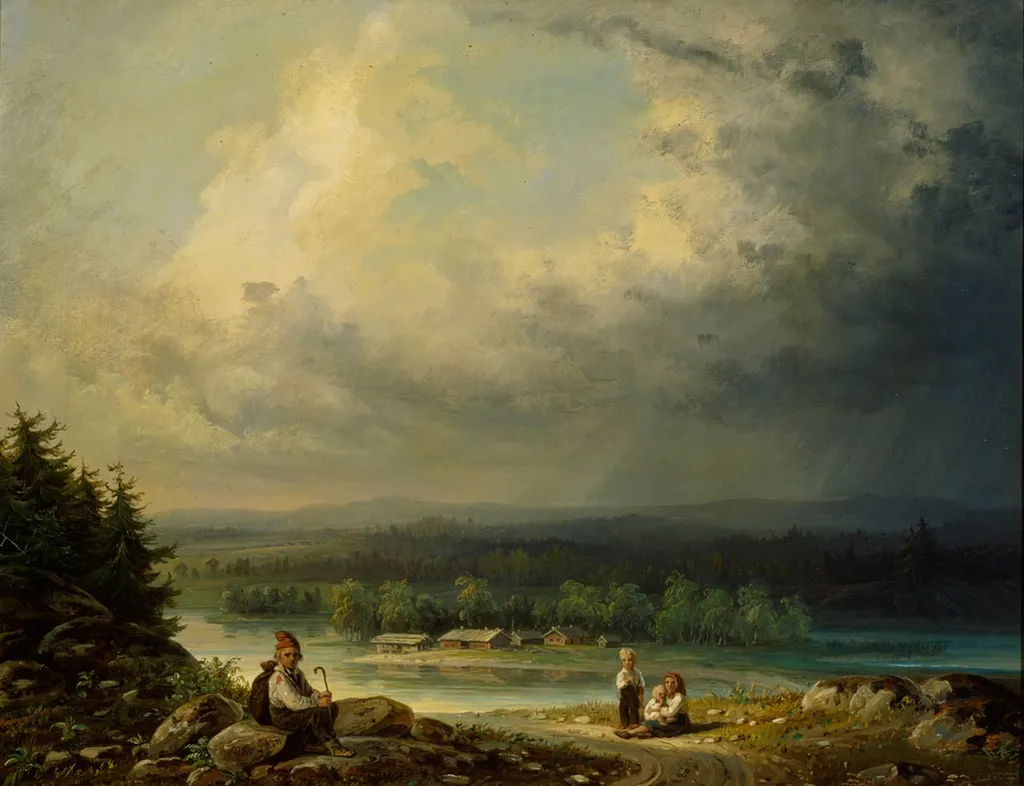
Neljä talonpoikaislasta maisemassa is an unspecified painting by Robert Wilhelm Ekman. It is held in the collection of the Finnish National Gallery. The work depicts a tranquil riverside setting where a man and two children are seated on a cluster of rocks.
About this work
Overview
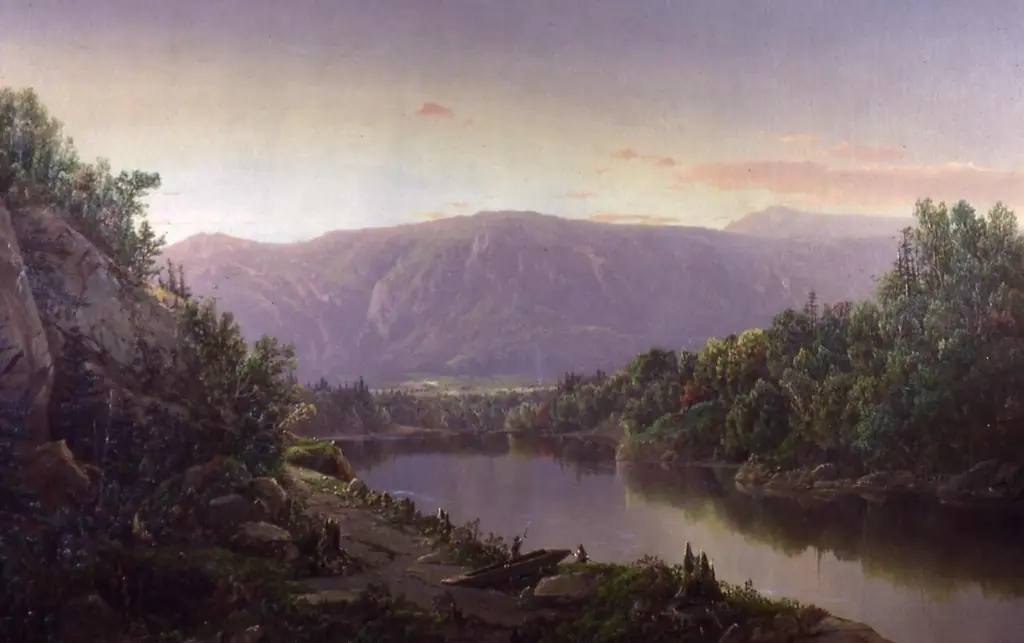
The work depicts a tranquil riverside setting where a man and two children are seated on a cluster of rocks. The adult, supported by a staff, wears a hat and modest attire, while one child clutches a stick. Beyond them, a gentle river winds through a verdant valley, framed by trees and distant hills beneath a sky filled with dramatic clouds.
Subject & Meaning
The composition presents a simple, rural moment, emphasizing the relationship between the figures and their natural surroundings. The presence of the staff and the children's posture suggest a pause in daily labor or travel, inviting contemplation of familial bonds and the quiet dignity of countryside life.
Technique & Style
The artist employs soft, blended brushwork that unifies sky and landscape, creating a seamless transition of tones reminiscent of sfumato. Light falls across the figures and rocks, producing subtle gradations of shadow and highlight that give the scene a sense of depth while maintaining an overall calm atmosphere.
Context
Although specific details about the creator and date are lacking, the painting aligns with 19th‑century European traditions that idealized pastoral scenes. Its focus on everyday rural figures and atmospheric landscape reflects a broader interest in depicting the harmony between people and nature during that period.
Artist & collection
Artist
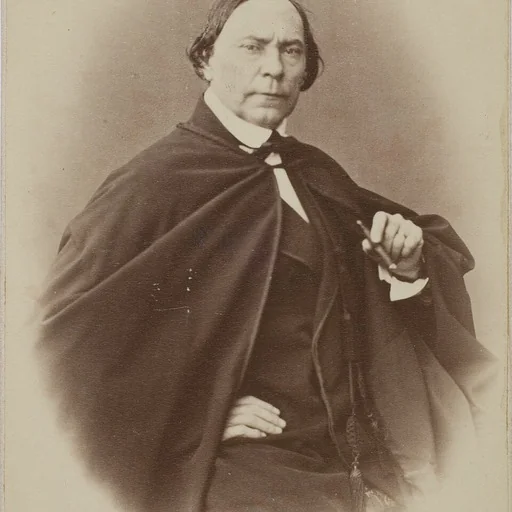
Robert Wilhelm Ekman (August 13, 1808 – February 19, 1873), a.k.a. R. W. Ekman, was a significant teacher and painter of the Finnish romantic portraits and early national romanticism.

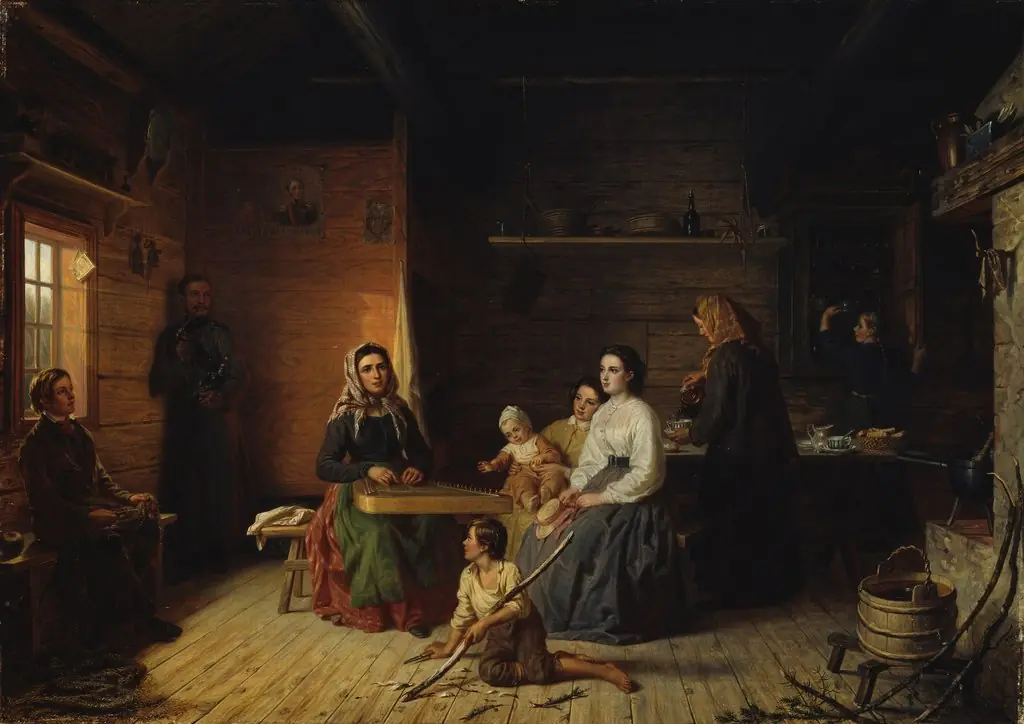 Kreeta Haapasalo Playing the Kantele in a Peasant Cottage
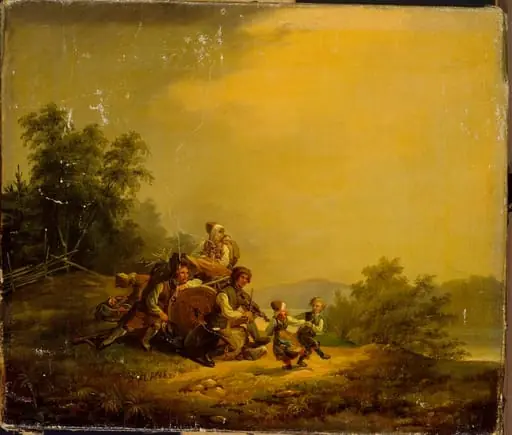 Lepääviä maalaisia ja tanssivia lapsia
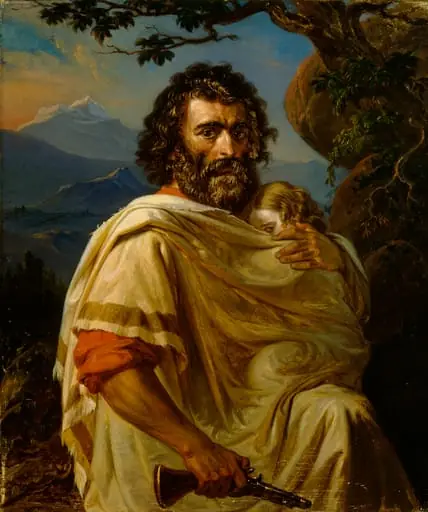 Italialainen mies lapsi käsivarrellaan
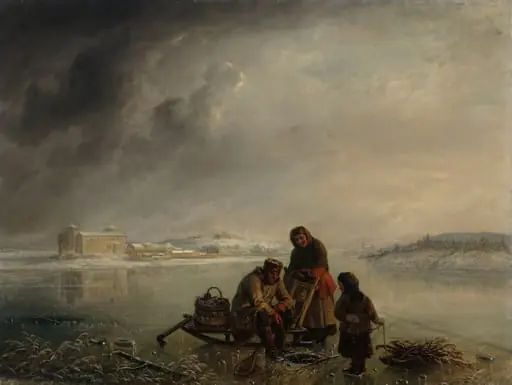 Talvikalastusta Turun linnan ulkopuolella
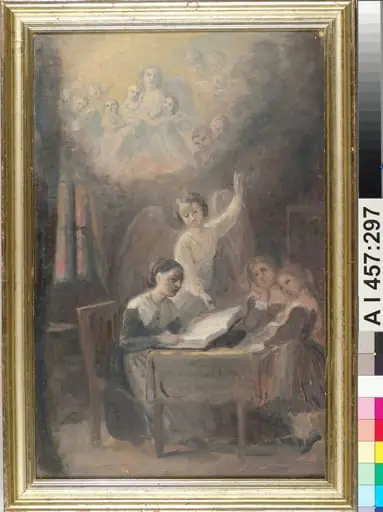 "Satu seitsemästä sisaruksesta", luonnos Haeggströmin sisarusten ryhmämuotokuvaa (1862) varten
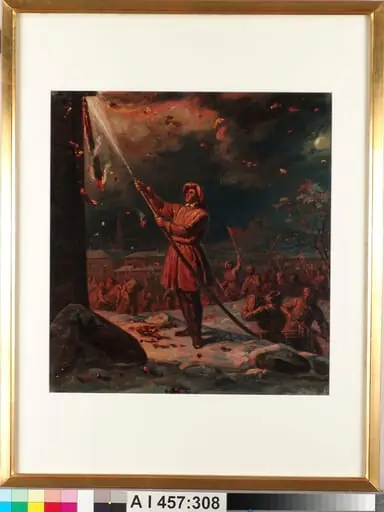 Turun palo
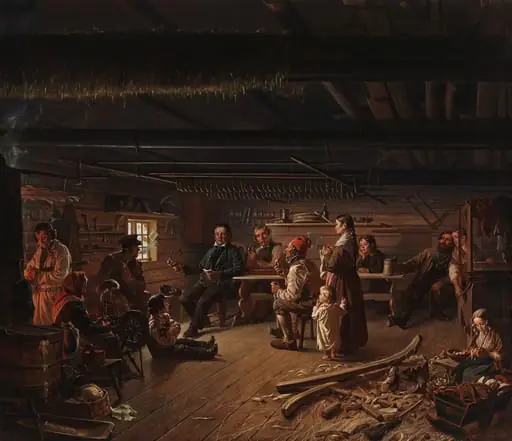 Pentti Lyytinen lukee runojaan savolaisessa pirtissä
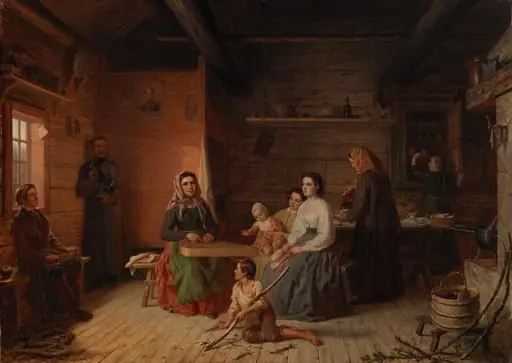 Kreeta Haapasalo soittaa kannelta talonpoikaistuvassa