Artwork
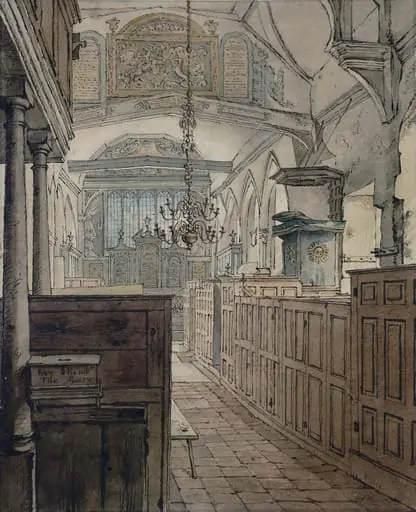
Interior view of the Church of St. Giles, Cripplegate
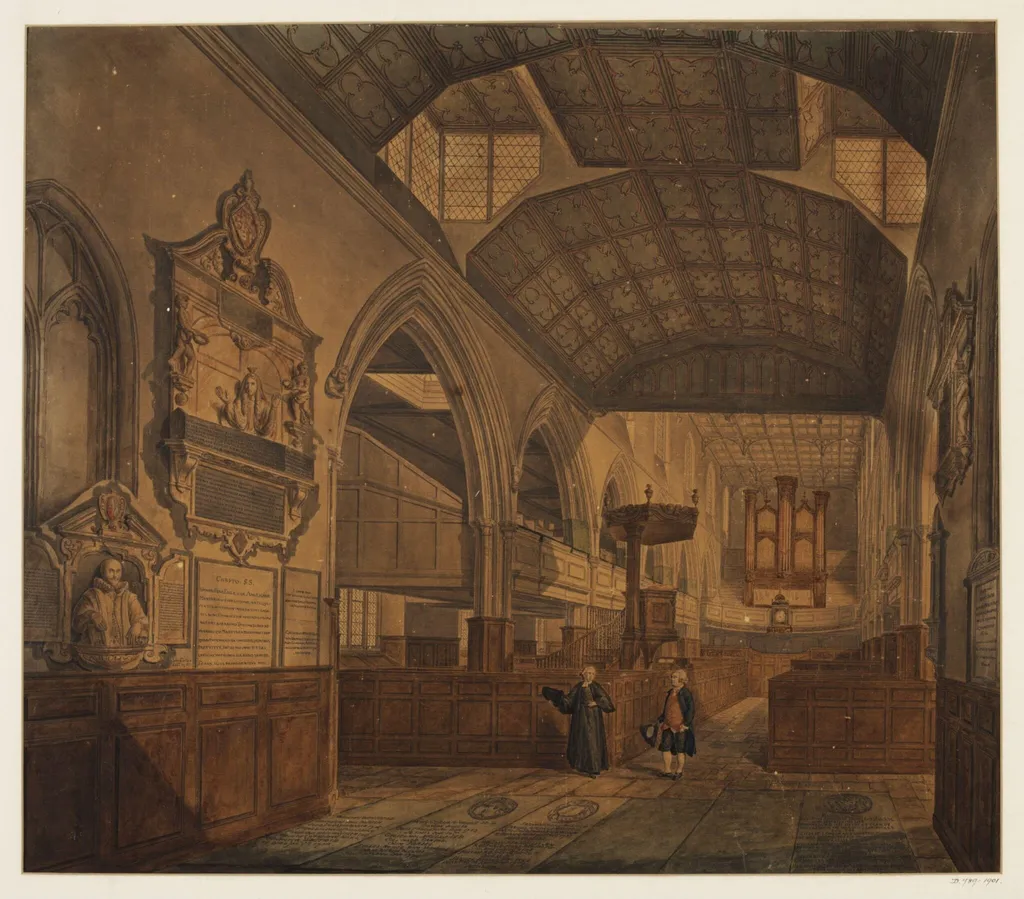
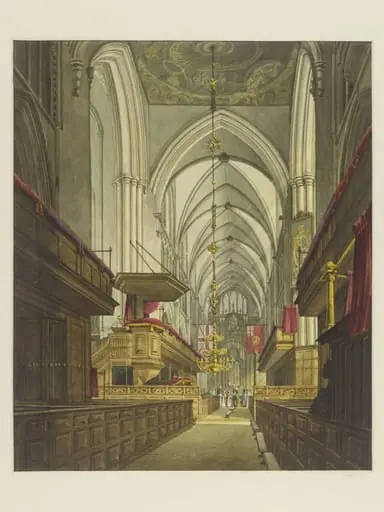
Interior view of the Church of St. Giles, Cripplegate is a drawing by the Romanticist artist John Carter. It dates from 1781 and is held in the collection of the Victoria and Albert Museum.
About this work
Overview
The drawing captures the church’s architectural form with precision, emphasizing spatial depth through careful shading and linear perspective.
John Carter created this detailed interior view of St. Giles, Cripplegate, in 1781, signing and dating the work. The drawing captures the church’s architectural form with precision, emphasizing spatial depth through careful shading and linear perspective. Its quiet atmosphere and restrained composition reflect Carter’s interest in documenting ecclesiastical spaces as historical records rather than decorative subjects.
Subject & Meaning
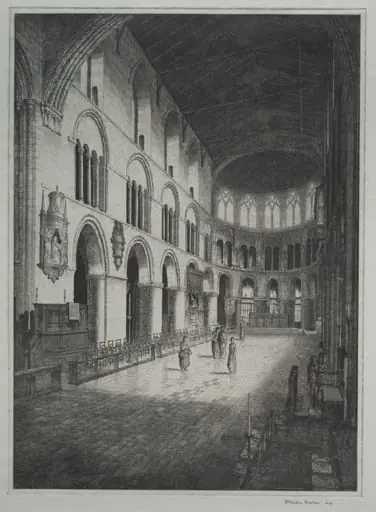
The scene depicts a modest, unoccupied church interior, with two figures near the front—likely clergy or parishioners—adding scale without narrative. A carved stone monument in the corner, crowned by a small statue, suggests commemorative tradition. Latin inscriptions on walls and floors reinforce the church’s long-standing religious and scholarly identity, grounding the image in continuity rather than ceremony.
Technique & Style
Carter employed fine cross-hatching and graded tonal washes to model light and shadow, creating a sense of volume in the vaulted ceiling and wooden pews. The lines are deliberate and controlled, avoiding flourish in favor of clarity. Textural variation is achieved through density of line: rough stone, smooth wood, and fabric folds are rendered with distinct, observational precision.
History & Provenance
The drawing was made during a period of heightened interest in documenting Britain’s medieval churches, before widespread restoration altered their appearance. Carter, an antiquarian and architect, produced numerous such records. This work likely served as archival material, preserved for its accuracy rather than aesthetic ambition, and remains a key reference for the church’s pre-19th-century condition.
Context
In the late 18th century, antiquarians like Carter sought to preserve visual records of buildings threatened by neglect or reform. St. Giles, a medieval parish church in London, was one of many sites under scrutiny. Carter’s focus on interior details—inscriptions, furnishings, and lighting—aligned with scholarly efforts to understand ecclesiastical heritage through material evidence.
Legacy
Carter’s drawing contributes to a broader movement of architectural documentation that influenced later preservation efforts. Its methodical approach set a standard for recording ecclesiastical interiors before modern conservation practices emerged. Today, it remains a valuable resource for historians studying the physical state of London churches in the late Georgian era.
Artist & collection
Artist
John Carter specialized in pen-and-ink drawings of English parish churches in the late 1700s.