Artwork
A view at Hursley, Hampshire
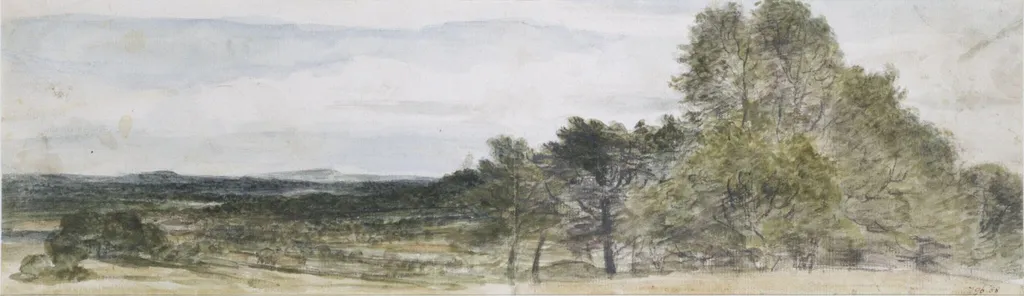
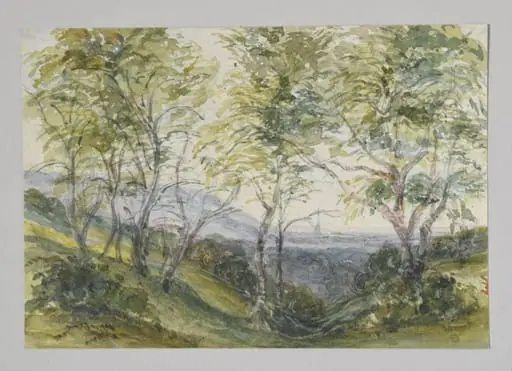
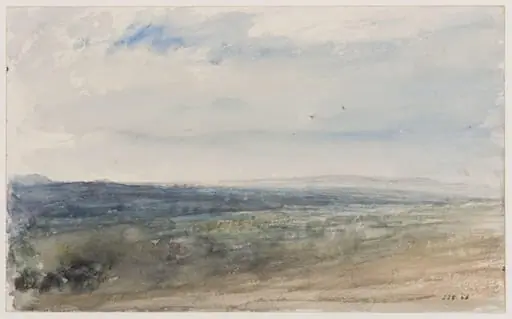
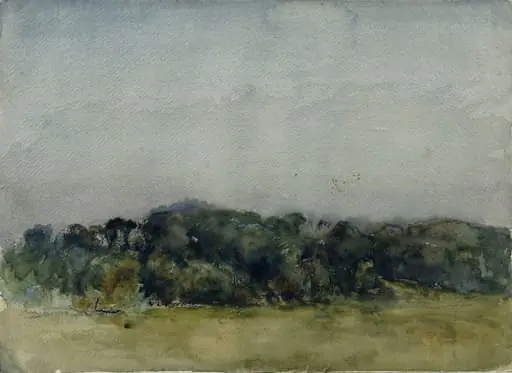
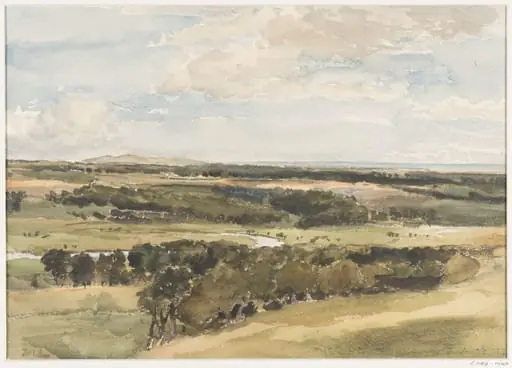
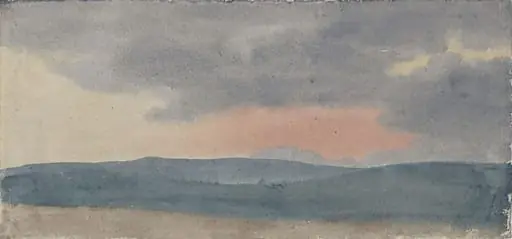
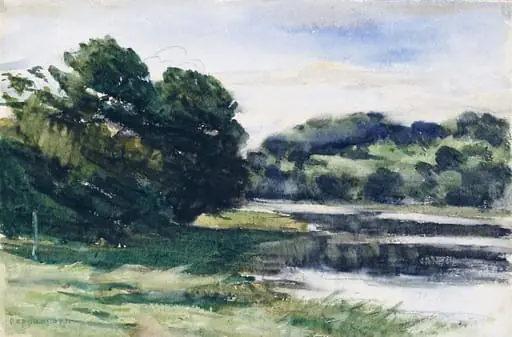
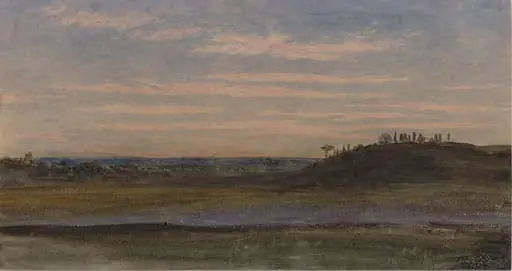
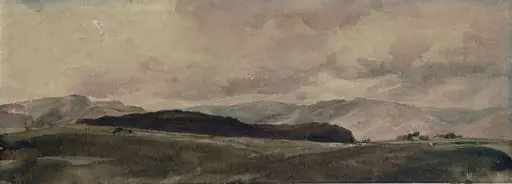
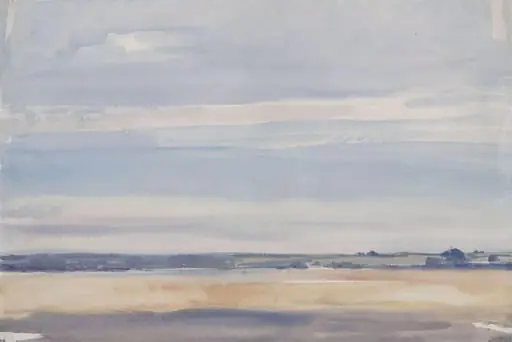
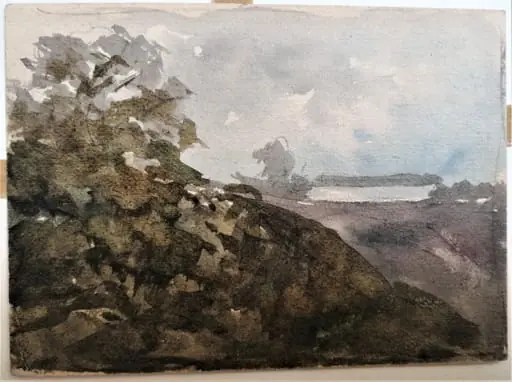
A view at Hursley, Hampshire is a watercolor work on paper by the Romanticist artist John Constable. It dates from 1804 and is held in the collection of the Victoria and Albert Museum.
About this work
Overview
The composition emphasizes open space and subtle tonal shifts, with minimal detail and a focus on atmospheric effect.
Painted in 1804, this watercolour by John Constable captures a quiet valley in Hursley, Hampshire. It belongs to a phase in his career when he was refining his landscape practice, often working directly from nature. The composition emphasizes open space and subtle tonal shifts, with minimal detail and a focus on atmospheric effect. The work is part of a small group of studies from his travels outside his native Suffolk.
Subject & Meaning
The scene presents an unremarkable rural stretch—rolling fields, scattered trees, and a faint path receding into the distance. There is no human activity or architectural feature to anchor the view, suggesting an interest in the quiet rhythm of the land itself. The absence of narrative implies a contemplative engagement with place, characteristic of Constable’s early approach to landscape as a subject worthy of quiet observation.
Technique & Style
Constable employed thin, translucent washes of watercolour, allowing the paper’s white surface to suggest light and air. Brushwork is loose and rapid, with areas of bare paper left untouched to imply highlights and distance. The palette is restrained—soft greens, muted browns, and pale sky tones—creating a sense of stillness. The technique prioritizes mood over precision, reflecting his growing sensitivity to natural light and weather.
History & Provenance
The painting is linked to Constable’s 1804 journey to Hampshire, confirmed by an inscription on a related sketch. During this period, he was primarily engaged in portrait commissions in East Bergholt but made time for landscape studies on excursions. This work likely served as a personal record rather than a commissioned piece, part of his broader effort to understand regional topography and light conditions beyond his home county.
Context
In the early 1800s, landscape painting in Britain was shifting from idealized compositions toward direct observation. Constable’s work aligned with this trend, rejecting theatricality in favor of local, unembellished scenery. His focus on Hampshire’s modest terrain reflected a broader interest among artists in the authenticity of everyday environments, laying groundwork for later Romantic and realist traditions.
Legacy
Though not widely exhibited in his lifetime, this watercolour exemplifies Constable’s foundational approach to landscape: attentive to subtle shifts in light, texture, and spatial depth. Its quiet realism influenced later generations of British painters who sought to depict nature without sentimentality. The work remains a quiet testament to his early commitment to painting the land as he saw it.
Artist & collection
Artist
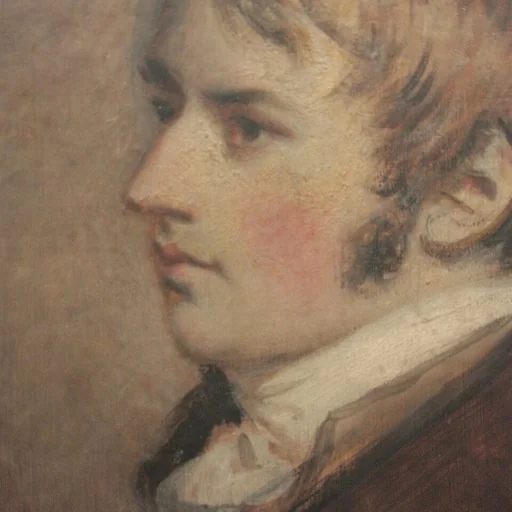
John Constable (; 11 June 1776 – 31 March 1837) was an English landscape painter in the Romantic tradition.