Artwork
Shap Fells, Westmorland
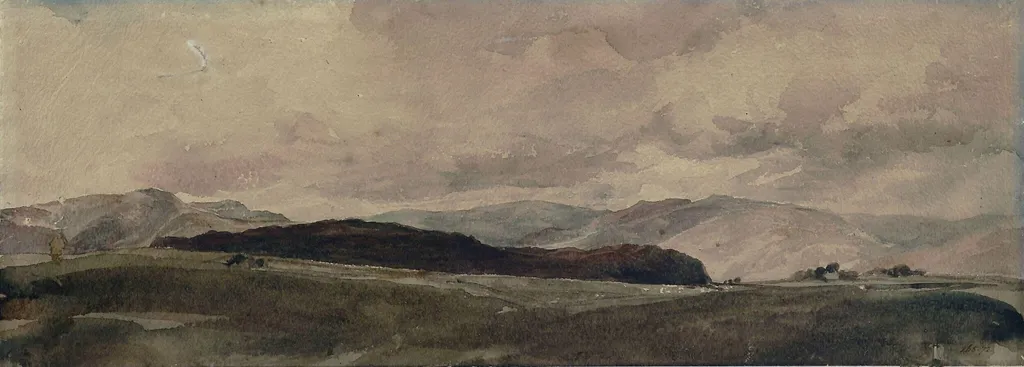
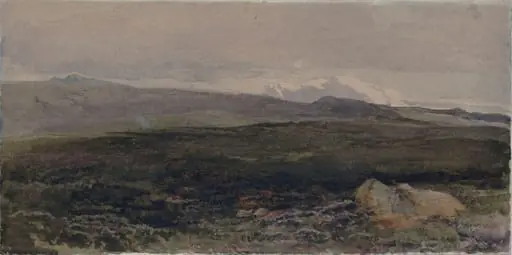
Shap Fells, Westmorland is a watercolor work on paper by the Romanticist artist Peter De Wint. It dates from 1805 and is held in the collection of the Victoria and Albert Museum.
About this work
Overview
Executed with delicate washes and minimal detail, the work reflects the artist’s practice of sketching directly from nature.
Painted in 1805, this watercolour by Peter de Wint captures a quiet expanse of the Shap Fells in Westmorland. Executed with delicate washes and minimal detail, the work reflects the artist’s practice of sketching directly from nature. The composition emphasizes horizontal bands of land and sky, suggesting a calm, unspoiled countryside. The medium’s transparency allows the paper’s texture to contribute to the overall atmosphere.
Subject & Meaning
The scene depicts a pastoral landscape devoid of human figures or structures, focusing instead on the subtle rhythms of the hills and the movement of the sky. This absence of narrative draws attention to the land’s quiet presence, aligning with early 19th-century Romantic sensibilities that valued nature as a contemplative force. The painting conveys stillness rather than drama, inviting quiet observation.
Technique & Style
De Wint employed loose, fluid brushwork and thin layers of watercolour, letting the white of the paper suggest light and air. Muted greens and browns dominate the terrain, while pale blues and greys define the cloud-filled sky. The technique avoids heavy outlines, instead relying on tonal gradations to suggest form. This approach was typical of topographical watercolours intended for immediacy and atmospheric effect.
History & Provenance
Created during de Wint’s early career, the work likely originated as an on-site sketch during his travels in northern England. It entered the Victoria and Albert Museum’s collection through later acquisitions of 19th-century British watercolours. Its survival reflects the growing institutional interest in landscape studies from this period, particularly those made outside formal studio settings.
Context
In the early 1800s, watercolour was increasingly used by artists to record landscapes during tours of Britain’s rural regions. De Wint was part of a generation that elevated the medium beyond mere documentation, treating it as a vehicle for personal observation. The Shap Fells, then a remote area, attracted artists seeking unspoiled scenery, contrasting with the industrializing lowlands.
Legacy
This work exemplifies the transition of watercolour from a utilitarian medium to one valued for its expressive potential. De Wint’s approach influenced later British landscape artists who prioritized atmospheric effect over precision. While not widely exhibited in his lifetime, such sketches now form a core part of the historical record of British topographical art.
Artist & collection
Artist
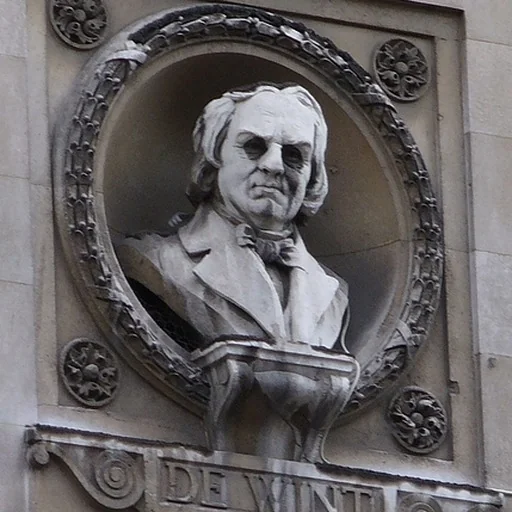
Peter De Wint was a prolific English painter, mostly in landscape painting in oils and watercolour. A number of his pictures are in Tate Britain, the Victoria and Albert Museum and The Collection, Lincoln. He died in London.

 Hills near Loch Awe : Twilight
 Landscape study
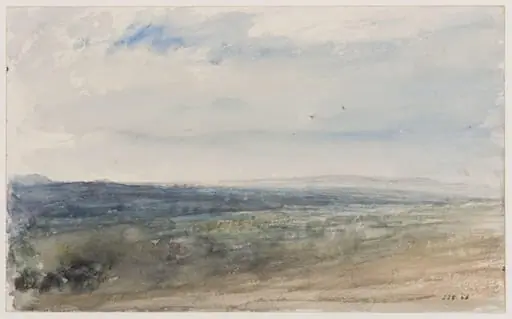 A view of downland country
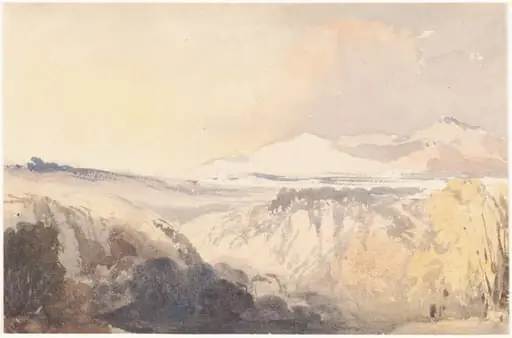 Landscape with a Distant Mountain Range
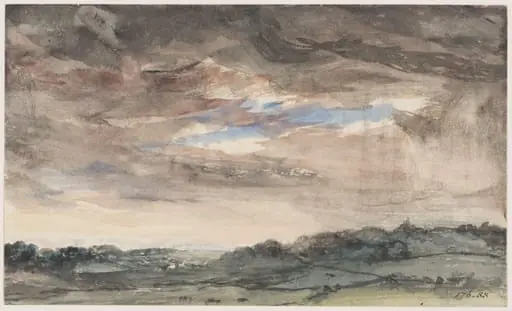 View over hilly country, with a stormy sky
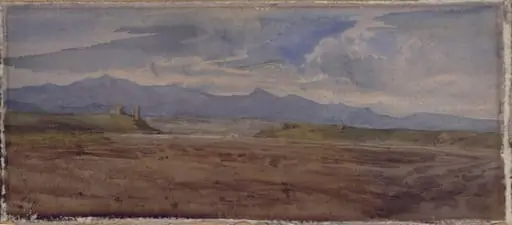 Ruin in Campagna
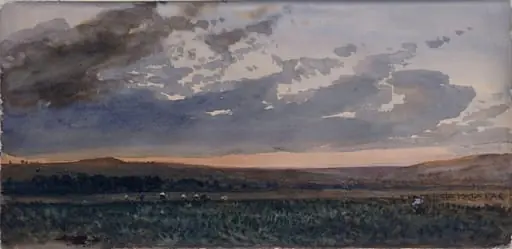 Landscape with rustics working: evening effect
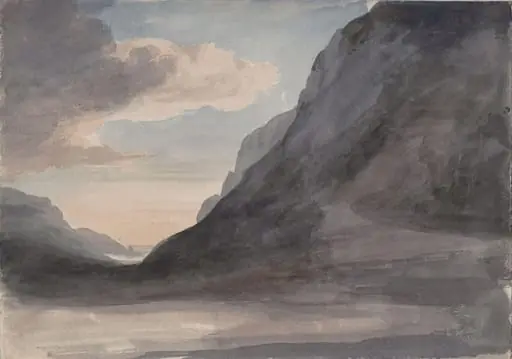 Welsh landscape
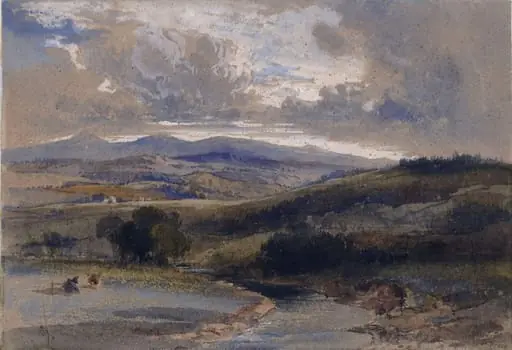 Landscape
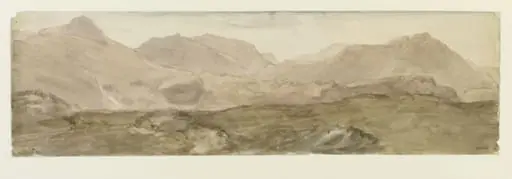 View from the top of Honister Crag
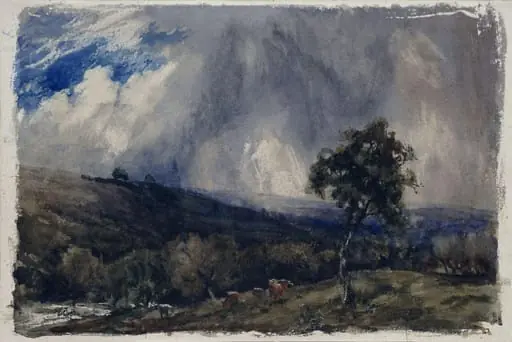 In the Wharfedale, Yorkshire
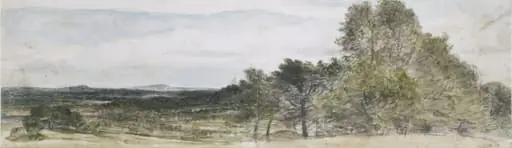 A view at Hursley, Hampshire