Artwork
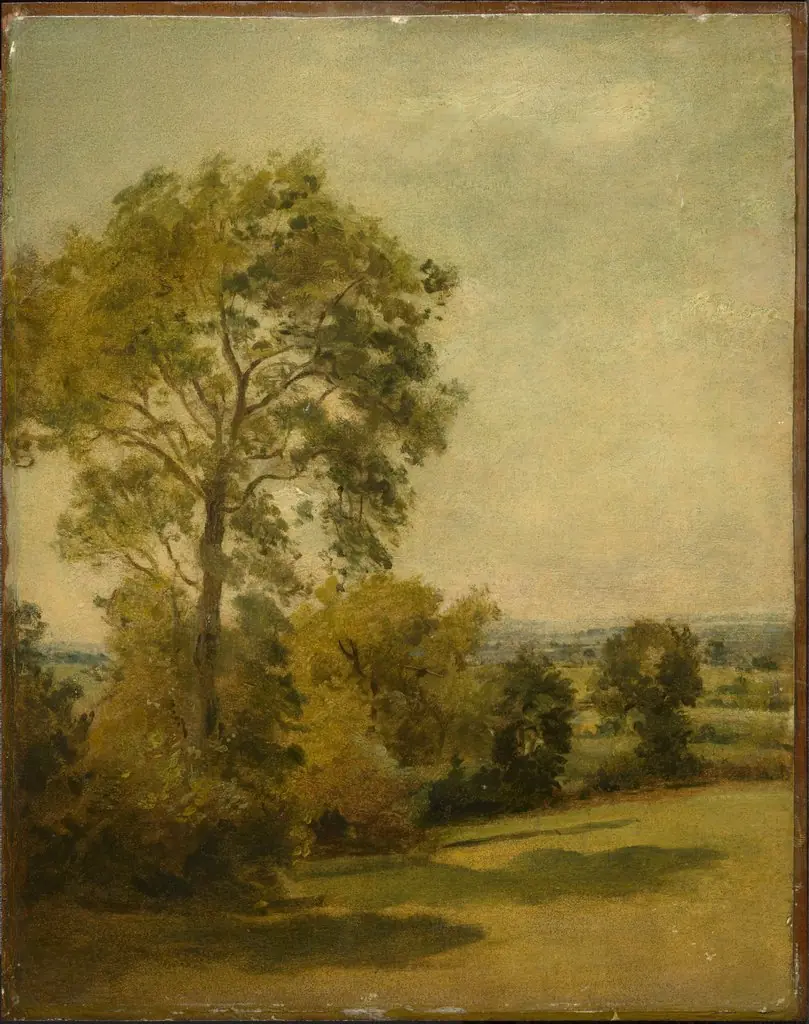
Landscape (possibly the Stour valley)
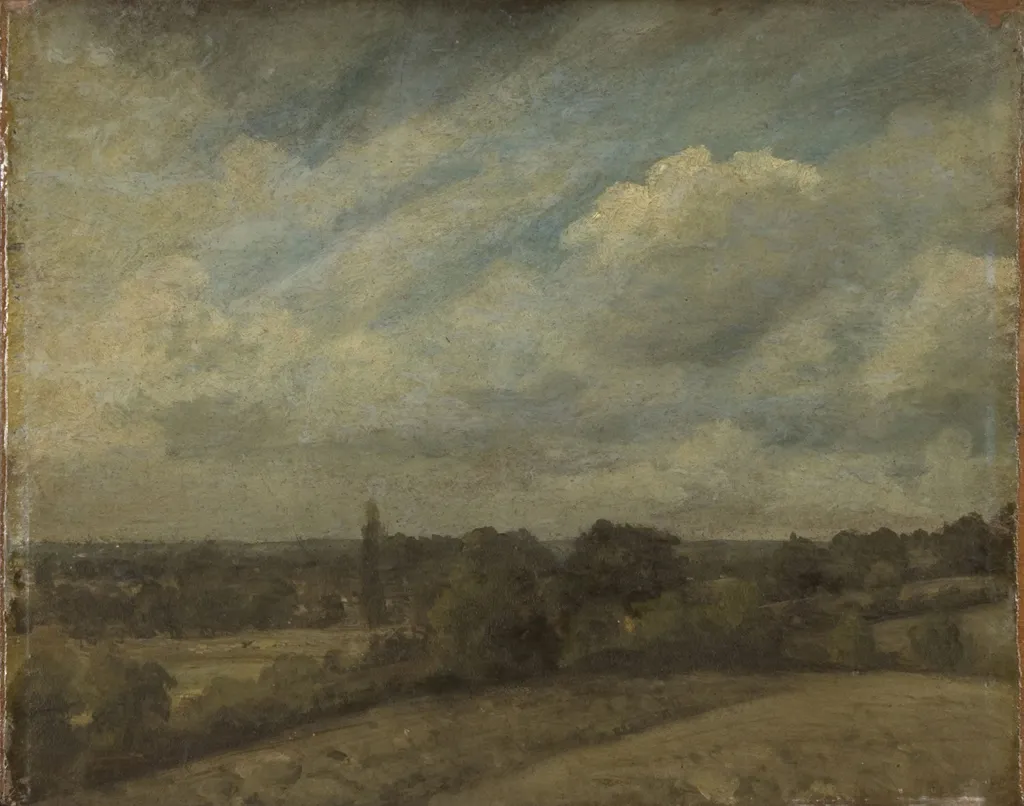
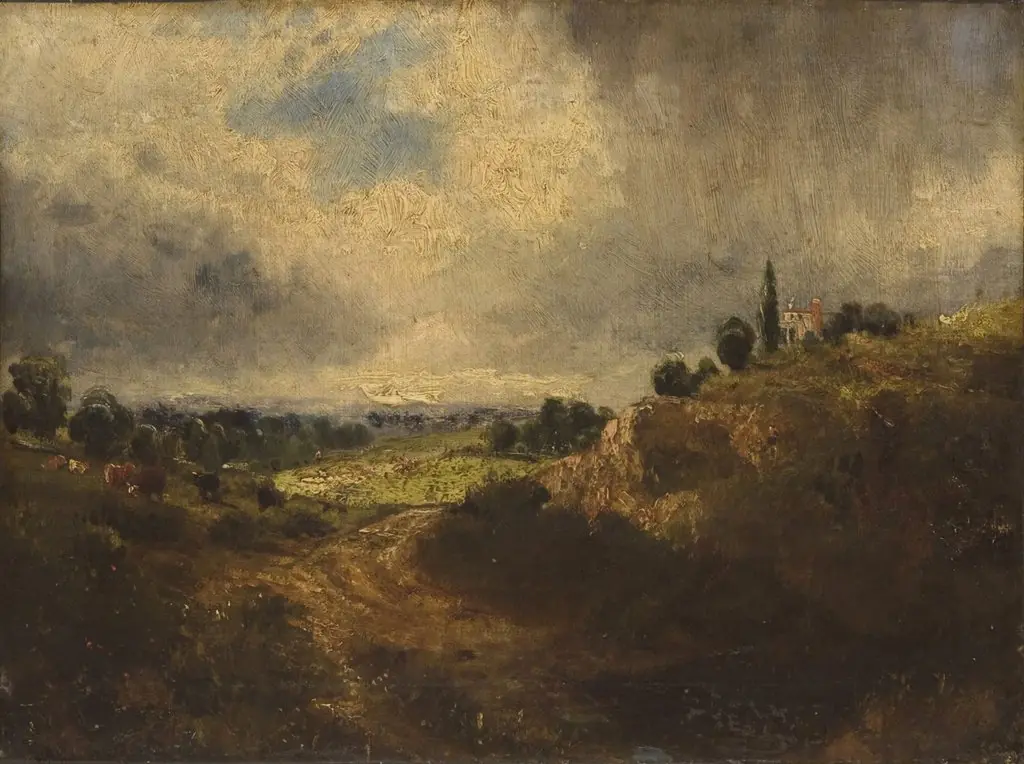
Landscape (possibly the Stour valley) is an unspecified painting by John Constable. It dates from 1816 and is held in the collection of the Philadelphia Museum of Art.
About this work
Overview
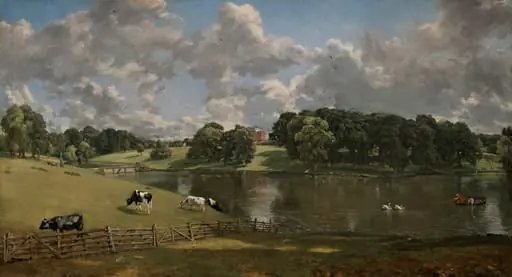
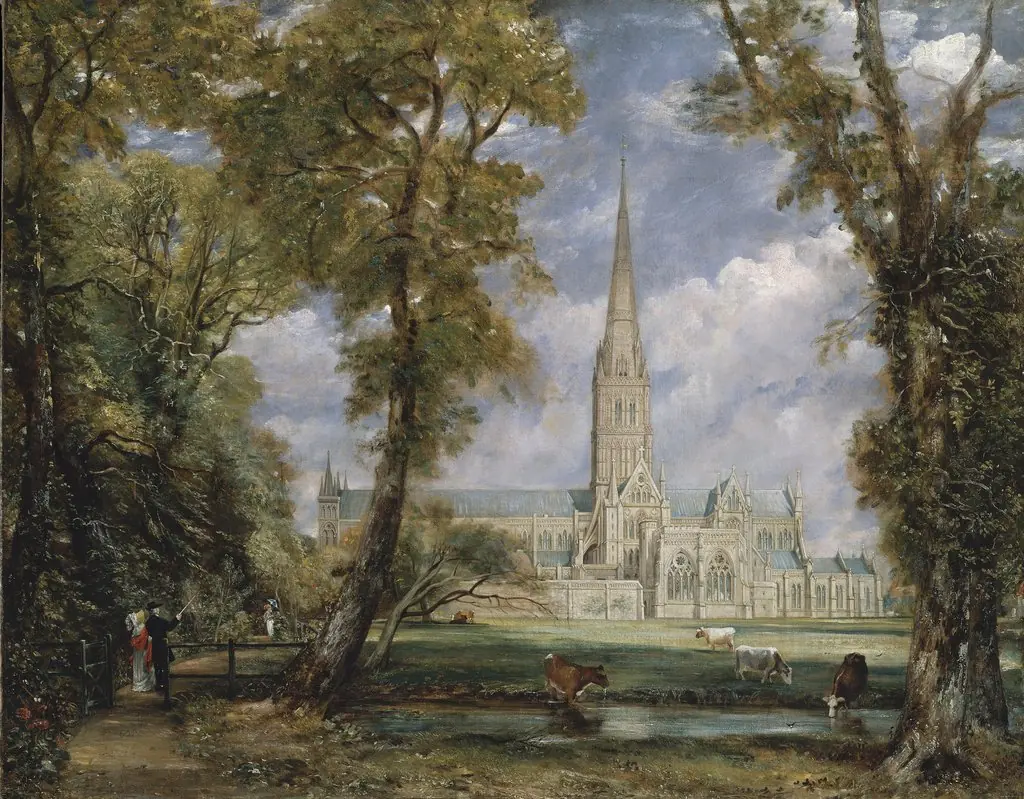
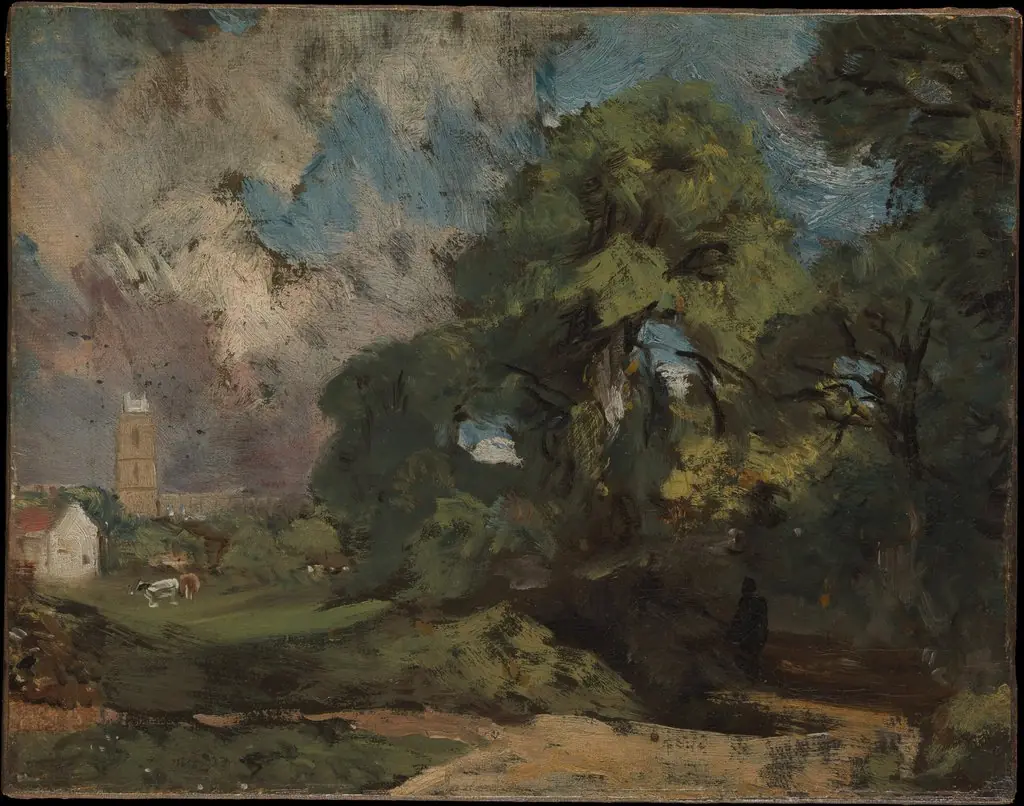
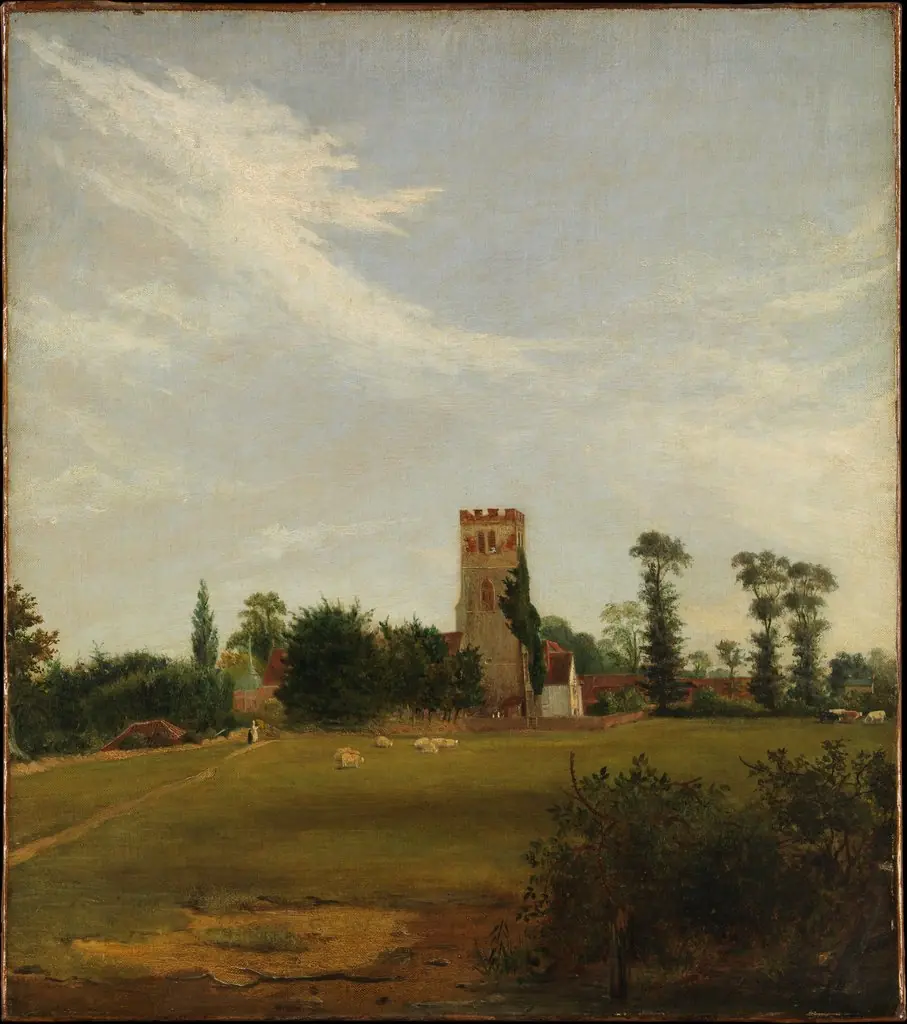
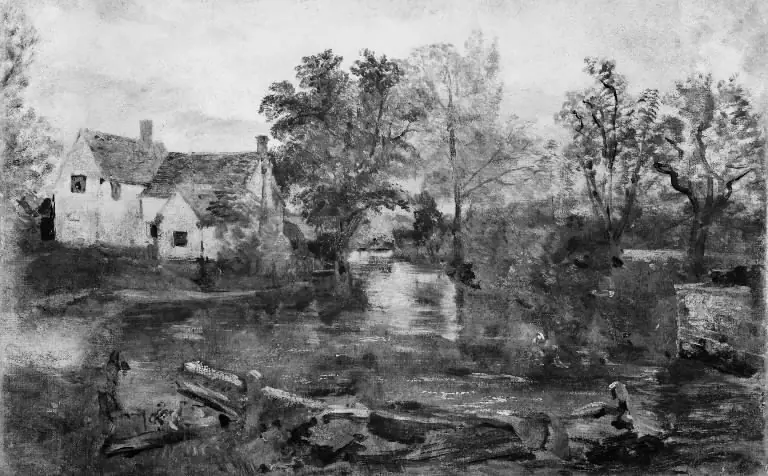
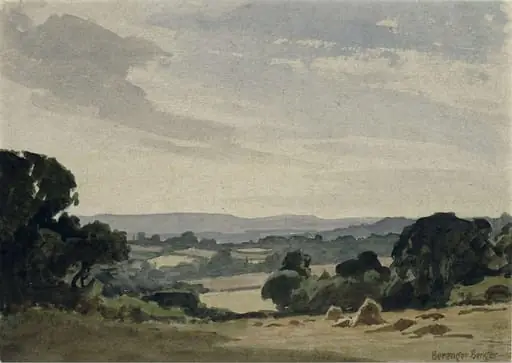
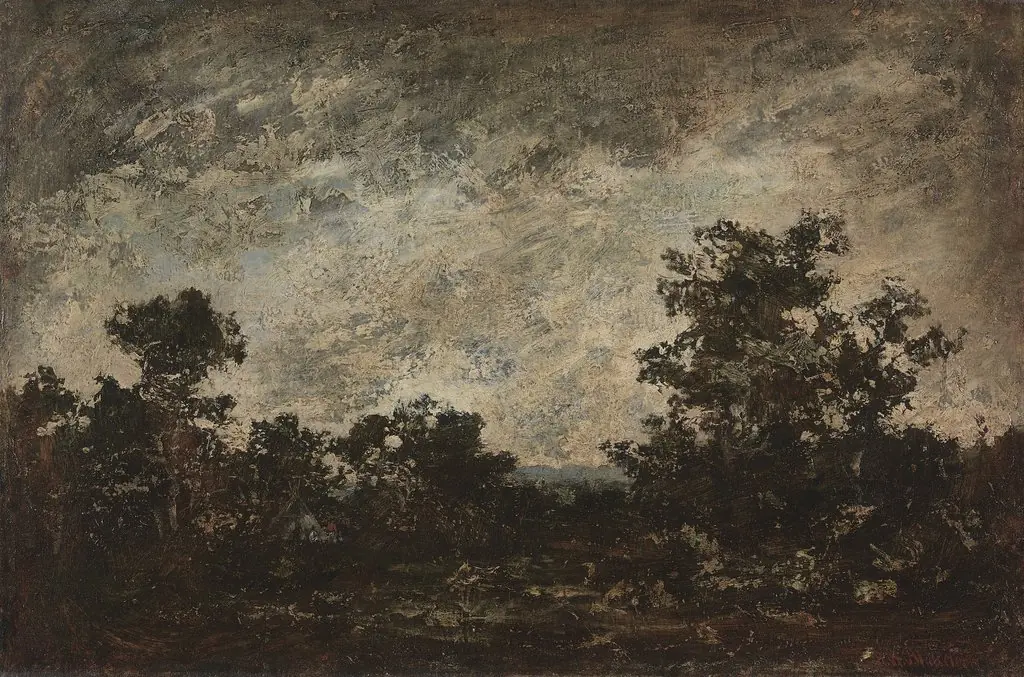
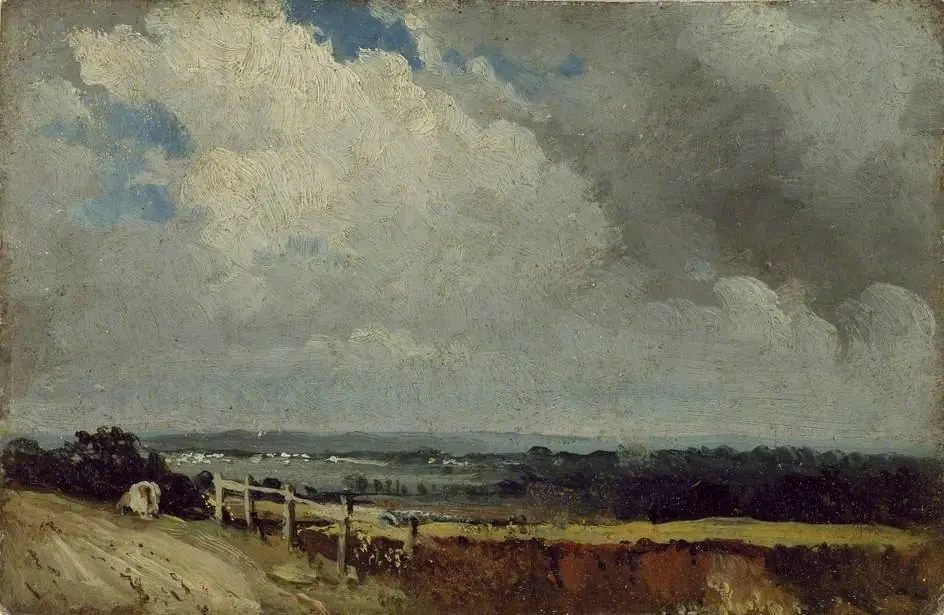
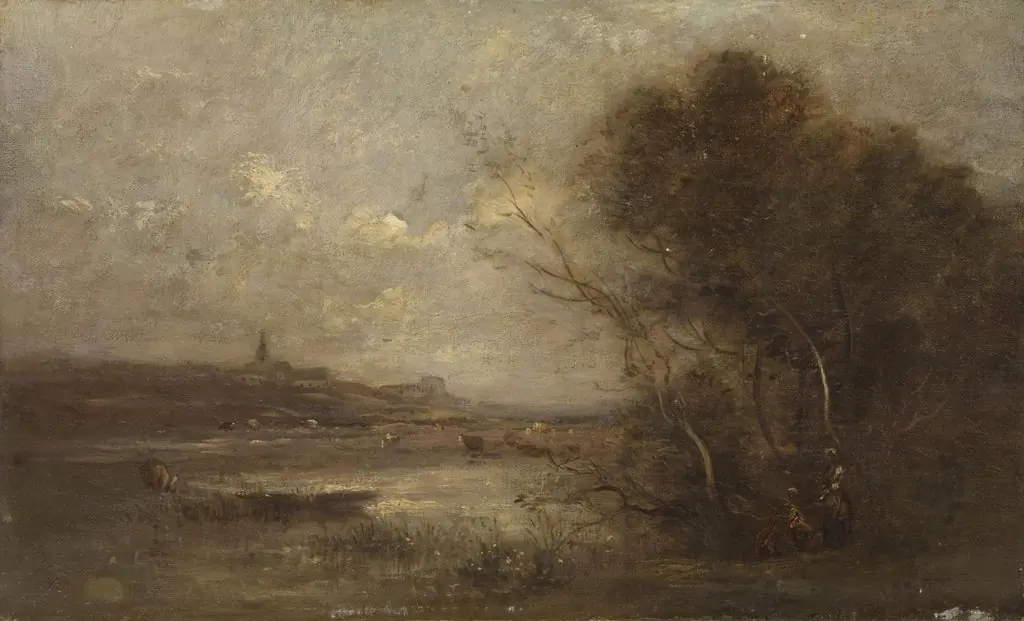
Painted around 1816, this landscape is attributed to John Constable and is thought to depict the Stour valley in Suffolk. It resides in the Philadelphia Museum of Art’s collection. The composition emphasizes quiet rural expanses, with gently rolling fields leading the eye toward a distant horizon. Subtle architectural elements anchor the scene without disrupting its stillness.
Subject & Meaning
The painting captures an unidealized stretch of English countryside, likely near Constable’s childhood home. Rather than dramatizing nature, it presents ordinary rural life—fields, scattered trees, and distant dwellings—as worthy of quiet contemplation. The absence of human figures reinforces a sense of solitude, suggesting a personal, introspective engagement with the land.
Technique & Style
Constable employed loose, observational brushwork to render sky and terrain with a sense of immediacy. The cloud-covered atmosphere is built through layered washes of gray and pale blue, allowing light to feel diffused rather than directed. Texture in the foliage and earth is suggested, not meticulously detailed, reflecting his commitment to naturalistic effect over polished finish.
History & Provenance
The work entered the Philadelphia Museum of Art’s collection in the 20th century, though its earlier ownership history remains unclear. It was likely painted during Constable’s early period of intense focus on the Stour region, before his major exhibition pieces. Its modest scale and unassuming subject suggest it may have been a study or personal exercise rather than a commissioned work.
Context
Created during a time when British landscape painting was shifting from idealized classical views toward direct observation, Constable’s work stood apart.
Created during a time when British landscape painting was shifting from idealized classical views toward direct observation, Constable’s work stood apart. While contemporaries favored dramatic scenery, he turned to familiar, unremarkable locales, elevating everyday rural life through attentive rendering. This painting reflects a broader cultural interest in the English countryside as a site of personal and national identity.
Legacy
Though not among Constable’s most famous works, this painting exemplifies his foundational approach: sincerity over spectacle, observation over convention. It influenced later generations of landscape painters who sought to capture transient atmospheric conditions and the quiet dignity of the natural world. Its presence in an American museum underscores the international recognition of his quiet realism.
Artist & collection
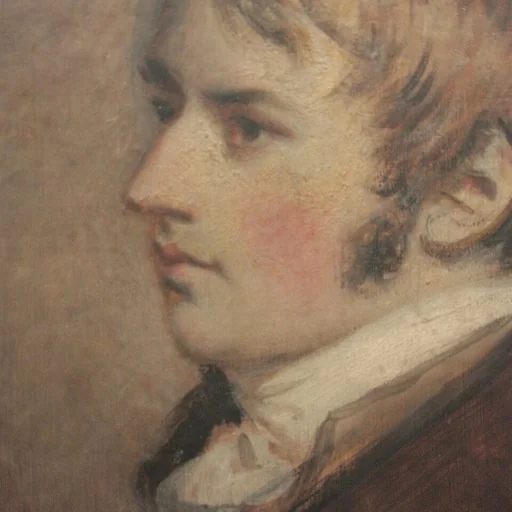
Artist
John Constable (; 11 June 1776 – 31 March 1837) was an English landscape painter in the Romantic tradition.