Artwork
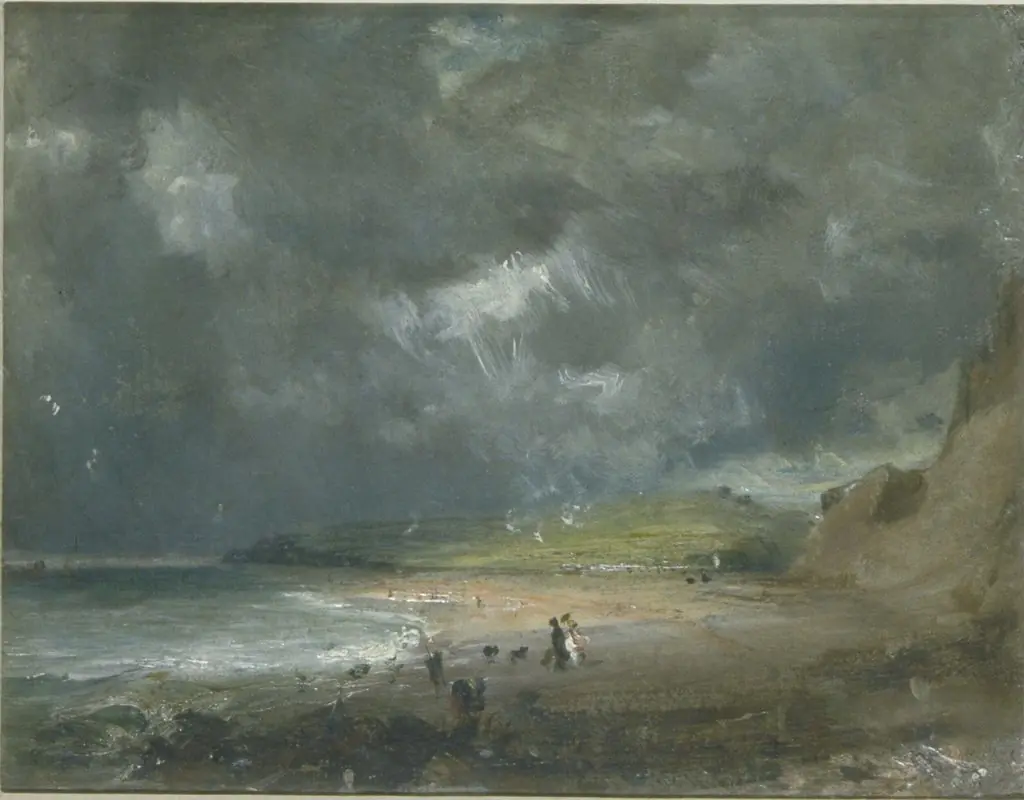
Sketch for The Marine Parade and Chain Pier, Brighton
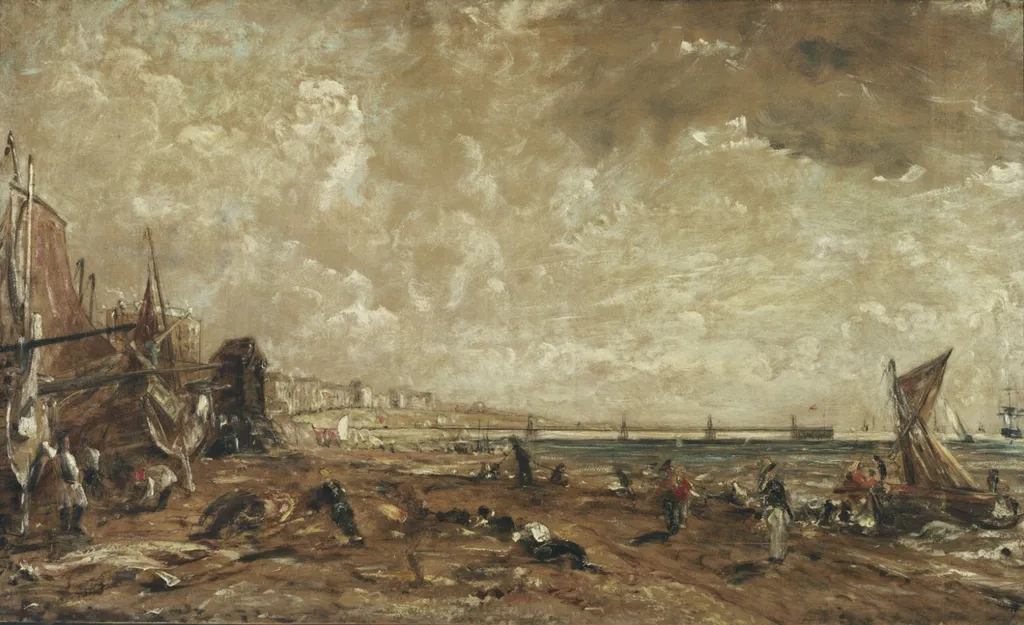
Sketch for The Marine Parade and Chain Pier, Brighton is an oil painting by John Constable. It dates from 1816 and is held in the collection of the Philadelphia Museum of Art.
About this work
Overview
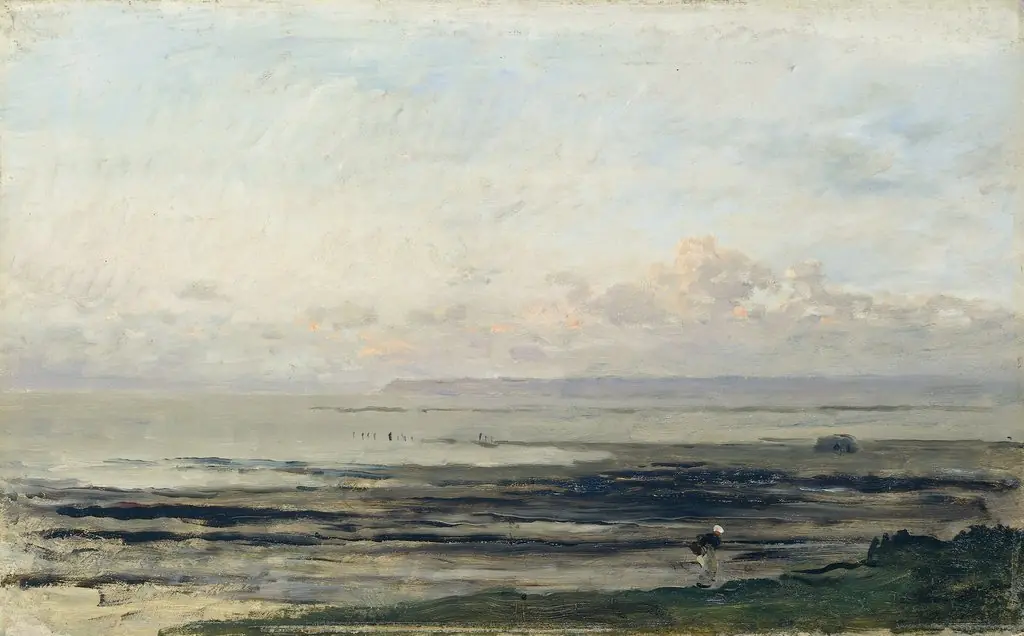
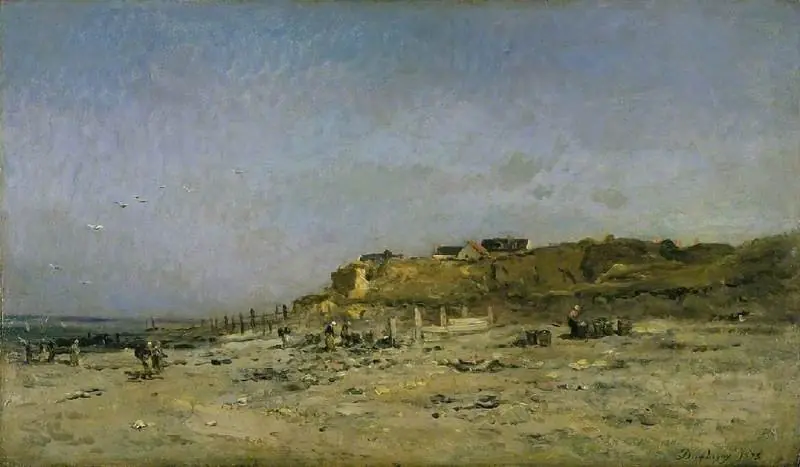
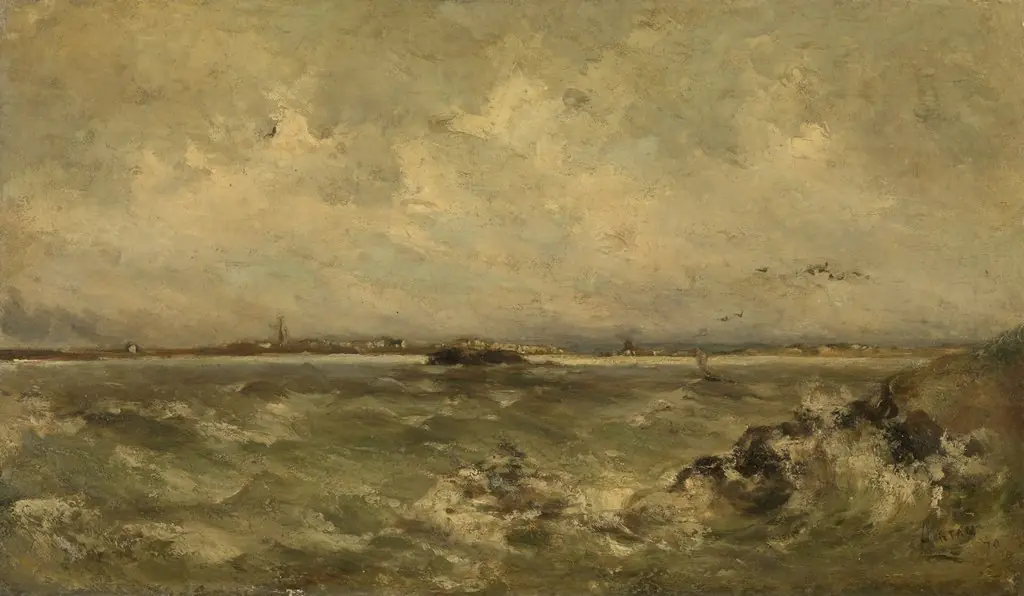
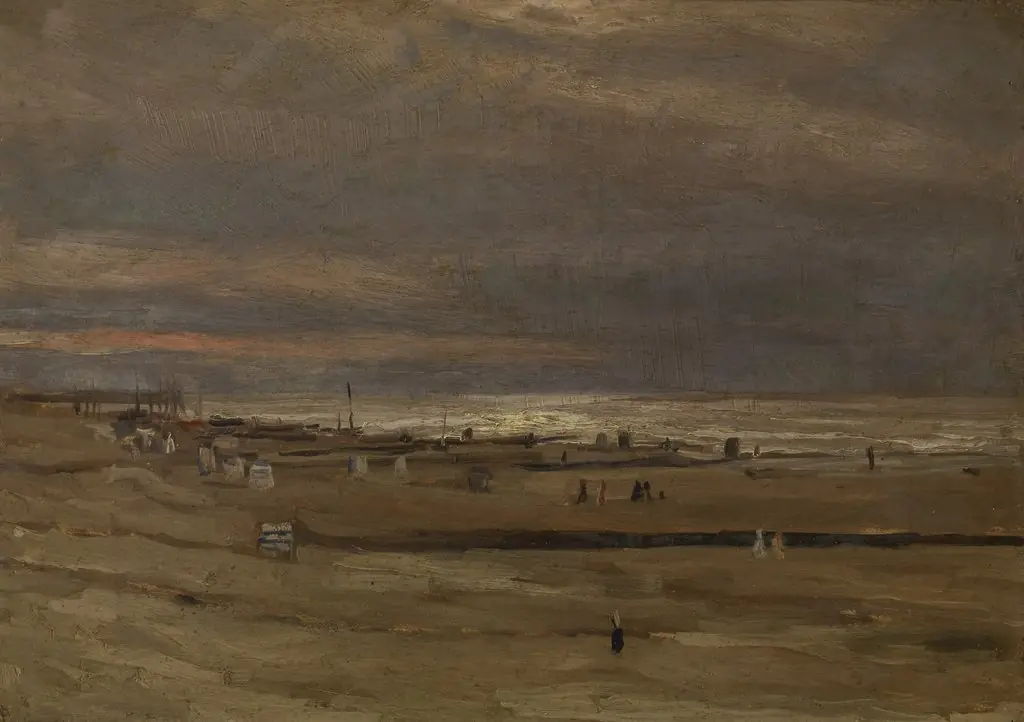
This oil sketch, dated around 1816, is a preparatory study by John Constable for a larger work depicting Brighton’s Marine Parade and Chain Pier.
This oil sketch, dated around 1816, is a preparatory study by John Constable for a larger work depicting Brighton’s Marine Parade and Chain Pier. Executed with rapid, fluid brushwork, it captures the coastal landscape in a moment of atmospheric transition. The piece reflects Constable’s practice of working outdoors to record light and weather, serving as a direct response to the scene before him rather than a polished final composition.
Subject & Meaning
The scene portrays Brighton’s newly constructed Chain Pier and the bustling shoreline, a symbol of early 19th-century seaside leisure. Figures dot the beach, while small vessels drift in the water, suggesting daily maritime activity. The subdued palette and overcast sky convey a quiet, almost melancholic mood, emphasizing nature’s dominance over human development rather than celebrating it as a resort destination.
Technique & Style
Constable applied oil paint with loose, energetic strokes, favoring texture and immediacy over refinement. Browns, greys, and muted greens dominate, evoking the damp, wind-swept air of the English coast. The brushwork conveys motion—not just in the waves and clouds, but in the artist’s own engagement with the landscape, revealing his commitment to capturing transient effects of light and weather through direct observation.
History & Provenance
Created during Constable’s visits to Brighton in the mid-1810s, the sketch was likely made as part of a series of studies for a planned exhibition piece. It remained in the artist’s possession until his death, later entering private collections before being acquired by the Philadelphia Museum of Art in the 20th century. Its survival as a working study offers rare insight into his creative process.
Context
Brighton was becoming a fashionable resort under the patronage of the Prince Regent, and the Chain Pier, completed in 1823, was an engineering novelty. Constable’s sketch predates the pier’s full completion, capturing the site in transition. His focus on weather and natural elements, rather than architectural grandeur, distinguishes his approach from contemporary tourist views, aligning with his broader interest in the English countryside’s emotional resonance.
Legacy
This sketch exemplifies Constable’s influence on later landscape traditions, particularly in how he prioritized atmospheric truth over idealized composition. Though not widely exhibited in his lifetime, such studies became foundational to understanding his method. Today, they are valued not as incomplete works but as vital records of an artist’s direct encounter with nature, shaping modern perceptions of landscape painting as a deeply observational practice.
Artist & collection
Artist
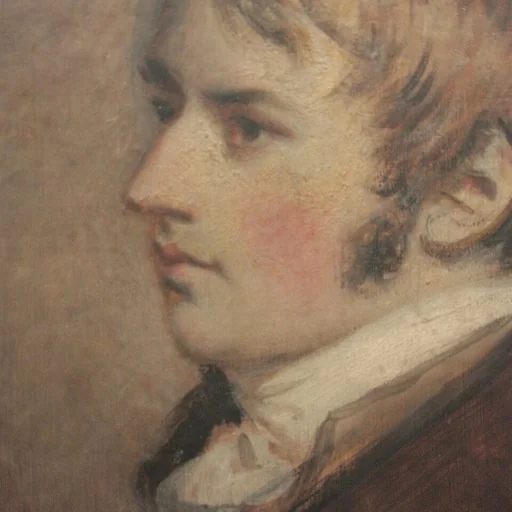
John Constable (; 11 June 1776 – 31 March 1837) was an English landscape painter in the Romantic tradition.