Artwork
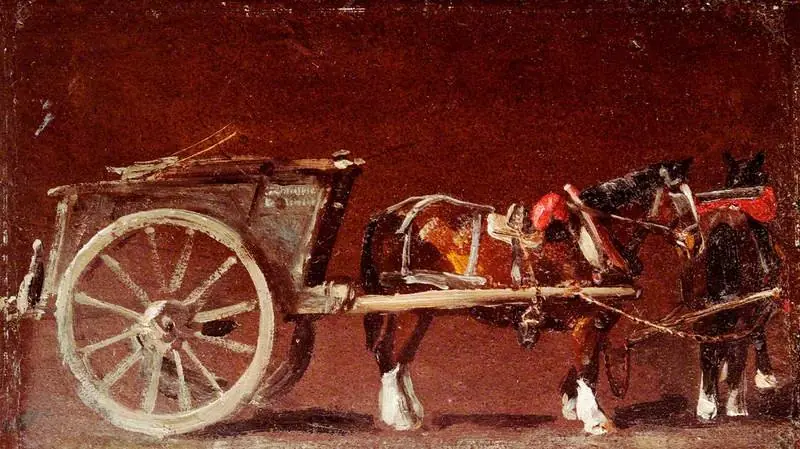
Study of a Cart and Horses with a Carter and a Dog
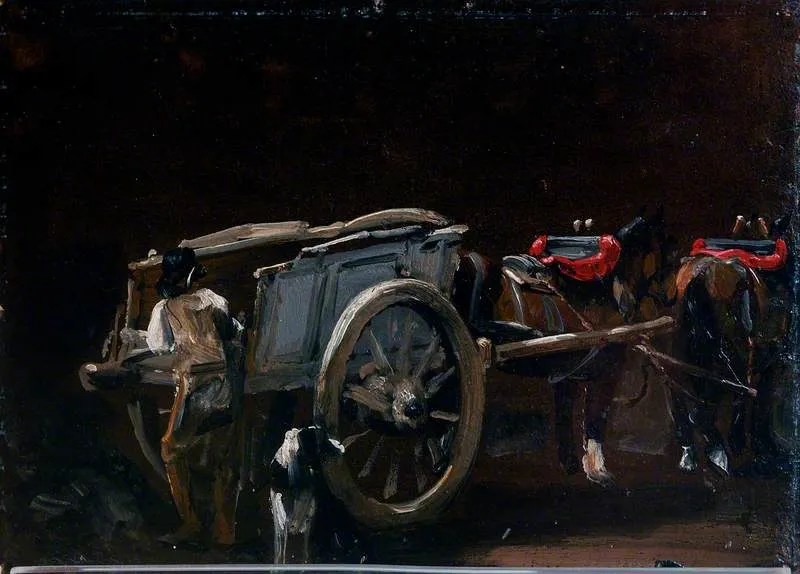
Study of a Cart and Horses with a Carter and a Dog is an unspecified painting by John Constable. It dates from 1814 and is held in the collection of the Victoria and Albert Museum.
About this work
Overview
The composition emphasizes everyday rural labor, rendered with close attention to the physical presence of the animals, equipment, and figures.
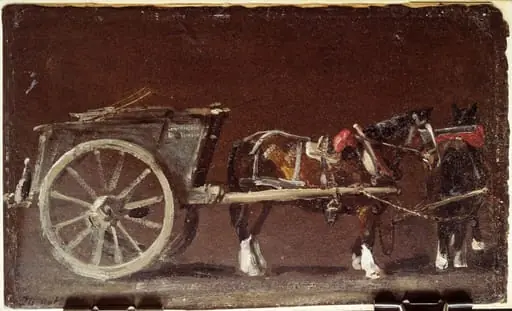
Painted in 1814 by John Constable, this oil study depicts a rural scene centered on a wooden cart drawn by two horses. A cartman stands beside the vehicle, holding its reins, while a dog rests near the front wheel. The composition emphasizes everyday rural labor, rendered with close attention to the physical presence of the animals, equipment, and figures. The work is part of Constable’s broader practice of observing and recording the English countryside with observational precision.
Subject & Meaning
The scene captures a moment of pause in agricultural work, highlighting the quiet dignity of rural life. The cart, horses, and figures are presented without idealization, suggesting Constable’s interest in the ordinary rhythms of the countryside. The presence of the dog and the man’s attentive posture imply a relationship of care and routine, reinforcing themes of labor, companionship, and the interdependence of humans and animals in pre-industrial England.
Technique & Style
Constable employed thick, textured brushwork to convey the rough surfaces of wood, fur, and fabric. Dark tonal values ground the composition, allowing the horses’ red blankets and the cart’s weathered wood to emerge with tactile clarity. The rendering of individual hairs and grain patterns reflects his commitment to direct observation. Unlike finished exhibition pieces, this study prioritizes sensory detail over narrative polish, serving as a record of visual experience.
History & Provenance
The painting entered the Victoria and Albert Museum’s collection as part of the Constable family’s bequest following the artist’s death. It was likely created during Constable’s early years in Suffolk, when he was intensively studying rural scenes to inform his larger landscapes. Its status as a preparatory study underscores its role in his artistic development rather than as a public commission.
Context
In the early 1810s, Constable was shifting from idealized landscape traditions toward direct engagement with the natural world. This study aligns with his growing focus on working rural life, a subject then considered unworthy of high art. His attention to carts, horses, and laborers reflected a broader Romantic-era interest in authentic, unembellished scenes of the English countryside.
Legacy
This study exemplifies Constable’s foundational role in redefining landscape painting through empirical observation. Its emphasis on ordinary subjects and material texture influenced later realist and impressionist artists. Though not widely exhibited in his lifetime, such works now stand as vital documents of his method and the evolving perception of rural life in 19th-century British art.
Artist & collection
Artist
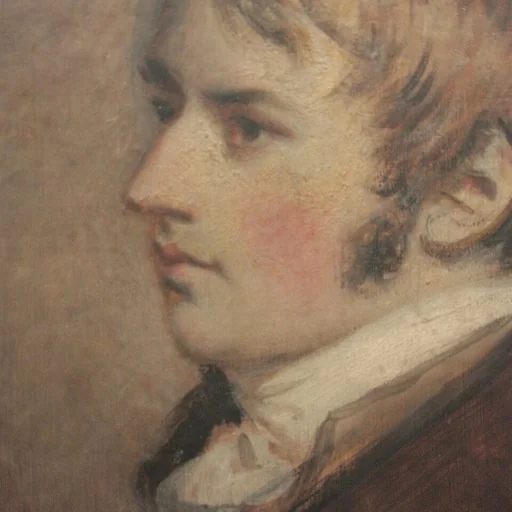
John Constable (; 11 June 1776 – 31 March 1837) was an English landscape painter in the Romantic tradition.

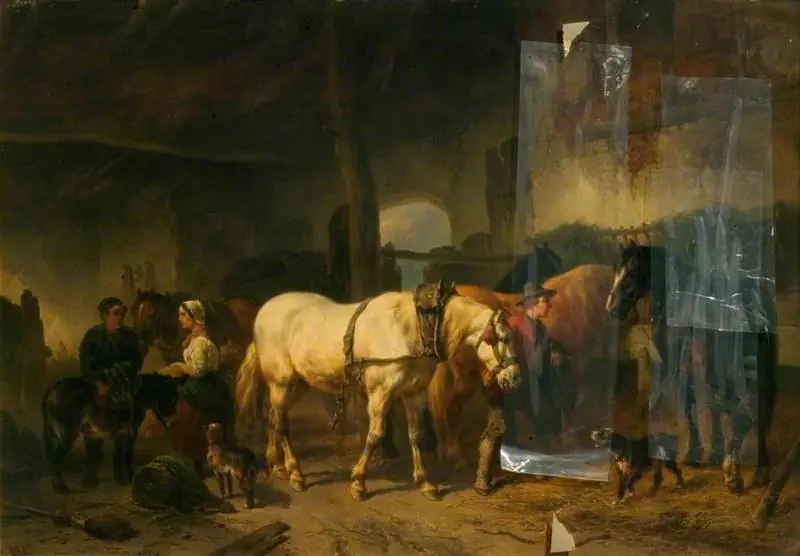 Interior of a Stable
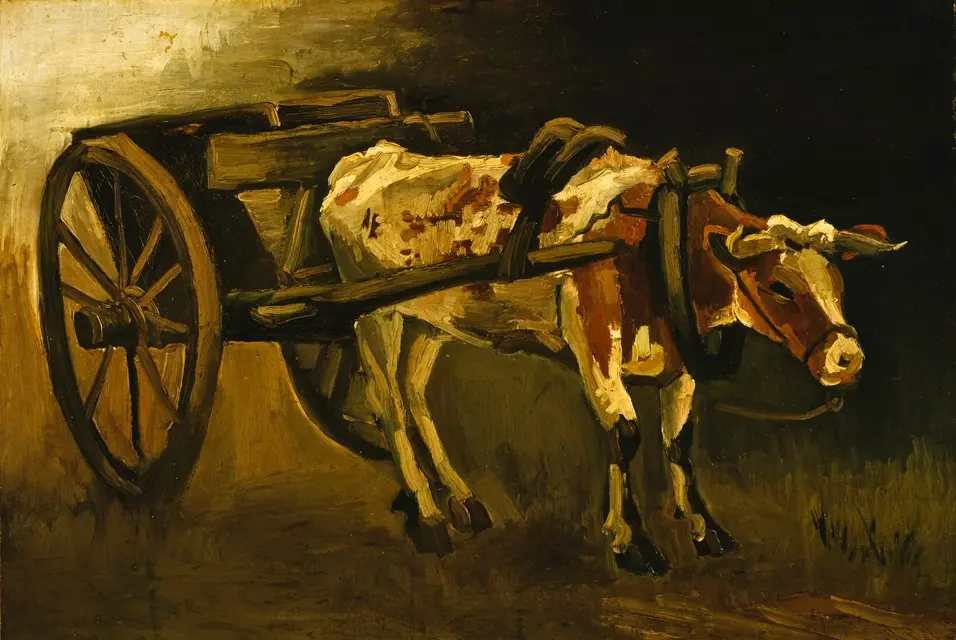 Cart with Red and White Ox
 A Team of Percheron Horses
 Study of a Cart with Two Horses
 The Stable Door
 The Errand Boy
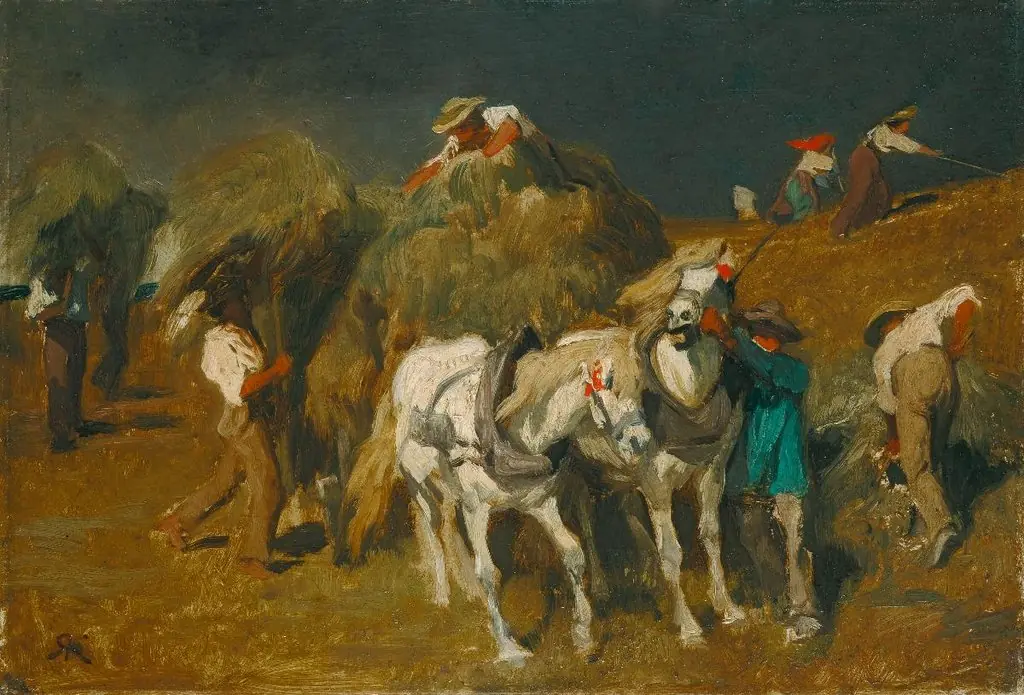 Heuernte bei drohendem Gewitter (Studie)
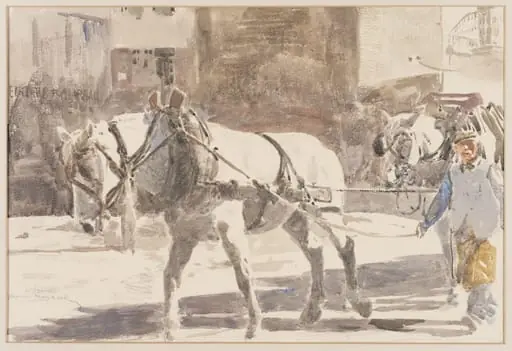 Two Percheron Horses
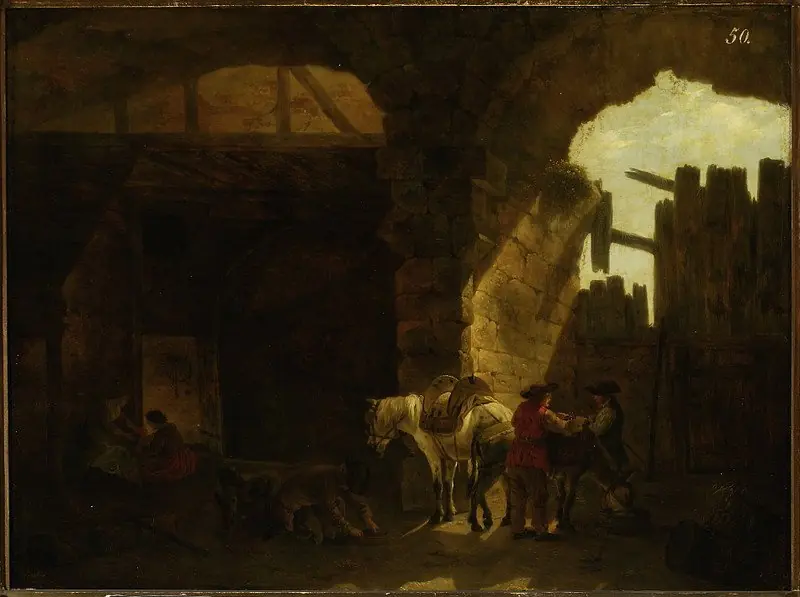 Scene in ruins (Departure to the marketplace)
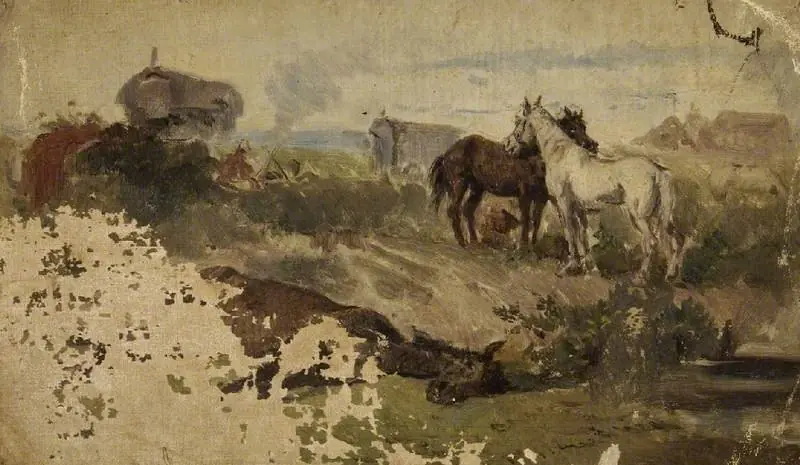 Horses in a field with gypsies and a caravan
 The Mail Guard
 Study of a Cart with Two Horses