Artwork
The Chain Pier, Brighton
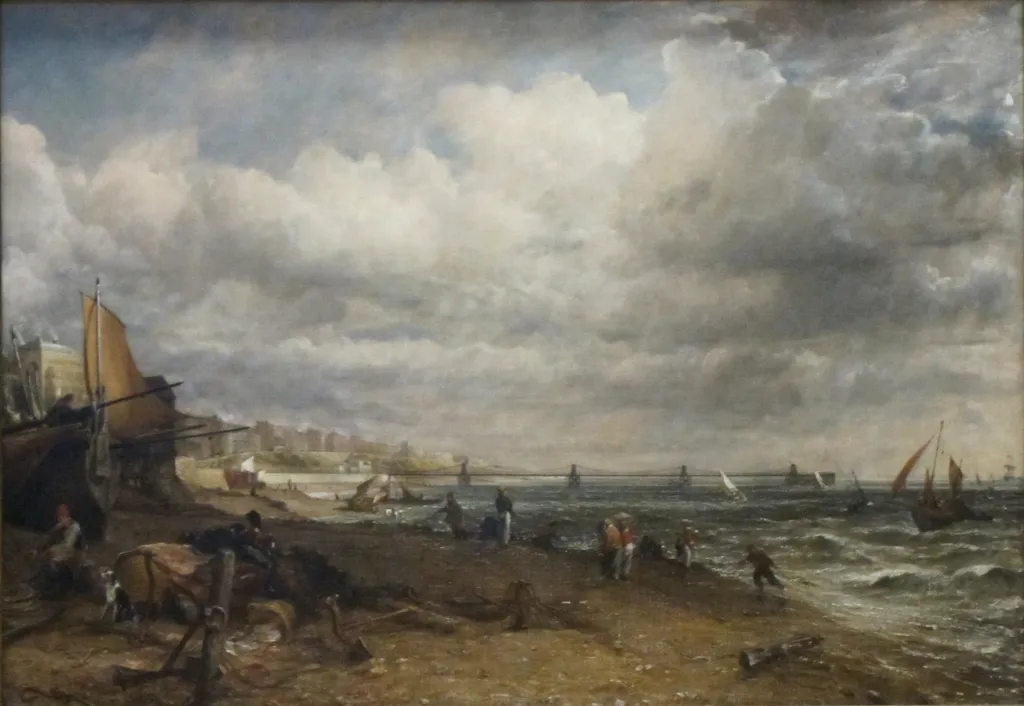
The Chain Pier, Brighton is an oil painting by John Constable. It dates from 1826 and is held in the collection of the National Gallery.
About this work
The Chain Pier, Brighton is a landscape painting by John Constable. It was created in 1826.
The painting depicts a recently constructed pier in a resort town. This pier was a new feature of the town's seafront at the time, having been opened just a few years earlier.
You can learn more about the artist's style and methods by looking up the technique of glazing.
Overview
Painted in 1826, The Chain Pier, Brighton is an oil landscape by John Constable, one of his large-scale works known as 'six footers.
Painted in 1826, The Chain Pier, Brighton is an oil landscape by John Constable, one of his large-scale works known as 'six footers.' It captures the newly opened Brighton Chain Pier, a modern structure that had drawn public attention since its 1823 debut. The painting was exhibited at the Royal Academy’s Summer Exhibition in 1827, reflecting Constable’s interest in contemporary urban development alongside natural scenery.
Subject & Meaning
The painting centers on the Chain Pier, a pioneering iron structure extending into the English Channel, symbolizing the era’s engineering ambition and the rise of seaside tourism. Constable frames it within a quiet coastal scene—figures strolling, boats bobbing, clouds gathering—suggesting neither celebration nor critique, but a calm observation of change in the British landscape.
Technique & Style
Constable employed layered glazes to achieve subtle shifts in light and atmosphere, particularly in the sky and water. His brushwork remains attentive to natural detail, with loose, textured strokes defining clouds and waves. The composition balances the pier’s linear structure against the organic forms of sea and sky, characteristic of his commitment to observed reality over idealized composition.
History & Provenance
Commissioned by the pier’s investors, the painting was completed in 1826 and shown at the Royal Academy in 1827. It remained in private hands until acquired by the Tate in 1910. The Chain Pier itself stood until 1896, when storm damage caused its collapse, making the painting a rare visual record of the structure in its prime.
Context
In the 1820s, Brighton was transforming from a quiet fishing village into a fashionable resort, fueled by royal patronage and improved transport. The Chain Pier, one of Britain’s first piers built for leisure, reflected this shift. Constable’s depiction aligns with broader cultural interest in how modern infrastructure integrated into traditional coastal life.
Legacy
The painting stands as a quiet testament to the intersection of industry and nature in early 19th-century Britain. While not as widely known as Constable’s rural scenes, it reveals his willingness to engage with contemporary urban change. Its preservation offers insight into how artists documented evolving public spaces during a period of rapid social and technological transition.
Artist & collection
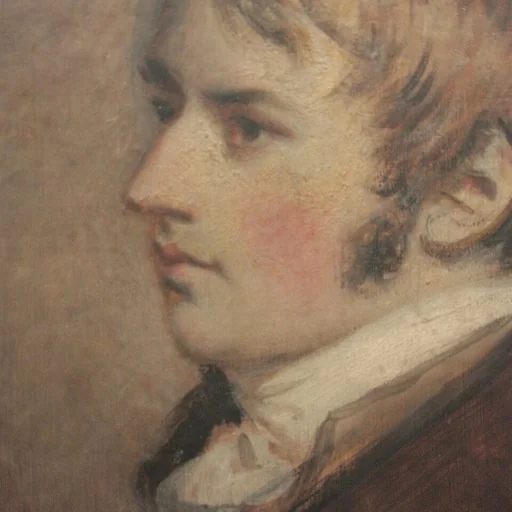
Artist
John Constable (; 11 June 1776 – 31 March 1837) was an English landscape painter in the Romantic tradition.