Artwork
Still Life, Apples and Chestnuts
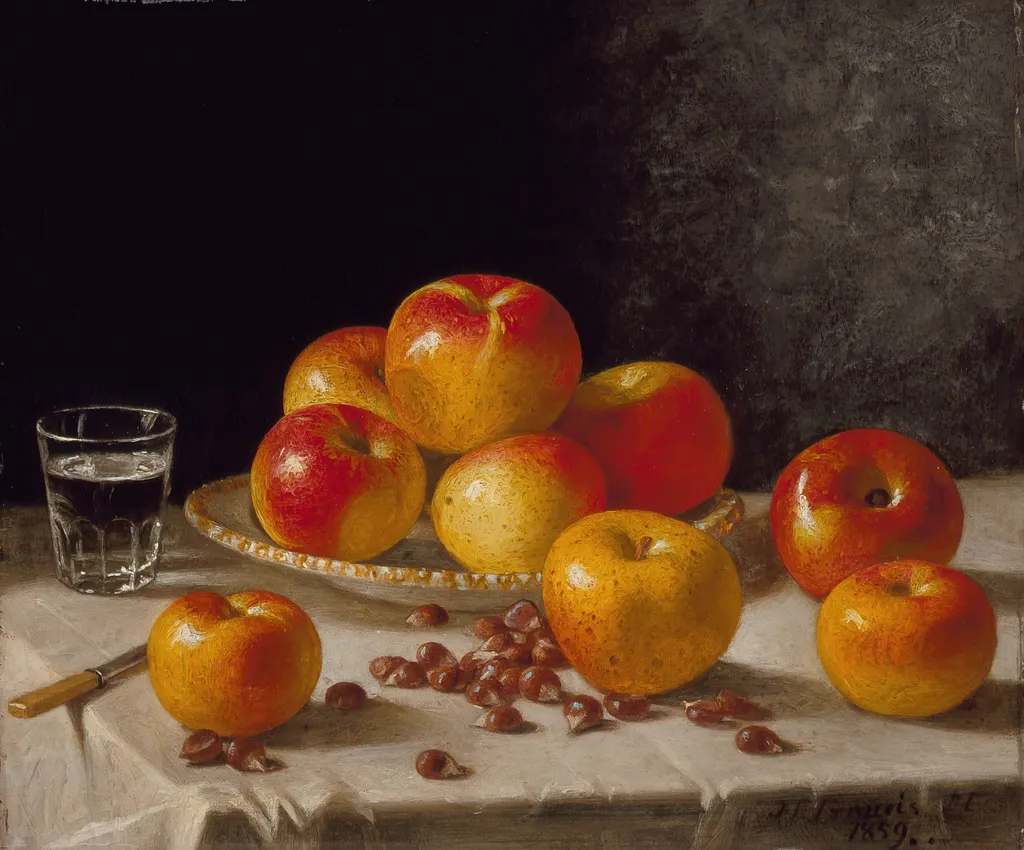
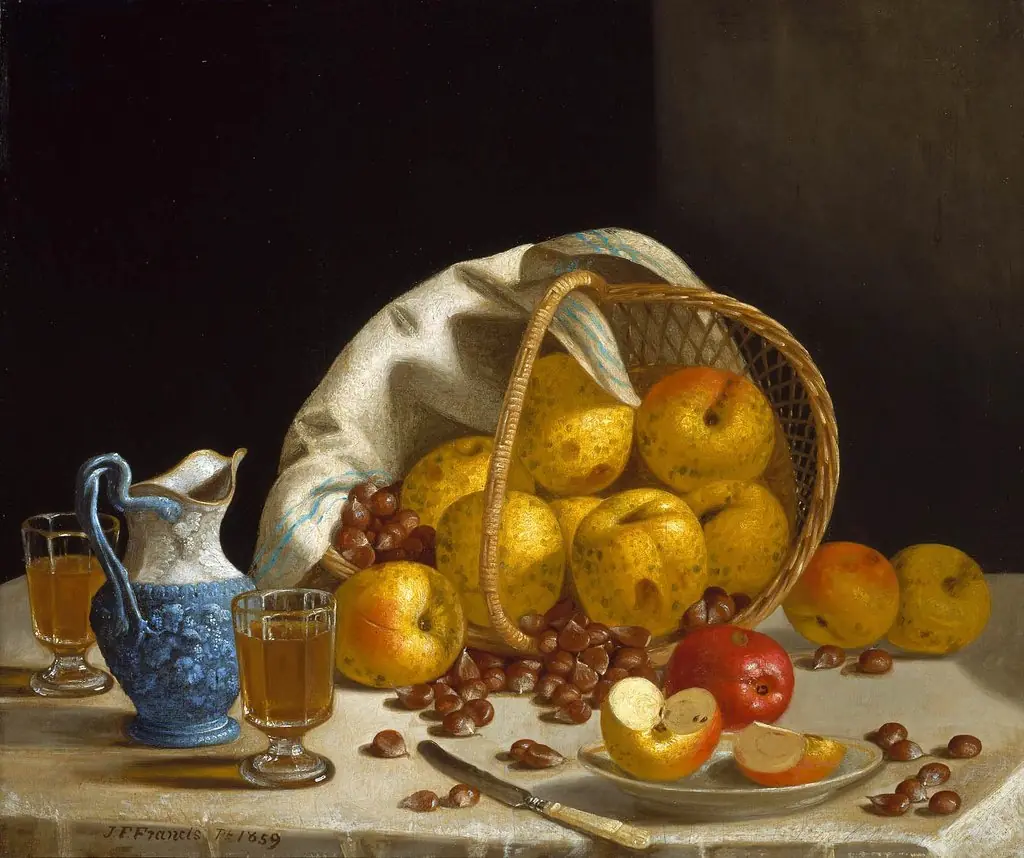
Still Life, Apples and Chestnuts is an oil painting by John F. Francis. It dates from 1859 and is held in the collection of the Los Angeles County Museum of Art. John F.
About this work
Overview
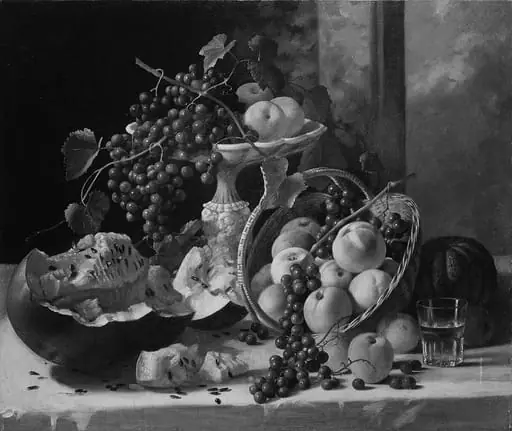
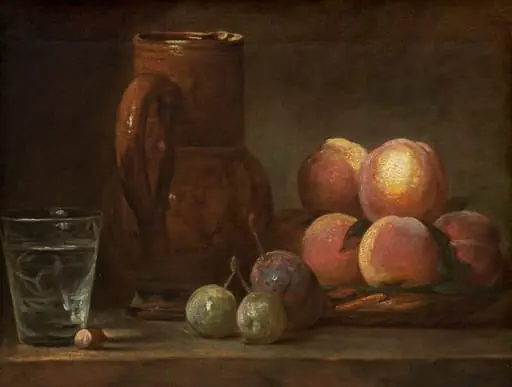
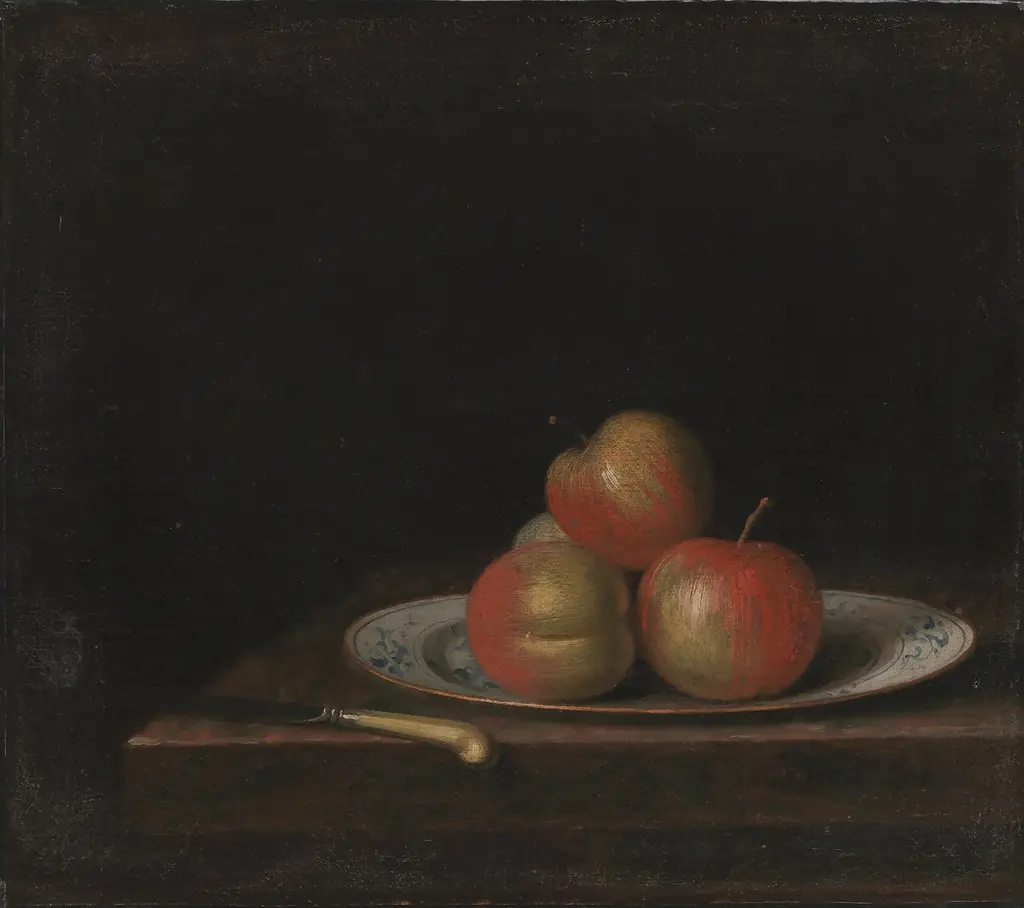
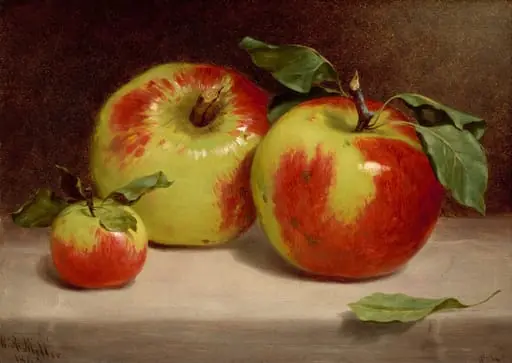
Francis’s 1859 oil painting titled *Still Life, Apples and Chestnuts* presents a modest arrangement of fruit and a glass on a darkened tabletop.
John F. Francis’s 1859 oil painting titled *Still Life, Apples and Chestnuts* presents a modest arrangement of fruit and a glass on a darkened tabletop. Six apples, rendered in warm yellow‑red tones, share space with a handful of spiky chestnuts and a half‑filled drinking glass. The composition is confined to a simple tray and a plain background, directing the viewer’s eye to the objects themselves.
Subject & Meaning
The work concentrates on everyday nourishment, juxtaposing the smooth, glossy surface of the apples with the rough, textured shells of the chestnuts. By isolating these items, Francis invites contemplation of the tactile qualities of food and the quiet domestic moments they evoke, without narrative embellishment or symbolic overtone.
Technique & Style
Francis employs a restrained chiaroscuro, allowing a single light source to model the fruit’s curvature and highlight the glass’s translucency. The paint is applied in thin, blended layers that convey the sheen of the apple skins, while the chestnuts receive a more impasto treatment to suggest their rugged exteriors. The overall palette remains muted, enhancing the realism of the objects.
History & Provenance
Created in 1859, the painting entered the collection of the Los Angeles County Museum of Art, where it remains on display. Its acquisition reflects the museum’s interest in mid‑nineteenth‑century American still‑life painting and the work’s representation of domestic genre subjects popular at the time.
Context
During the mid‑1800s, American artists often turned to still life as a means of demonstrating technical skill and exploring the visual potential of ordinary objects. Francis’s focus on fruit aligns with this trend, while his careful handling of light places the piece within the broader tradition of European chiaroscuro influenced by Dutch masters.
Own this work as a print
Artist & collection