Artwork
Still Life with Apples and Chestnuts
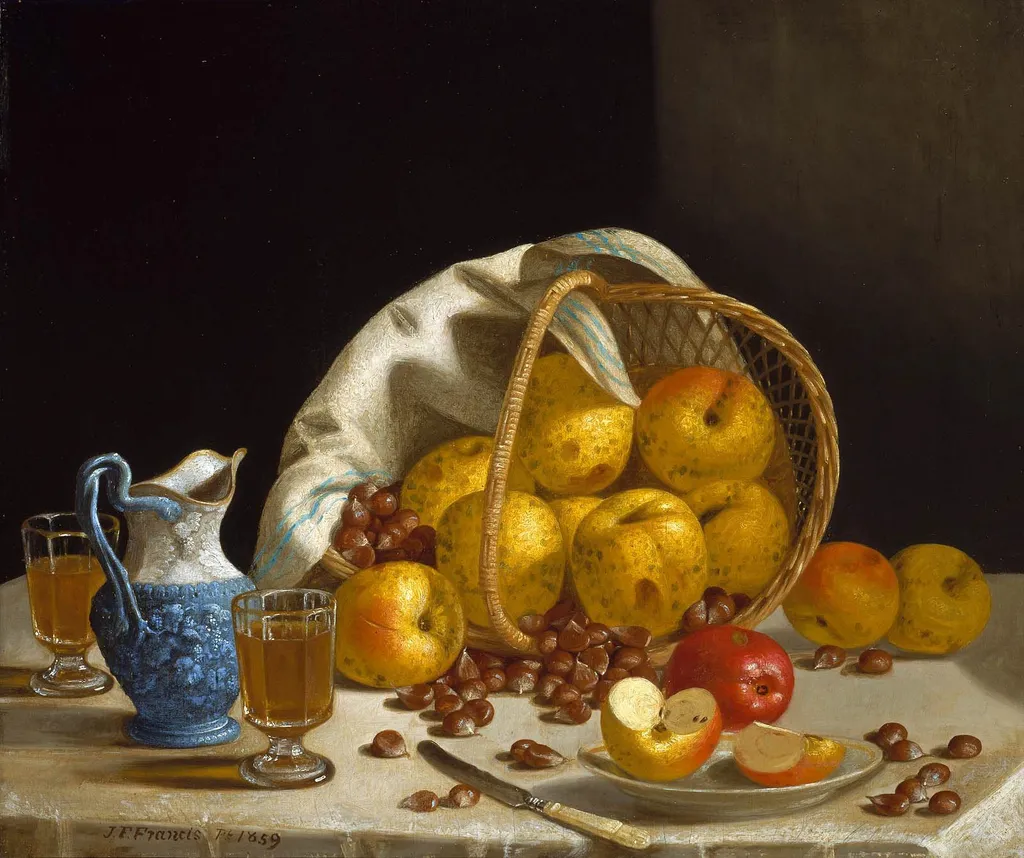
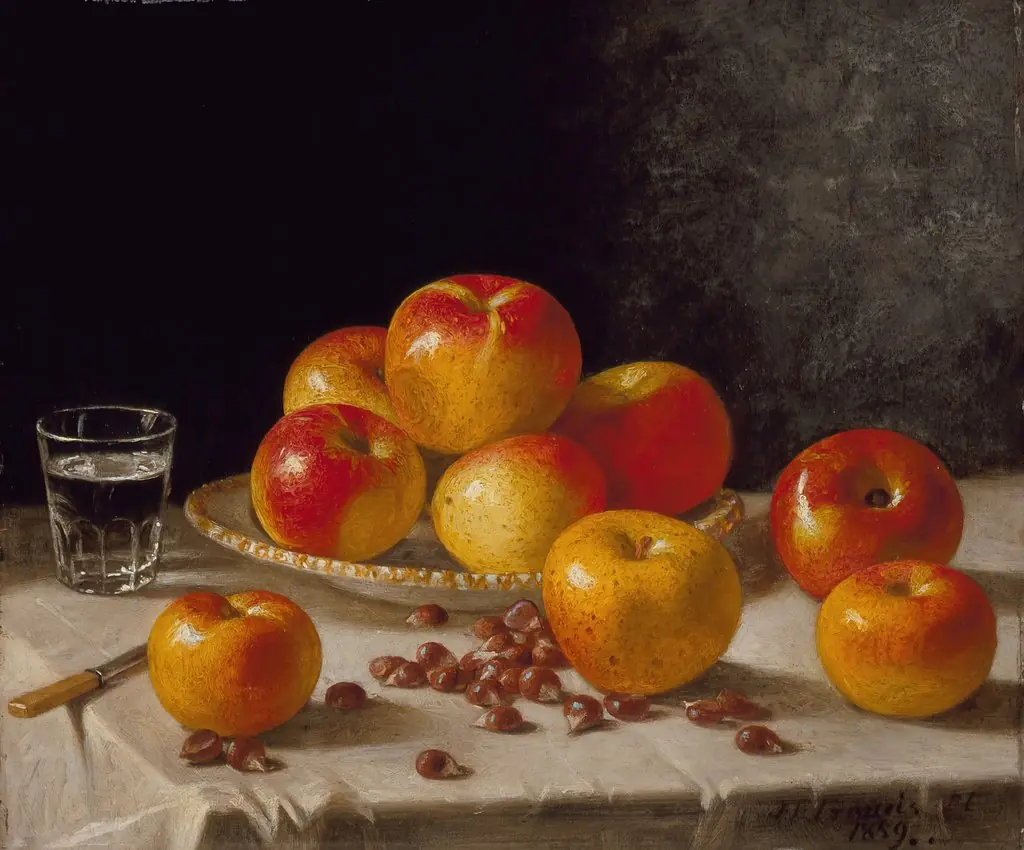
Still Life with Apples and Chestnuts is an oil painting by the Realist artist John F. Francis. It dates from 1859 and is held in the collection of the Museum of Fine Arts Boston. John F.
About this work
Overview
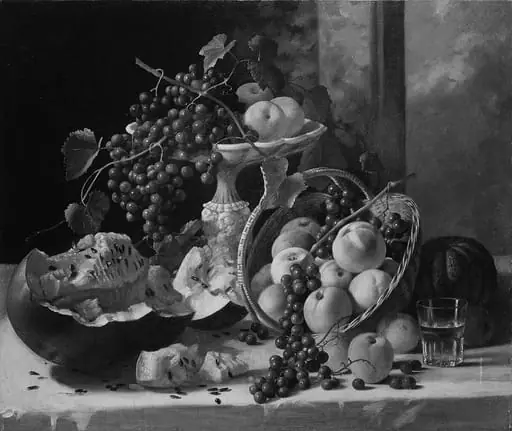
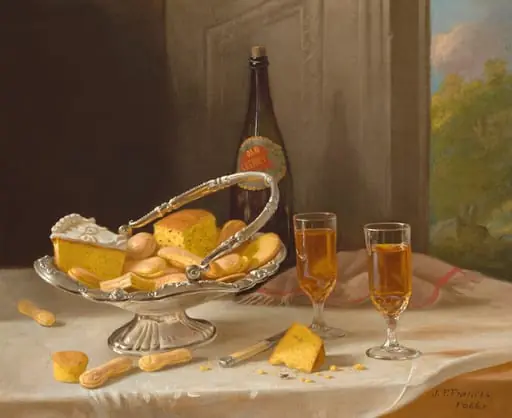
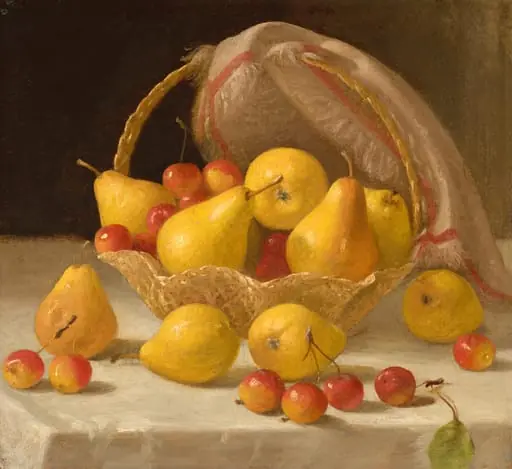
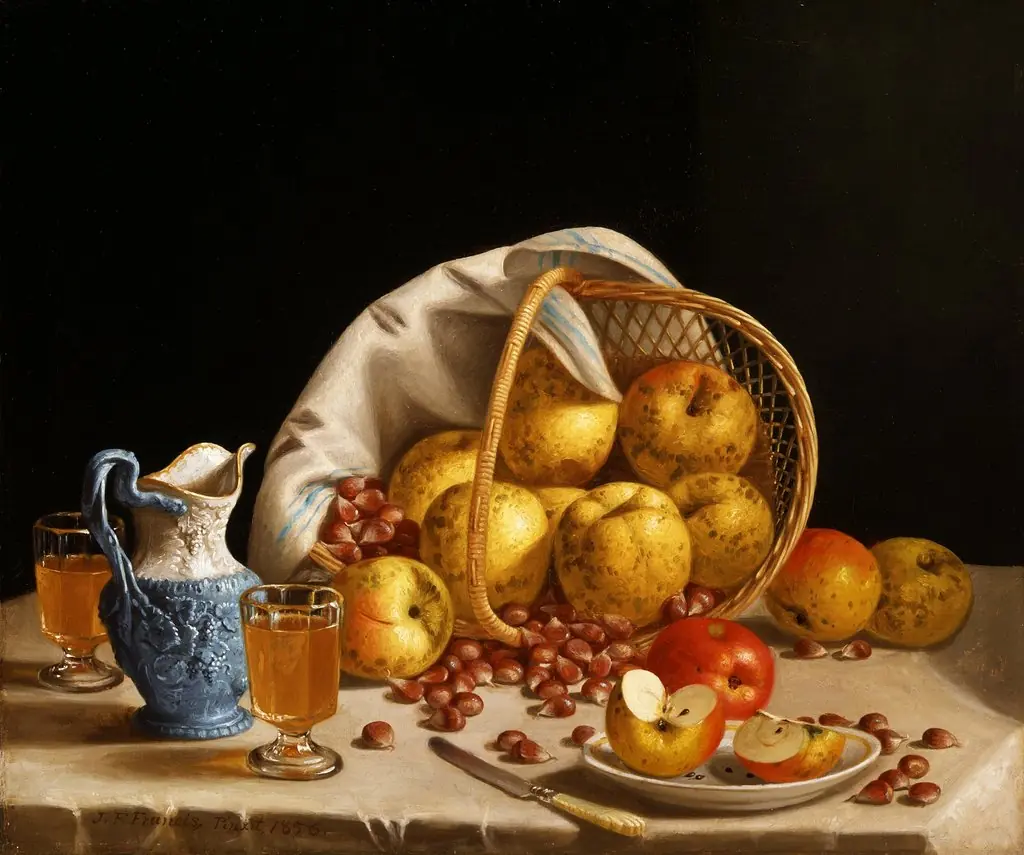
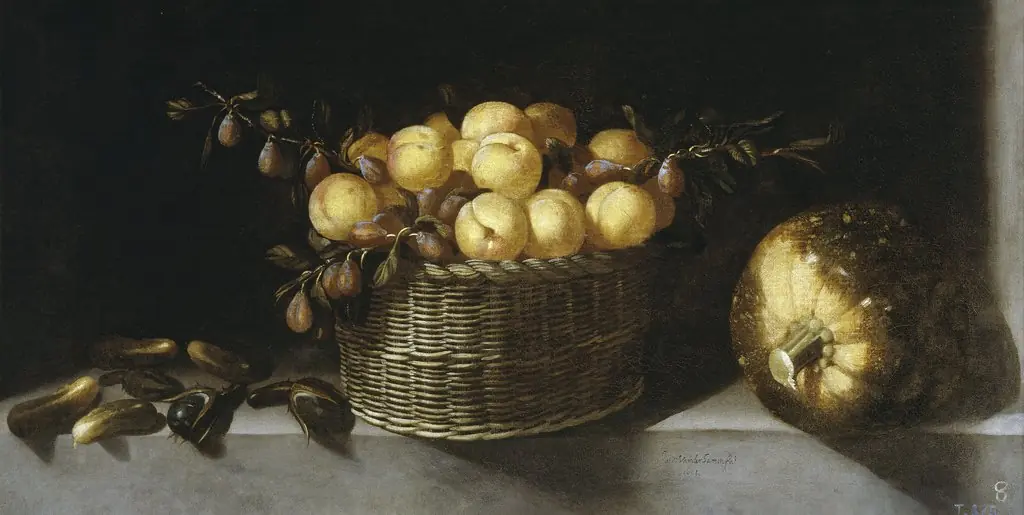
The composition centers on a basket overflowing with apples and chestnuts, accompanied by a blue pitcher, two glasses, and a plate with sliced fruit.
Painted in 1859 by John F. Francis, this oil on canvas still life presents a modest arrangement of seasonal produce and tableware. The composition centers on a basket overflowing with apples and chestnuts, accompanied by a blue pitcher, two glasses, and a plate with sliced fruit. The dark, unobtrusive background isolates the objects, emphasizing their textures and the quiet interplay of light across their surfaces.
Subject & Meaning
The painting captures everyday rural fare—apples and chestnuts—common in autumnal New England. These items suggest harvest abundance and domestic simplicity. The half-empty glass and scattered chestnuts imply recent use, evoking a momentary pause in daily life. No symbolic or allegorical intent is overt; the work instead honors the quiet dignity of ordinary things through careful observation.
Technique & Style
Francis employs subtle chiaroscuro to model the forms, with light catching the dimpled skin of apples and the glossy sheen of the pitcher. The cloth’s folds are rendered with soft transitions, while the chestnuts’ rough shells contrast with the smoothness of the glass. Brushwork is restrained, prioritizing tactile accuracy over decorative flourish. The palette is muted yet warm, anchored by deep shadows that heighten the vibrancy of the fruits.
History & Provenance
The painting entered the collection of the Museum of Fine Arts, Boston, in the late 19th century. Its early history is undocumented, but its style aligns with American still-life traditions of the mid-1800s, particularly those influenced by European realism. Francis, a Philadelphia-based artist, was known for his precise renderings of natural objects, though few of his works survive in public collections.
Context
Created during a period when American artists increasingly turned to domestic subjects, this work reflects a broader shift away from grand historical themes toward intimate, observable reality. Still lifes like this one resonated with middle-class audiences who valued domesticity and the aesthetic of the everyday. Francis’s focus on regional produce also aligns with emerging regional identities in post-antebellum art.
Legacy
Though not widely exhibited beyond institutional circles, the painting remains a representative example of 19th-century American still-life painting. Its quiet precision and attention to materiality offer insight into the technical priorities of lesser-known artists of the era. It contributes to a growing recognition of non-heroic subjects in American art history, valued for their observational integrity rather than narrative ambition.
Own this work as a print
Artist & collection