Artwork
Tivoli
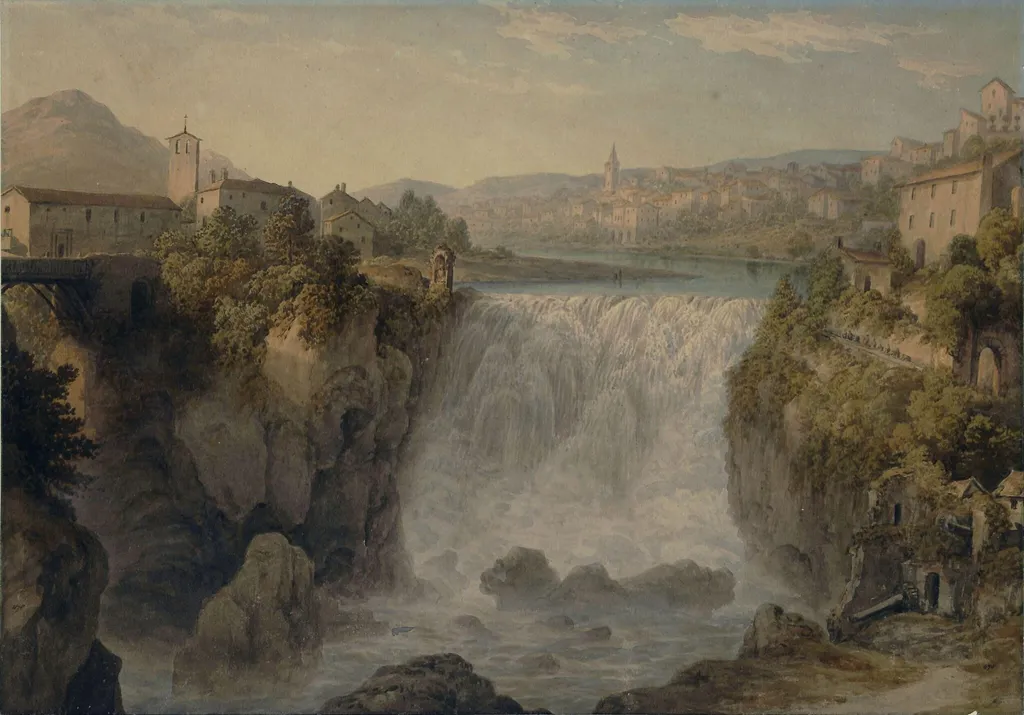
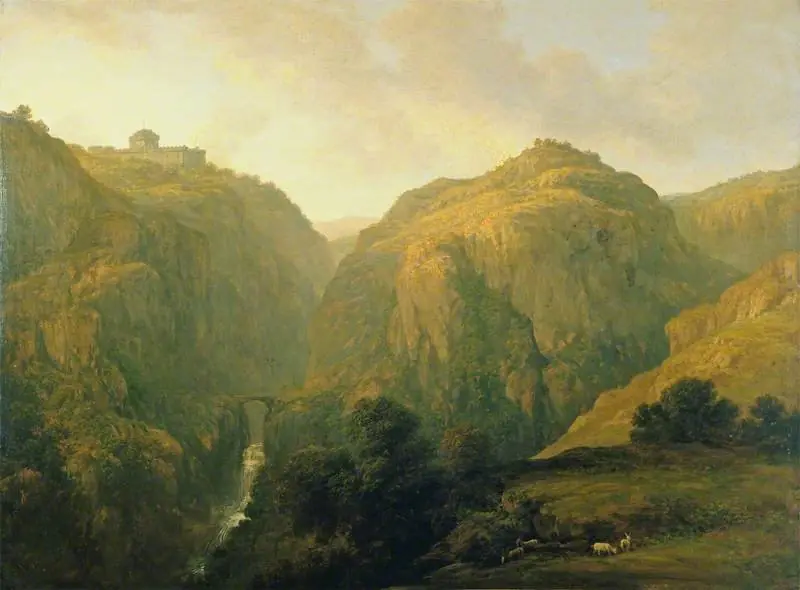
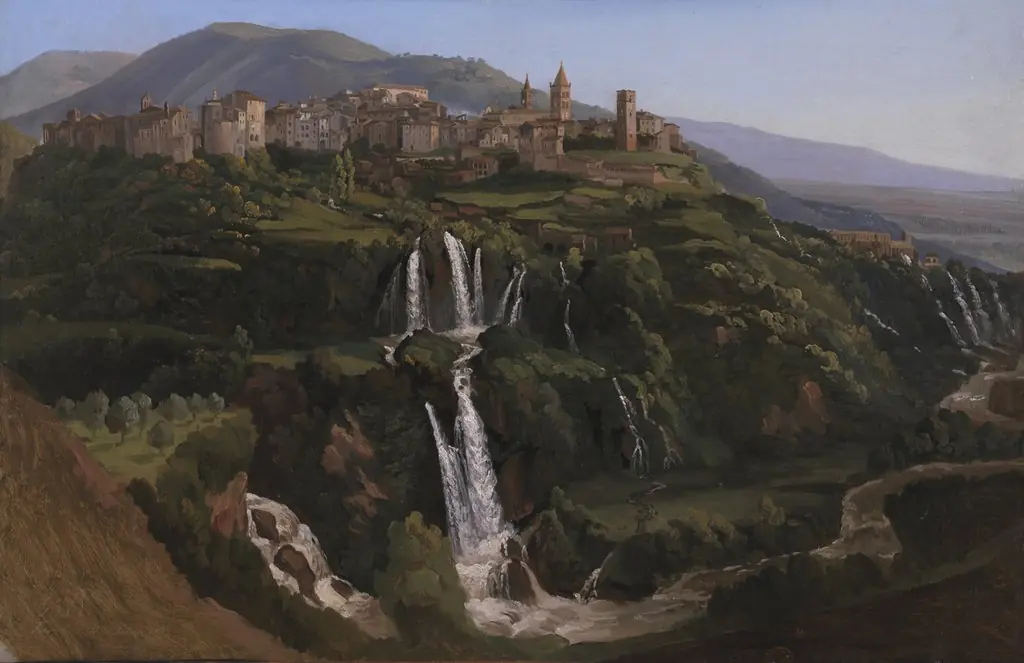
Tivoli is a watercolor work on paper by John Glover. It is held in the collection of the Victoria and Albert Museum.
About this work
Overview
Tivoli is a watercolour painting created by John Glover around 1850, during his time in Van Diemen’s Land (now Tasmania), where he established himself as a pastoralist and artist.
Subject & Meaning
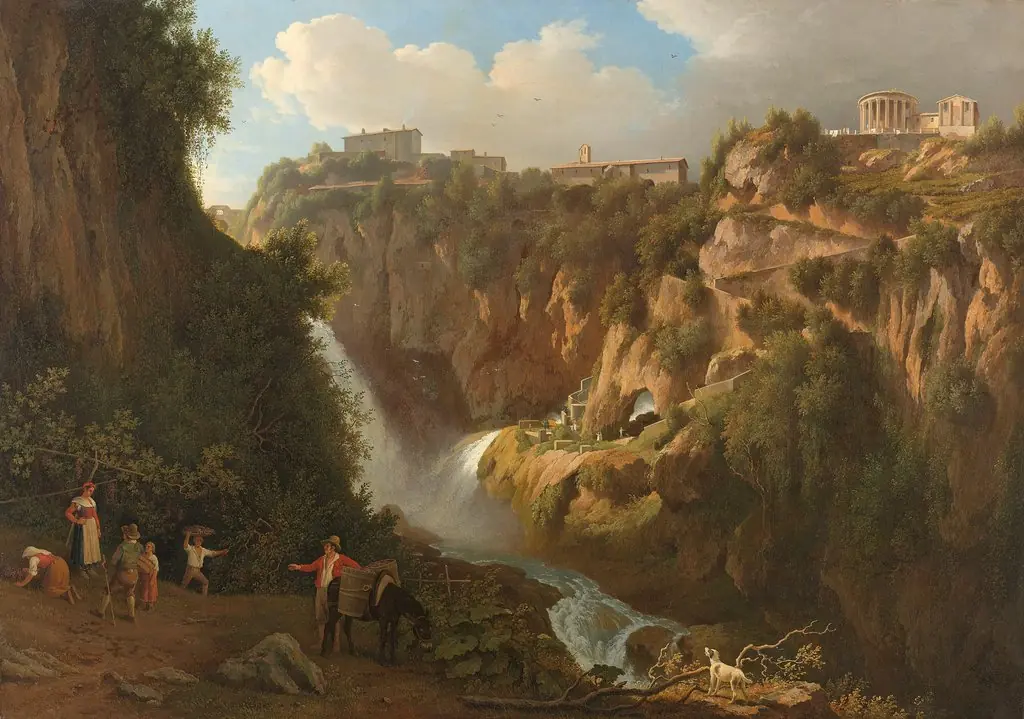
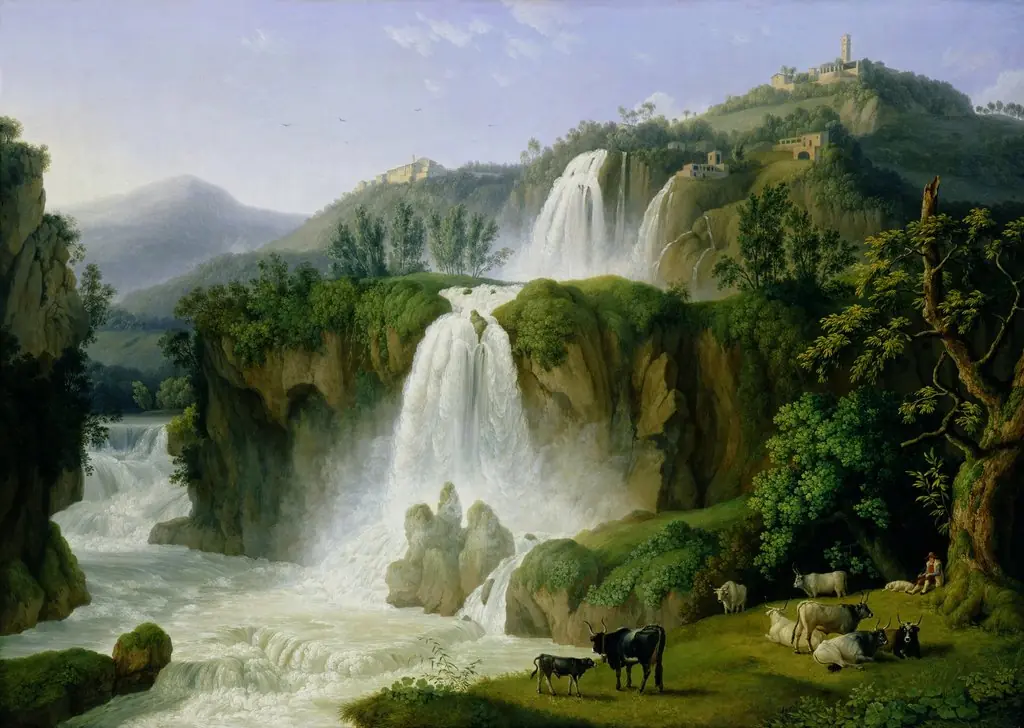
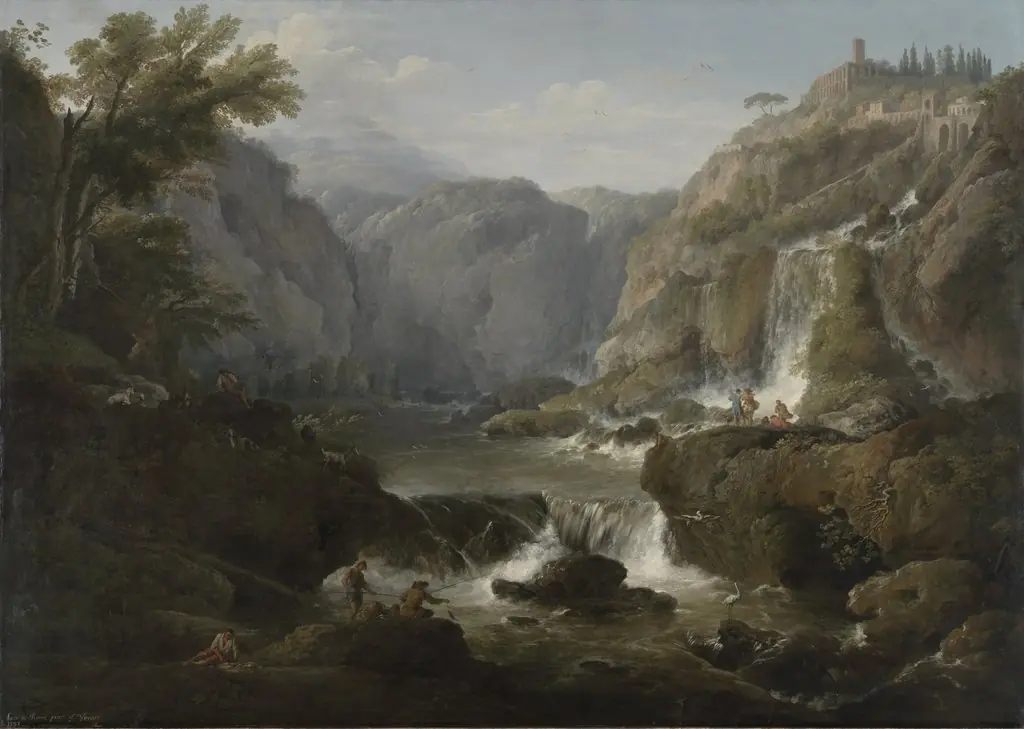
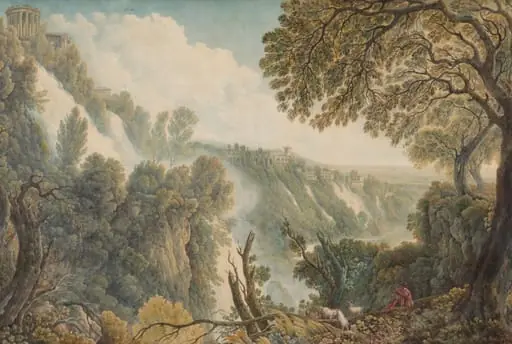
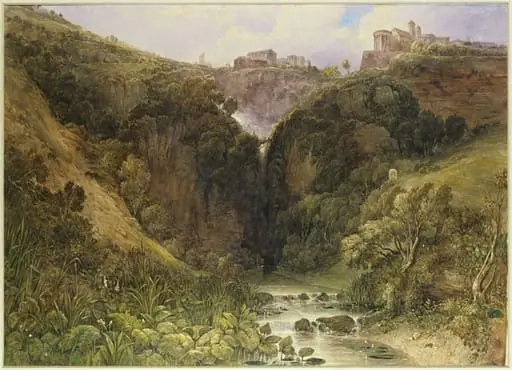
The painting captures a serene rural landscape featuring a waterfall cascading into a river, a hillside village with stone buildings and a church steeple, and surrounding trees. The scene likely draws inspiration from Glover’s Tasmanian environment, reflecting his artistic adaptation to the Australian colonial setting.
Technique & Style
Executed in watercolour, Tivoli showcases Glover’s skill in depicting dynamic natural elements, such as splashing water and luminous rocks, set against a softly rendered clouded sky. The technique conveys a sense of quiet vitality, framing nature as a vibrant backdrop.
History & Provenance
Created circa 1850, Tivoli is part of Glover’s output during his Tasmanian period. While specific provenance details are not provided here, the work is characteristic of his transitional style from English to Australian landscapes.
Context
As a work by John Glover, known for his influence on Australian landscape painting, Tivoli sits within the broader context of colonial-era art in Australia, bridging European artistic traditions with the new environment of Van Diemen’s Land.
Artist & collection

Artist
John Glover (18 February 1767 – 9 December 1849) was an English-born artist. In later life he migrated to Van Diemen’s Land and became a pastoralist during the early colonial period. He has been dubbed "the father of…