Artwork
Launceston and the river Tamar
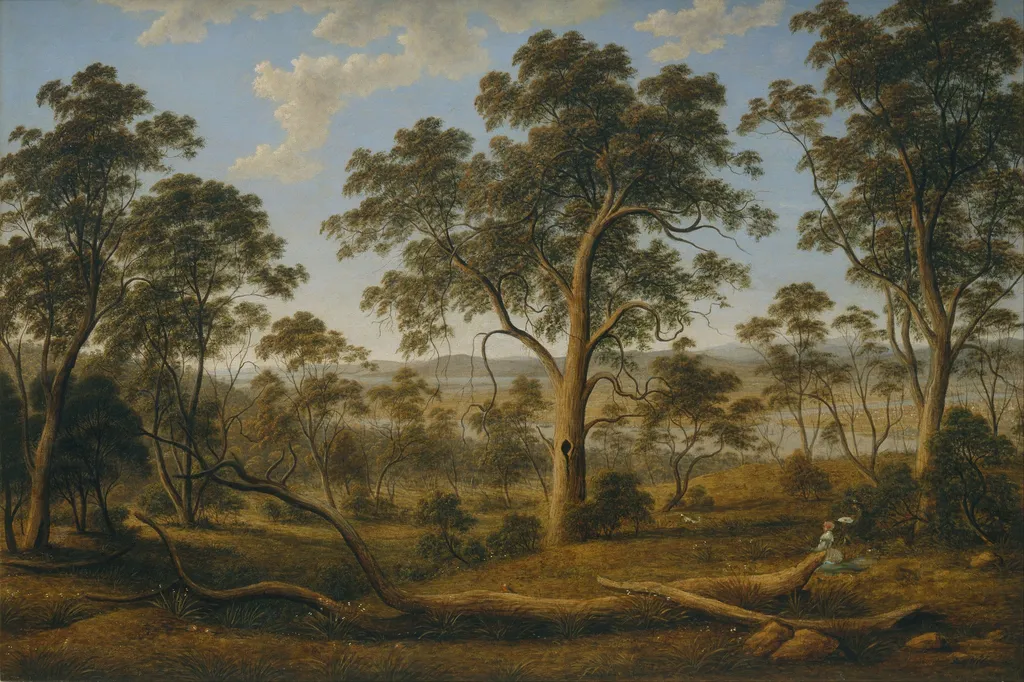
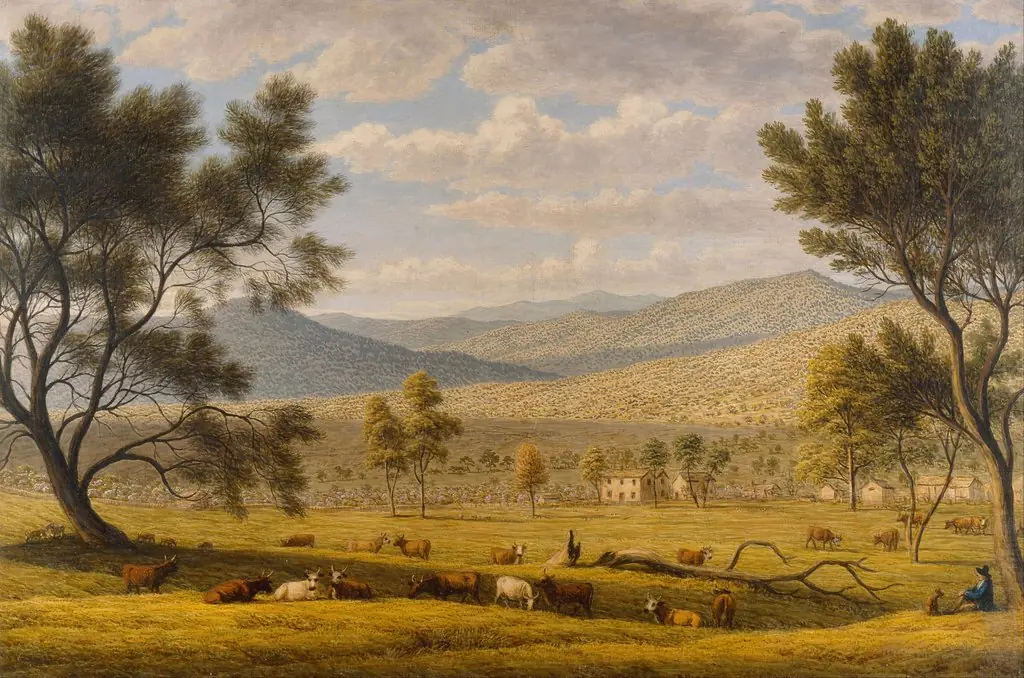
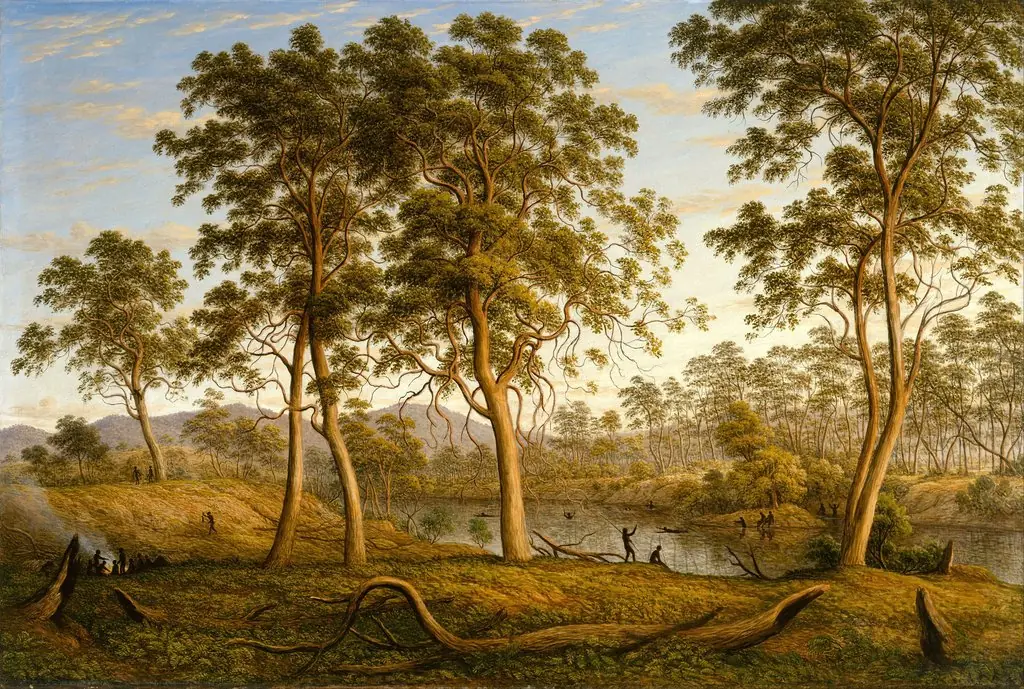
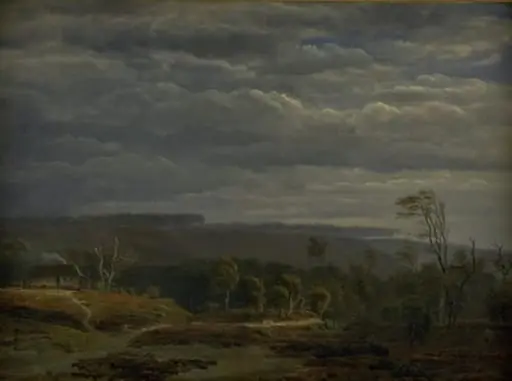
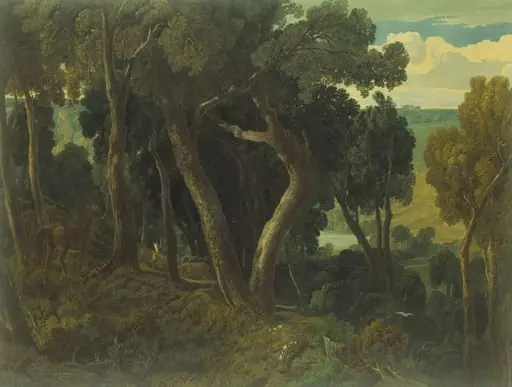
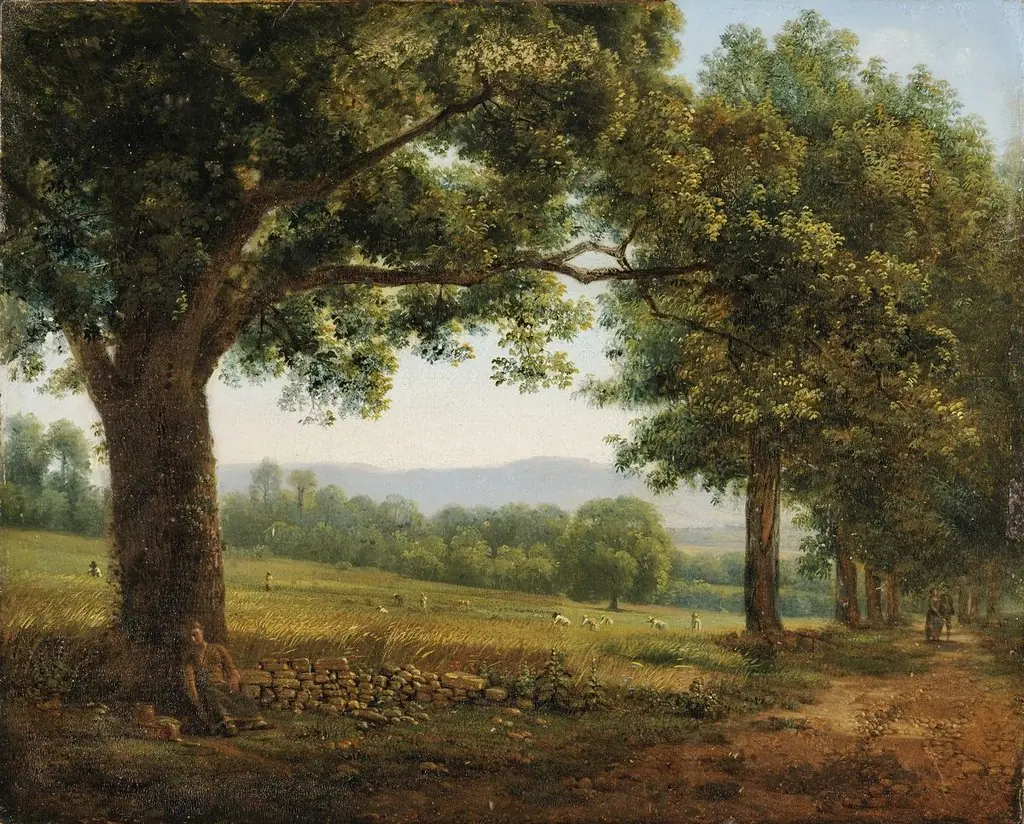
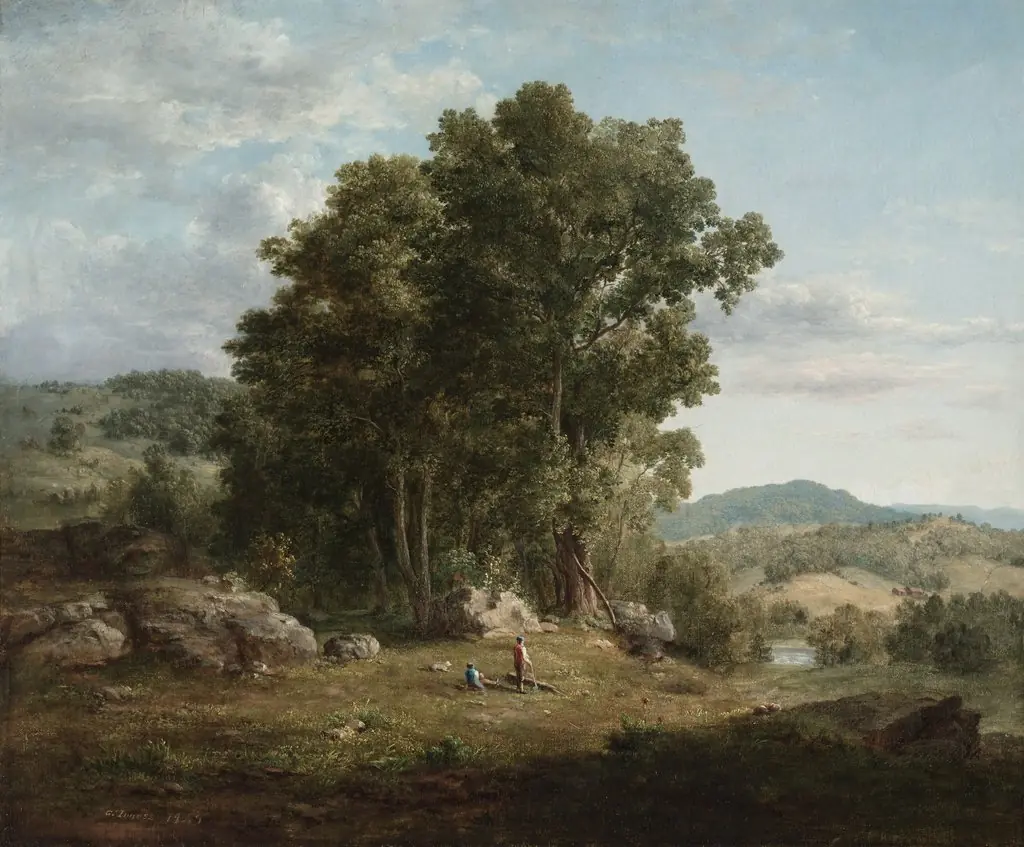
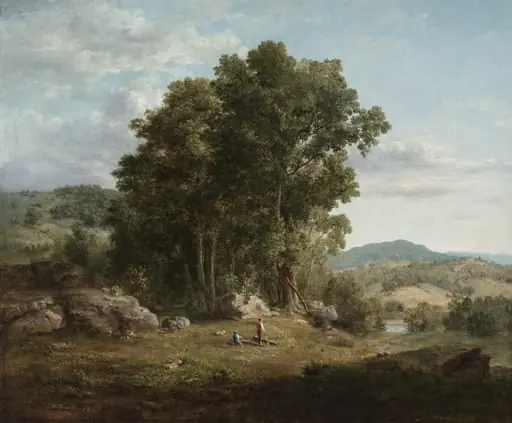
Launceston and the river Tamar is an oil painting by John Glover. It dates from 1832 and is held in the collection of the Art Gallery of New South Wales.
About this work
Overview
Painted in 1832 by English-born artist John Glover, this oil on canvas depicts the landscape around Launceston in Van Diemen’s Land, now Tasmania.
Painted in 1832 by English-born artist John Glover, this oil on canvas depicts the landscape around Launceston in Van Diemen’s Land, now Tasmania. Glover, who relocated to the colony in 1831, rendered the Tamar River and its surrounding terrain with careful observation. The work reflects his transition from European traditions to documenting the unfamiliar Australian environment, becoming one of the earliest sustained visual records of the region’s natural features.
Subject & Meaning
The scene centers on the Tamar River, framed by native eucalypts and open savanna. Two figures seated on a log observe the expanse, their presence subtly humanizing the landscape without dominating it. The composition suggests contemplation rather than conquest, aligning with Glover’s interest in harmony between settlers and the land. The absence of built structures emphasizes the wildness of the terrain, reinforcing a sense of untouched nature.
Technique & Style
Glover employed a detailed, naturalistic style rooted in European academic training, yet adapted to local conditions. He rendered foliage with layered greens and browns, capturing the texture of twisted trunks and sparse undergrowth. Light falls evenly across the scene, with soft contrasts between sunlit grasses and shaded underbrush. While not overtly dramatic, the handling of atmosphere and depth reflects an awareness of chiaroscuro, used here to model form rather than evoke tension.
History & Provenance
Created shortly after Glover’s arrival in Tasmania, the painting was part of his effort to document the colony’s scenery for European audiences. It remained in his possession until his death in 1849, after which it passed through private hands before entering the Art Gallery of New South Wales’ collection. Its preservation reflects its significance as an early colonial record, valued for its historical rather than purely aesthetic merit.
Context
Glover painted this work during a period of rapid colonial expansion and displacement of Aboriginal peoples. While his landscapes appear serene, they were created against a backdrop of violent frontier conflict. His depictions of empty, fertile land subtly supported settler narratives of terra nullius, even as his attention to detail acknowledged the uniqueness of the Australian environment beyond European conventions.
Legacy
Glover’s work laid foundational imagery for Australian landscape painting, influencing later artists to engage directly with local topography. Though his style remained tied to European traditions, his commitment to painting from observation helped shift colonial art toward authenticity. Today, the painting is studied as both a visual document and a cultural artifact, revealing early settler perceptions of the land they occupied.
Own this work as a print
Artist & collection
Artist
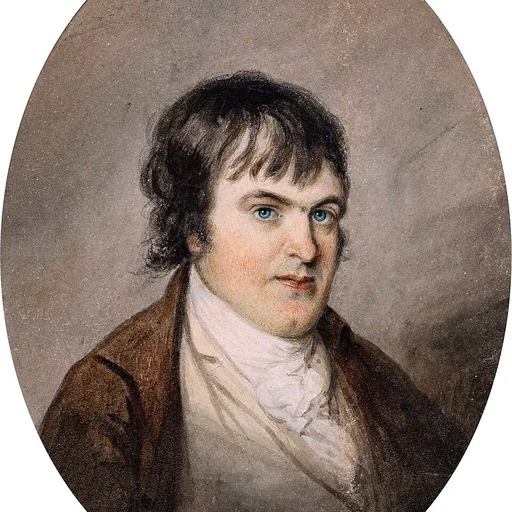
John Glover (18 February 1767 – 9 December 1849) was an English-born artist. In later life he migrated to Van Diemen’s Land and became a pastoralist during the early colonial period. He has been dubbed "the father of…