Artwork
Seated Girl in a High Collared Cloak
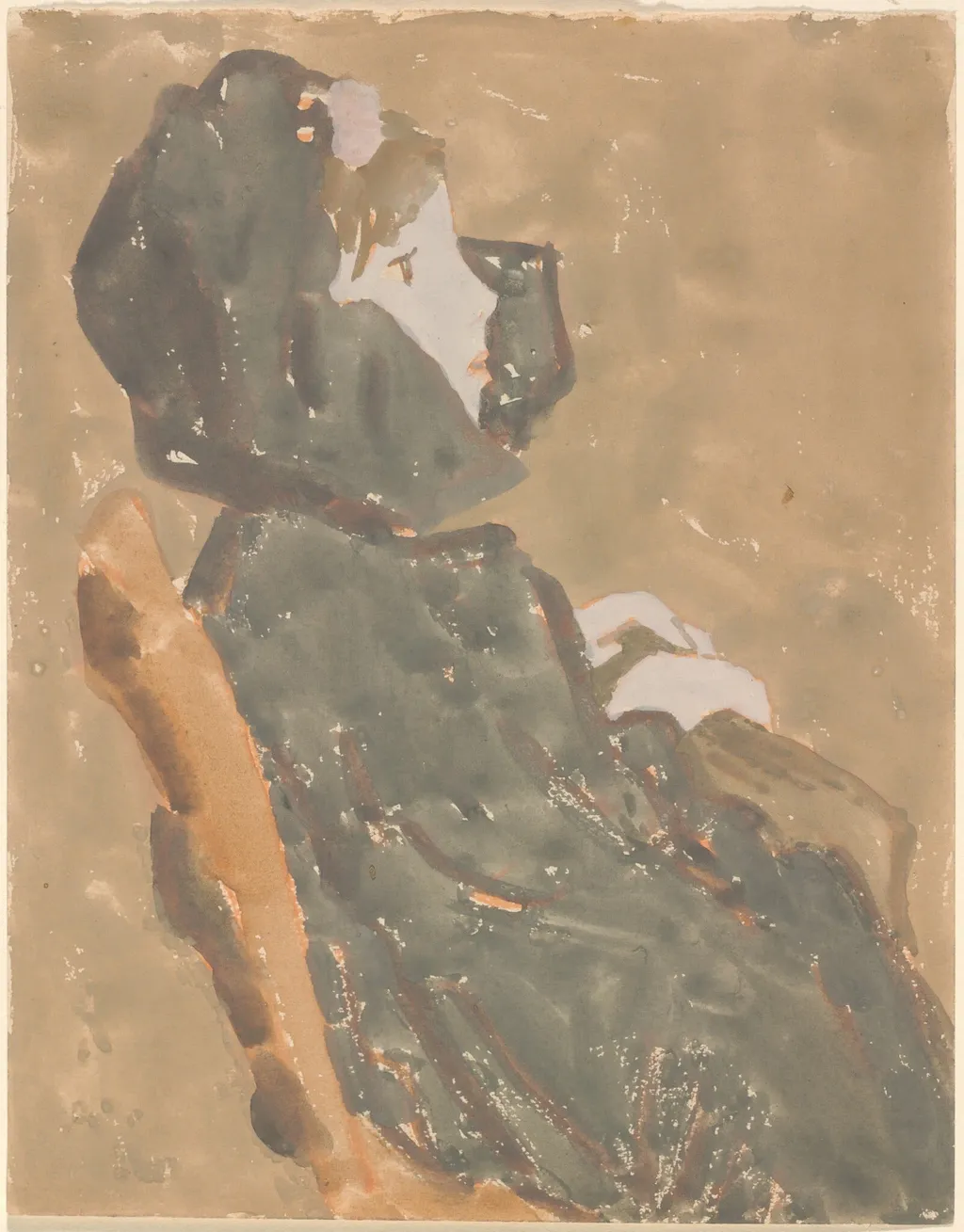
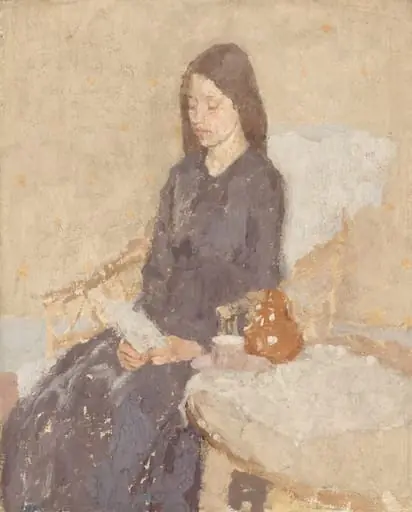
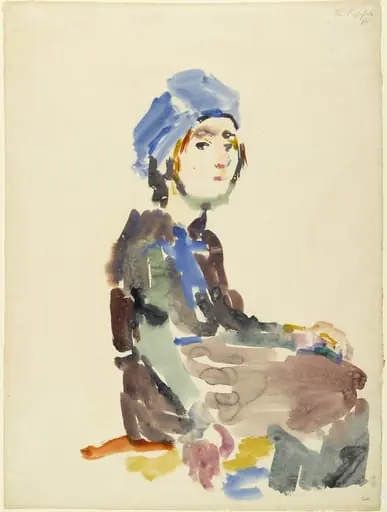
Seated Girl in a High Collared Cloak is a gouache drawing by the Impressionist artist Gwen John. It dates from 1914 and is held in the collection of the National Gallery of Art.
About this work
Overview
Created around 1914, this drawing by Gwendolen John combines gouache and watercolor on wove paper, reflecting her preference for intimate, quiet portraiture.
Created around 1914, this drawing by Gwendolen John combines gouache and watercolor on wove paper, reflecting her preference for intimate, quiet portraiture. Executed in a subdued tonal range, the work captures a seated female figure in a high-collared cloak, rendered with minimal detail and a sense of immediacy. The medium’s transparency and opacity are layered to suggest form without emphasis on finish, aligning with John’s broader focus on mood over narrative.
Subject & Meaning
The figure is anonymous, her face partially obscured, inviting contemplation rather than identification. The high collar and enveloping cloak suggest modesty or emotional withdrawal, reinforcing the painting’s introspective tone. John frequently portrayed women in solitary, unposed moments, avoiding theatricality to emphasize quiet presence. The lack of context or expression shifts focus to the physicality of the figure and the weight of her attire.
Technique & Style
John applied watercolor and gouache with loose, rapid strokes, allowing pigment to bleed and layer unevenly. The folds of the cloak are suggested rather than defined, using subtle shifts in hue rather than line. Skin tones and fabric are rendered in muted browns, greens, and off-whites, creating a harmonious but restrained palette. The sketch-like quality conveys spontaneity, as if the image were captured in a fleeting glance.
History & Provenance
Gwen John painted this work during her time in France, where she lived most of her adult life. Though overshadowed in her lifetime by her brother Augustus John and Auguste Rodin, her work remained largely private, exhibited sparingly. After her death in 1939, curators and scholars gradually recognized the distinctiveness of her approach, leading to renewed interest in her oeuvre, including this piece.
Context
In early 20th-century Europe, many female artists worked outside mainstream institutions, often focusing on domestic or solitary subjects. John’s quiet style contrasted with the boldness of contemporaries like the Vorticists or Fauves. Her choice of intimate scale, muted tones, and anonymous sitters aligned with a broader trend among women artists seeking autonomy in representation, away from public spectacle.
Legacy
This drawing exemplifies John’s enduring influence on 20th-century figurative art, particularly in how she used restraint to convey psychological depth. Her work has been reassessed in recent decades as part of a broader reevaluation of women artists who operated on the margins of modernist movements. Today, her approach is seen as a quiet but significant contribution to the evolution of portrait drawing.
Artist & collection
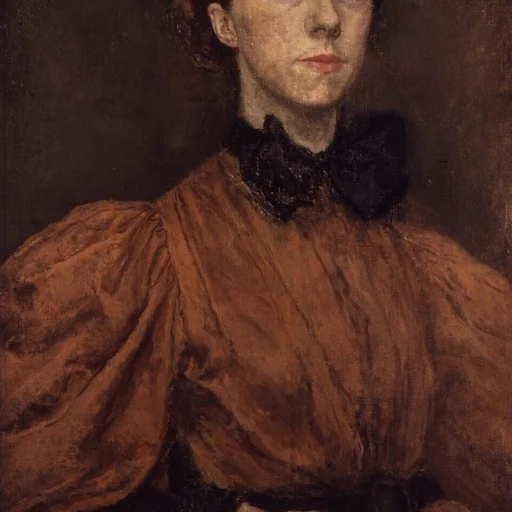
Artist
Gwendolen "Gwen" Mary John (22 June 1876 – 18 September 1939) was a Welsh artist who worked in France for most of her career.