Artwork
Needlework
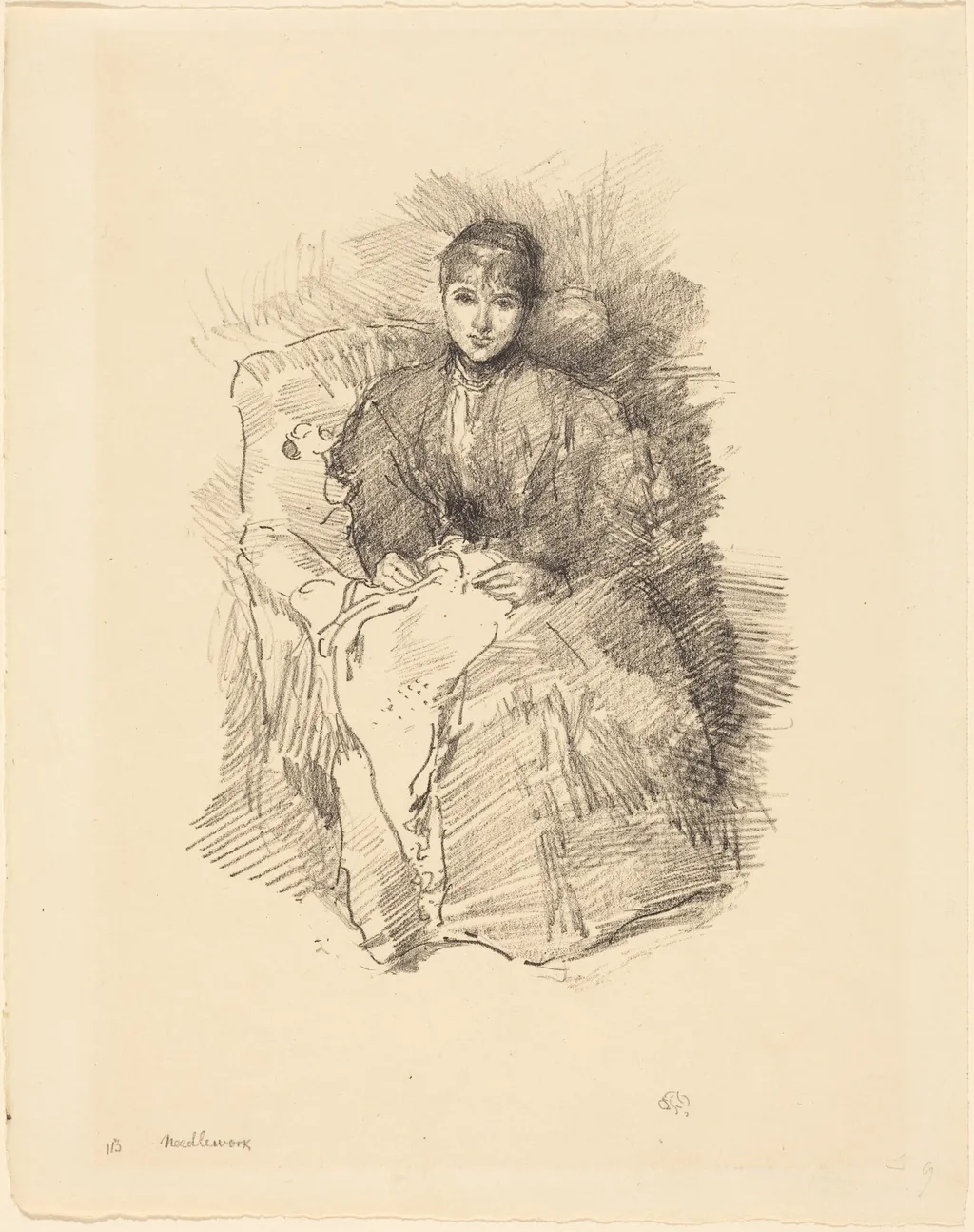
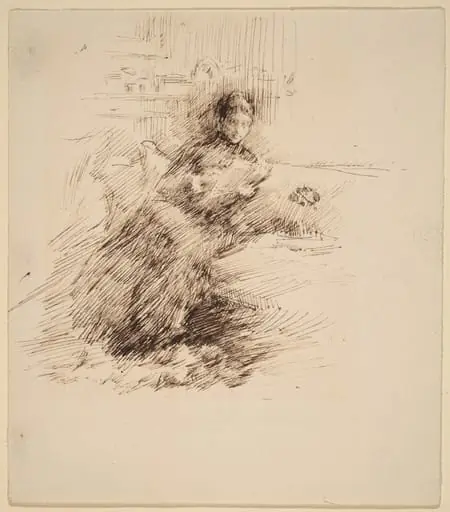
Needlework is an ink print by the Impressionist artist James McNeill Whistler. It dates from 1896 and is held in the collection of the National Gallery of Art.
About this work
Overview
It belongs to the later period of his career, during which he concentrated on graphic works after establishing himself through painting and etching.
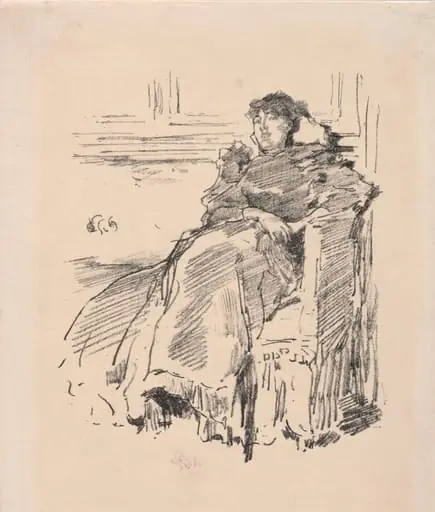
Created in 1896, *Needlework* is a lithograph by James McNeill Whistler, executed in black ink on laid paper. It belongs to the later period of his career, during which he concentrated on graphic works after establishing himself through painting and etching. The piece exemplifies his commitment to formal harmony and restrained expression, aligning with his broader philosophy that art should prioritize visual balance over storytelling.
Subject & Meaning
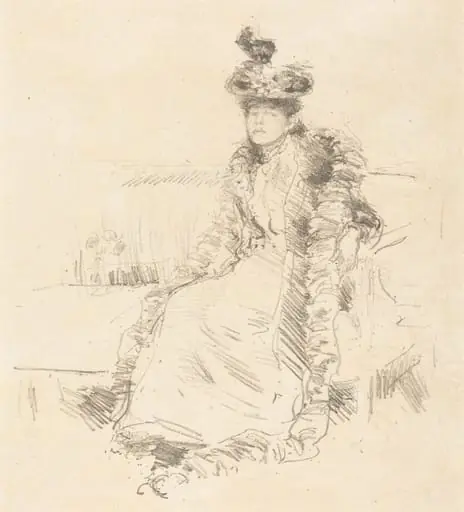
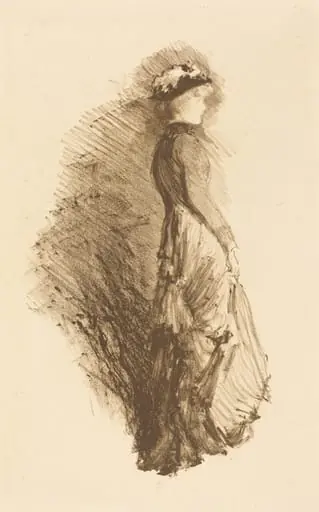
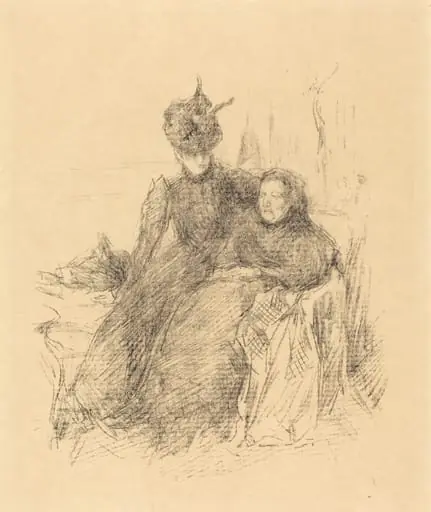
The image depicts a woman seated in quiet repose, engaged in needlework. Her posture and attire—a loose gown with a draped shawl—suggest a moment of domestic stillness rather than narrative action. Whistler avoids emotional dramatization; the figure is rendered as an element within a composed arrangement of form and tone, reflecting his belief that art should evoke mood rather than convey moral or sentimental messages.
Technique & Style
Whistler employed lithography to achieve subtle gradations of tone with minimal line work. The drawing is deliberately sketchlike, using soft, flowing contours and sparse shading to suggest volume without detail. The textured surface of the laid paper enhances the tactile quality of the image, reinforcing the impression of immediacy. His signature butterfly, delicately inscribed, serves as both mark and aesthetic counterpoint to the quiet subject.
History & Provenance
This print emerged during Whistler’s mature years in London, when he was deeply engaged with printmaking as a medium for personal expression. It was likely produced for private circulation or limited publication, consistent with his practice of controlling the reproduction and presentation of his graphic works. No public record of early ownership is widely documented, but it was included in posthumous catalogues of his prints.
Context
In the 1890s, Whistler was part of a broader European movement that elevated graphic arts beyond illustration, treating them as autonomous aesthetic objects. His rejection of narrative in favor of tonal harmony aligned with contemporary ideas of 'art for art’s sake.' *Needlework* reflects this ethos, resonating with the quiet introspection found in the work of contemporaries like Degas and Toulouse-Lautrec, though with a more restrained palette and composition.
Legacy
The print contributes to Whistler’s enduring influence on modern graphic art, particularly in demonstrating how minimal means could convey presence and atmosphere. Its understated elegance helped redefine the potential of lithography, inspiring later artists to explore the expressive limits of line and tone. Though not widely exhibited in his lifetime, it remains a quiet testament to his commitment to formal purity in printmaking.
Artist & collection
Artist
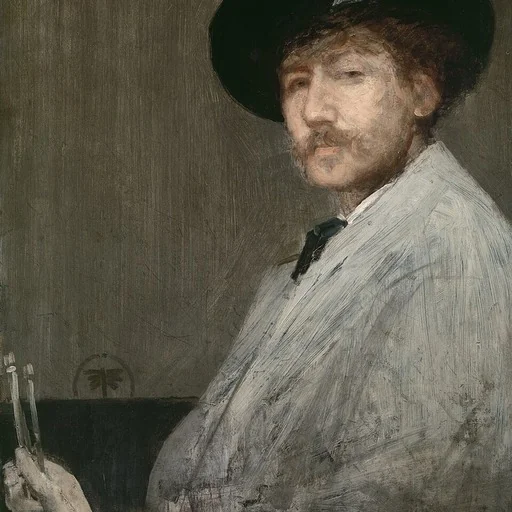
James Abbott McNeill Whistler was an American painter in oils and watercolor, and printmaker, active during the American Gilded Age and based primarily in the United Kingdom.

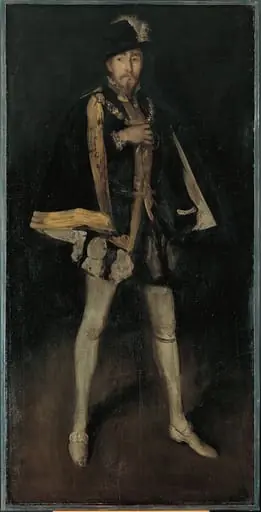 Arrangement in Black, No. 3: Sir Henry Irving as Philip II of Spain
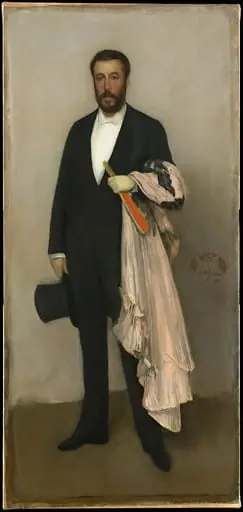 Arrangement in Flesh Colour and Black: Portrait of Theodore Duret
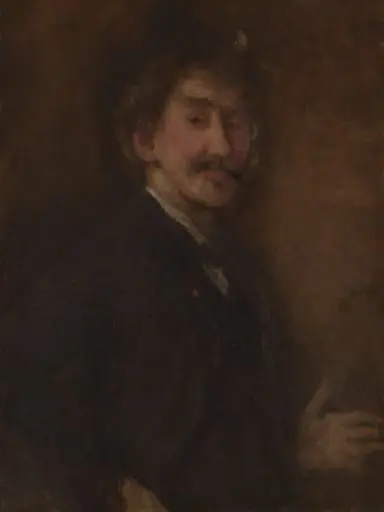 Gold and Brown: Self-Portrait
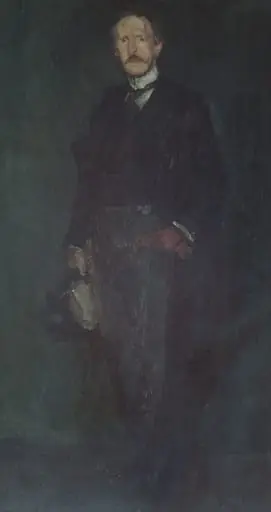 Edward Guthrie Kennedy
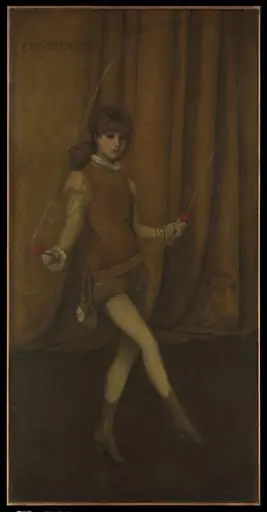 Harmony in Yellow and Gold: The Gold Girl—Connie Gilchrist
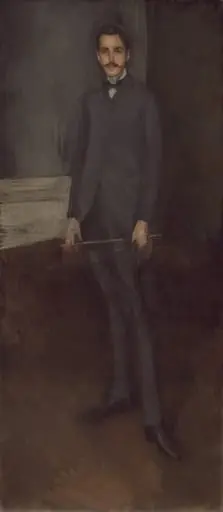 George W. Vanderbilt
 Symphony in White, No. 1: The White Girl
 Henry Irving as Philip II of Spain