Artwork
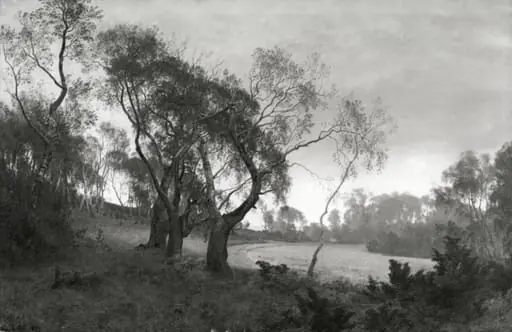
Autumn: October. Hillside, Noonday, Glen Cove, Long Island
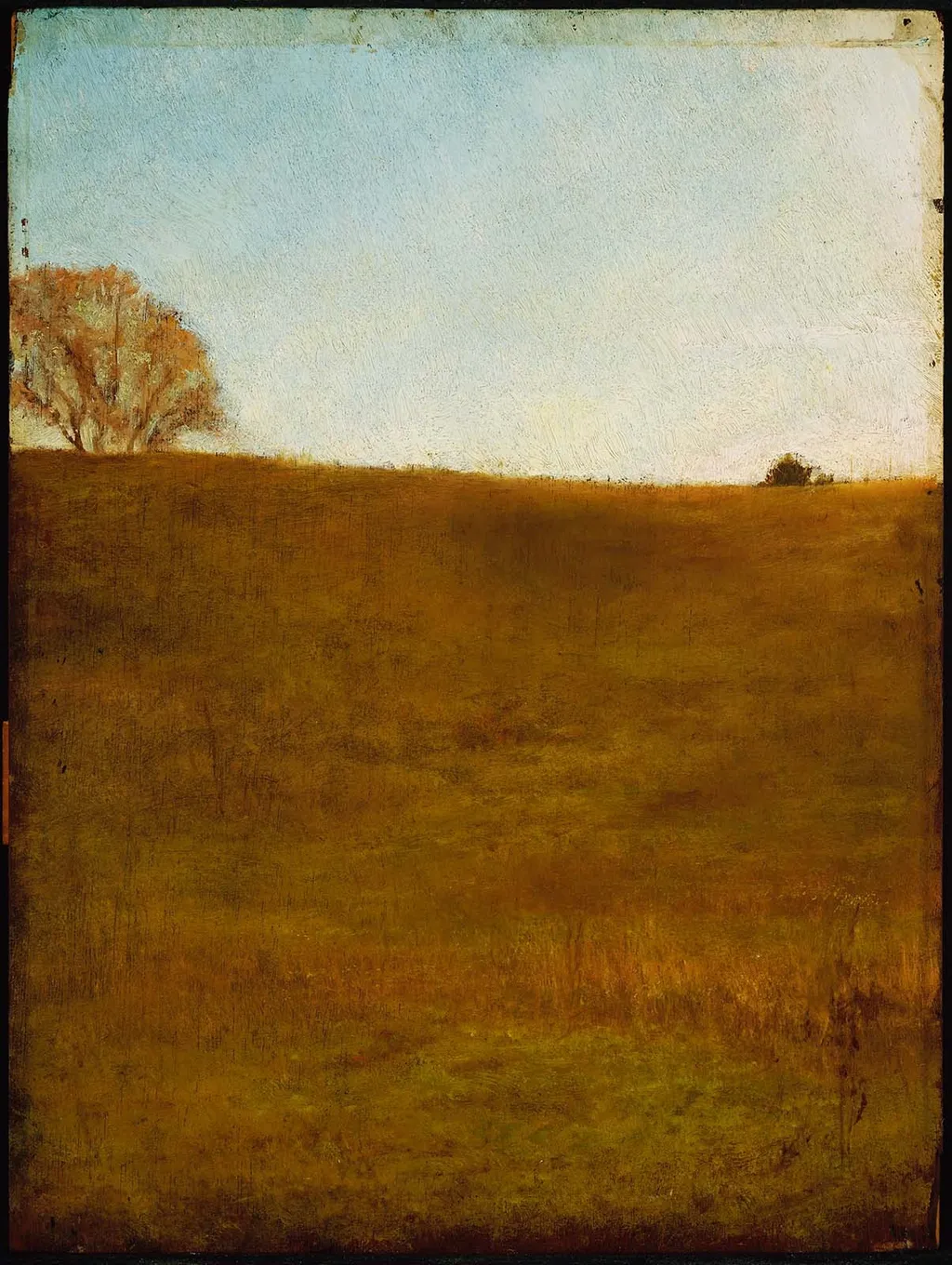
Autumn: October. Hillside, Noonday, Glen Cove, Long Island is an unspecified painting by the American Impressionist artist John La Farge. It dates from 1860 and is held in the collection of the Museum of Fine Arts Boston. Painted in 1860, *Autumn: October.
About this work
Overview
Painted in 1860, *Autumn: October. Hillside, Noonday, Glen Cove, Long Island* is an early landscape by John La Farge, created before his later fame in stained glass. The work captures a quiet rural scene on Long Island, reflecting the artist’s interest in natural light and seasonal change. It resides in the Museum of Fine Arts, Boston, as part of its collection of 19th-century American art.
Subject & Meaning
The painting depicts a sunlit hillside in late autumn, with a broad field of dry grass and scattered trees receding toward the horizon.
The painting depicts a sunlit hillside in late autumn, with a broad field of dry grass and scattered trees receding toward the horizon. There is no human presence, emphasizing solitude and the quiet rhythm of nature. The noonday light suggests a moment of stillness, inviting contemplation rather than narrative. The scene reflects a broader 19th-century American fascination with the pastoral and the transient beauty of the seasons.
Technique & Style
La Farge employed a restrained palette of muted browns, greens, and soft blues, avoiding bold contrasts in favor of subtle tonal shifts. Brushwork is loose but controlled, suggesting texture without overt detail. The composition is deliberately simple: horizontal bands of land and sky create a sense of calm equilibrium. This approach aligns with early American landscape traditions, anticipating the tonal sensibilities of later Impressionist work.
History & Provenance
Created during La Farge’s formative years as a painter, the work predates his shift toward decorative arts. It remained in private hands until acquired by the Museum of Fine Arts, Boston, where it has been held since the early 20th century. The painting offers insight into the artist’s development before his groundbreaking innovations in glass layering and ecclesiastical commissions, notably at Trinity Church in Boston.
Context
Painted during a period when American artists were increasingly turning to local landscapes for inspiration, the work reflects the influence of the Hudson River School and the growing interest in plein air observation. Though not part of a formal movement, La Farge’s approach shares affinities with contemporaries who sought to convey atmosphere and mood through light and color, setting the stage for American Impressionism’s emergence.
Legacy
While La Farge is better known for his stained glass and mural work, this early landscape reveals his foundational sensitivity to light and composition. *Autumn: October* stands as a quiet precursor to his later technical experiments, demonstrating how his understanding of color and spatial harmony began in observation of the natural world. It remains a representative example of pre-Impressionist American landscape painting.
Artist & collection

Artist
John La Farge (March 31, 1835 – November 14, 1910) was an American artist whose career spanned illustration, murals, interior design, painting, and popular books on his Asian travels and other art-related topics.

 The Muse of Painting
 Portrait of the Painter
 The Last Valley - Paradise Rocks
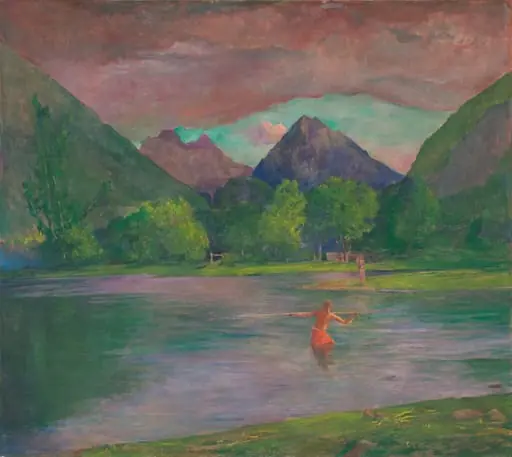 The Entrance to the Tautira River, Tahiti. Fisherman Spearing a Fish
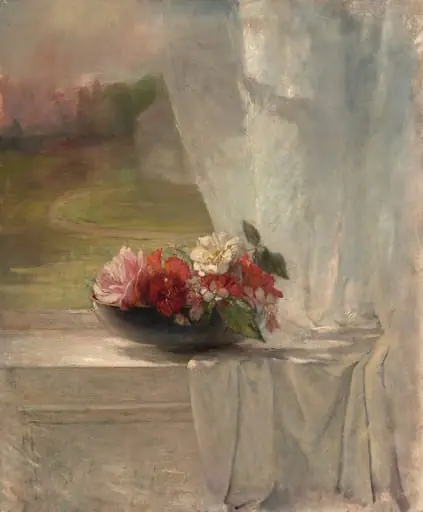 Flowers on a Window Ledge
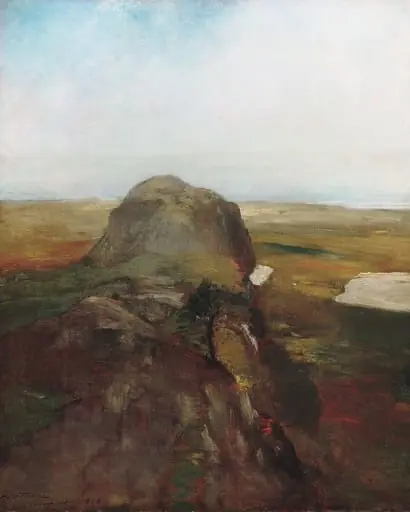 Autumn Study, View over Hanging Rock, Newport, R.I.
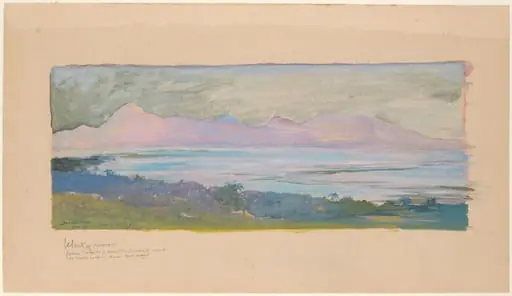 The Island of Moorea Looking across the Strait from Tahiti, January 1891
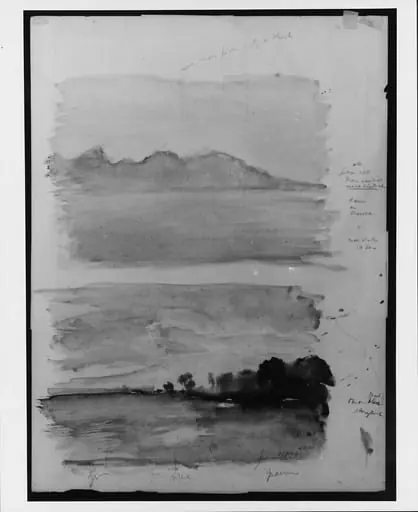 Double Study of Dawn, Moorea Seen across the Water, Tahiti
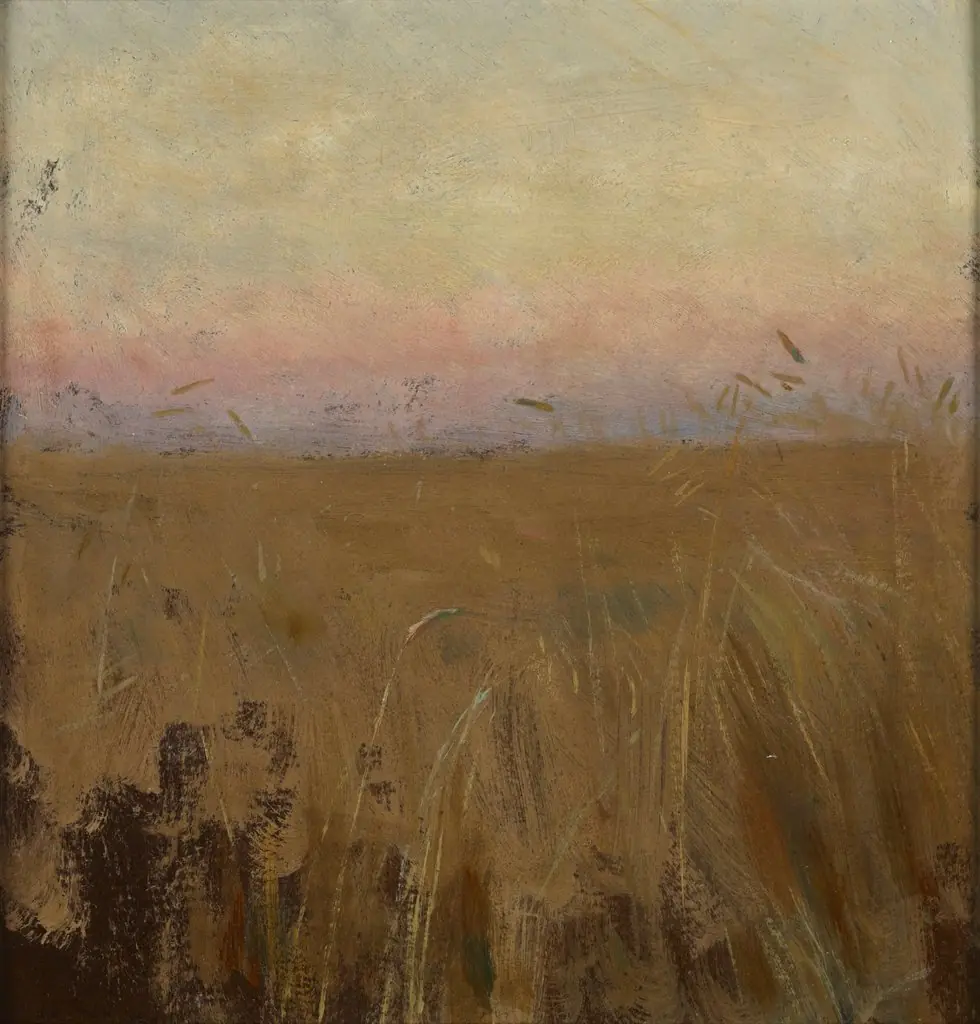 Rye
Rye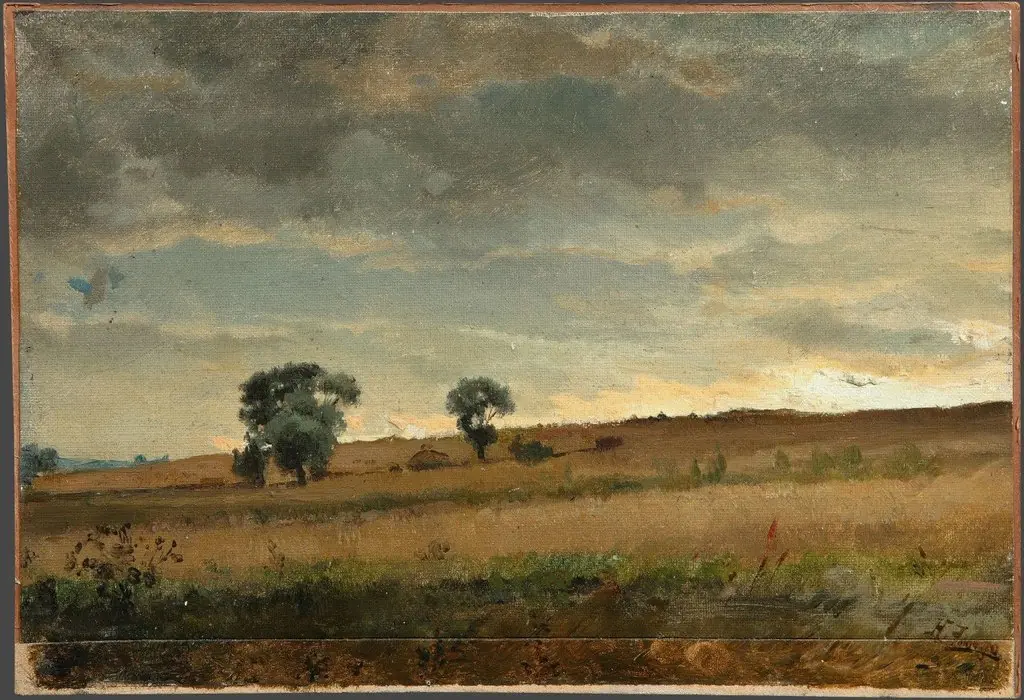 Перед грозой
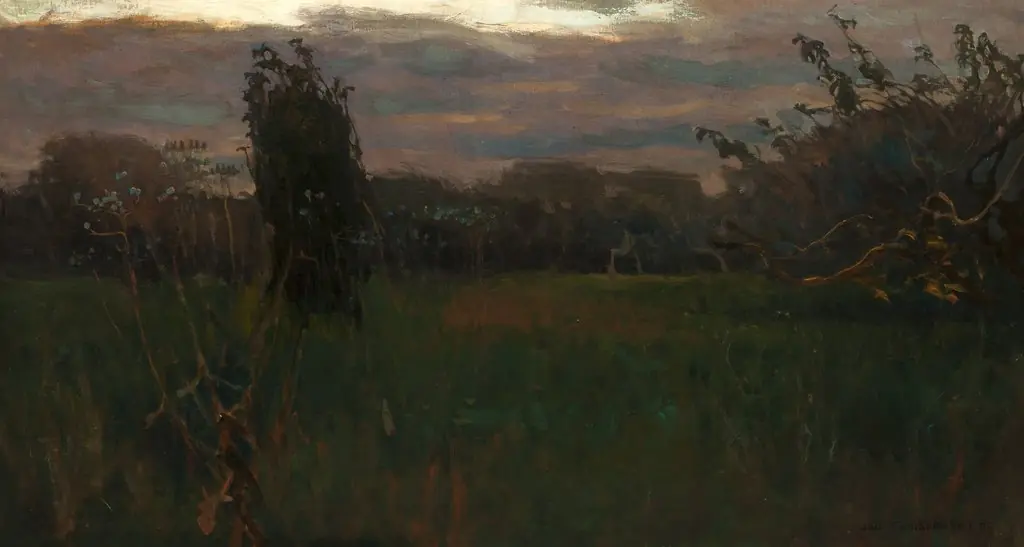 Evening
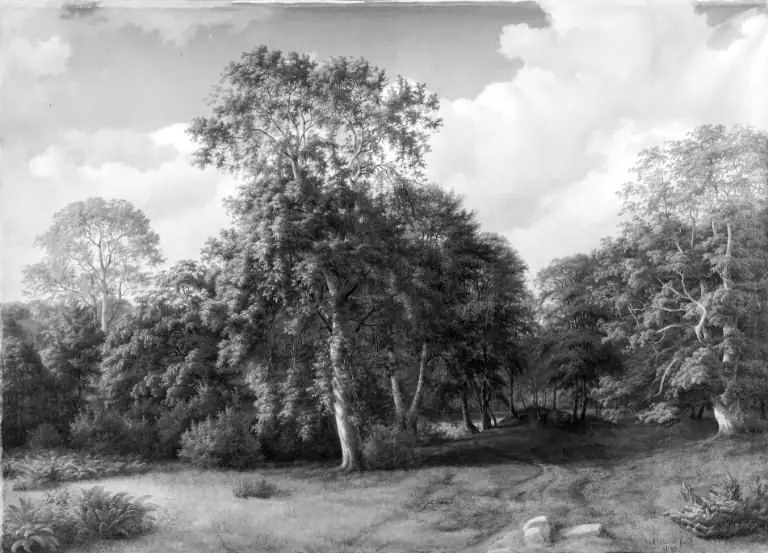 Forest Scenery from Præstevangen near Frederiksborg
 Forest Scenery from Præstevangen near Frederiksborg
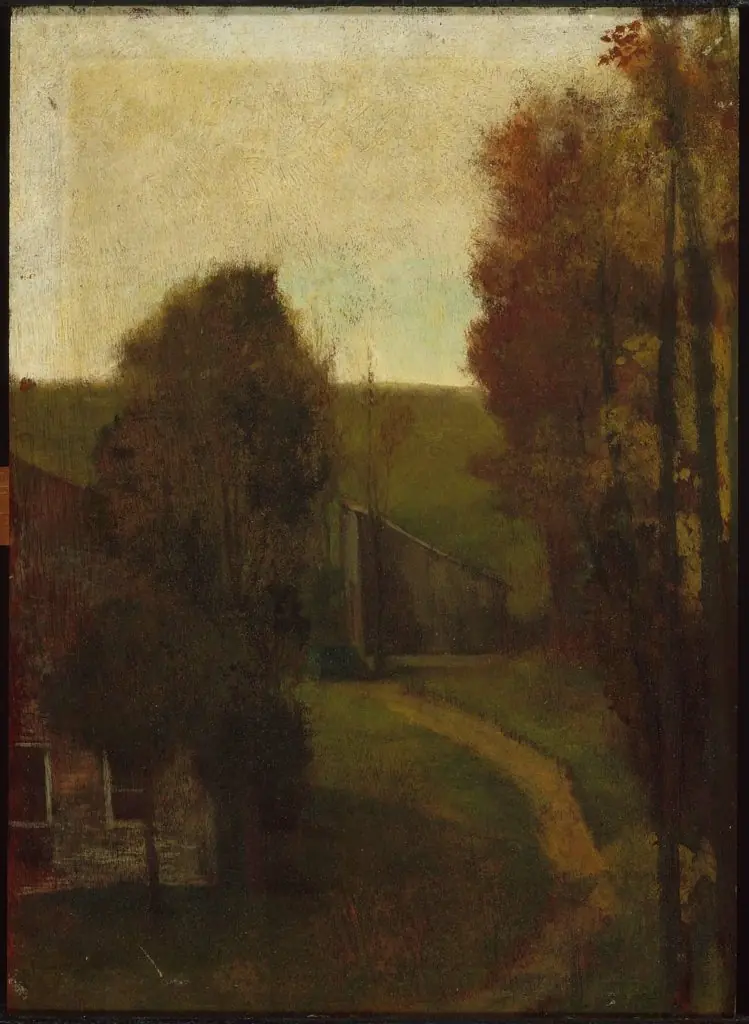 Hill-side with House. Paradise Farm, Afternoon Sky, Autumn
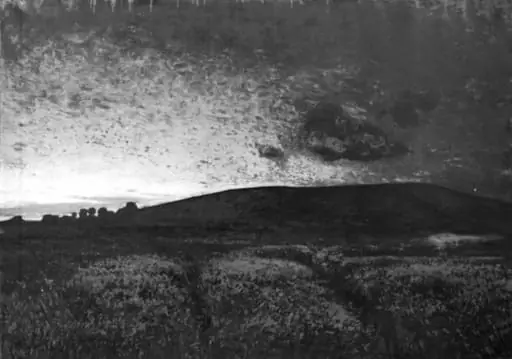 Aftenlandskab
 Țărăncuță cu fuior coborând spre casă
 Aftenlandskab
 La marginea satului
 Pom singuratic
 Tåget efterårsmorgen i udkanten af en birkeskov. Motiv fra egnen ved Silkeborg