Artwork
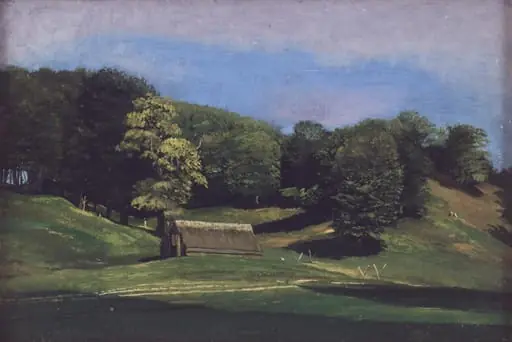
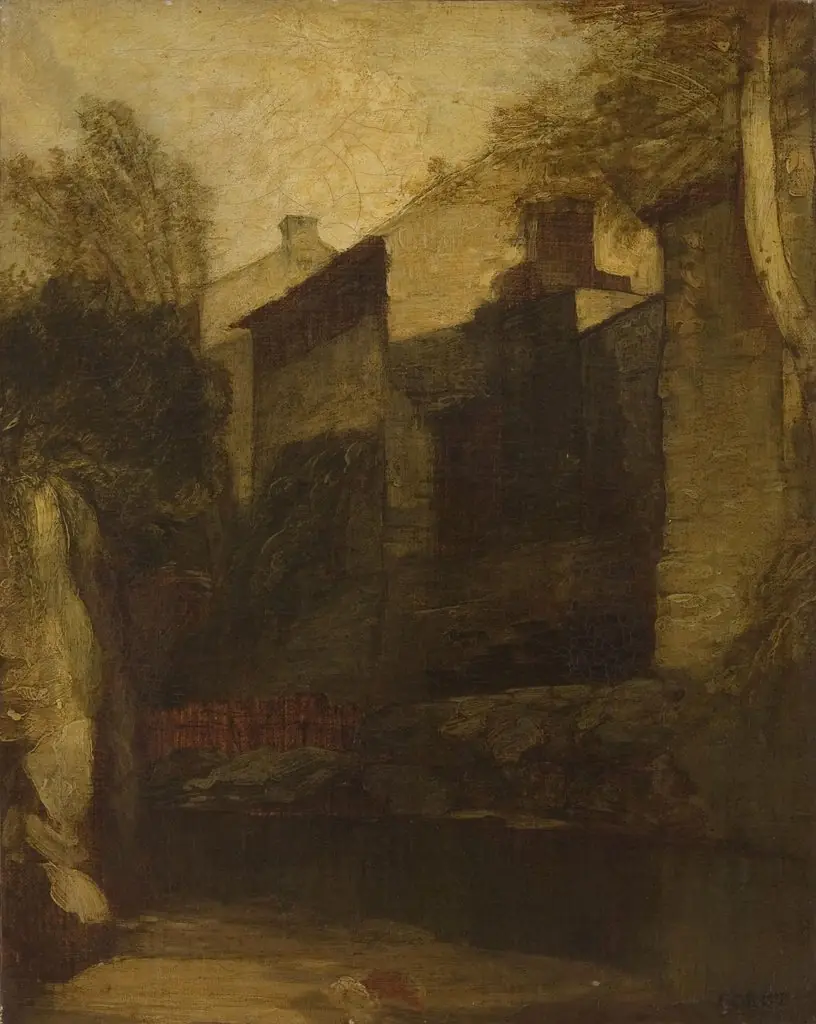
Hill-side with House. Paradise Farm, Afternoon Sky, Autumn
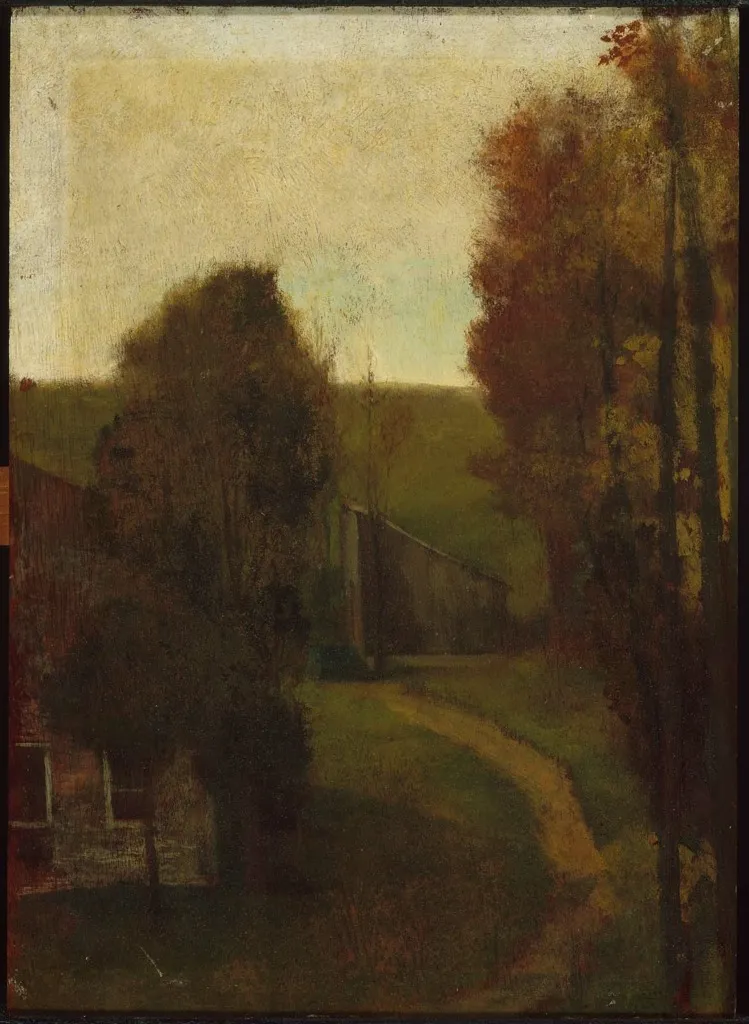
Hill-side with House. Paradise Farm, Afternoon Sky, Autumn is an unspecified painting by John La Farge. It dates from 1861 and is held in the collection of the Museum of Fine Arts Boston. Painted in 1861, *Hill-side with House.
About this work
Overview
Paradise Farm, Afternoon Sky, Autumn* is an early landscape by John La Farge, created before he became known for his stained glass and mural work.
Painted in 1861, *Hill-side with House. Paradise Farm, Afternoon Sky, Autumn* is an early landscape by John La Farge, created before he became known for his stained glass and mural work. The scene captures a quiet rural setting in autumn, emphasizing natural light and seasonal change. It reflects La Farge’s formative interest in observing and rendering the American countryside with sensitivity and restraint.
Subject & Meaning
The painting presents a modest farmhouse nestled against a gently sloping hill, framed by trees in early autumn hues. A dirt path winds upward, drawing the eye toward the structure, suggesting quiet human habitation within the landscape. The absence of figures or activity reinforces a mood of stillness, evoking contemplation rather than narrative. The scene conveys an unembellished reverence for everyday rural life.
Technique & Style
La Farge employs soft, muted tones to render the autumn sky in pale yellow and the foliage in varying shades of brown and green. Brushwork is subtle, avoiding dramatic contrasts in favor of atmospheric harmony. The composition balances horizontal landforms with vertical tree trunks, while the house is placed off-center to maintain visual equilibrium. Light is diffused, suggesting late afternoon without harsh shadows.
History & Provenance
Created during La Farge’s early career, the painting originates from his time spent at Paradise Farm, a rural retreat that influenced his landscape studies. It remained in private hands for much of its history, with limited public exposure until later scholarly interest in his pre-stained glass work. Its survival offers insight into the development of an artist who would later shift toward decorative arts.
Context
Painted in 1861, the work aligns with the broader American interest in landscape painting during the mid-nineteenth century, though it lacks the grandeur of Hudson River School works. Instead, it reflects a quieter, more intimate mode of observation, akin to the emerging trend of domestic realism. La Farge’s focus on a single farmstead signals a personal, rather than monumental, engagement with nature.
Legacy
Though overshadowed by La Farge’s later stained glass achievements, this painting remains a significant example of his early naturalism. It demonstrates his capacity for nuanced color and compositional restraint, qualities that informed his later decorative work. Art historians view it as a quiet precursor to his mature style, revealing the roots of his sensitivity to light and surface.
Artist & collection

Artist
John La Farge (March 31, 1835 – November 14, 1910) was an American artist whose career spanned illustration, murals, interior design, painting, and popular books on his Asian travels and other art-related topics.

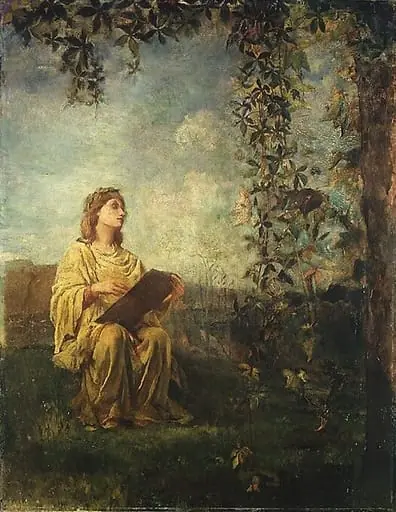 The Muse of Painting
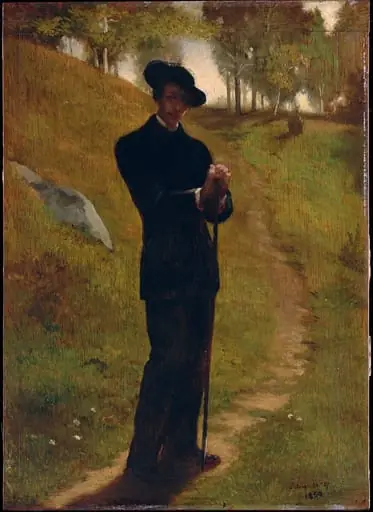 Portrait of the Painter
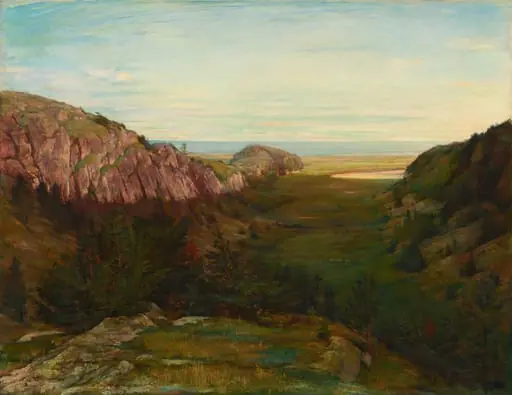 The Last Valley - Paradise Rocks
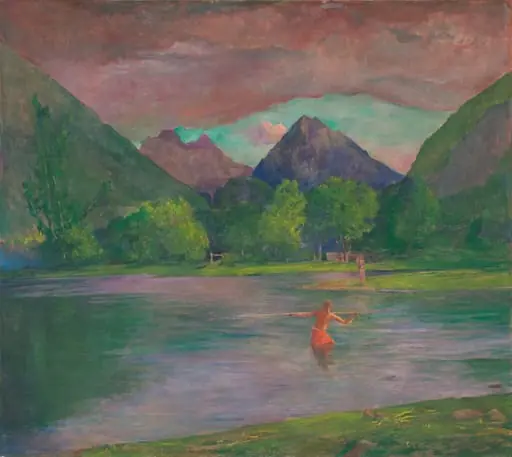 The Entrance to the Tautira River, Tahiti. Fisherman Spearing a Fish
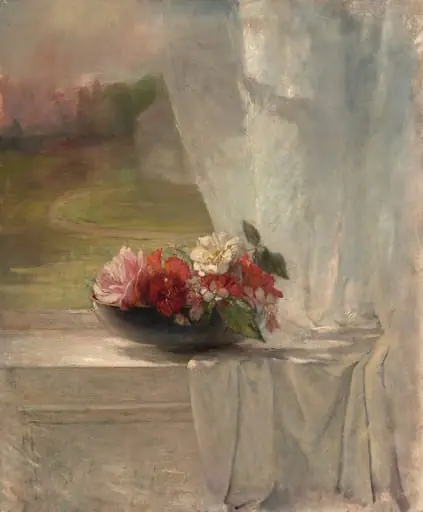 Flowers on a Window Ledge
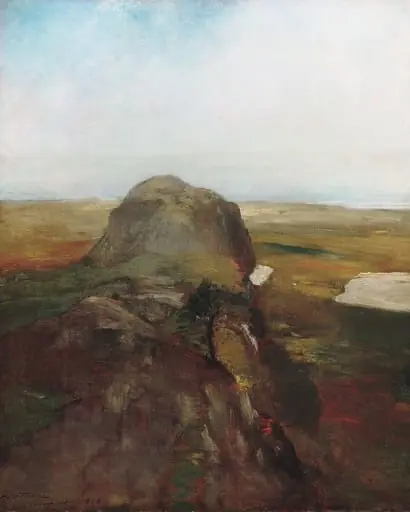 Autumn Study, View over Hanging Rock, Newport, R.I.
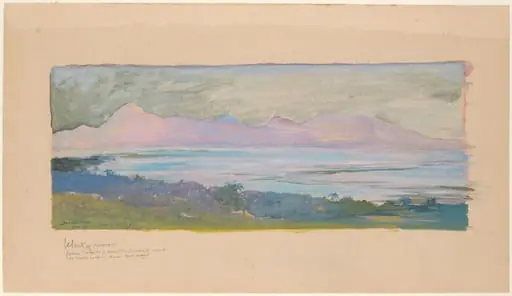 The Island of Moorea Looking across the Strait from Tahiti, January 1891
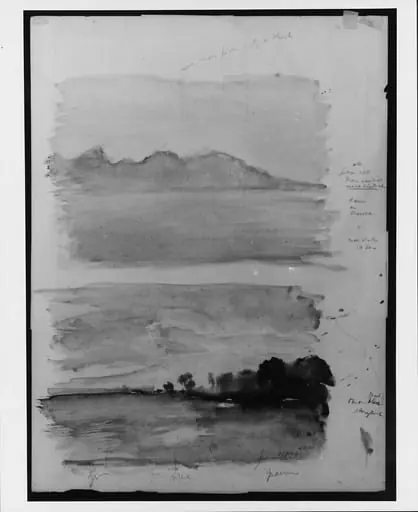 Double Study of Dawn, Moorea Seen across the Water, Tahiti