Artwork
Mrs Fitzroy Bell
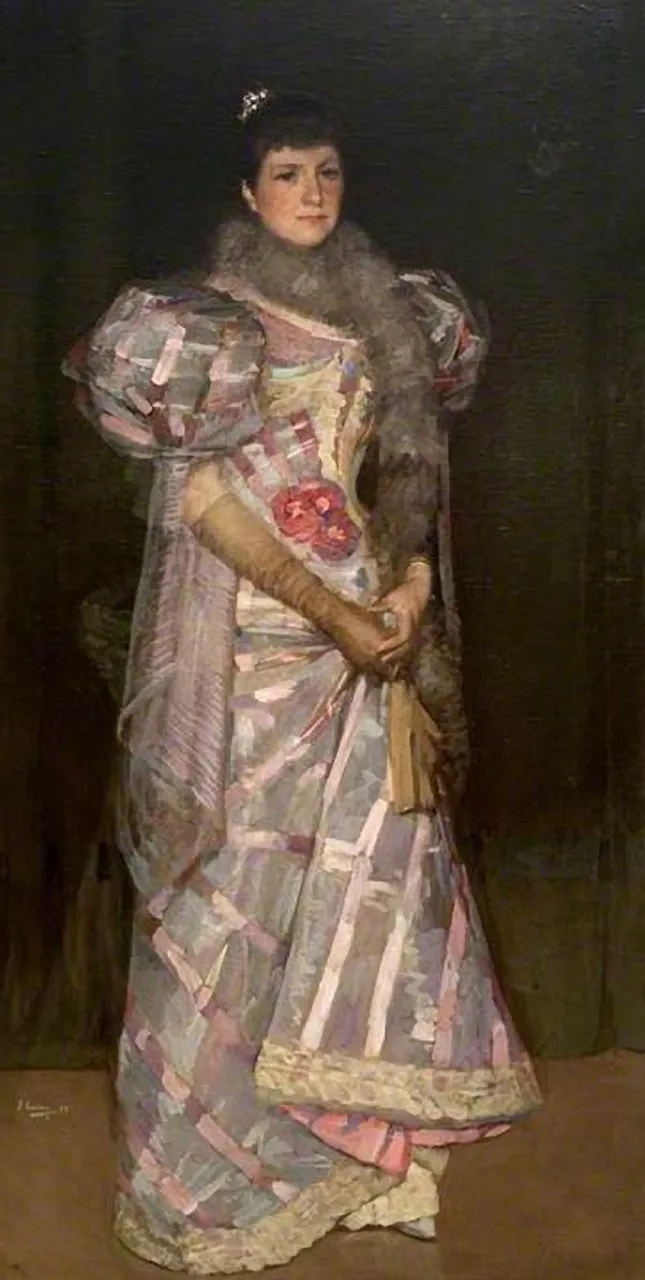
Mrs Fitzroy Bell is an oil painting by the Impressionist artist John Lavery. It dates from 1898 and is held in the collection of the Kelvingrove Art Gallery and Museum.
About this work
Overview
The piece resides in the Kelvingrove Art Gallery and Museum, Glasgow, as part of its permanent collection of British and Irish art.
Painted in 1898 by Irish artist Sir John Lavery, this oil-on-canvas portrait captures Mrs. Fitzroy Bell in a composed, formal stance. Lavery, known for his refined portraiture and later wartime scenes, executed the work with a sensitivity to light and texture characteristic of late 19th-century Impressionist-influenced painting. The piece resides in the Kelvingrove Art Gallery and Museum, Glasgow, as part of its permanent collection of British and Irish art.
Subject & Meaning
Mrs. Fitzroy Bell, a member of Scotland’s social elite, is portrayed with quiet dignity. Her clasped hands and still posture convey composure, while her attire—elaborate floral gown and fur-trimmed shawl—signals status and refinement. Lavery avoids overt narrative, focusing instead on presence and poise. The painting reflects the era’s emphasis on personal identity within aristocratic circles, rendered without theatricality or sentimentality.
Technique & Style
Lavery employed loose, visible brushwork and layered oil paint to suggest texture in fabric and skin, blending Impressionist light effects with traditional portraiture. The dark, undefined background isolates the figure, enhancing focus on her form and garments. Subtle shifts in tone and brushstroke create depth without hard outlines, giving the surface a tactile richness that invites closer observation while maintaining an air of restraint.
History & Provenance
Commissioned or chosen by Lavery himself, the portrait entered the Kelvingrove collection in the early 20th century. Its acquisition aligned with the museum’s broader effort to document Scottish cultural life through portraiture. No significant changes in ownership are recorded, and the painting has remained in public display since its acquisition, preserving its original condition and context.
Context
In the late 1890s, British portraiture was shifting between academic tradition and emerging modern sensibilities. Lavery, influenced by French Impressionism, adapted its luminous brushwork to depict upper-class subjects with psychological subtlety. This work reflects a transitional moment: formal attire and pose endure, but the handling of paint reveals a more spontaneous, atmospheric approach than earlier Victorian portraiture.
Legacy
The portrait exemplifies Lavery’s skill in merging elegance with modern technique, influencing later British portraitists. While not widely reproduced, it remains a key example of how Impressionist methods were localized in Scottish and Irish art circles. Its continued display at Kelvingrove underscores its role in documenting the aesthetic values of its time without overt dramatization.
Artist & collection
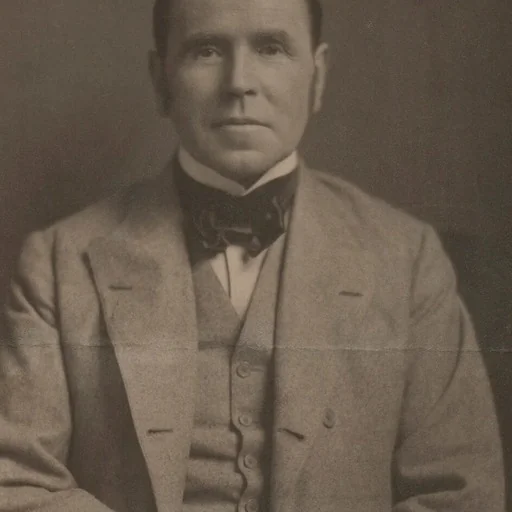
Artist
Sir John Lavery (20 March 1856 – 10 January 1941) was an Irish painter best known for his portraits and wartime depictions.

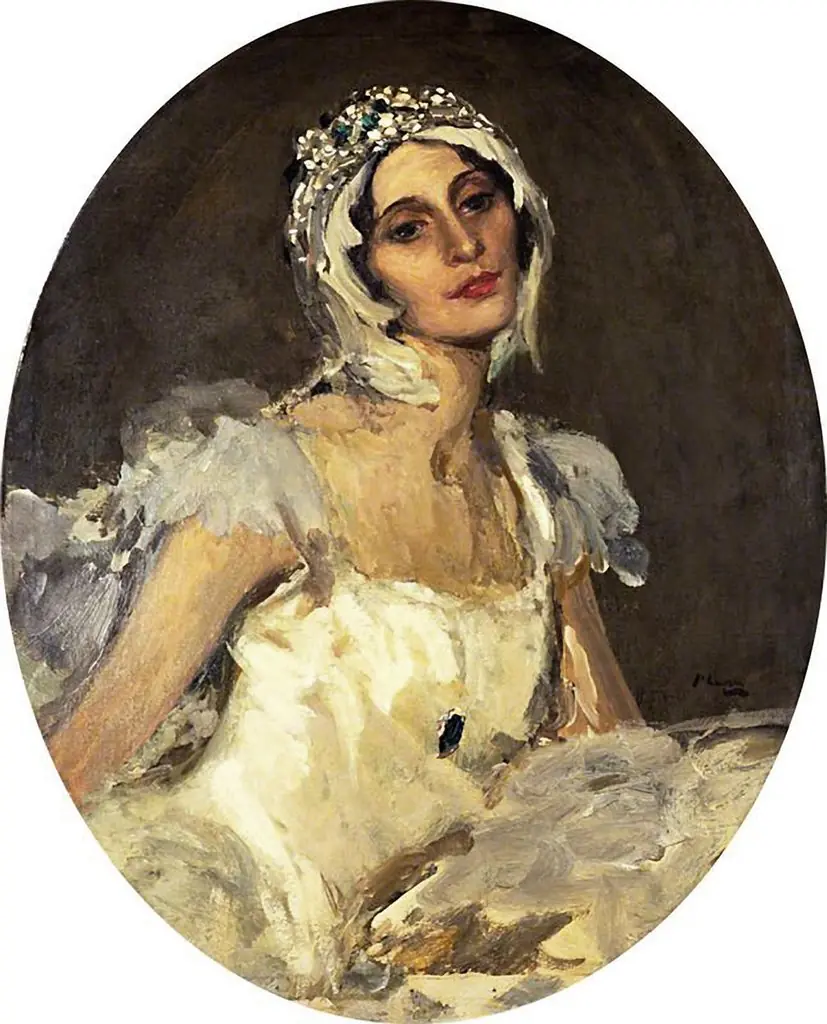 Anna Pavlova (1881–1931), as 'The Dying Swan'
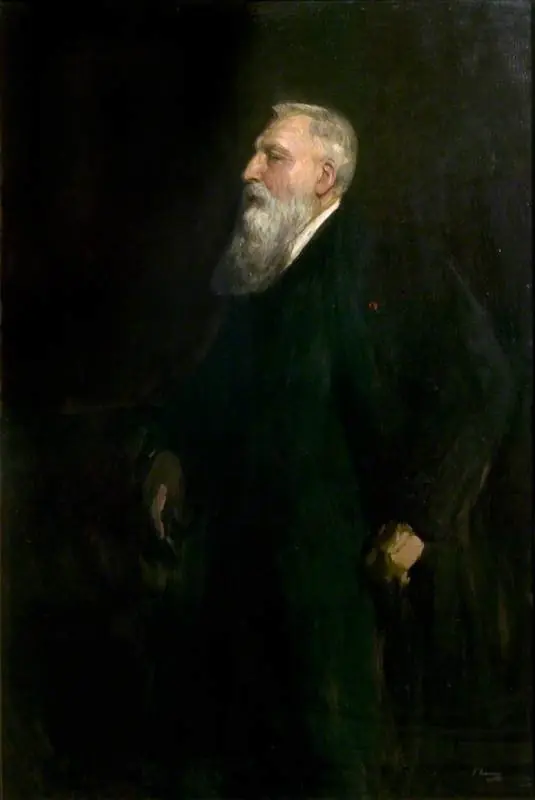 Auguste Rodin (1840–1917)
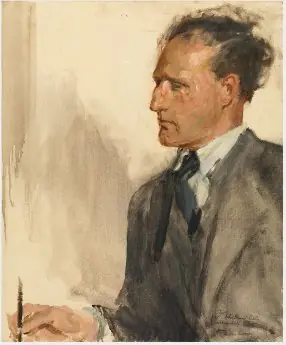 Portrait of John Stewart Collis (1900-1984), Author
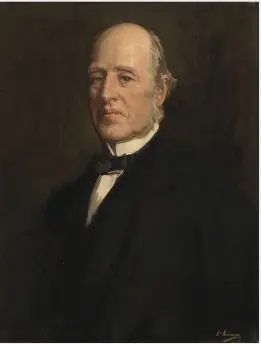 Portrait of W.E.H. Lecky (1838-1903), Historian
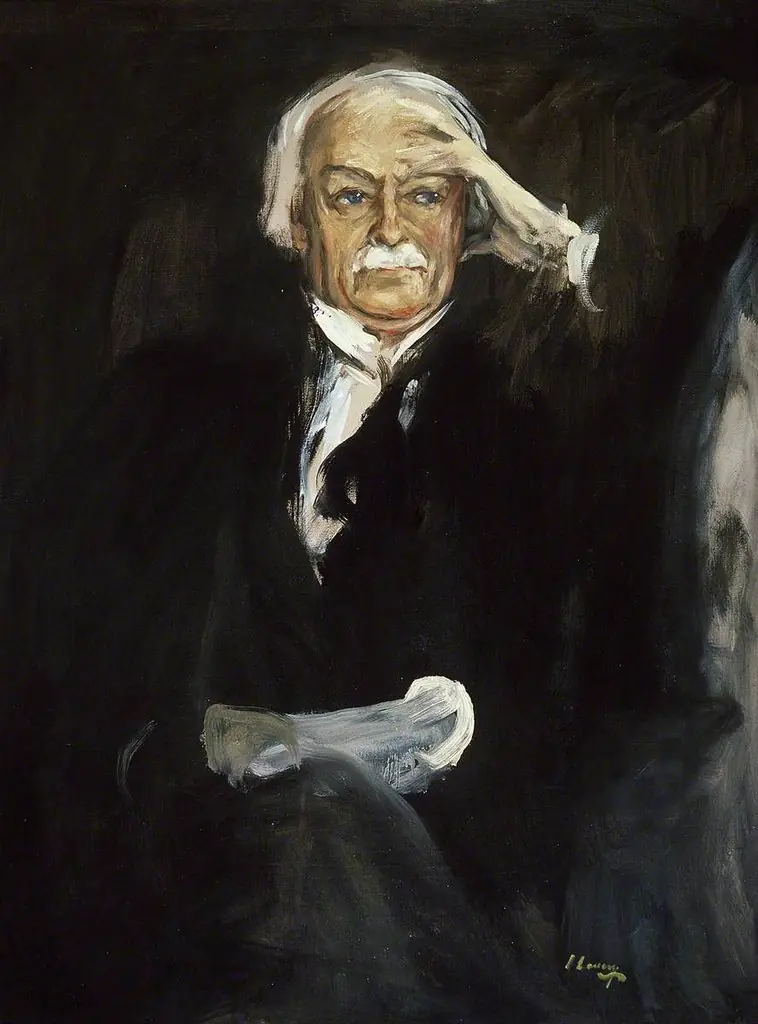 David Lloyd George (1863–1945)
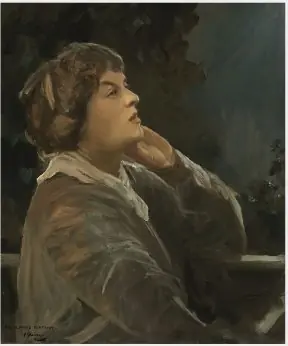 Portrait of Dora Sigerson (Mrs Shorter) (c.1870-1918), Poet
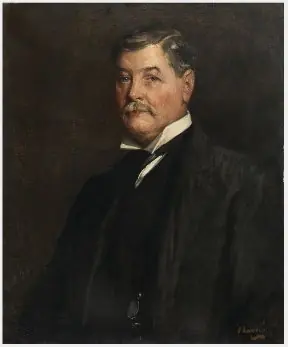 Portrait of T.P. O'Connor, Parliamentarian and Journalist
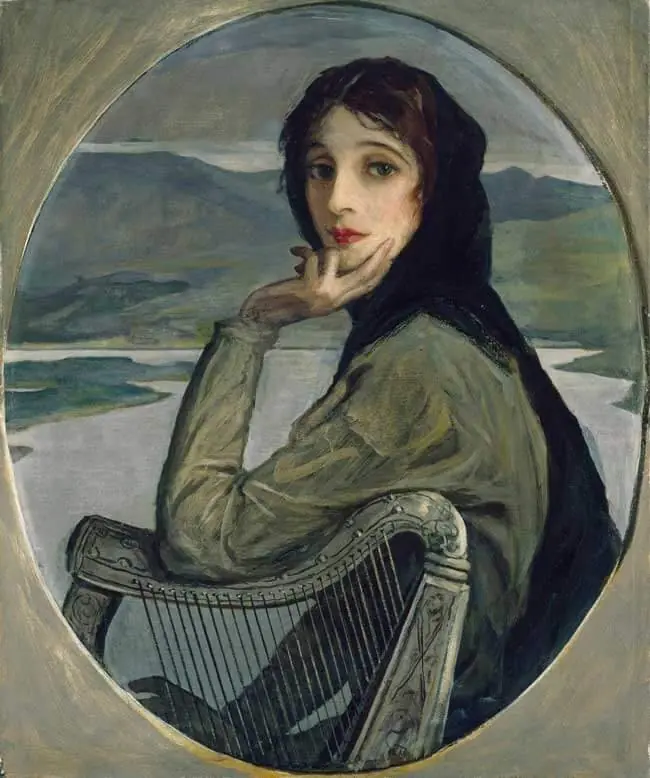 Portrait of Lady Lavery as Kathleen Ni Houlihan
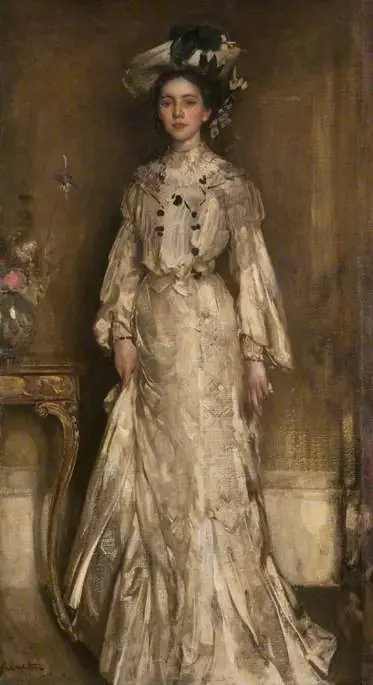 Lilian May Law (d.1882)
 Retrat de la nena Sardà
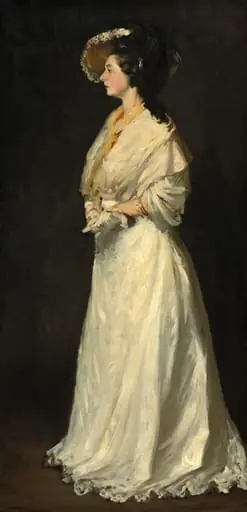 Young Woman in White
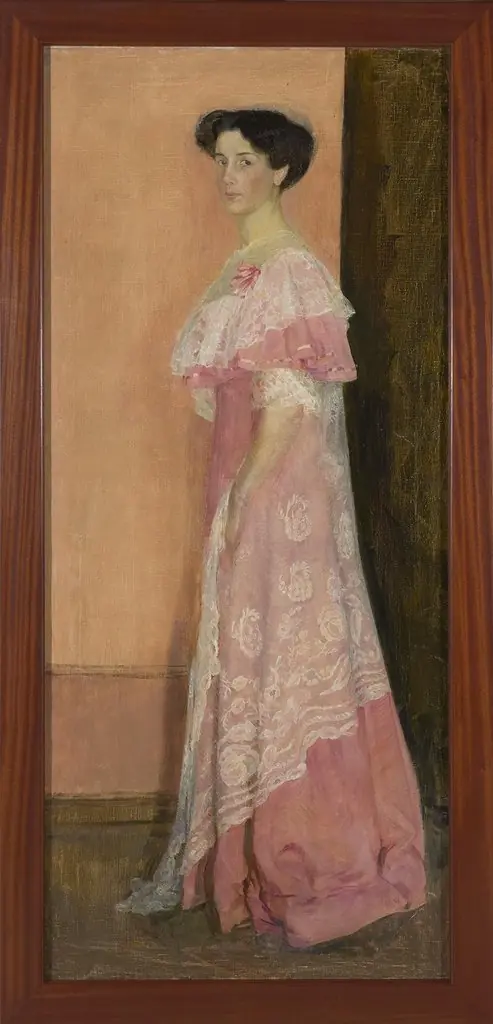 Society in the Restaurant. Revers: Study of a Lady in Pink
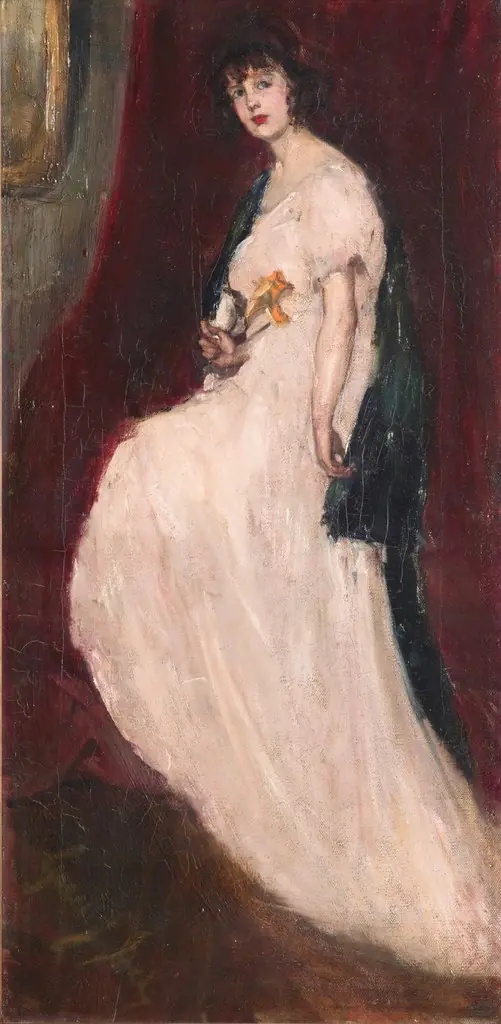 Girl in a pink dress
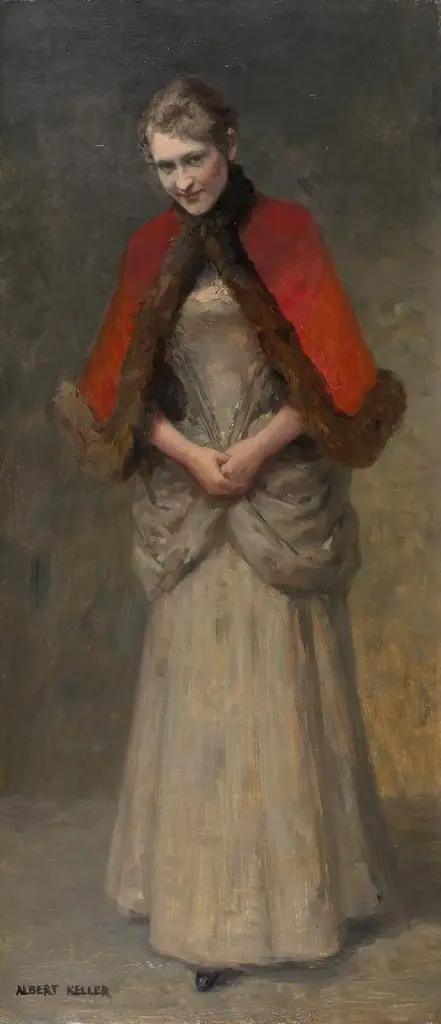 Madame La Suire
 The Artist's Wife, Constance, Comtesse de Markievicz (1868-1927), Irish Painter and Revolutionary
 Porträt der Frau Elfy Cilly
 Jessica Penn in Black with White Plumes
 The Velvet Cloak
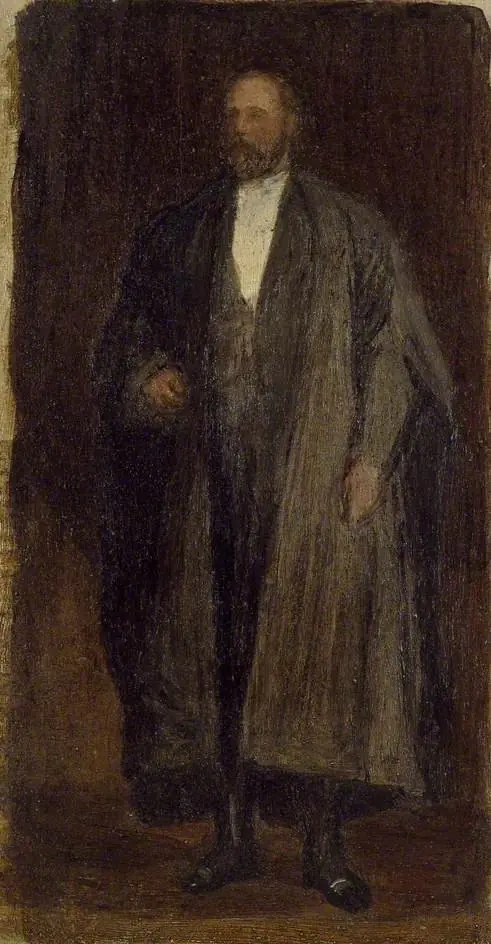 Edward VII as Prince of Wales
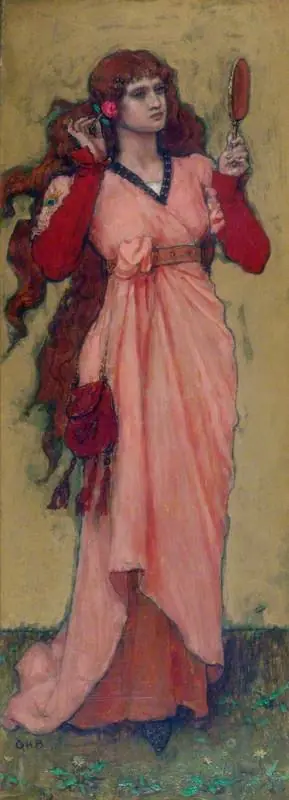 A Girl Holding a Mirror and a Rose