Artwork
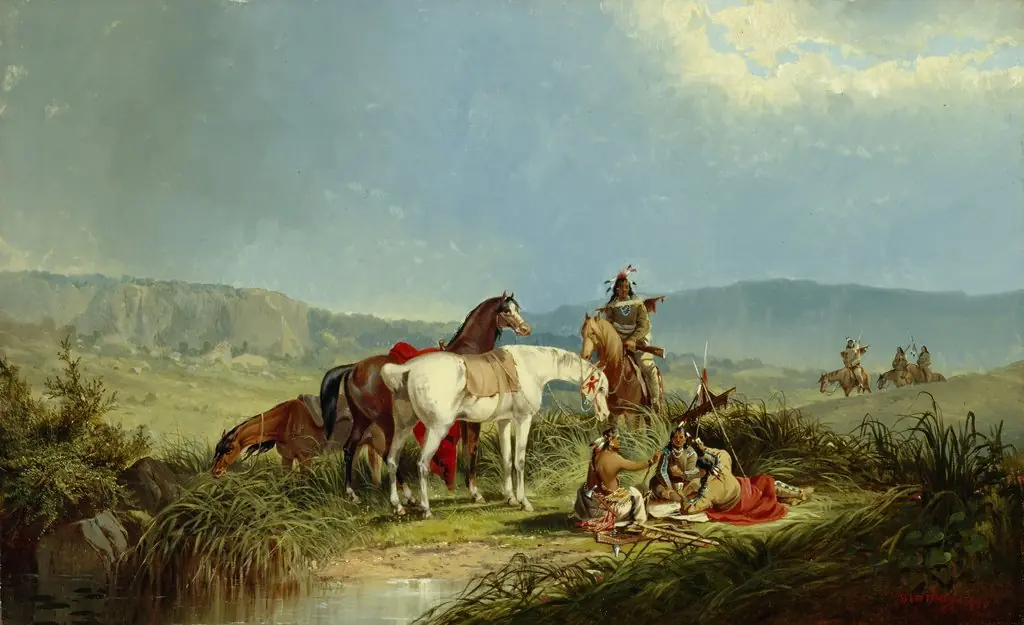
Prairie Indian Encampment
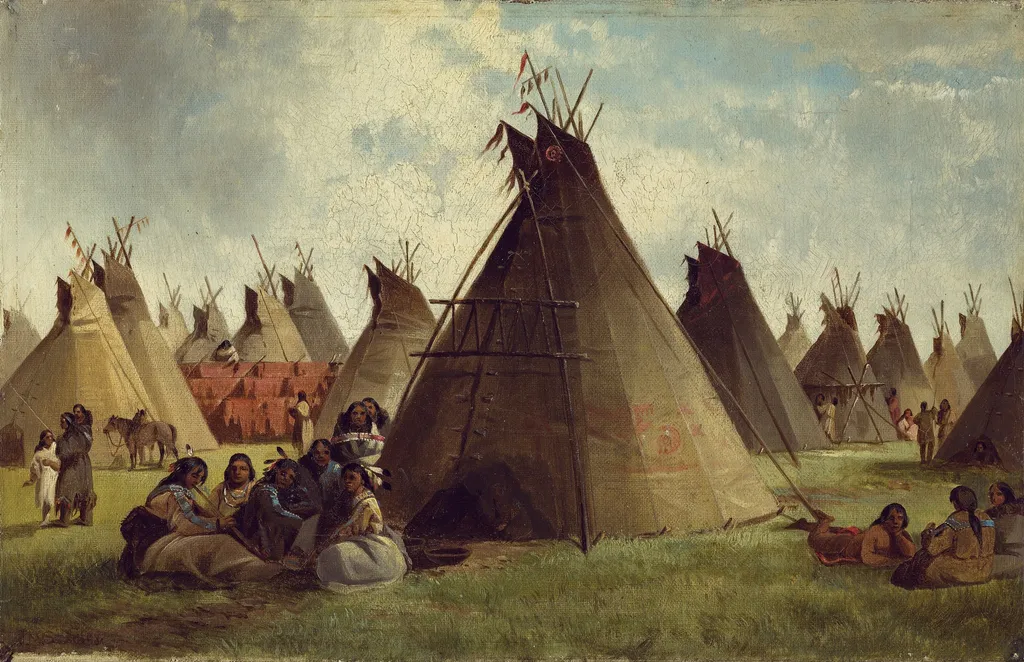
Prairie Indian Encampment is an oil painting by the American Folk Art artist John Mix Stanley. It dates from 1870 and is held in the collection of the Detroit Institute of Arts.
About this work
Overview
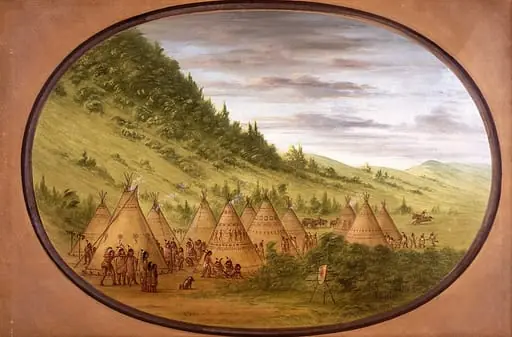
Painted in 1870 by John Mix Stanley, *Prairie Indian Encampment* is an oil-on-canvas work depicting a Native American encampment on the Great Plains.
Painted in 1870 by John Mix Stanley, *Prairie Indian Encampment* is an oil-on-canvas work depicting a Native American encampment on the Great Plains. Stanley, who traveled extensively in the American West during the mid-nineteenth century, rendered this scene based on direct observation rather than imagination. The painting belongs to the Detroit Institute of Arts’ permanent collection and reflects his broader effort to record Indigenous life before widespread displacement.
Subject & Meaning
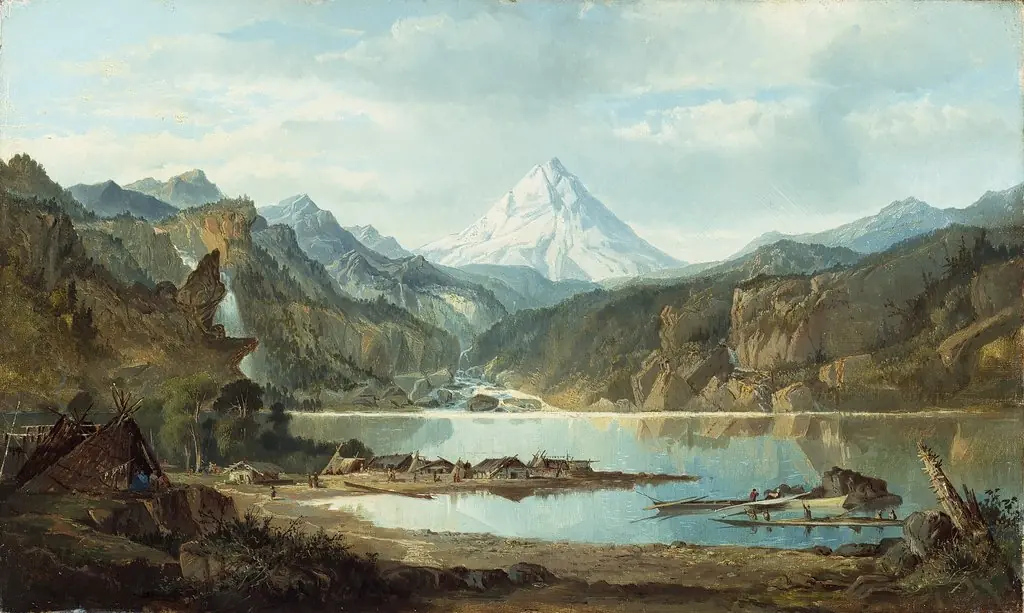
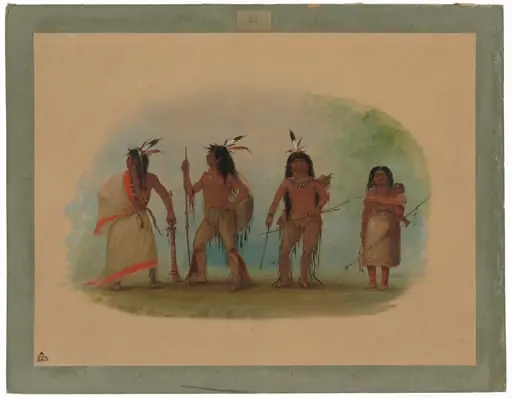
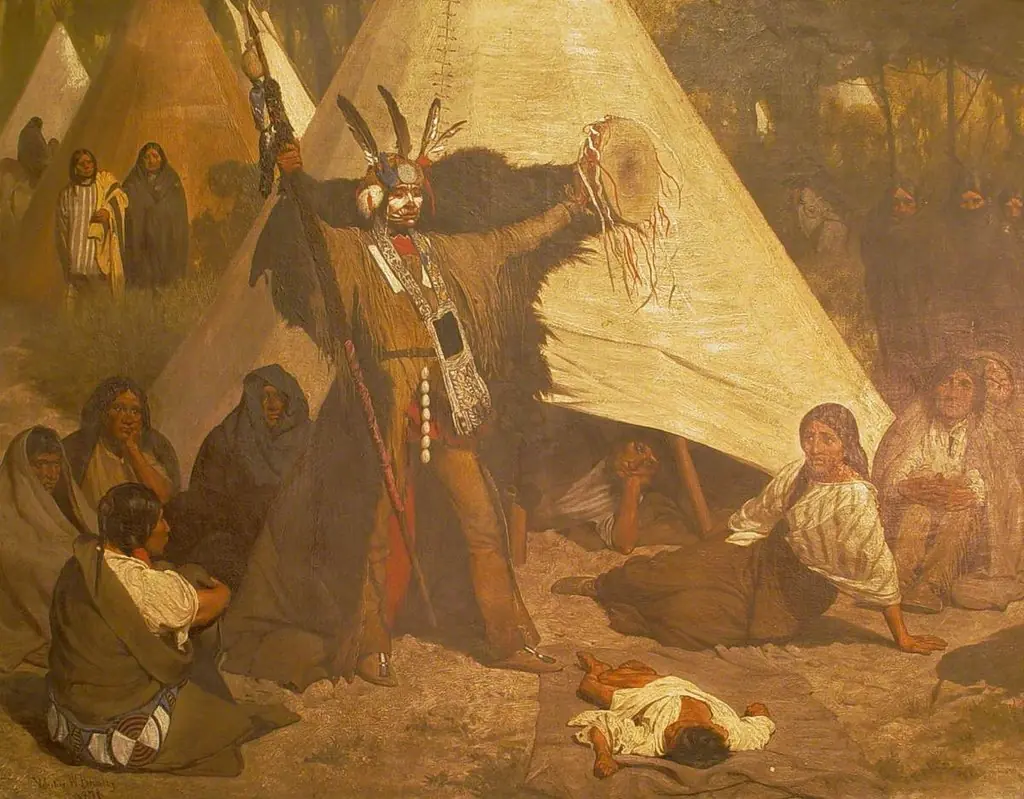
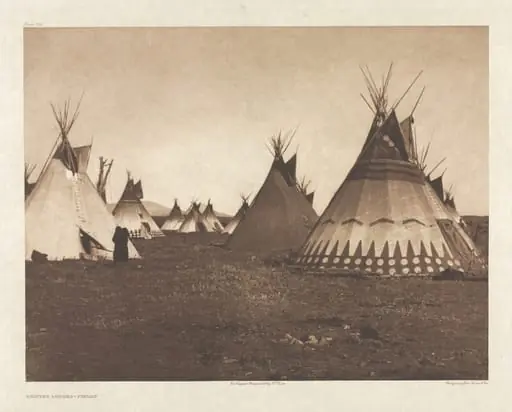
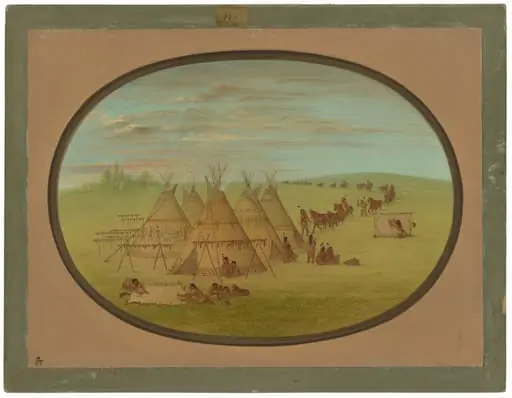
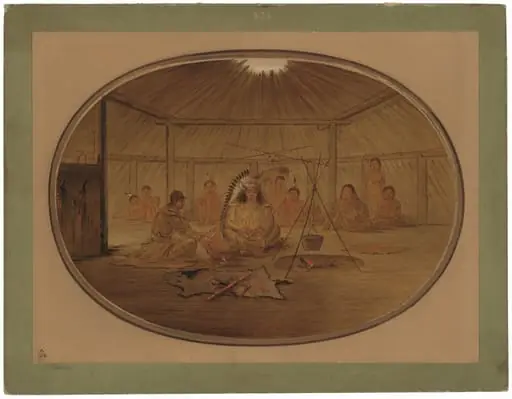
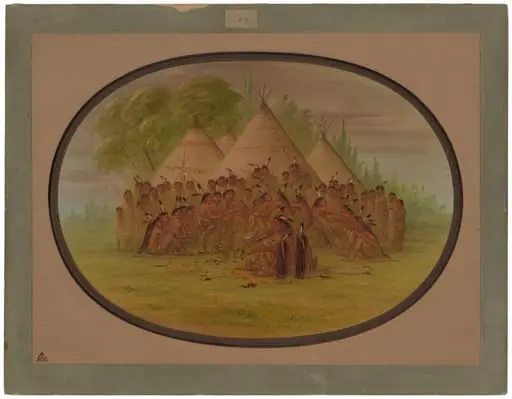
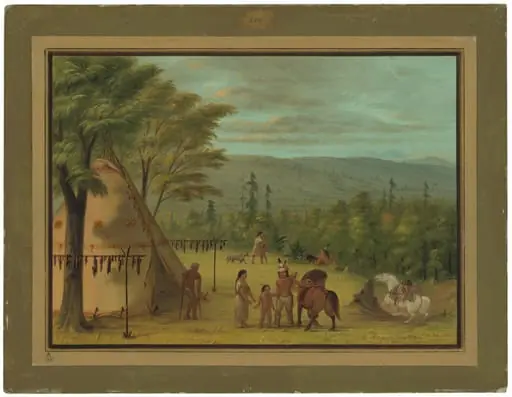
The scene centers on a large central tent surrounded by smaller dwellings, with figures engaged in quiet daily activities. Individuals wear traditional attire, some adorned with feathered headdresses, suggesting ceremonial or seasonal gatherings. The composition avoids dramatization, presenting a moment of stillness rather than conflict. Stanley’s intent appears to be documentation: capturing the spatial organization and cultural presence of Plains communities at a time of increasing pressure from westward expansion.
Technique & Style
Stanley employed a restrained palette of earth tones—browns, beiges, and muted ochres—to render tents and figures, harmonizing with the pale blue sky and scattered clouds. Brushwork is deliberate but not highly detailed, favoring atmospheric cohesion over fine precision. The perspective is slightly elevated, allowing the viewer to take in the full encampment layout. This approach aligns with 19th-century American topographical painting, blending observation with a sense of quiet reverence.
History & Provenance
Created after Stanley’s decades of fieldwork across the western territories, the painting emerged during a period when federal policies were displacing Native nations. Though completed in 1870, it draws on sketches and notes from earlier journeys in the 1850s and 60s. The work entered the Detroit Institute of Arts’ collection in the early 20th century, where it remains as part of a larger group of Stanley’s ethnographic studies acquired by the museum.
Context
Stanley’s work coincided with growing public interest in Indigenous cultures, often filtered through romantic or paternalistic lenses. Unlike many contemporaries who depicted Native Americans as vanishing or hostile, Stanley’s encampment scenes emphasize quiet continuity. His paintings were used by government surveys and later by ethnographers, lending them an archival quality even as they reflect the artist’s personal perspective on a changing landscape.
Legacy
Though not widely exhibited today, *Prairie Indian Encampment* endures as a visual record of Plains life during a transitional era. It contributes to the historical archive of Native American representation, offering a non-combative, observational viewpoint rare among 19th-century Western art. Scholars value it for its fidelity to material culture and spatial arrangement, even as its limitations as a single artist’s lens are acknowledged.
Own this work as a print
Artist & collection
Artist
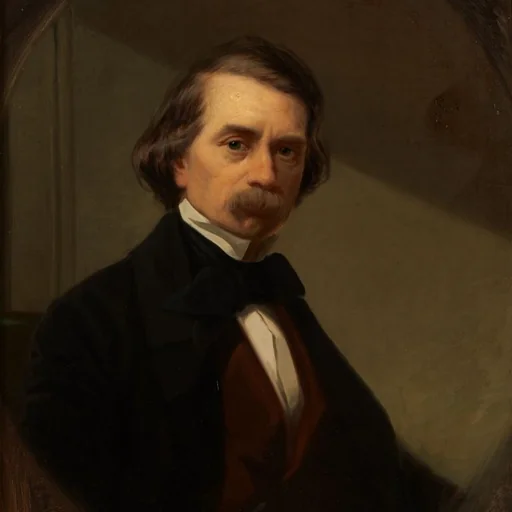
John Mix Stanley (January 17, 1814 – April 10, 1872) was an artist-explorer, an American painter of landscapes, and Native American portraits and tribal life.