Artwork
Front Elevation of the same
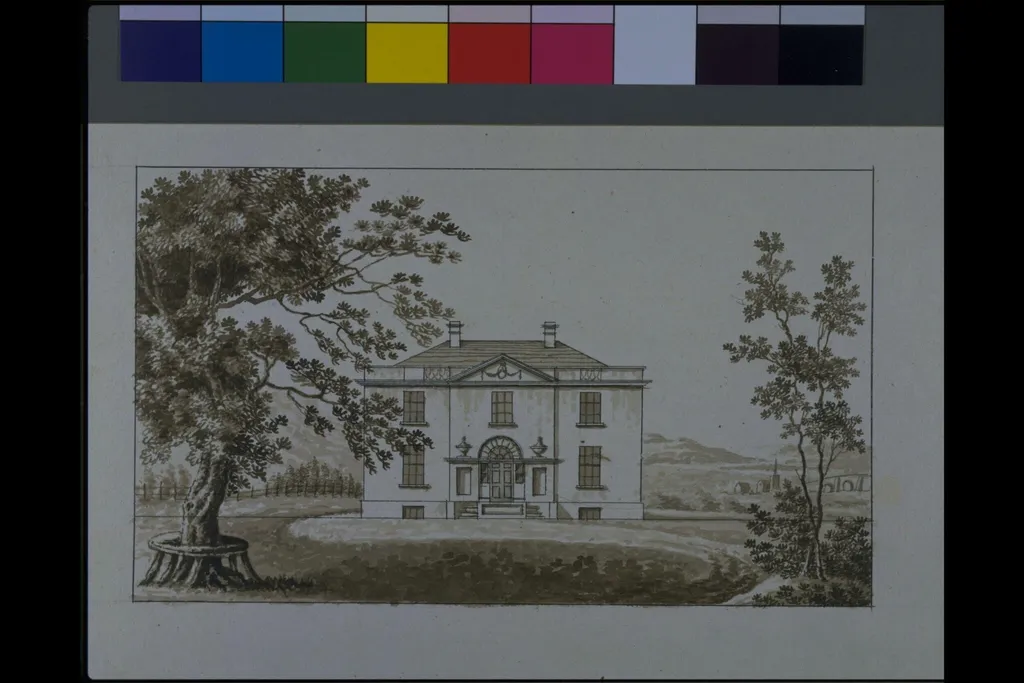
Front Elevation of the same is a drawing by the Romanticist artist John Plaw. It dates from 1784 and is held in the collection of the Victoria and Albert Museum.
About this work
Overview
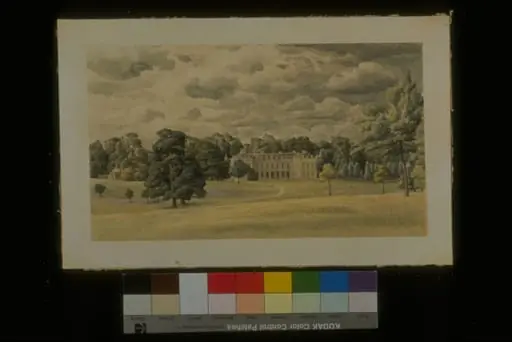
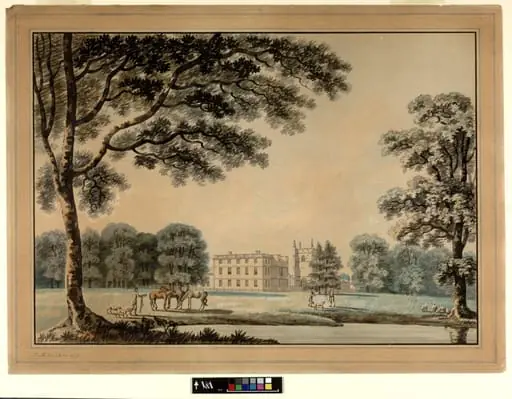
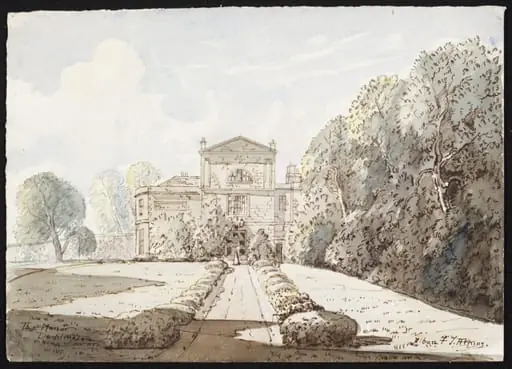
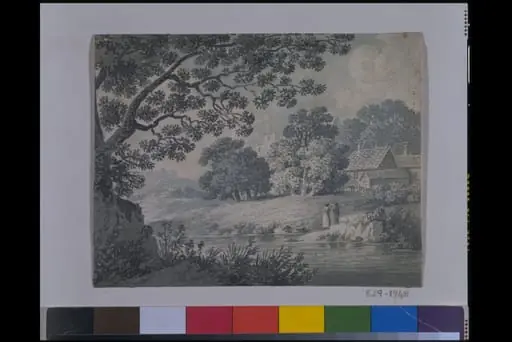
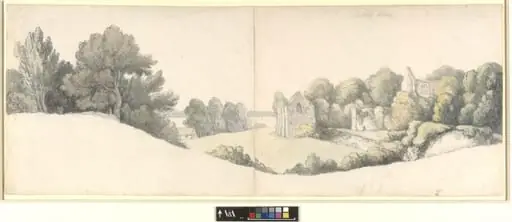
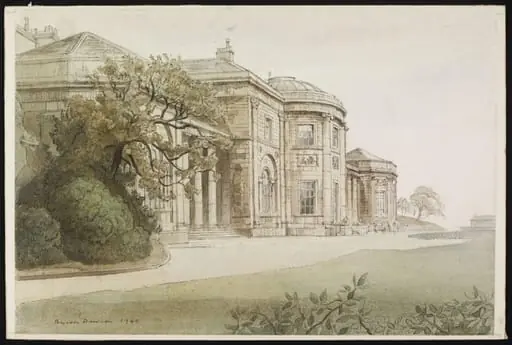
John Plaw’s 1784 drawing depicts a classical‑style façade set within a cultivated landscape. The white, columned building rises on a raised platform, accessed by a flight of steps, while a large tree shelters a circular fountain at its foot. A winding path leads past a small pond, and distant hills and trees frame the scene, suggesting a harmonious integration of architecture and nature.
Subject & Meaning
The composition presents an idealized country house, embodying the 18th‑century aspiration for orderly, picturesque dwellings that blend civic grandeur with pastoral charm. By situating the structure amid trees, a settlement, and rolling terrain, Plaw emphasizes the balance between human design and the surrounding environment, a principle central to contemporary notions of the ‘beautiful house in the landscape.’
Technique & Style
Executed with fine, precise lines, the drawing employs cross‑hatching to model shadows and surface texture, a common practice in architectural renderings of the period. The linear treatment creates depth and delineates architectural details—columns, windows, and steps—while also rendering foliage and water with delicate tonal variation, reflecting the disciplined draftsmanship typical of late‑Georgian design studies.
History & Provenance
The book’s wide circulation helped disseminate Plaw’s designs, influencing British domestic architecture around the turn of the 19th century.
Plaw’s original elevation was later adapted for an aquatint plate in the 1785 volume *Rural Architecture or Designs from the simple cottage to the decorated villa*. The published image differs slightly in its landscape background, indicating that the drawing served as a preparatory study. The book’s wide circulation helped disseminate Plaw’s designs, influencing British domestic architecture around the turn of the 19th century.
Context
The drawing belongs to a period when architects and pattern books sought to codify classical motifs for rural residences. Plaw’s work aligns with the broader movement toward standardized, yet aesthetically pleasing, villa designs that catered to the emerging middle class, offering a visual template for builders and patrons seeking refined yet attainable country homes.
Artist & collection

Artist
John Plaw (1745–1820) was an architect who was born in London but later emigrated to the Colony of Prince Edward Island in North America. He is known for favouring circular designs in the classical style.