Artwork
Lake House, Epping
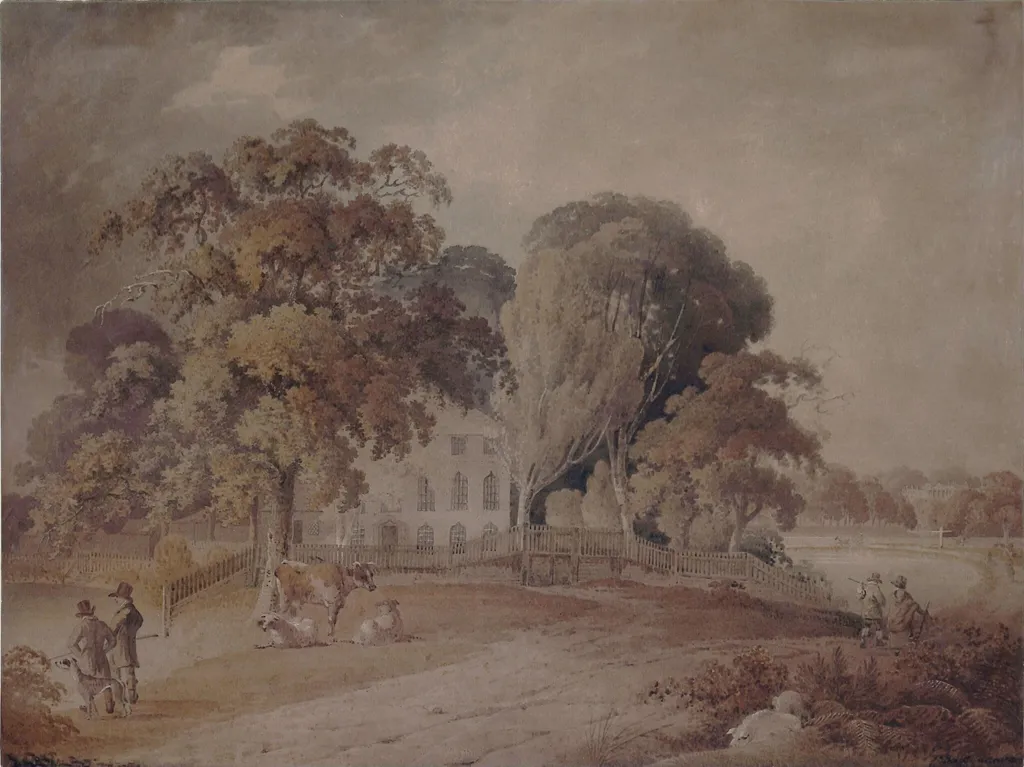
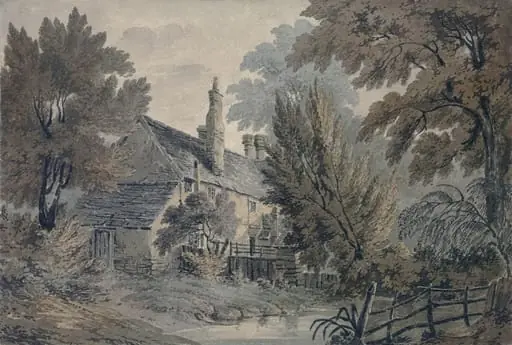
Lake House, Epping is a watercolor work on paper by the Romanticist artist J.S. Barth. It dates from 1809 and is held in the collection of the Victoria and Albert Museum. Painted in 1809 by J.
About this work
Overview
Painted in 1809 by J. S. Barth, this watercolour depicts a rural landscape near Epping. The work is signed and dated by the artist, confirming its origin. Rendered in delicate washes, it captures a tranquil moment in the English countryside, with a modest white house visible through a line of mature trees. The composition emphasizes stillness and subtle detail rather than dramatic action.
Subject & Meaning
The scene portrays ordinary rural life: a dirt path winds past a farmhouse, with figures walking, dogs accompanying them, and sheep grazing near a low fence. No grand narrative is present—instead, the focus lies in the quiet rhythm of daily activity. The absence of overt symbolism suggests an appreciation for the unremarkable, valuing serenity over spectacle.
Technique & Style
Barth employed light, transparent watercolour washes to suggest atmosphere and texture. The foliage and grass are rendered with soft, blended tones, creating a hazy, diffused quality. Figures and animals are rendered with minimal detail but remain legible, reinforcing the painting’s gentle, observational tone. The pale sky enhances the sense of calm, unobtrusive light.
History & Provenance
The painting’s early history is undocumented beyond its creation in 1809. It bears the artist’s signature and date, indicating intentional preservation. While its path through collectors or institutions is unknown, its survival suggests it was valued by contemporaries for its quiet realism. No record of public exhibition prior to modern archives exists.
Context
Created during the early 19th century, the work aligns with a growing interest in domestic landscapes among British watercolourists. Artists increasingly turned to local scenes over grand historical or exotic subjects. Barth’s focus on Epping’s outskirts reflects this trend—emphasizing the ordinary beauty of the English countryside away from urban centers.
Legacy
Though not widely known today, the painting exemplifies the quiet tradition of topographical watercolours practiced by amateur and professional artists alike. Its preservation offers insight into how everyday rural life was visually recorded outside the academic canon. It remains a modest but authentic record of early 19th-century English landscape sensibility.
Own this work as a print
Artist & collection
Artist
English watercolor artist J. S. Barth turned quiet corners of Epping into glowing paper scenes in 1809. That year he painted Lake House, Epping, a small sheet where brick walls meet still water under a pale sky. His…

 An Old Manor House
 Landscape with cottage
 Harewood House, Yorkshire
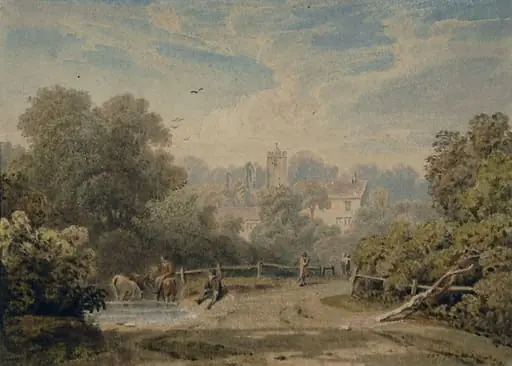 Crowhurst near Hastings
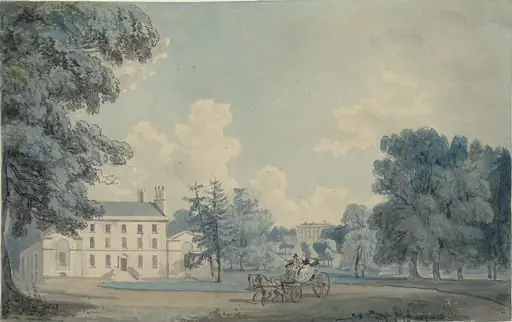 St. Wolstan's near Celbridge, Co. Kildare
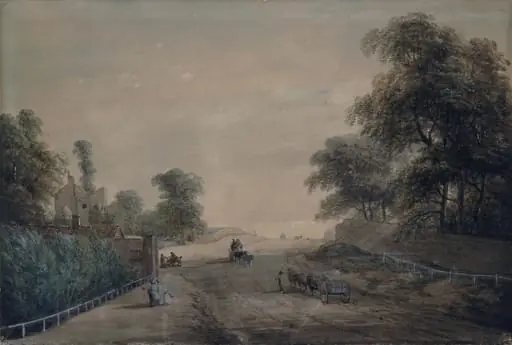 Bayswater Hill
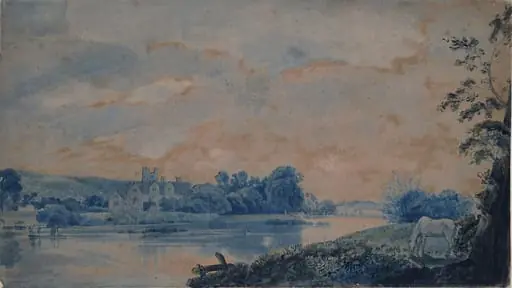 Bisham Abbey, on the Thames
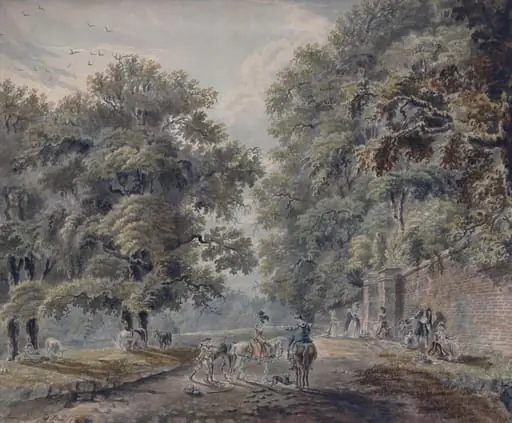 Entrance to Greenwich Park from Blackheath
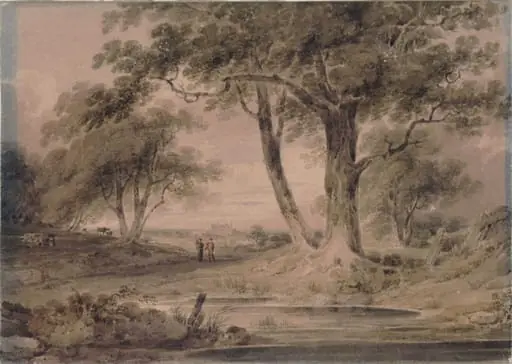 Landscape: Ripon Cathedral in the distance
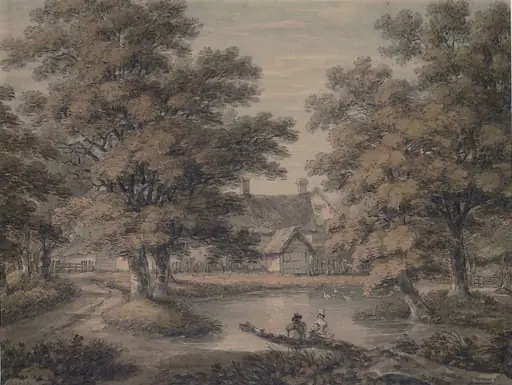 Farmhouse and Trees
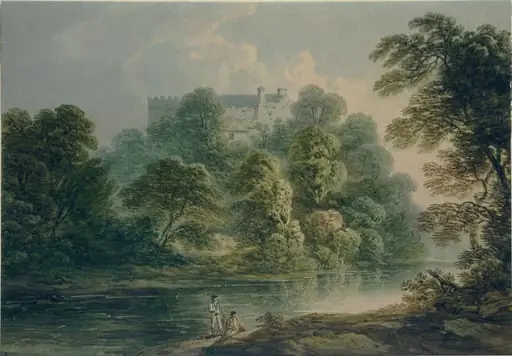 Castle on the Liffey, Ireland
 Landscape with House by a Pond