Artwork
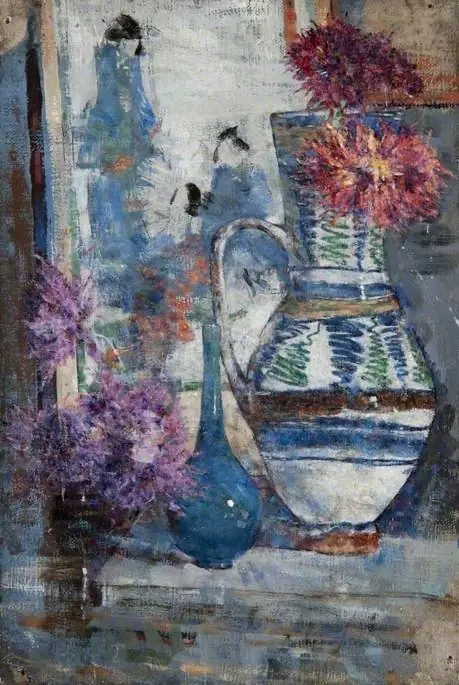
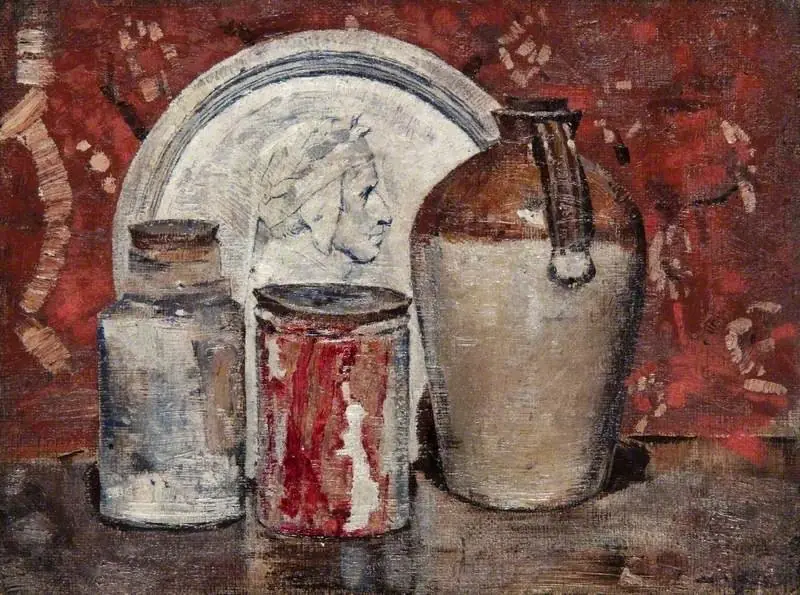
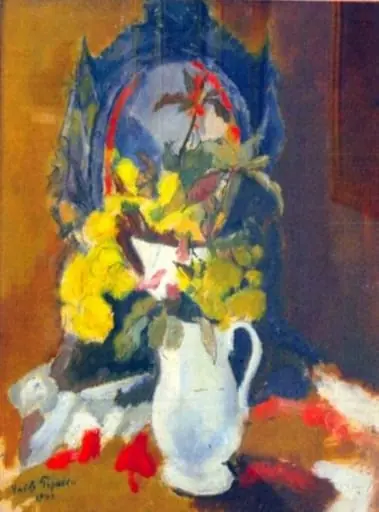
Still Life, a Jug, a Japanese Print and a Blue Drape
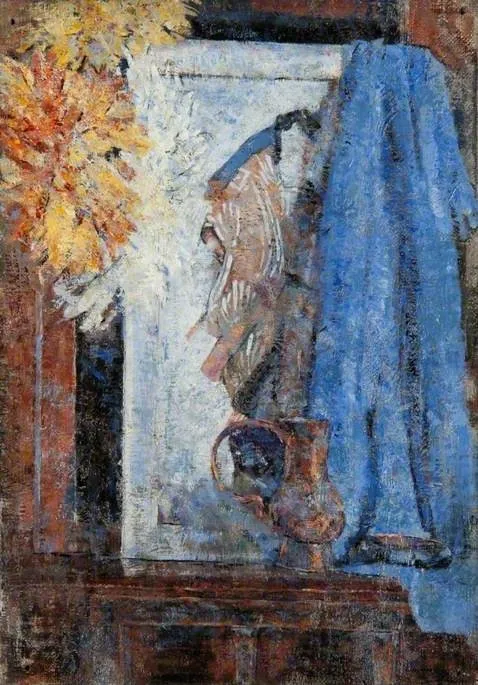
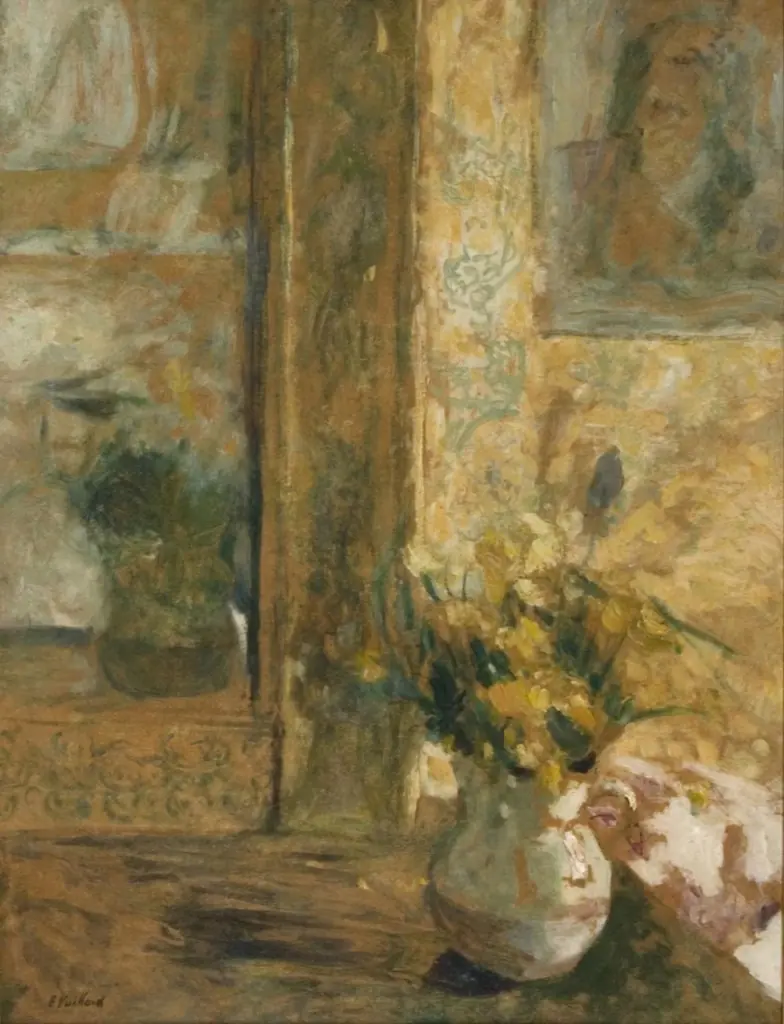
Still Life, a Jug, a Japanese Print and a Blue Drape is an oil painting by the Impressionist artist John Quinton Pringle. It dates from 1923 and is held in the collection of the Kelvingrove Art Gallery and Museum.
About this work
Overview
The composition reflects Pringle’s engagement with late 19th-century naturalism and the subdued tonalities favored by the Glasgow Boys.
Painted in 1923 by Scottish artist John Quinton Pringle, this oil-on-canvas still life presents a quiet arrangement of a ceramic jug, a Japanese woodblock print, and a folded blue fabric. The composition reflects Pringle’s engagement with late 19th-century naturalism and the subdued tonalities favored by the Glasgow Boys. Its restrained palette and deliberate placement of objects convey a contemplative mood, characteristic of his mature style.
Subject & Meaning
The objects—domestic, imported, and textile—suggest an intimate, personal space. The Japanese print hints at the Victorian-era fascination with ukiyo-e, while the draped fabric and jug anchor the scene in everyday reality. Together, they form a silent dialogue between East and West, between utility and decoration, without overt symbolism. The arrangement invites quiet observation rather than narrative interpretation.
Technique & Style
Pringle employed subtle glazing techniques to build depth in the muted blues and earthy browns, allowing light to softly modulate surfaces. Brushwork is restrained, avoiding dramatic contrasts in favor of tonal gradations. The composition is carefully balanced, with the jug’s vertical form counterpointed by the horizontal line of the print and the soft folds of the drape, creating a harmonious, almost architectural stillness.
History & Provenance
The painting entered the collection of Kelvingrove Art Gallery and Museum in Glasgow, where it remains today. It was produced late in Pringle’s career, after his most active years with the Glasgow Boys. While not widely exhibited during his lifetime, its inclusion in the museum’s permanent collection reflects its value as an example of early 20th-century Scottish still life painting.
Context
In the 1920s, British art was shifting toward modernism, yet Pringle retained a commitment to observational realism. His work bridges the naturalism of Jules Bastien-Lepage and the quiet introspection of later British painters. The presence of a Japanese print aligns with broader European interest in Japonisme, though here it is treated as a quiet domestic object rather than an exotic ornament.
Legacy
Though not widely reproduced, the painting exemplifies a strand of Scottish painting that valued restraint and sensitivity over spectacle. It stands as a quiet testament to Pringle’s enduring interest in light, texture, and the poetic potential of ordinary things. Its presence in Kelvingrove ensures continued access for study and reflection within the context of Scottish art history.
Artist & collection
Artist
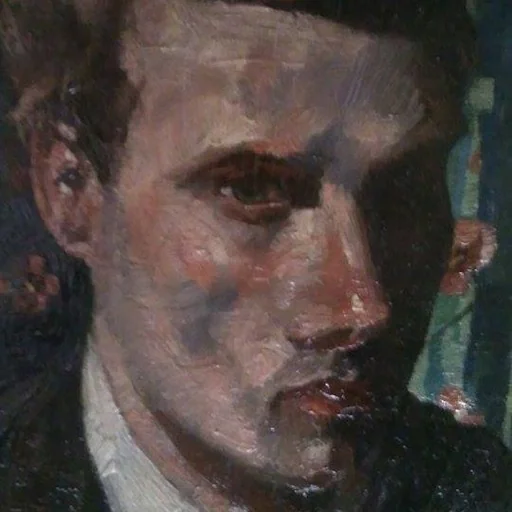
John Quinton Pringle (13 December 1864 – 25 April 1925) was a Scottish painter, influenced by Jules Bastien-Lepage and associated with the Glasgow Boys.